What to do when fuchsia leaves curl? Pay attention to 4 points, water and fertilizer are key
When it comes to the fuchsia, gardening enthusiasts should be familiar with it. It is also called the lantern flower and is a very beautiful flowering plant. In daily life, because of its beauty, many enthusiasts keep it at home to decorate their surroundings. But as we care for it, we find that its leaves curl very easily. So what should be done when fuchsia leaves curl? To address this, the editor has summarized 4 causes and attached solutions. Let's take a look together.
I. When fuchsia leaves curl, find the cause
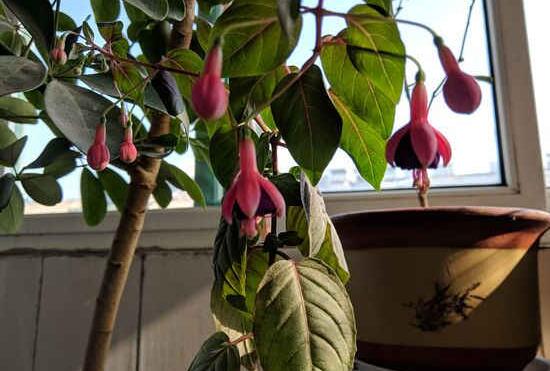
As a common indoor potted plant, the fuchsia is not difficult to grow, but because there are many beginners, they easily cause the plant's leaves to curl. So what should be done when fuchsia leaves curl? To address this, the editor found 4 causes: too much light, too low temperature, too little watering, and excessive fertilizing. Follow the editor below to look at the solutions.
II. Causes of fuchsia leaves curling and solutions
1. Too much light
When growing it indoors, many enthusiasts know that the fuchsia likes light, so they often let it go outside to bask in the sun. In general, doing this is not a problem, but doing it in summer is not good! Because under strong light, the fuchsia is easily scorched, leading to a series of problems, such as fuchsia leaves curling, fuchsia leaves turning yellow, and fuchsia leaves dropping.
Solution: If the leaf curling is caused by too much light, everyone should move the fuchsia to a shady place. Do not water it immediately; wait a while, then give it an appropriate amount of water and just keep the potting soil moist. After a week, place it in bright indirect light. After careful care for a period of time, the fuchsia leaves will recover.
2. Too low temperature
When growing fuchsia indoors, enthusiasts must pay attention to temperature! Because the most suitable temperature for fuchsia is 15-25°C. Once the temperature exceeds 30°C, it will scorch the leaves and cause yellowing; when it is below 5°C, it will cause the fuchsia's roots to freeze, so the plant cannot absorb sufficient nutrients, causing the leaves to curl.
Solution: If the fuchsia leaves curling is caused by too low temperature, everyone should adjust the temperature immediately. An air conditioner can be used to keep the indoor temperature at 10°C, and it can overwinter safely, and the leaves will also recover to health.
3. Too little watering
The fuchsia likes a moist environment and needs sufficient water during growth. Once it is watered too little and lacks moisture, the plant cannot grow normally, causing problems such as leaf curling, affecting the fuchsia's flowering yield and ornamental value, and may even cause the fuchsia to wither and die.
Solution: When lacking water, of course you need to replenish it, but do not replenish too much at once. Specifically, follow the watering method for fuchsia. Simply put: follow the principle of "water when dry, stop when wet." In spring and autumn, water once every 2-5 days; in summer, water once every morning and evening; in winter, water once every 10 days. Do not water too much each time; just keep the soil moist.
4. Excessive fertilizing
In addition to the above points, the cause of fuchsia leaves curling may also be excessive fertilizing. The fuchsia likes fertilizer, and sufficient nutrients can keep it blooming continuously, but no matter how much it likes it, there is a limit. Once too much fertilizer is applied, it will cause fertilizer burn, leaving the leaves with insufficient nutrients and causing curling, yellowing, and other conditions, and may even cause the whole plant to die.
Solution: If you find that too much fertilizer has been applied, enthusiasts need to flush the roots with clean water so that the fertilizer flows out from the bottom of the pot; or directly replace it with new soil and replant it. After that, master the fertilizing method for fuchsia and fertilize once every 7-10 days during the growing season.
What to do when fuchsia leaves turn yellow: reasonable light, controlled water and fertilizer, timely replacement of potting soil
When it comes to the fuchsia, everyone should have seen it. Its flower shape is like a lantern and also like an upside-down bell, so it is also called the upside-down golden bell. Although the beauty of the fuchsia mainly lies in its flowers, when its leaves turn yellow and have problems, it also affects its appearance. So what should be done when fuchsia leaves turn yellow and soft? To address this, the editor has summarized 5 causes. Follow the editor below to analyze them one by one.
I. When fuchsia leaves turn yellow, find the cause
As a common beautiful flowering plant, the fuchsia is not difficult to grow, but there are many beginners, and they often have problems with light, watering, and fertilizing. As a result, when the leaves turn yellow, they start to worry blindly! Enthusiasts must feel anxious about this phenomenon, but do not worry. As long as we find the cause and take remedial measures, even if the fuchsia leaves turn yellow, there is still hope.
II. Causes of fuchsia leaves turning yellow and soft and remedial methods
1. Sudden environmental change
Regarding the causes of fuchsia leaves turning yellow, the first thing everyone should think of is environmental problems. Nowadays, many people buy fuchsia online, but fuchsia bought online may have a relatively large change in growing environment all at once and cannot adapt for a while, resulting in yellowing leaves.
Remedial method: It is very simple. Ask the seller about the fuchsia's previous growing environment, then change the environment at home until the fuchsia fully adapts. After normal care for a period of time, the plant's leaves will recover.
2. Too much light
The fuchsia likes light and needs sufficient light during growth, but once the light is too strong, it will be scorched, resulting in yellowing leaves and even fuchsia leaf drop.
Remedial method: Immediately move the plant to a well-ventilated place with bright indirect light for care. Do not water at first; after a few hours, water an appropriate amount. After careful care for a period of time, the plant will recover to health.
3. Improper watering
The fuchsia likes a moist environment and needs us to water it often during growth. But watering is a technical skill, and for beginners it is hard to grasp the right amount, so they often water too much or too little, and both are causes of fuchsia leaves turning yellow.
① Too much watering: Water accumulating in the pot will cause the fuchsia's roots to rot, and the external sign is yellowing leaves. Remedial method: Stop watering, take the fuchsia out of the pot, cut off the rotten roots, replace the potting soil, and replant.
② Too little watering: The evaporation of water from the leaves is greater than absorption, causing water supply to fall short of demand, which also causes leaves to turn yellow. Remedial method: Water an appropriate amount, but do not water too much. Follow the principle of "water when dry, stop when wet."
③ Humidity problem: In the north, the weather is very dry, and with heating at home in winter, the air is even drier. Growing in this kind of environment makes it very easy for fuchsia leaves to turn yellow. Remedial method: Often spray and wash the leaves with warm water, and increase indoor air humidity. For the leaf tips, you can put a plastic bag over the plant to increase humidity and uncover it in the morning.
4. Improper fertilizing
After discussing the water problem, let's talk about fertilizing. It is also one of the causes of fuchsia leaves turning yellow. It is understood that whether too much or too little fertilizer is applied, it can cause leaves to turn yellow.
① Too much fertilizer: Especially when too much nitrogen fertilizer is applied and phosphorus and potassium fertilizers are lacking, it easily causes leaves to turn yellow. Remedial method: Stop fertilizing immediately, increase the amount of watering, and let the fertilizer flow out from the drainage holes, or immediately repot, remove part of the old soil, replace it with new soil, and replant the plant.
② Insufficient fertilizer: Forgetting to fertilize, or not applying nitrogen fertilizer for a long time or not changing the potting soil, will lead to a lack of nitrogen nutrition in the soil, causing weak branches and leaves, and thin, yellow leaves. Remedial method: Fertilize an appropriate amount. If the potting soil has not been changed for a long time, you should also repot in time, take the plant out of the pot, put it into new loose soil, and replant it properly.
5. Soil leaning alkaline
If the above points can be ruled out, then the yellowing of fuchsia leaves may be caused by soil leaning alkaline. The fuchsia likes loose, fertile, well-drained, breathable, slightly acidic soil. If the soil leans alkaline, it will affect the plant's growth, resulting in yellowing leaves.
Reasons for soil leaning alkaline: Most areas in the north have soil with more salt and alkali; in addition, after the plant is grown for a period of time, the soil will also become alkaline. Remedial method: At intervals, water with 0.2% ferrous sulfate solution, and alternately water with 0.1% potassium dihydrogen phosphate solution to change the soil's pH.
Summary: Actually, the fuchsia is not difficult to grow, but because many enthusiasts are beginners, yellowing leaves inevitably occur. However, after reading the whole article, I believe everyone has a clearer idea. If yellowing leaves occur, just remedy it according to the methods above. Regarding fuchsia leaves turning yellow and soft, the editor will introduce it here, hoping to help everyone.
What to do when fuchsia leaves wilt: supplement light, fertilize appropriately, do cooling treatment
As a common flowering plant, the fuchsia is not difficult to grow. It only needs appropriate water and fertilizer and care in bright indirect light, and it will bloom beautiful flowers. But during the growing process, many enthusiasts still have care problems, causing fuchsia leaves to wilt and affecting the plant's ornamental value. So what should be done when fuchsia leaves wilt? Today the editor will help everyone solve this problem.
I. When fuchsia leaves wilt, find the cause
The beauty of the fuchsia is 9 parts in the flowers and 1 part in the leaves. Even so, when problems appear in the leaves, they also affect the fuchsia's blooming. In daily life, many enthusiasts' fuchsia leaves wilt as they care for them. What is going on? To address this, the editor has summarized 4 causes: too little light, insufficient fertilizer, too high temperature, and also a growing environment that is too poor. For specific solutions, let's continue reading below.
II. Causes of fuchsia leaves wilting and solutions
1. Insufficient light
Although the fuchsia can grow in a semi-shady environment, it cannot do so for long, because its growth needs sufficient light. Once light is insufficient, photosynthesis in fuchsia leaves will be hindered, so they lack nutrients and wilt.
Solution: When lacking light, of course you need to supplement it. After finding that fuchsia leaves have wilted, enthusiasts should place the fuchsia in a place with good light, such as a balcony, windowsill, and so on. If conditions are limited, a fluorescent lamp can be used to supplement light.
2. Insufficient nutrients
The growth of fuchsia needs sufficient nutrients, and apart from photosynthesis, the source of nutrients is fertilizing. Once too little fertilizer is applied, causing a lack of nutrients, fuchsia leaves will also wilt.
Solution: Supplement fertilizer and water in time, but fertilizer should not be applied too much or too little. For this, enthusiasts can refer to the fertilizing method for fuchsia. As long as fertilizer is applied appropriately, the fuchsia leaves will recover to health.
3. Temperature too high
The fuchsia likes a cool environment. In the hot summer, the leaves wilt very easily. The reason is that the fuchsia is a plant afraid of high temperatures. If the air humidity is insufficient, or the temperature is too high, its leaves will wilt.
Solution: Do cooling treatment for the fuchsia and move the potted plant to a cool, ventilated place, such as a north-facing windowsill at home, and at the same time spray a small amount of water on the leaves and soil. After careful care for a period of time, the fuchsia leaves will recover to health.
4. Environment too poor
Although the fuchsia has strong adaptability, if the growing environment is too poor, such as being hit by strong wind, or washed by rain during the rainy season, it will develop various problems, such as leaves wilting or being attacked by pests and diseases.
Solution: Move the fuchsia indoors where there is ventilation and bright indirect light, avoiding wind and rain exposure. If it is attacked by pests and diseases, spray pesticide in time for prevention and control. For exactly what pesticide to spray, refer to fuchsia pest and disease control.