What to do when the leaves of the Longevity Begonia turn yellow: apply light fertilizer frequently / control water / light should not be too strong
Longevity Begonia is a highly ornamental plant, and it can be seen in many regions of our country. However, no matter how ornamental a plant is, if its leaves turn yellow, it will also affect its overall beauty. What to do when the leaves of Longevity Begonia turn yellow? Below, the editor will take everyone to learn about it.
1. What to do when the leaves of Longevity Begonia turn yellow: find the cause
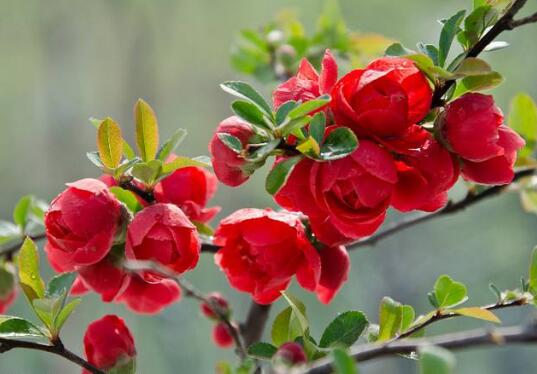
If you want to know what to do when the leaves of Longevity Begonia turn yellow, first we need to understand what causes it, so that we can solve it in a targeted way. Too strong light, too concentrated fertilizer, and so on are all causes of this phenomenon. As for how to solve it, let us take a look below.
2. Causes of yellowing leaves in Longevity Begonia (with solutions)
1. Soil is strongly alkaline
In the northern regions of our country, most soil is alkaline. This kind of soil is relatively lacking in nutrients, its structure is relatively simple, and it is also prone to compaction, which weakens its ability to absorb nutrients, and therefore also causes the leaves of Longevity Begonia to turn yellow.
Solution: If it is a soil problem, during usual care we can occasionally give it a little diluted edible vinegar or lemon water, to change the acidity and alkalinity of the soil. After the soil becomes acidic, the problem of yellowing leaves will also gradually recover.
2. Fertilizer concentration is too high
Fertilizer is one of the main nutrients in the growth process of Longevity Begonia, but fertilizing requires skill. If too much fertilizer is applied or concentrated fertilizer is applied directly, it is very easy to cause the leaves of Longevity Begonia to turn yellow, because Longevity Begonia does not need heavy fertilizer.
Solution: In terms of fertilizing Longevity Begonia, light fertilizer should be applied skillfully, and concentrated fertilizer, heavy fertilizer, and undecomposed liquid fertilizer must be avoided. Before fertilizing, we need to first dilute the fertilizer with clean water, so that it can be absorbed better.
3. Too little watering
In the process of growing Longevity Begonia, if we water too little, the leaves of the plant will droop. Especially when the weather is relatively dry, the humidity of the environment is low, which can easily cause the plant's leaves to turn yellow.
Solution: If the yellowing leaves of Longevity Begonia are caused by too little watering, we should not immediately pour water in heavily. We should proceed step by step. If too much is poured at once, the plant can easily develop root rot. Generally, when the weather is relatively dry, watering once every 2-3 days is enough.
4. Light is too strong
Longevity Begonia is a light-loving plant. If the light in spring and autumn is relatively suitable, we can grow it outdoors and let it receive light all day. However, it is relatively afraid of strong light, so after summer arrives it still needs shading. Otherwise, if the light is too strong, it can easily scorch the plant and cause the phenomenon of yellowing leaves in Longevity Begonia.
Solution: If the problem is caused by too strong light, we should promptly move it indoors to a semi-shaded place for cultivation. After growing it this way for a period, the leaves of the plant will gradually turn green again.
5. Pests and diseases
In the process of growing Longevity Begonia, if it is not grown properly, problems such as pests and diseases can easily appear. Such problems are extremely harmful to the plant. They will not only cause the leaves of Longevity Begonia to turn yellow, but in severe cases will also cause the plant to wither and die.
Solution: If this problem is caused by pests and diseases, we must deal with it promptly. The specific treatment methods are introduced in detail by the editor in the article on pest and disease control for Longevity Begonia, and everyone can take a look.
How to grow Dracaena fragrans: what to do when the leaves turn yellow
The Dracaena fragrans plant is upright and elegant, full of tropical flavor, and is a world-famous new-generation indoor foliage plant. Dracaena fragrans is also called fragrant dracaena, and is an evergreen tree of the genus Dracaena in the Liliaceae family. Its plant can reach more than 8 m tall, while potted cultivation reaches 20-150 cm. It likes semi-shade and sufficient fertilizer. Today, everyone, come with the editor and take a look at the introduction to the cultivation methods of Dracaena fragrans and what to do when its leaves turn yellow.
Introduction to Dracaena fragrans
The scientific name of Dracaena fragrans is fragrant dracaena, with aliases Dracaena fragrans, Brazilian thousand-year tree, and golden-edged fragrant dragon tree. It is an evergreen tree of the genus Dracaena in the Liliaceae family. The plant is more than 8 m tall, with branches, and leaves clustered at the top of the stem, curved in an arch shape. The leaves are bright green and glossy, the flowers are small and inconspicuous, and the flowers are fragrant. Dracaena fragrans is slightly shade-tolerant and likes high temperatures, but when the temperature is below 13°C, it will enter a dormant period and stop growing. Dracaena fragrans likes loose, well-drained soil. When potting it, it is best to plant it with leaf mold or peat soil.
Cultivation methods of Dracaena fragrans: propagation method
The propagation method of Dracaena fragrans can use cuttings propagation. When carrying out cuttings propagation, first cut off branches with relatively poor plant shape to use as cutting material, and cut them into 5-10 cm sections, then insert them upright or flat on a cutting bed with coarse sand or vermiculite as the medium. As long as the temperature is suitable, Dracaena fragrans can grow all year round.
Cultivation methods of Dracaena fragrans: light and temperature
The best growth temperature for Dracaena fragrans is 20-28°C. If the temperature is below 13°C, it will enter a dormant state and stop growing. If the temperature is too low, yellow-brown spots will appear on its leaf tips and leaf margins, and in severe cases the tender branches or the whole plant will be damaged by freezing. Therefore, when growing it, in winter it should be placed indoors and placed in a place with light.
Cultivation methods of Dracaena fragrans: humidity and watering
Dracaena fragrans does not need much water, but its requirement for humidity is relatively high. After potting, be sure to water thoroughly to settle the roots, and place it in a relatively bright place for cultivation. During cultivation, keep its potting soil moist, and often spray water on the leaves of Dracaena fragrans to increase the air humidity of the environment, but the potting soil must not become waterlogged. When growing it in spring, summer, and autumn, water once every 2-3 days, and spray water on its leaf surfaces 1-2 times a day. After late autumn, control the amount of watering, and keeping the potting soil slightly moist is enough. In winter, control watering, and keeping the potting soil half-dry and half-moist is enough.
Cultivation methods of Dracaena fragrans: fertilizing and soil
Dracaena fragrans likes to grow in loose, well-drained, fertile river sand loam rich in humus. Therefore, when growing it, you can use 3 parts garden soil, 2 parts leaf mold, 2 parts peat soil, and 3 parts river sand mixed in proportion for cultivation. If you choose Dracaena fragrans with relatively thick stems for planting, its culture soil can be made by mixing equal amounts of vermiculite, peat soil or garden soil, and river sand. Dracaena fragrans should be repotted once a year. When repotting, replace 1/3 of the old soil, then replace it with new sand and soil, and trim the leaves and the aged, scorched leaves on the lower part of the stem. During its growth period, apply organic fertilizer at its base or edges, then apply liquid fertilizer once every 15-20 days, or compound fertilizer 1 to 2 times, to ensure lush growth of branches and leaves. The fertilizing period is from May to October each year, and fertilizing should stop in winter.
Cultivation methods of Dracaena fragrans: pest control
Dracaena fragrans sometimes develops phenomena such as scorched leaf edges and scorched leaf tips. Generally, this situation is mostly caused by drought, too low temperature, or improper watering. Therefore, at this time, be sure to control temperature and humidity, fertilize reasonably, and provide appropriate ventilation. If Dracaena fragrans is attacked by the sugarcane flat moth, it can be sprayed with 40% omethoate emulsifiable concentrate at 1000 times dilution or 90% trichlorfon at 800 times dilution, once a week, and it can be completely eliminated after 3 consecutive times.
Summary:The above is the editor's introduction to the cultivation methods of Dracaena fragrans and yellowing leaves. After reading the editor's introduction, I believe everyone has a relatively good understanding. Dracaena fragrans has a thick trunk, sword-shaped leaves, and is emerald green and glossy, full of vitality and with an elegant and simple style. It is a new-generation indoor foliage plant. Moreover, the flower language of Dracaena fragrans is firm and unyielding, steadfast, longevity and wealth, and good fortune. It is very suitable for growing at home.
Related recommendations
☑ Partition curtain ☑ How to grow camellia ☑ Paper art ☑ Flower language of peony ☑ How to grow crabapple
☑ Green overlord ☑ How to grow calla lily ☑ Picture frame ☑ Embroidery patterns ☑ How to grow Alocasia macrorrhizos
How to grow the palace lantern Kalanchoe Palace lantern Kalanchoe pictures
❤`•.¸¸.•´´¯`•Related recommendations:
❤ Ash tree price
❤ Scutellaria barbata pictures and effects
❤ Complete collection of Magnolia zenii picture appreciation
❤ When does osmanthus bloom
❤`•.¸¸.•´´¯`•Decorate your small home, enjoy every minute of life! This article comes from Aiyouwo!
..........................................................................................
The palace lantern Kalanchoe has a small flower shape, like little palace lanterns. It is a potted plant with extremely high ornamental value. The palace lantern Kalanchoe has a short plant type, with little palace lanterns hanging on the branches, bright red and very lovable. It is the best decoration when placed at home. So do you know how to grow the palace lantern Kalanchoe beautifully? Below, the editor will introduce to everyone the cultivation methods of the palace lantern Kalanchoe, as well as pictures of the palace lantern Kalanchoe.
The palace lantern Kalanchoe, also known as red lantern and hanging bell Kalanchoe, is a Crassulaceae Kalanchoe, a succulent plant, and a perennial herbaceous plant, with many branches soft and drooping. The flower shape is bell-shaped, the flower color is purplish red or pink, the top of the petals is yellow, the leaves are opposite, and it blooms in spring. Its place of origin is Madagascar in Africa. Because of its extremely high ornamental value, it is now cultivated by people all over the world.
Cultivation methods of the palace lantern Kalanchoe
Watering: The palace lantern Kalanchoe is drought-tolerant and afraid of waterlogging. It grows well in dry air. In spring and autumn, when the potting soil is dry, water once thoroughly, and keeping it moist is enough. Even if the summer temperature is hot, do not water too frequently; watering once a week is fine. If the palace lantern Kalanchoe is placed outdoors, take shelter from rain in time when it rains. If too much water accumulates, it can easily cause root rot or death.
Fertilizing: The palace lantern Kalanchoe likes fertilizer. When it is a seedling, mainly apply liquid fertilizer based on nitrogen, which can promote the growth of stems and leaves. After flowering, apply liquid fertilizer based on nitrogen once more to promote strong growth. Do not fertilize in summer. When fertilizing, be careful not to get fertilizer on the leaves, otherwise the leaves can easily rot. If it is accidentally sprinkled on the leaves, just wipe it off. The flowering period of the palace lantern Kalanchoe is relatively long. During the flowering period, apply a thin nitrogen fertilizer once a month, so that the flowers can be even more beautiful.
Light: The palace lantern Kalanchoe likes an environment with sufficient sunlight, but it cannot be exposed to the sun. It is best to avoid the midday sun in summer, and place it in a sunny place at other times. There must be sufficient sunlight every day for it to grow more robustly. Although the palace lantern Kalanchoe can also grow in a shady place, it is not as lush as when grown in a sunny place, and the flower color will also become lighter, reducing its ornamental value.
Temperature: The most suitable growth temperature for the palace lantern Kalanchoe is around 15°C-25°C. Too high a temperature will reduce the growth rate. In summer and winter, the palace lantern Kalanchoe will basically stop growing. When the temperature is below 0°C, the palace lantern Kalanchoe is prone to freezing to death. Therefore, it is best to let it see more sunlight, but remember that Kalanchoe cannot be exposed to the sun and cannot have water accumulation.
Summary: Seeing this, I believe everyone must have some understanding of the characteristics and cultivation methods of the palace lantern Kalanchoe. Kalanchoe is very suitable for decorating the home, and it is also very good as a gift. To grow a good pot of flowers, what is needed is not only professional cultivation skills, but also the care and patience of flower lovers, so that good flowers with ornamental value can be grown.
▓ Recommended reading
Θ Absorbent towel Θ Wedding jewelry Θ EVA puzzle floor mat Θ What color is winter jasmine Θ Cosmos pictures
Θ Wedding car decoration Θ Colored glaze ornaments Θ Bedroom wallpaper Θ What brand of yoga mat is good Θ Flower language of 33 white roses
Θ Lotus root planting Θ Champagne rose Θ **Tianshan snow lotus Θ How to grow Dracaena fragrans Θ Latest gold jewelry prices
Θ Wedding invitation template Θ Tiger pillow Θ Oil painting appreciation Θ How many lucky bamboo stalks bring wealth Θ Mandarin duck pillow Θ Petunia
Θ Glass vase Θ Wedding arch Θ Flower language of 11 roses Θ When does crabapple bloom Θ Wall stickers Θ Electricity meter box