What to Do When Pomegranate Flowers Have Bugs? Red Chili Peppers and Laundry Detergent for Pest and Disease Control
As an excellent choice for indoor cultivation, pomegranate flowers not only bloom beautifully but also bear delicious fruit, making them deeply loved by flower enthusiasts. However, pomegranate flowers are a flowering shrub species and a favorite of bugs. Although there are fewer pest problems when grown indoors, improper care can still attract bugs. So what should you do when pomegranate flowers have bugs? Below is a carefully selected guide to pomegranate flower pest and disease control. It is very comprehensive, so if you love flowers, you must read it.
I. What to Do When Pomegranate Flowers Have Bugs - Kill Them with Laundry Detergent
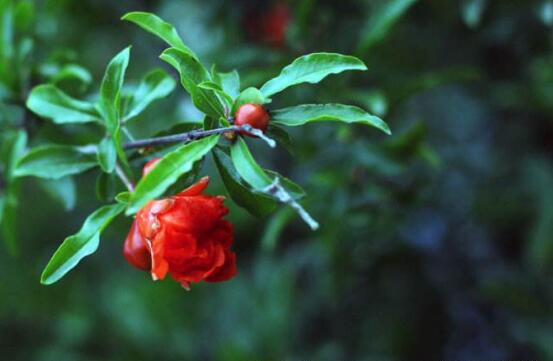
As plants, being troubled by pests and diseases is very normal, and the pests and diseases of pomegranate flowers not only affect the normal growth of pomegranates but also pose a great threat to pomegranate yield and quality. It is understood that when pomegranate flowers are grown indoors, improper care can attract scale insects, aphids, stem window moths, and others. What should you do when pomegranate flowers have bugs? Let me first introduce a simple and effective method.
Solution: Take 2-3 red chili peppers (chopped), 2-3 smoked cigarette butts (broken apart), and about 3 grams of laundry detergent, add water together, stir, and soak for more than 24 hours. Filter out the impurities and spray on the leaf surface once a day for very good results! However, the control methods for different bugs are different, as follows:
1. Scale insects
Scale insects are a common pest in household flower growing, and pomegranate flowers, as an excellent choice for home cultivation, naturally cannot escape them. It is understood that scale insect larvae mainly attach to pomegranate flower leaves or new shoots, sucking sap from branches and leaves and secreting a sticky substance that induces sooty mold, affecting photosynthesis, slowing pomegranate growth, causing leaf drop, and in severe cases possibly leading to flower drop and plant death.
Control method: When a small number of scale insects are found on branches and leaves, they can be wiped off with soapy water. Spray pesticide promptly, once every 7-10 days, for 2-3 consecutive sprays, to control the damage.
2. Stem window moth
The stem window moth, also called the flower window moth, although rarely seen in household cultivation, is also one of the pests of pomegranate flowers. Stem window moth larvae damage new branches and perennial branches, slowing plant growth, affecting flowering and fruiting, and in severe cases causing the entire plant to die.
Control method: During the pomegranate growing season, frequently check the growth condition of the branches. If new branches are found to be growing weakly and with accumulated debris, promptly prune the branches to eliminate the larvae. Spray pesticide promptly. Tools such as discarded syringes can be used to inject a 400-500 times dilution of dichlorvos into the insect tunnels, or spray directly on the branches.
3. Cotton aphid
The cotton aphid is one of the main pests of pomegranate flowers. Its adults and nymphs gather in groups on the host's tender leaves, tender buds, tender stems, flower buds, and flowers, sucking sap from branches and leaves, causing leaves to turn yellow and wilt, and in severe cases causing the entire plant to die.
Control method: Before bringing plants indoors in winter, spray with 5-degree Baume lime sulfur mixture as a preventive measure. When pests appear on the plant, promptly spray 50% pirimicarb emulsifiable concentrate at 1500 times dilution or 25% phosmet emulsifiable concentrate at 800 times dilution, both of which are relatively effective.
II. Diseases of Pomegranate Flowers and Their Control
In addition to pests, diseases also attack pomegranate flowers, which not only affects photosynthesis but also reduces their ornamental and economic value, and can even cause death. The main diseases of pomegranate flowers include anthracnose, black spot, sooty mold, and dry rot. The specific symptoms and methods are as follows:
1. Anthracnose
When pomegranate fruit is infected with anthracnose, the diseased area produces nearly circular dark brown spots. Some fruit edges turn red without obvious sunken areas, but the flesh beneath the spots becomes necrotic, and small black granules appear on the diseased area.
Control method: Choose disease-resistant varieties for planting, which can effectively reduce the incidence of anthracnose from the source. After rain, promptly drain accumulated water from the field to reduce pathogen reproduction. Strengthen pruning and shaping of pomegranate trees, adopt dense planting with a single-trunk system, which can improve field ventilation and light penetration, promote strong tree vigor, early fruiting, and mild disease.
2. Black spot
Black spot is also one of the diseases of pomegranate flowers, and it mainly damages leaves. When leaves are infected, small dark brown spots first appear, which expand into circular or nearly circular lesions. Due to the restriction of leaf veins, a few lesions appear square or polygonal, with a diameter of 2-3 mm, and a few large lesions can reach a diameter of 3-4 mm.
Control method: Generally, before pomegranate buds sprout in the following spring, spray the tree once with a 600-800 times dilution; after flowering and before disease onset, use 80% Dacotec M45 wettable powder at 800 times dilution, or 70% Antracol wettable powder at 800 times dilution and other protective fungicides, spraying once every 2 weeks or so; after disease onset, choose 64% Sandofan, 70% thiophanate-methyl, 3% polyoxin, etc. at 600-800 times dilution, spraying once every 7-10 days for 3-4 consecutive sprays. Also note to spray promptly after rain when the weather clears, rotate medications, and improve efficacy.
3. Sooty mold
Sooty mold mainly damages the leaves and fruit of pomegranate flowers. When leaves or fruit are infected, a black sheet-like mycelial layer that can be wiped off is produced, and a layer of soot adheres to the leaves, affecting photosynthesis. The main cause of this disease is insects feeding on the host and excreting feces and secretions. In addition, poor ventilation and light penetration, high temperature, and retained moisture lead to severe disease.
Control method: When pests such as scale insects and aphids are found causing damage, promptly spray 0.9% abamectin emulsifiable concentrate at 2000 times dilution or 48% chlorpyrifos emulsifiable concentrate at 1000 times dilution. If necessary, spray 65% methyl pyrimethanil wettable powder at 1000 times dilution or 15% imibenconazole wettable powder at 2500 times dilution, etc., once every 10 days or so, for 2-3 consecutive treatments.
4. Dry rot
After pomegranate is infected with dry rot, flowers, fruit, and branches can all be affected, especially young fruit. Generally, bean-sized light brown spots appear around the calyx tube and gradually expand into sunken spots with dark brown centers and light brown edges, until the entire fruit rots, which can cause early fruit drop. Therefore, timely control is especially important.
Control method: In the early stage of disease during the growing season, spray 50% carbendazim wettable powder at 800 times dilution, 70% thiophanate-methyl wettable powder at 800 times dilution, 4.5% beta-cypermethrin at 1500 times dilution, etc. During the dormant period, spray 3-5 Baume lime sulfur mixture or 1% copper sulfate aqueous solution.
That is all for the introduction to pomegranate flower pest and disease control. Overall, pomegranate flowers are easy to grow, but if you do not care for them properly, pests and diseases will still trouble them. After understanding the specific symptoms and control methods, you may also want to look at the cultivation methods and precautions for pomegranate flowers. Follow what is described there, and you can basically avoid pests and diseases.
Common Household Flower Pests and Diseases and Their Control
With the improvement of people's living standards and cultural quality, appreciating and growing flowers has become a fashion. Household flower growing is generally mainly potted flowers. To grow flowers well, you must master care and management knowledge, especially pest and disease control.Common Household Flower Pests and Diseases and Their Control
I.Diseases
1. Powdery mildew
Yellow transparent small spots appear on the leaf surface, then gradually spread to the entire leaf, white powdery spots appear, and later the lesions turn gray. It mainly damages many flowers such as Chinese rose, rose, dahlia, chrysanthemum, peony, cineraria, impatiens, and banksia rose.
2. Anthracnose
Yellow-brown sunken spots appear on the leaves and spread outward into dark brown circular spots, or irregular patches appear on the leaves, with leaf tips drying up and continuously spreading downward. Later, small black dots appear on the lesions, often arranged in concentric rings. When the disease is severe, the leaves wither and die. It mainly damages many flowers such as orchid, rubber tree, Rosa species, cactus species, peony, jasmine, dianthus, and fishtail palm.
3. Black spot
Nearly circular or irregular black lesions appear on affected leaves and gradually expand. In severe cases, the leaves turn yellow, fall off, and may even cause plant death. It mainly damages flowers such as Chinese rose, azalea, camellia, cherry, and elm-leaved spirea.
Common Household Flower Pests and Diseases and Their Control
Control
1. Agricultural control
Strengthen cultivation management, appropriately increase phosphorus and potassium fertilizers to enhance plant disease resistance, and promptly remove diseased and fallen leaves and burn them, clean the environment to reduce transmission vectors, and pay attention to ventilation and light penetration.
2. Chemical control
In the early stage of disease, spray 1:1:100 Bordeaux mixture for protection to prevent disease occurrence and development; in the early stage of disease, spray fungicides including 50% carbendazim, 50% Tuzet, 65% zineb, 75% chlorothalonil, and 50% thiophanate at 500 times dilution, and 50% benomyl at 1000 times dilution.
Common Household Flower Pests and Diseases and Their Control
II.Pests
1. Aphids
Aphids, also known as greasy insects, can occur throughout the year and mainly damage bougainvillea, chrysanthemum, pomegranate, and others. Affected plants have curled leaves, and branches and leaves turn yellow, causing a large number of leaves and flowers to fall off, and in severe cases causing the plant to die quickly.
Aphid control: Use 50 g of red chili peppers, add 30-50 g of water, soak for 24 hours, and spray the filtrate on affected plants for very good control results, or spray 40% dimethoate emulsifiable concentrate at 2000-3000 times dilution, 50% menazon emulsifiable concentrate at 1000-1500 times dilution, or 80% dichlorvos emulsifiable concentrate at 3000 times dilution.
Common Household Flower Pests and Diseases and Their Control
2. Red spider mites
Red spider mites, also called fire dragon bugs, produce multiple generations per year. They mainly damage the leaves and petals of wild elm, Japanese apricot, five-needle pine, and others. The body of the red spider mite is about the size of a needle tip, dark red or purple, and only red dots can be seen with the naked eye. Affected plant leaves lose green color, leaf margins curl upward, and then scorch and fall off, causing early shriveling of flower buds, and in severe cases plant death.
Control method: Use 50 g of citrus peel, add 0.5 kg of water, soak for 24 hours, filter, and spray the plants, or spray dicofol at 1500 times dilution or 40% omethoate at 2000 times dilution for control. When spraying, spray both the front and back of the leaves for better results.
Complete Household Flower Growing Techniques - Step by Step Teaching You "Watering, Fertilizing, Pest and Disease Control"
Complete Household Flower Growing Techniques - Step by Step Teaching You "Watering, Fertilizing, Pest and Disease Control"
Appreciating and growing flowers has now become a fashion, and household flower growing is generally mainly potted flowers. To grow flowers well, you must master care and management knowledge, especially the three key techniques of watering, fertilizing, and pest and disease control. Dadi Ge has compiled a complete household flower growing guide for everyone today. Flower lovers, remember to save it well!!
1. Watering: Choosing Water Quality
Household flower watering mostly uses tap water, but tap water contains the disinfectant bleaching powder, and the chloride ions in it can easily damage the tender root hairs of potted flowers. It must be stored for 1-2 days until the chlorine evaporates and the water temperature approaches the soil temperature before it can be used to water flowers. As for magnetized water, because the natural arrangement of water molecules has been disrupted by the magnetic field, it is similar to the water molecules in plant cells and is easily absorbed and utilized by plants, so potted flowers are best watered with magnetized water.
Watering amount
The principle of watering is "water thoroughly when you water, water thoroughly but do not let it leak," that is, each time water until water seeps out from the saucer under the pot. In addition, it should also be determined according to the size, depth, and material of the flower pot. Small pots are shallow, so water less and more frequently; clay pots have good water permeability and the soil dries easily, so water frequently; stone pots and glazed pots do not easily permeate water, and long-term water accumulation can cause flowers to rot roots.
Different flowering plants have different watering periods. The first is the prefer-wet-not-dry type, referring to flowering plants that will be damaged and die when the potting soil is completely dry. Such plants should be watered sufficiently when the potting soil is slightly dry, such as maidenhair fern and brake fern; the second is the prefer-dry-not-wet type, referring to plants that should be watered after the potting soil dries out, such as cactus and aloe; the third is the alternate-dry-and-wet type, referring to plants that should be watered immediately when the surface of the potting soil is dry about 3 cm, such as Monstera deliciosa and pothos.
Watering varies with the seasons. In early spring when it turns warm, the weather is changeable. At this time, potted flowers begin to sprout and take root and have a large water requirement, so the potting soil should be kept moist; summer is dry and evaporation is fast, so watering should be doubled; in autumn, watering should be appropriately reduced to prevent excessive growth of flowering branches and affect flowering the following year; in winter, most flowering plants are dormant, so keeping the potting soil slightly dry is sufficient.
Complete Household Flower Growing Techniques - Step by Step Teaching You "Watering, Fertilizing, Pest and Disease Control"
Watering time
The daily time for watering flowers differs in spring, summer, autumn, and winter. As the flower proverb says, "Morning water is sweet dew, midday water is arsenic, evening water is a life-saving soup." This means that in spring and autumn, around 10 a.m. and after 4 p.m. are suitable times for watering flowers, while in summer do not water flowers at noon. At the hottest time of midsummer at noon, the difference between potting soil and water temperature is the largest. Watering at this time can easily block the normal physiological activities of the root system, weaken the root system's absorption of water, cause physiological drought, and make branches and leaves wilt. By the same reasoning, in winter it is better to water flowers at noon. In short, "water at noon in spring, morning and evening in summer, every other day in autumn, and check frequently in winter."
Watering methods
Before watering potted flowers, the compacted potting soil must be loosened to facilitate timely absorption of the water applied and prevent it from running off from the pot edge. It is best to use a fine-nozzle watering can to water evenly and thoroughly. For small potted flowers, the immersion method is best for watering, that is, place the flower pot into a larger water basin so that water seeps into the potting soil from the drainage holes, and move it out after the surface of the potting soil is slightly wet. This can prevent the potting soil from compacting due to watering and is beneficial to the root respiration of potted flowers. Generally, shade-loving foliage potted flowers in the special environment of a dry room, plus being covered with dust, often find it difficult to show their bright true colors. In addition to regular watering, leaf-surface spraying should also be adopted by sprinkling water to wash off dust and spraying water to moisten leaves. This method can also lower the temperature and relieve heat for potted flowers at high noon in summer, and help semi-dormant flowers break dormancy and continue to bloom well.
Complete Household Flower Growing Techniques - Step by Step Teaching You "Watering, Fertilizing, Pest and Disease Control"
2. Fertilizing
Fertilizer typesOrganic fertilizers. Organic fertilizers are fertilizers formed from the seeds, organs, residues, or excrement of various plants and animals after processing and decomposition, such as human feces and urine, livestock and poultry manure, oilseed cakes, distiller's grains, and green manure from weeds. Organic fertilizers are slow-release fertilizers with complete nutrients and long-lasting effects, and must be fermented and decomposed before use.
Inorganic fertilizers. Inorganic fertilizers are fertilizers made by chemical synthesis or processing of natural ores, such as urea, superphosphate, and monopotassium phosphate. Inorganic fertilizers have quick effects, but their nutrients are simple and their effects do not last long. The nutrient composition is single, and long-term use alone will cause the potting soil to compact, so it is better to use them together with organic fertilizers.
Complete Household Flower Growing Techniques - Step by Step Teaching You "Watering, Fertilizing, Pest and Disease Control"
Rational fertilization
The principle of fertilization is timely and appropriate amounts. Timely means applying when the flowers need it, such as applying fertilizer when flower leaf color becomes lighter or the plant grows thin and weak. No matter when, the amount should be appropriate. Excessive fertilization will affect the growth and development of flowers. Too much nitrogen fertilizer makes plants prone to leggy growth, with weak stems and leaves, affecting flowering and fruiting, and making them more susceptible to pests and diseases; too much phosphorus fertilizer hinders flower growth and development and affects flowering and fruiting; too much potassium fertilizer makes plants short, with wrinkled brown leaves, and even withered.
Change fertilization according to the growth stage of the flower seedlings. During the seedling stage, growth is rapid, so more nitrogen and potassium fertilizers should be applied to make stems and branches sturdy and the root system well developed; before flowering and at bud formation, apply more phosphorus fertilizer to promote larger, more colorful flowers and plump buds; when color shows and after flowers fade, spraying monopotassium phosphate can prevent flower and bud drop; during the flowering period and early fruit set, control fertilizer and water, otherwise flowers and fruit are prone to drop.
Change fertilizer concentration according to seasonal changes. In winter, temperatures are low, plant growth is slow, and most flowers are in a dormant or semi-dormant state, so generally no fertilization is applied. Spring and autumn are peak growing seasons, so appropriately more supplementary fertilizer should be applied. In summer, temperatures are high, water evaporates quickly, and flowers grow vigorously, so adhere to the principle of light fertilizer applied frequently. Organic fertilizers must be fully decomposed before application. The concentration of chemical fertilizers must not be too high to prevent flowers from being "burned to death."
In different seasons, fertilization times differ. Generally, in summer it is better to fertilize in the evening, and in winter it is better to fertilize around noon. Generally, fertilization can be done on sunny days when the climate is dry or before rain, but not after rain or during consecutive cloudy and rainy days; apply more when the climate is warm and suitable for growth, and do not apply when the climate is hot or cold and plants are semi-dormant or dormant; apply when the potting soil is dry, not when wet; apply more to old potting soil and less to newly replaced potting soil; apply less when base fertilizer is sufficient, and more when there is no base fertilizer or it is insufficient.
Fertilize according to the characteristics of the flowers. For foliage-oriented flowers such as pine, bamboo, and spider plant, nitrogen fertilizer is mainly used, which can promote branch and leaf growth and deep green color. For flowers grown mainly for flowers and fruit, more fertilizer is needed. When growing branches and leaves, apply 1-2 applications of fertilizer mainly based on nitrogen; during the growth stages of flower bud differentiation, flower bud formation, and before flowering, apply fertilizer mainly based on phosphorus, which can make flowers abundant and fruit plentiful. Generally, for diseased or newly transplanted flowers, do not fertilize temporarily; for flowers in the flowering period, it is best not to fertilize, so as not to cause buds and flowers to drop.
Complete Household Flower Growing Techniques - Step by Step Teaching You "Watering, Fertilizing, Pest and Disease Control"
Fertilization methods
Base fertilizer. Base fertilizer application generally adopts 2 methods: first, mix fertilizer with potting soil in a certain ratio (about 1:9) evenly and then use it to cultivate flowers, which can both improve the physical properties of the soil and supply the nutritional needs of flowers throughout the entire growth period. Second, place a small amount of fertilizer at the bottom of the pot when potting, repotting, or changing the soil for flowers, generally not exceeding 1/10 of the potting soil, and cover it with a layer of soil before planting the flowers.
Top dressing. Top dressing generally adopts 2 methods: first, soil application, that is, applying fertilizer directly into the soil. For liquid top dressing, first dilute and spray it into the potting soil; for solid top dressing, it can be evenly scattered on the surface of the potting soil and then covered with a layer of soil. Note that after fertilizing, water should be applied to aid absorption. Second, leaf-surface spraying, also called foliar feeding, which has the advantages of saving fertilizer and taking effect quickly. It is usually used during the vigorous growth period of flowers or when a certain element is lacking. Generally, inorganic fertilizers are prepared at a concentration of 0.1%-0.5% and sprayed in the morning or evening when there is no wind, so that the leaf surface is moist. The most commonly used are urea, monopotassium phosphate, superphosphate, and ferrous sulfate.
Complete Household Flower Growing Techniques - Step by Step Teaching You "Watering, Fertilizing, Pest and Disease Control"
3. Common pest and disease control
Diseases① Powdery mildew. Diagnosis of powdery mildew: yellow transparent small spots appear on the leaf surface, then gradually spread to the entire leaf, white powdery spots appear, and later the lesions turn gray. It mainly damages many flowers such as Chinese rose, rose, dahlia, chrysanthemum, peony, cineraria, impatiens, and banksia rose.
② Anthracnose. Diagnosis of anthracnose: yellow-brown sunken spots appear on the leaves and spread outward into dark brown circular spots, or irregular patches appear on the leaves, with leaf tips drying up and continuously spreading downward. Later, small black dots appear on the lesions, often arranged in concentric rings. When the disease is severe, the leaves wither and die. It mainly damages many flowers such as orchid, rubber tree, Rosa species, cactus species, peony, jasmine, dianthus, and fishtail palm.
③ Black spot. Diagnosis of black spot: nearly circular or irregular black lesions appear on affected leaves and gradually expand. In severe cases, the leaves turn yellow, fall off, and may even cause plant death. It mainly damages flowers such as Chinese rose, azalea, camellia, cherry, and elm-leaved spirea.
Complete Household Flower Growing Techniques - Step by Step Teaching You "Watering, Fertilizing, Pest and Disease Control"
Control methods:
① Agricultural control. Strengthen cultivation management, appropriately increase phosphorus and potassium fertilizers to enhance plant disease resistance, and promptly remove diseased and fallen leaves and burn them, clean the environment, and reduce transmission vectors; pay attention to ventilation and light penetration.
② Chemical control. In the early stage of disease, spray 1:1:100 Bordeaux mixture for protection to prevent disease occurrence and development; in the early stage of disease, spray fungicides including 50% carbendazim, 50% Tuzet, 65% zineb, 75% chlorothalonil, and 50% thiophanate at 500 times dilution, and 50% benomyl at 1000 times dilution.
Pests
① Aphids. Aphids, also known as greasy insects, can occur throughout the year and mainly damage bougainvillea, chrysanthemum, pomegranate, and others. Affected plants have curled leaves, and branches and leaves turn yellow, causing a large number of leaves and flowers to fall off, and in severe cases causing the plant to die quickly.
Control method: Use 50 g of red chili peppers, add 30-50 g of water, soak for 24 hours, and spray the filtrate on affected plants for very good control results, or spray 40% dimethoate emulsifiable concentrate at 2000-3000 times dilution, 50% menazon emulsifiable concentrate at 1000-1500 times dilution, or 80% dichlorvos emulsifiable concentrate at 3000 times dilution.
② Red spider mites. Red spider mites, also called fire dragon bugs, produce multiple generations per year. They mainly damage the leaves and petals of wild elm, Japanese apricot, five-needle pine, and others. The body of the red spider mite is about the size of a needle tip, dark red or purple, and only red dots can be seen with the naked eye. Affected plant leaves lose green color, leaf margins curl upward, and then scorch and fall off, causing early shriveling of flower buds, and in severe cases plant death.
Control method: Use 50 g of citrus peel, add 0.5 kg of water, soak for 24 hours, filter, and spray the plants, or spray dicofol at 1500 times dilution or 40% omethoate at 2000 times dilution for control. When spraying, spray both the front and back of the leaves for better results.