What to do when red spider lily leaves turn yellow? Prevent and control pests and diseases and water appropriately
As a flower full of legends, the red spider lily is very attractive to many flower lovers. However, during the process of growing it, beginners always encounter some problems, such as yellowing leaves. So what should be done when red spider lily leaves turn yellow? First we must find the cause, and then target it accordingly. Below is the pest and disease control for red spider lily carefully compiled by the editor. Let's take a look!
I. What to do when red spider lily leaves turn yellow: find the cause
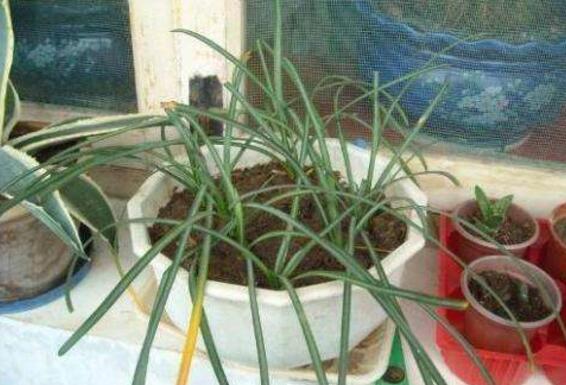
Yellowing of red spider lily leaves mainly shows on newly grown leaves. As for the reason for the yellowing, it is that your care is not in place. In the planting methods for red spider lily, we introduced its requirements for soil, water and so on. If these are too much or too little, the leaves will turn yellow. The specific symptoms and solutions are as follows:
1. Soil on the alkaline side
The red spider lily is a southern flower and likes acidic soil, while water quality in the north tends to be alkaline. At this time, symptoms appear in which the leaves gradually fade, turn yellow and even fall off.
Solution: Water with fermented rice-washing water or rainwater.
2. Improper watering
Overwatering is one of the main causes of yellowing leaves in red spider lily. With too much watering, the soil stays waterlogged and wet for a long time, aeration is poor, and some fibrous roots may even rot, showing dark yellow, lusterless young leaves and shrunken new shoots; with too little watering, although the new leaves keep a normal color, the lower leaves gradually dry, yellow and fall off from the bottom upward as they age.
Solution: (1) If overwatered, take the flowerpot outside to air, or repot and change the soil; (2) if underwatered, just water appropriately.
3. Too much fertilizer
To make the red spider lily grow well, appropriate fertilization is necessary, but once too much fertilizer is applied, the tips of the old leaves will turn yellow and fall off, and although the new leaves are thick and glossy, they generally appear uneven and do not spread out smoothly.
Solution: You can scatter a layer of pak choi or radish seeds, and after they sprout for a few days, pull them out to consume nutrients.
II. Pest and disease control for red spider lily
The causes and solutions for yellowing red spider lily leaves have been introduced above, but besides yellowing leaves, the red spider lily can also get sick. It can be affected by diseases and pests. The specific symptoms and solutions are as follows:
1. Bacterial soft rot
This disease mainly harms the plant's tubers. The pathogen invades through wounds on the surface of the red spider lily, and during expansion it secretes protopectinase, which breaks down the pectin of the middle lamella between host cells, the plant cells decompose, water leaks out, and the affected part appears soft and rotten, sometimes giving off a foul odor.
Solution: In the early stage of the disease, spray with a 2500-fold dilution of 50% benomyl. Control method: before planting, soak in 0.3% copper sulfate solution for 30 minutes, wash with water, dry in the shade and then plant; every half month spray a 500-fold dilution of 50% carbendazim wettable powder for control.
2. Tobacco cutworm
It generally causes serious damage from late spring to November. The larvae harm the leaves, flower buds and fruits of the red spider lily, gnaw the leaf mesophyll, and bore into the flower scapes and seeds, causing the red spider lily to grow weakly and gradually wither and die.
Solution: Use a 2500-fold dilution of 5% fipronil suspension concentrate, or a 1000-fold dilution of methomyl for control.
3. Lycoris noctuid
The larvae of the Lycoris noctuid gnaw the inside of the red spider lily bulb. When damage is found, the leaves have often already been hollowed out, and large amounts of green or brown frass are left at the damaged site.
Control method: Frequently observe the underside of the leaves to see whether there are neatly arranged eggs, and once found, remove them immediately. When turning the soil in early spring, you can dig out overwintering eggs to reduce the occurrence of pest damage.
Solution: When affected, spray with a 1500-fold dilution of chlorpyrifos or an 800-fold dilution of phoxim emulsifiable concentrate. Choose to spray in the morning or evening when the larvae come out to move, and the control effect is relatively good.
Basic knowledge about the red spider lily
In myths and stories, the red spider lily has always been a mysterious plant. The red spider lily blooms for a thousand years and withers for a thousand years, and the flower and leaves never meet. The editor of TheNaturePlanet will take you to learn about this plant!1 Matching the red spider lily with home styles
In the world of flowers, legend says there is a flower that voluntarily entered hell, was sent back by the demons, but still lingered on the road to the underworld. The demons could not bear it, so they agreed to let her bloom on this road, giving guidance and comfort to the souls leaving the human world. The legend refers to the red spider lily, with flowers as brilliantly red as blood. The red spider lily belongs to the amaryllis family (Lycoris Herb), and the genus name is the name of the sea goddess in Greek mythology.When the red spider lily blooms, no leaves can be seen; when there are leaves, no flowers can be seen. Flower and leaf never meet and are forever separated from each other. Therefore there is the saying, "The red spider lily blooms on the other shore; only flowers are seen, no leaves."
For a long time, Chinese decorative styles have mainly advocated solemnity and elegance, emphasizing the beauty of symmetry. In terms of color, red and black are the most important; these two colors make people feel heavy and mature, full of inner meaning. Placing red spider lilies at home has a distinctive flavor.
The legendary red spider lily is a naturally captivating creature, possessing the appearance of a fresh flower yet remaining brilliant in all four seasons. Their leaf edges usually have charming curves, or the leaves have fantastical patterns, and some even change leaf color depending on the light, making them lovable. They are usually paired with European classical-style or warm, soft modern-style interiors, placed in the bedroom, on a desk, on the balcony or in the garden.
The living room is the place in the home with the most functions. Friends gather, relax and take breaks, watch TV and so on all take place here, making it a very important activity space. The living room emphasizes sufficient light, so on the balcony one should try to avoid placing too many dense potted plants that block sunlight. One simple pot of red spider lily decorates the living room, and a bright living room can make the household fortune flourish.
2 Feng shui applications of the red spider lily
The Japanese alias of the red spider lily is "Manjusaka", which comes from<<法华经>the transliteration of the Sanskrit "Mahamanjusaka" in the Lotus Sutra. Its original meaning is a flower from heaven, a large red flower, and it is one of the four flowers of auspicious heavenly omens (Manjusaka, Mahamanjusaka, Mandarava, Mahamandarava). The scriptures say that those who see this flower have their evil removed.It is said that this flower blooms only in the underworld and is the only scenery on the road to the underworld.
Legend says the red spider lily is the tenderness of demons. A flower that voluntarily entered hell, it was sent back by the demons but still lingered on the road to the underworld. The demons could not bear it, so they agreed to let her bloom on this road, giving guidance and comfort to the souls leaving the human world. (This does not conflict with the later passage about Ksitigarbha Bodhisattva in the myth; careful reading will show this, or see the editor's note; please do not delete it.) It is considered the guiding flower growing by the Wangchuan River, the only flower of the underworld. There this flower blooms in great masses, and from a distance it looks like a carpet spread with blood. Because it is red like fire, it is also called the "road lit by fire." It is also the only scenery and color on this long road to the underworld, and people follow the guidance of this flower to the prison of the underworld. Therefore it also means the flower of death.
It is said that the floral fragrance has magic power and can awaken the memories of the dead from before their death. In Buddhist terms, roses are the last flowers to bloom in the flowering season. When the roses have bloomed, the flowering affair is over, leaving only the flower of the other shore that blooms in forgotten past lives. Buddhist scriptures record: "The red spider lily blooms for a thousand years and falls for a thousand years. Flower and leaf will never meet. Love is not caused by karma; fate determines life and death."
3 The role of the red spider lily in the home
The red spider lily is also called "red flower lycoris." When it blooms, it is like a flame, beautiful and elegant, and many people like to grow it. Placing red spider lilies in the living room, balcony and other places at home all has the function of beautifying the environment.Although the red spider lily is highly ornamental, its rhizome is toxic. The bulb contains the alkaloid lycorine poison, which can cause symptoms such as vomiting and spasms. It must not be eaten casually, but it can be used for sedation, inhibiting drug metabolism and anti-cancer effects. Although toxic, the bulb can be eaten after processing and is also used as a medicinal material. "Galanthamine" extracted from the rhizome of lycoris can be used to treat polio. The red spider lily has the effects of dispelling wind and reducing swelling, and of detoxifying and fighting cancer. It is used to treat stomach cancer, esophageal cancer and liver cancer. According to records in traditional Chinese medical texts, the red spider lily bulb is warm in nature, bitter in taste, and toxic; as medicine it has the effects of inducing vomiting, eliminating phlegm, reducing swelling, relieving pain and detoxifying. But if eaten by mistake, it may cause poisoning, with mild cases involving vomiting and diarrhea. According to pharmacological research, the red spider lily has a certain anti-cancer activity and can also fight inflammation, reduce fever, sedate and induce vomiting, and it also has a curative effect on amoebic dysentery.
4 How to grow the red spider lily
The growing method for the red spider lily is very simple. Peel off the small bulbs around the main bulb of the red spider lily for propagation. Trim off the residual roots of the main bulb, and once the wounds are dry, it can be planted. For pot cultivation, choose a large bulb that has grown for 3 years and can bloom (diameter over 7 cm) and plant it in a pot; one bulb per pot is fine. Plant it shallowly so that 1/3 of the bulb sits above the soil surface. After potting, water once, just enough to make the soil slightly moist. Water again after new leaves emerge. Apply liquid fertilizer once every half month. After sprouting between February and March, repot or replace the potting soil. Water sparingly during the summer dormant period, and keep the potting soil often moist in spring and autumn. During the growing season, apply a topdressing of thin cake fertilizer water once every half month. Lycoris likes semi-shade; avoid direct sunlight in summer, maintain it in a semi-shaded place in spring and autumn, strictly control watering during overwintering and stop fertilizing. Common pests include: tobacco cutworm, Lycoris noctuid, thrips and white grubs. Post-bloom handling and pest and disease control: after lycoris blooms, the flower scape should be cut off to reduce nutrient loss.The planting depth of the red spider lily should not be too deep; it is best for the top of the bulb to be just buried at the soil surface. The soil should be well-drained sandy soil or loose potting soil. During the vegetative growth period, it should be watered frequently. From 20 days before flowering until the flowering period, an appropriate amount of water must be supplied to achieve uniform flowering and make the flowers easier to maintain. Keep the soil moist, but do not let water accumulate, to prevent the bulb from rotting.
5 Brief introduction to the red spider lily
The red spider lily is also called "Manjusaka." Its original meaning is a flower from heaven, a large red flower, and it is one of the four flowers of auspicious heavenly omens. The scriptures say that those who see this flower have their evil removed. Its place of origin is the tropical regions of Asia. During the Edo period it was introduced to Japan via China and cultivated as a medicinal herb. Its toxicity is stronger than that of the red spider lily, and in ancient times it was recorded many times as being used as an anesthetic. Datura leaves also have a curative effect on asthma, which was previously of concern on this site. The red spider lily is a perennial herbaceous flower of the amaryllis family. The flower is like a dragon's claw. It has a bulb shaped like an onion head; the leaves are clustered, slender and pointed, shaped like garlic leaves, fleshy, strap-shaped, blue-green with white powder; the flower scape is solitary, with a terminal umbel. At the turn of summer and autumn, the flower stem breaks through the soil, with a terminal umbel bearing 5 to 7 flowers, strangely brilliant red (besides red there are also white, yellow and other varieties), with petals rolled back like a dragon's claw.The name "red spider lily" spread widely in Japan because it blooms during the Japanese solar term "Higan," which is the time when Japanese people visit graves. In legend, it is generally considered the guiding flower growing by the Naihe Bridge. Its floral fragrance has magic power and can awaken the memories of the dead from before their death. The scientific name of the red spider lily is "red flower lycoris." It is a plant of the genus Lycoris in the amaryllis family, order Liliales, class Monocotyledoneae. Besides red, the red spider lily also has white, yellow and other varieties. The red spider lily blooms first and then grows leaves; in winter the leaves do not fall, and in summer the leaves fall and it goes dormant. Because the flower and leaves cannot meet, the red spider lily is also called the "heartless and unrighteous" flower.
Feng shui role of the red spider lily
When the red spider lily blooms, it is like a flame, beautiful and elegant, and many people like to grow it. Below we will explain the basic knowledge of the red spider lily.
Red spider lily effect picture
1 Matching the red spider lily with home stylesIn the world of flowers, legend says there is a flower that voluntarily entered hell, was sent back by the demons, but still lingered on the road to the underworld. The demons could not bear it, so they agreed to let her bloom on this road, giving guidance and comfort to the souls leaving the human world. The legend refers to the red spider lily, with flowers as brilliantly red as blood. The red spider lily belongs to the amaryllis family (Lycoris Herb), and the genus name is the name of the sea goddess in Greek mythology.
When the red spider lily blooms, no leaves can be seen; when there are leaves, no flowers can be seen. Flower and leaf never meet and are forever separated from each other. Therefore there is the saying, "The red spider lily blooms on the other shore; only flowers are seen, no leaves."
For a long time, Chinese decorative styles have mainly advocated solemnity and elegance, emphasizing the beauty of symmetry. In terms of color, red and black are the most important; these two colors make people feel heavy and mature, full of inner meaning. Placing red spider lilies at home has a distinctive flavor.
The legendary red spider lily is a naturally captivating creature, possessing the appearance of a fresh flower yet remaining brilliant in all four seasons. Their leaf edges usually have charming curves, or the leaves have fantastical patterns, and some even change leaf color depending on the light, making them lovable. They are usually paired with European classical-style or warm, soft modern-style interiors, placed in the bedroom, on a desk, on the balcony or in the garden.
The living room is the place in the home with the most functions. Friends gather, relax and take breaks, watch TV and so on all take place here, making it a very important activity space. The living room emphasizes sufficient light, so on the balcony one should try to avoid placing too many dense potted plants that block sunlight. One simple pot of red spider lily decorates the living room, and a bright living room can make the household fortune flourish.
2 Feng shui applications of the red spider lily
The Japanese alias of the red spider lily is "Manjusaka," which comes from the transliteration of the Sanskrit "Mahamanjusaka" in the Lotus Sutra. Its original meaning is a flower from heaven, a large red flower, and it is one of the four flowers of auspicious heavenly omens (Manjusaka, Mahamanjusaka, Mandarava, Mahamandarava). The scriptures say that those who see this flower have their evil removed.
It is said that this flower blooms only in the underworld and is the only scenery on the road to the underworld.
Legend says the red spider lily is the tenderness of demons. A flower that voluntarily entered hell, it was sent back by the demons but still lingered on the road to the underworld. The demons could not bear it, so they agreed to let her bloom on this road, giving guidance and comfort to the souls leaving the human world. (This does not conflict with the later passage about Ksitigarbha Bodhisattva in the myth; careful reading will show this, or see the editor's note; please do not delete it.) It is considered the guiding flower growing by the Wangchuan River, the only flower of the underworld. There this flower blooms in great masses, and from a distance it looks like a carpet spread with blood. Because it is red like fire, it is also called the "road lit by fire." It is also the only scenery and color on this long road to the underworld, and people follow the guidance of this flower to the prison of the underworld. Therefore it also means the flower of death.
It is said that the floral fragrance has magic power and can awaken the memories of the dead from before their death. In Buddhist terms, roses are the last flowers to bloom in the flowering season. When the roses have bloomed, the flowering affair is over, leaving only the flower of the other shore that blooms in forgotten past lives. Buddhist scriptures record: "The red spider lily blooms for a thousand years and falls for a thousand years. Flower and leaf will never meet. Love is not caused by karma; fate determines life and death."
3 The role of the red spider lily in the home
The red spider lily is also called "red flower lycoris." When it blooms, it is like a flame, beautiful and elegant, and many people like to grow it. Placing red spider lilies in the living room, balcony and other places at home all has the function of beautifying the environment.
Although the red spider lily is highly ornamental, its rhizome is toxic. The bulb contains the alkaloid lycorine poison, which can cause symptoms such as vomiting and spasms. It must not be eaten casually, but it can be used for sedation, inhibiting drug metabolism and anti-cancer effects. Although toxic, the bulb can be eaten after processing and is also used as a medicinal material. "Galanthamine" extracted from the rhizome of lycoris can be used to treat polio. The red spider lily has the effects of dispelling wind and reducing swelling, and of detoxifying and fighting cancer. It is used to treat stomach cancer, esophageal cancer and liver cancer. According to records in traditional Chinese medical texts, the red spider lily bulb is warm in nature, bitter in taste, and toxic; as medicine it has the effects of inducing vomiting, eliminating phlegm, reducing swelling, relieving pain and detoxifying. But if eaten by mistake, it may cause poisoning, with mild cases involving vomiting and diarrhea. According to pharmacological research, the red spider lily has a certain anti-cancer activity and can also fight inflammation, reduce fever, sedate and induce vomiting, and it also has a curative effect on amoebic dysentery.
4 How to grow the red spider lily
The growing method for the red spider lily is very simple. Peel off the small bulbs around the main bulb of the red spider lily for propagation. Trim off the residual roots of the main bulb, and once the wounds are dry, it can be planted. For pot cultivation, choose a large bulb that has grown for 3 years and can bloom (diameter over 7 cm) and plant it in a pot; one bulb per pot is fine. Plant it shallowly so that 1/3 of the bulb sits above the soil surface. After potting, water once, just enough to make the soil slightly moist. Water again after new leaves emerge. Apply liquid fertilizer once every half month. After sprouting between February and March, repot or replace the potting soil. Water sparingly during the summer dormant period, and keep the potting soil often moist in spring and autumn. During the growing season, apply a topdressing of thin cake fertilizer water once every half month. Lycoris likes semi-shade; avoid direct sunlight in summer, maintain it in a semi-shaded place in spring and autumn, strictly control watering during overwintering and stop fertilizing. Common pests include: tobacco cutworm, Lycoris noctuid, thrips and white grubs. Post-bloom handling and pest and disease control: after lycoris blooms, the flower scape should be cut off to reduce nutrient loss.
Red spider lily effect picture
The planting depth of the red spider lily should not be too deep; it is best for the top of the bulb to be just buried at the soil surface. The soil should be well-drained sandy soil or loose potting soil. During the vegetative growth period, it should be watered frequently. From 20 days before flowering until the flowering period, an appropriate amount of water must be supplied to achieve uniform flowering and make the flowers easier to maintain. Keep the soil moist, but do not let water accumulate, to prevent the bulb from rotting.5 Brief introduction to the red spider lily
The red spider lily is also called "Manjusaka." Its original meaning is a flower from heaven, a large red flower, and it is one of the four flowers of auspicious heavenly omens. The scriptures say that those who see this flower have their evil removed. Its place of origin is the tropical regions of Asia. During the Edo period it was introduced to Japan via China and cultivated as a medicinal herb. Its toxicity is stronger than that of the red spider lily, and in ancient times it was recorded many times as being used as an anesthetic. Datura leaves also have a curative effect on asthma, which was previously of concern on this site. The red spider lily is a perennial herbaceous flower of the amaryllis family. The flower is like a dragon's claw. It has a bulb shaped like an onion head; the leaves are clustered, slender and pointed, shaped like garlic leaves, fleshy, strap-shaped, blue-green with white powder; the flower scape is solitary, with a terminal umbel. At the turn of summer and autumn, the flower stem breaks through the soil, with a terminal umbel bearing 5 to 7 flowers, strangely brilliant red (besides red there are also white, yellow and other varieties), with petals rolled back like a dragon's claw.
The name "red spider lily" spread widely in Japan because it blooms during the Japanese solar term "Higan," which is the time when Japanese people visit graves. In legend, it is generally considered the guiding flower growing by the Naihe Bridge. Its floral fragrance has magic power and can awaken the memories of the dead from before their death. The scientific name of the red spider lily is "red flower lycoris." It is a plant of the genus Lycoris in the amaryllis family, order Liliales, class Monocotyledoneae. Besides red, the red spider lily also has white, yellow and other varieties. The red spider lily blooms first and then grows leaves; in winter the leaves do not fall, and in summer the leaves fall and it goes dormant. Because the flower and leaves cannot meet, the red spider lily is also called the "heartless and unrighteous" flower.