How to get rid of insects on night-blooming jasmine? For pest and disease control, dichlorvos can be used to kill them
Night-blooming jasmine (Cestrum nocturnum), a flower that blooms at night and is deeply loved by people, is grown in the homes of many flower enthusiasts. However, problems inevitably arise during cultivation, such as insect infestations. So how do you get rid of insects on night-blooming jasmine? Diseases and pests are the main factors threatening the growth of night-blooming jasmine. Below is a carefully compiled guide to pest and disease control for night-blooming jasmine that every flower lover must know~
I. How to get rid of insects on night-blooming jasmine
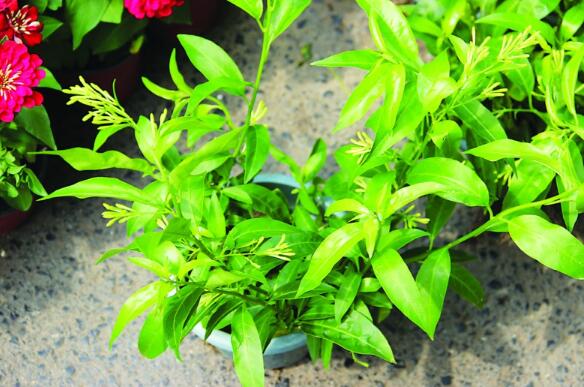
In the cultivation methods for night-blooming jasmine, we have learned that it has high requirements for soil, water, and light. Once care is improper, it will become diseased. There are mainly two types of diseases affecting night-blooming jasmine: diseases and pest infestations, and the control methods differ. How to get rid of insects on night-blooming jasmine? The specific methods are as follows:
(1) Pests of night-blooming jasmine
How to get rid of insects on night-blooming jasmine? At this point we should not panic, but instead identify what pest it is and then address it accordingly. It is known that the main pests of night-blooming jasmine include scale insects, aphids, mites, and whiteflies. The specific symptoms and solutions are as follows:
① Scale insects
Scale insects are the most common pests on night-blooming jasmine. They often cluster on branches, leaves, and fruit, feeding on plant sap. In severe cases, they can cause branches to wither or the entire plant to die. In addition, the secretions of scale insects can induce sooty mold, making them extremely harmful.
Solution: Scale insects are relatively small, often gather together, and secrete a waxy substance that looks like a pile of white wax powder. Simply use a wooden stick to pick them off and crush them. Alternatively, spray with an 80% dichlorvos 1000-times solution. Uranus, cypermethrin, and kuaishaling can also be used for control.
② Aphids
Aphids, commonly known as greenflies, are very small, about 1 mm, dark green, and winged. They reproduce rapidly and mainly attack the leaves, stems, and tender buds at the top of night-blooming jasmine. Since the terminal buds of night-blooming jasmine are the most tender, aphids love to gather there in groups. The terminal buds are small and tender, making them difficult to handle by hand, which is a headache and a very tricky problem.
Solution: Spray with omethoate at a 1:150 dilution. Omethoate is a systemic broad-spectrum insecticide that can be absorbed by the plant's stems and leaves and transported to parts not sprayed with the solution, causing the pests feeding there to be poisoned and die. One to two applications can cure the problem. When there are large numbers of aphids, it is recommended to slowly drench the soil with this solution once to eliminate future problems.
③ Mites
Mites are arachnid pests and one of the important pests harming night-blooming jasmine. In China, they are mainly distributed in South China, Central China, Northeast China, North China, and other widespread regions. Solution: Spray with 25% anti-mite emulsifiable concentrate at 800-times dilution, 73% propargite at 2000-times dilution, or similar chemicals.
④ Whiteflies
Among the pests of night-blooming jasmine, whiteflies cannot be overlooked. They are a type of tiny phytophagous piercing-sucking insect that mainly harms host plants by nymphs and adults piercing and sucking plant sap. Solution: Use 23% anti-mite emulsifiable concentrate at 800-times dilution, 73% propargite at 2000-times dilution, etc.
(2) Diseases of night-blooming jasmine and their control
The pests harming night-blooming jasmine are mainly the several types above, while the main diseases are fusarium wilt, sooty mold, and ring rot. The specific symptoms and solutions are as follows:
① Fusarium wilt
A plant disease caused by fungi or bacteria, with sudden onset. Symptoms include severe spotting, wilting, or death of leaves, flowers, fruit, stems, or the entire plant. Rapidly growing tender tissues are often attacked. Most major economic crops are infected by one or more blight diseases. Blight can affect flowers, leaves, buds, seedlings, twigs, stems (vines), and growing tips.
Solution: Spray with kuwelilike at 600-800 times dilution, 50% carbendazim at 600 times dilution, etc. Also promptly remove and burn diseased branches, and spread quicklime on the soil around diseased plants to kill insects and sterilize.
② Sooty mold and ring rot
Sooty mold mainly refers to harmful components in coal. Having a lot of coal at home will harm the growth of night-blooming jasmine. Ring rot is characterized by lesions during development, with the leaf vein area appearing reddish-brown, surrounded by dark green to yellow-green, and the interior being brown or dark brown. Small leaves have fewer lesions, which soon become ring-shaped, forming many small black dots.
Solution: For sooty mold and ring rot, spray with 50% thiophanate-methyl wettable powder at 500 times dilution.
Pest and disease control for night-blooming jasmine
Sooty moldand ring rotcommonly occur, and can be treated by spraying with 50% thiophanate-methyl wettable powder at 500 times dilution. Pests include scale insects and whiteflies, which can be killed by spraying with 50% fenitrothion emulsifiable concentrate at 1000 times dilution.
Cultivation and pest/disease control of night-blooming jasmine
Night-blooming jasmine, also known as night jessamine, is native to tropical America. It prefers warm, humid, sunny, and well-ventilated environments. It is highly adaptable but not cold-tolerant, requiring fertile, loose, and slightly acidic soil. Winter temperatures should not fall below 5 degrees.
Propagation: Commonly propagated by cuttings, division, and seeding. For cuttings, spring and autumn are best. Cut mature branches 10-12 cm long and insert them into a sand bed; roots form in about 30 days. For division, it can be done in spring when repotting. For seeding, sow in May, and germination occurs 2 weeks after sowing.
Cultivation: Water promptly during the growing season and fertilize once every half month. After flowering, prune dead branches and overly dense branches, and shorten leggy growth. In winter, plants in the Nanjing area should be moved indoors for care.
Pests and diseases: Sooty mold and ring rot commonly occur, and can be treated by spraying with 50% thiophanate-methyl wettable powder at 500 times dilution. Pests include scale insects and whiteflies, which can be killed by spraying with 50% fenitrothion emulsifiable concentrate at 1000 times dilution.
Uses: The night-blooming jasmine has slender branches and blooms in summer and autumn. Its yellow-green flowers open in the evening, releasing bursts of rich, striking fragrance. In the south, it is often used to decorate courtyards, windowsides, pond edges, and pavilions.