What to do when the leaves of the night-blooming jasmine turn yellow? Master these 5 points, watering and light are the key
Night-blooming jasmine (Cestrum nocturnum), a common indoor flowering plant, blooms at night with a rich fragrance and looks absolutely beautiful. However, during cultivation, flower lovers often run into some problems, such as yellowing leaves. So what should you do when the leaves of the night-blooming jasmine turn yellow? First we need to stay calm, then carefully check the cause, and then simply solve it. Below are the causes and solutions for yellowing night-blooming jasmine leaves compiled by the editor, come in and take a look!
1. What to do when the leaves of the night-blooming jasmine turn yellow, find the cause
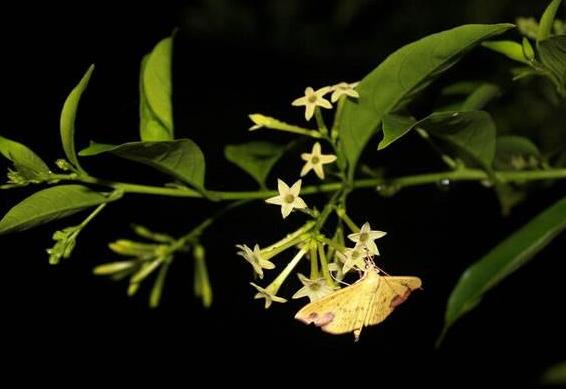
In the cultivation methods for night-blooming jasmine, we know that it has corresponding requirements for soil, water, light, etc. Once these requirements are not met, the leaves of the night-blooming jasmine may turn yellow. So what to do when the leaves of the night-blooming jasmine turn yellow, we find the cause of the yellowing through analysis, and then solve it accordingly. The specific symptoms and solutions are as follows:
1. Long-term failure to repot or change the soil
There are many reasons for the leaves of the night-blooming jasmine turning yellow, but first we should consider the potting soil. If the night-blooming jasmine you bought has not been repotted or had its soil changed for a long time, its branches and leaves will grow thin and weak, the leaves will become thin and then turn yellow.
Solution: It needs to be repotted, changed into new loose and fertile potting soil, and gradually given more dilute decomposed liquid fertilizer or compound flower fertilizer.
2. Too much or too little watering
The young leaves at the top of the night-blooming jasmine are pale yellow, the old leaves also gradually turn yellow, and the new shoots shrink. This is because too much watering, rain, or excessive watering causes the pot to be too wet, the soil to lack oxygen, and the fibrous roots to rot; the color of the top leaves of the night-blooming jasmine is normal, but the lower leaves gradually dry, turn yellow and fall off from the bottom up. This is generally because the pot soil is too full, so water cannot penetrate thoroughly for a long time, causing the lower leaves and branches to age.
Solution: ① Too much watering: take the plant out of the pot, place it in a ventilated and cool place to let the soil ball dry by itself, then put it back in the pot, or loosen the soil frequently and control watering; ② Too little watering: water appropriately and just keep the soil moist.
3. Insufficient or excessive light
Insufficient light or exposure to strong sun is also one of the reasons for the leaves of the night-blooming jasmine turning yellow. If the night-blooming jasmine is placed indoors in a spot without sunlight for a long time, the leaves easily turn yellow, because the leaves cannot get enough sunlight and cannot form chlorophyll, so the whole plant's leaves turn yellow and then fall off; if it is placed directly under the strong sun, it easily causes the leaf tips and leaf margins of the night-blooming jasmine to dry up, and yellow spots appear on the sun-facing parts of the leaves.
Solution: ① Insufficient light: supplementing light can avoid this problem; ② Strong sun exposure: just move it to a shaded place.
4. Yellowing leaves caused by lack of fertilizer
Improper fertilizing is also one of the main reasons for the leaves of the night-blooming jasmine turning yellow. The leaves of the night-blooming jasmine are thin, tender and yellow, generally due to the plant being large while the pot is small, resulting in insufficient fertilizer. When the night-blooming jasmine shows uneven and unopened leaves, thick new leaves, and yellowing old leaves, it is mostly caused by too much fertilizer.
Solution: ① Lack of fertilizer: gradually increase fertilizer and water, but be careful not to make it too concentrated. Potted flowers should be repotted once every one to two years, and tree bonsai once every 2 to 4 years. When repotting, add a small amount of base fertilizer at the bottom of the pot and replace part of the soil with new soil; ② Too much fertilizer: water frequently, stop fertilizing, and you can sow some rapeseeds or other seeds in the pot, then pull them out after they sprout, so as to consume the fertility in the pot.
5. Yellowing leaves caused by pests and diseases
Besides the several reasons above for the leaves of the night-blooming jasmine turning yellow, a kalanchoe affected by pests and diseases can also cause yellow leaves and leaf drop. But if a small number of leaves at the lower part of the plant turn yellow and fall off in winter, this is normal metabolism.
Solution: Find out specifically which pest or disease is affecting it, and then solve it accordingly. As for the pest and disease control of the night-blooming jasmine, it has been introduced in detail earlier, so I will not say more here.
What to do when the leaves of the night-blooming jasmine turn yellow, and what are the causes of the leaves of the night-blooming jasmine turning yellow
The night-blooming jasmine flower is fragrant, especially stronger at night, and is often cultivated for ornamental purposes. However, during planting, the leaves of the night-blooming jasmine often turn yellow. So what to do when the leaves of the night-blooming jasmine turn yellow? What are the causes of the leaves of the night-blooming jasmine turning yellow?
Yellowing caused by too much watering:
The young leaves at the top of the night-blooming jasmine are pale yellow, the old leaves also gradually turn yellow, and the new shoots shrink. This is because too much watering, rain, or excessive watering causes the pot to be too wet, the soil to lack oxygen, and the fibrous roots to rot. The correct approach is to loosen the soil frequently and control watering.
Yellowing of leaves caused by lack of water:
The color of the top leaves of the night-blooming jasmine is normal, but the lower leaves gradually dry, turn yellow and fall off from the bottom up. This is generally because the pot soil is too full, so water cannot penetrate thoroughly for a long time, causing the lower leaves and branches to age. You should properly remove excess potting soil, water appropriately, and keep the soil moist.
Yellowing of leaves caused by lack of fertilizer:
The leaves of the night-blooming jasmine are thin, tender and yellow, generally due to the plant being large while the pot is small, or the soil not being changed for a long time, resulting in insufficient fertilizer. You should gradually increase fertilizer and water, but be careful not to make it too concentrated. Potted flowers should be repotted once every one to two years, and tree bonsai once every 2 to 4 years. When repotting, add a small amount of base fertilizer at the bottom of the pot and replace part of the soil with new soil.
Yellowing of leaves caused by fertilizer damage:
When the night-blooming jasmine shows uneven and unopened leaves, thick new leaves, and yellowing old leaves, it is mostly caused by too much fertilizer. You should water frequently, stop fertilizing, and you can sow some rapeseeds or other seeds in the pot, then pull them out after they sprout, so as to consume the fertility in the pot.
Yellowing of leaves caused by pests and diseases:
Yellow spots appear on the night-blooming jasmine due to scale insect damage. Rough, dry and yellow leaves are due to red spider mite damage, and can be sprayed with a 1,000-fold dilution of 70% trichlorfon or 40% dimethoate diluted 2,000 times with water. Leaf yellowing caused by a virus will quickly spread across a whole area, so the affected leaves should be picked off and burned in time, and then carbendazim or Bordeaux mixture should be sprayed for control. Do not spray too much pesticide, otherwise pesticide damage will also occur.
Yellowing caused by insufficient light:
If the night-blooming jasmine is placed indoors in a spot without sunlight for a long time, the leaves easily turn yellow. Some other sun-loving plants such as jasmine and white magnolia will also have yellow leaves if there is insufficient light. On the contrary, some plants that prefer a cool environment, such as Chinese evergreen, fuchsia, and pearl orchid, will also have yellow leaves and leaf drop if exposed to high temperatures and strong sun with improper shading.
What to do when the leaves of the night-blooming jasmine turn yellow? Causes of the leaves of the night-blooming jasmine turning yellow
Recently, many people have asked about the leaves of the night-blooming jasmine turning yellow and do not know what to do. Next we will carry out an analysis and solutions for the leaves of the night-blooming jasmine turning yellow.
1. Yellowing from too much water
The young leaves at the top of the plant are pale yellow, the old leaves also gradually turn yellow, and the new shoots shrink. This is because too much watering, rain, or excessive watering causes the pot to be too wet, the soil to lack oxygen, and the fibrous roots to rot. The correct approach is to loosen the soil frequently and control watering.
2. Yellowing from lack of water
The color of the top leaves of the potted flower is normal, but the lower leaves gradually dry, turn yellow and fall off from the bottom up. This is generally because the pot soil is too full, so water cannot penetrate thoroughly for a long time, causing the lower leaves and branches to age. You should properly remove excess potting soil, water appropriately, and keep the soil moist.
3. Yellowing from lack of fertilizer
The leaves of the plant are thin, tender and yellow, generally due to the plant being large while the pot is small, or the soil not being changed for a long time, resulting in insufficient fertilizer. You should gradually increase fertilizer and water, but be careful not to make it too concentrated. Potted flowers should be repotted once every one to two years. Tree bonsai should be repotted once every 2 to 4 years. When repotting, add a small amount of base fertilizer at the bottom of the pot and replace part of the soil with new soil.
4. Yellowing from fertilizer damage
The leaves appear uneven and unopened, the new leaves are thick, and the old leaves turn yellow, which is mostly caused by too much fertilizer. You should water frequently, stop fertilizing, and you can sow some rapeseeds or other seeds in the pot, then pull them out after they sprout, so as to consume the fertility in the pot.
5. Yellowing from alkaline soil
For acid-loving flowering plants such as camellia, azalea, orchid, white magnolia, and gardenia, the leaves gradually turn yellow because the soil is too alkaline. You can water them with water soaked in grass, or apply ferrous sulfate, and the leaves will turn green again before long.
6. Yellowing from pests and diseases
Yellow spots appear on the leaves due to scale insect damage; rough, dry and yellow leaves are due to red spider mite damage, and can be sprayed with a 1,000-fold dilution of 70% trichlorfon or 40% dimethoate diluted 2,000 times with water; leaf yellowing caused by a virus will quickly spread across a whole area, so the affected leaves should be picked off and burned in time, and then carbendazim or Bordeaux mixture should be sprayed for control. Do not spray too much pesticide, otherwise pesticide damage will also occur.
7. Yellowing from insufficient light
If the flowerpot is placed indoors in a spot without sunlight for a long time, the leaves easily turn yellow. Sun-loving plants such as jasmine and white magnolia will have yellow leaves if there is insufficient light. On the contrary, some plants that prefer a cool environment, such as Chinese evergreen, fuchsia, and pearl orchid, will also have yellow leaves and leaf drop if exposed to high temperatures and strong sun with improper shading.
From the above introduction, we should know that there are many reasons for the leaves of the night-blooming jasmine turning yellow, and the characteristics of the yellowing also differ, so we should analyze according to the specific situation, and then make a judgment and handle it after comparing.