What to Do If Your Pothos Has Pests? Three Tricks to Teach You Pest and Disease Control for Pothos
Pothos is one of the most common green plants in the home, and because it is easy to grow and attractive, it is deeply loved by people. Earlier we introduced the benefits and effects of pothos, as well as how to grow it and the points to note, and now let's look at pest and disease control for pothos. With any plant, if you do not control pests and diseases, it is very likely to cause the plant to die.
Pest and Disease Control for Pothos
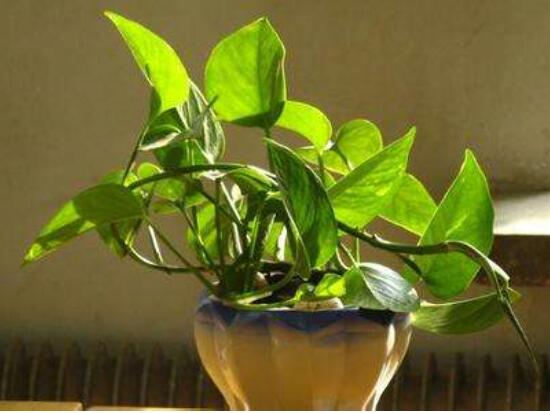
Pothos is a very easy-to-grow green plant, but if you do not pay attention to pothos pruning methods and pest and disease control, it can also very likely cause the pothos to die. Pest and disease control for pothos involves many kinds of symptoms, and different symptoms call for different control methods. The editor has put together the following points:
1. Anthracnose
Symptoms: When anthracnose occurs, it mainly affects the middle section of the leaves, and even the flowers, but pothos does not bloom! Reddish-brown or dark brown spots appear on the leaves, and as the disease worsens, the spots gradually expand and develop ring-like patterns. The same plant can be infected repeatedly.
Control methods for pothos anthracnose: Wash the leaves, using a water spray to clean the leaves, and normally give them more sunlight. Spray with chemicals: once anthracnose infects the plant, it can only be held back with chemicals. You can choose carbendazim, thiophanate, or anthracnose-specific fungicide, dilute the solution and spray, once every 1-2 days, and improvement can be seen after 3-4 applications.
2. Leaf Spot Disease
Symptoms: Leaf spot disease mainly harms the leaves, and many small brown spots appear on the leaves. It is similar to the symptoms of anthracnose, but the spots spread across the entire leaf. Leaf spot disease is very common, and many people have encountered this situation.
Control methods for leaf spot disease: Remove diseased leaves promptly, pay attention to ventilation, and provide sufficient sunlight. Spray with chemicals: use a 500-fold dilution of amobam and spray to control.
3. Root Rot
Symptoms: As the name suggests, root rot mainly harms the roots and causes them to rot. In severe cases, it causes the leaves to turn yellow and wither, and the whole plant to die.
Control methods for root rot: During the onset period, spray 50% carbendazim, or directly use the solution to drench the roots. In severe cases, directly change the soil: pull out the pothos, remove the rotted parts of the roots, and replant. The above is the pest and disease control for pothos brought to you. After reading this, hurry home and save your pothos.
What to Do If Your Aspidistra Has Pests: Pest and Disease Control for Aspidistra / Five Tricks to Avoid Yellowing and Early Leaf Drop
Although Aspidistra is very resistant to pests and diseases and is itself extremely adaptable, if you do not understand the correct way to grow Aspidistra, it can still be troubled by many pests and diseases. What should you do if Aspidistra has pests? Let's take a look at pest and disease control methods for Aspidistra.
What to Do If Your Aspidistra Has Pests
1. Whiteflies
Occurrence pattern: They usually occur in spring and summer. The optimal development temperature for whiteflies is 26-28 degrees. Their adults and nymphs suck the sap from Aspidistra leaves, causing the leaves to shrink and drop early, and they can even induce sooty mold, causing the plant to become weak and die.
[Control methods]: (1) Adjust the planting period, fertilizer amount, and so on, to improve the environment around the Aspidistra and keep it cleaner and tidier; (2) Spray with a solution made by diluting 40% omethoate into a 1000-fold solution; (3) Protect the natural enemies of whiteflies, such as hemipteran insects and predatory mites.
2. Aphids
They appear on the young leaves or new shoots of Aspidistra, causing the leaves to become greasy, the leaf color to turn pale yellow, and black or yellow spots to be left on the leaves, making the leaves turn yellow and fall off. They are one of the most common pests in Aspidistra pest and disease control.
[Control methods]: (1) Sprinkle plant ash on the plant, or use a brush to brush the aphids off; (2) Spray with a solution made by diluting 40% phosmet into a 1000-fold solution, generally once every 7-10 days, and about 3 times is usually enough to eliminate most of the aphids.
Pest and Disease Control for Aspidistra
1. Sooty Mold
Small black mold spots appear on the leaf surface and branch tips of Aspidistra, after which the young tips become covered with a black mold layer. There are many types of sooty mold, so the symptoms differ slightly, but the main feature is generally a black mold layer.
[Control methods]: (1) One cause of sooty mold is that the plants are planted too densely and the ventilation in the environment is poor, so when preventing it, timely pruning should be done. For detailed methods, refer to the detailed introduction in how to prune Aspidistra; (2) When the disease occurs, spray with a 1000-fold solution of 40% omethoate or a 1500-fold solution of 80% dichlorvos.
2. Leaf Blight
The old leaves of Aspidistra turn yellow and develop brown diseased spots. The spots begin to extend toward the base of the leaf, and finally the leaf turns grayish brown, while small black spots also appear on the underside of the leaf.
[Control methods]: (1) Add more organic fertilizer, such as phosphorus fertilizer and potassium fertilizer, and improve the ventilation of the environment; (2) Spray with a solution made by diluting 70% zineb into a 600-fold solution.
3. Gray Mold
The affected leaves soften and rot, and white water-soaked patterns appear on the surface, then turn into gray mold spots. Water-soaked spots also appear on new tender stems, finally causing the Aspidistra leaves to rot and wither. It is extremely harmful in Aspidistra pest and disease control.
[Control methods]: (1) When diseased leaves are found, they should be removed promptly to prevent the pathogen from harming other leaves; (2) Spray with 50% iprodione or 20% pyrimethanil mixed with water, once every 5—7 days, and generally 2-3 times is enough.
What to Do If Your Lucky Bamboo Has Pests: Pest and Disease Control for Lucky Bamboo (Pests Are Common in Damp Places)
I. Solutions for Pests on Lucky Bamboo
The leaves of lucky bamboo are green all year round, but if it is not cared for well, the leaves of lucky bamboo can also turn yellow or rot. So how should we treat pest and disease problems in lucky bamboo? What should you do if lucky bamboo has pests? If lucky bamboo gets sick, it will show the following symptoms, and the treatment for each symptom is different. Let's take a look:
Brown Soft Scale
What should you do if lucky bamboo has pests? What grows on it is very likely this kind of insect. This insect has complex feeding habits and can harm many plants, and lucky bamboo is one of the affected ornamental flowers. When brown soft scale harms plants, it generally gathers on the leaf surface or tender leaves, pierces and sucks the plant sap, and at the same time excretes sticky liquid. Its excrement easily causes sooty mold pathogens to multiply in large numbers, making stems and leaves turn black, affecting the plant's photosynthesis, causing weak growth and yellow, withered leaves, and harming its ornamental value. When the infestation is severe, the branches and stems are covered with insect bodies, causing the plant to turn yellow and wither and affecting growth.
Control methods for lucky bamboo pests and diseases: The pest-infested branches and leaves of lucky bamboo need to be pruned off, and you can choose to spray a 2000-fold solution of 20% fenvalerate, a 1000-fold solution of 50% fenitrothion emulsifiable concentrate, a 1000-fold solution of 50% monocrotophos emulsifiable concentrate, or a 1000-fold solution of 40% omethoate emulsifiable concentrate, etc.
II. Pest and Disease Control for Lucky Bamboo
1. Leaf Spot Disease
Leaf spot disease occurs on the leaves of lucky bamboo and is especially likely to occur in weather with high humidity. At first, the diseased spots are small brown spots, with water-soaked faded green margins, and they expand in concentric rings, round to oval, with brown edges and grayish white centers. In the later stage, dark brown mold spots appear in the center of the diseased spots, and under humid conditions they become a dark brown mold layer.
Control methods for lucky bamboo pests and diseases: Remove diseased and damaged leaves promptly. Both in the early and late stages of the disease, you can spray with 0.5%-1% Bordeaux mixture (or a 1000-fold solution of 50% carbendazim).
2. Anthracnose
This disease also occurs on the leaves of lucky bamboo. Compared with pests on lucky bamboo, this is the most terrifying, and in severe cases it can spread to the leaf stalks. In the early stage, the diseased spots are small water-soaked yellow spots. After expanding, they are oval to irregular brown or yellowish brown, slightly showing concentric rings. In the later stage, the diseased spots join into one patch and become dry and withered, and produce small black dots arranged in concentric rings.
Solution: This disease is mainly caused by poor ventilation, and the presence of scale insects favors the occurrence of the disease. The methods to control this disease are to strengthen care and increase the application of phosphorus and potassium fertilizers; in the early stage of the disease, you can spray with 0.3%-0.5% equal-part Bordeaux mixture (or a 800-900-fold solution of 60% zineb, or a 1500-fold solution of 70% thiophanate).
III. Lucky Bamboo Should Avoid Direct Strong Light in Summer
Lucky bamboo likes warm, humid, and semi-shaded environments, and should avoid direct strong light in summer. The key to growing lucky bamboo well is to avoid direct strong light in summer when the weather is hot and sunlight is intense. Otherwise, it easily causes the leaf tips to dry and the leaf edges to scorch, or even turn yellow and wither, affecting its ornamental effect. Therefore, after being brought out of the room in early spring, it should be placed under a shaded trellis or under the eaves or in a shady spot on the balcony, and care should be taken to prevent rain from falling on it. As for watering, in addition to keeping the potting soil moist in summer, watering should not be too frequent in spring and autumn, and watering should be controlled in winter.
Lucky bamboo has fleshy roots, so it is most afraid of waterlogging. If watered too much, it easily rots the roots. However, the air must be kept humid, because if the air is dry, undesirable phenomena such as dry leaf tips are also likely to occur. In spring and autumn, apply decomposed cake fertilizer water once every 3-4 weeks, which can make the plant grow robustly and the leaves green. In addition, around the Beginning of Summer, several old leaves around the outer part of mature plants should be cut off to encourage the sprouting of new buds, new leaves, and the emergence of flower stalks. Now that you know what to do if lucky bamboo has pests and the analysis of pest and disease control methods for lucky bamboo, do you know what to do?