Common pest and disease control for Kalanchoe: 4 major diseases and 4 major pests / careful care is key
In today's gardening world, Kalanchoe is arguably one of the most common plants. It is not only easy to grow, but also has beautiful flowers and helps improve the home environment. However, during cultivation, many flower lovers run into various problems, such as diseases and pests. What should you do then? It is actually very simple: find the cause and treat it accordingly. Below is a summary of common pest and disease control for Kalanchoe. Go and take a look!
I. Common pest and disease control for Kalanchoe
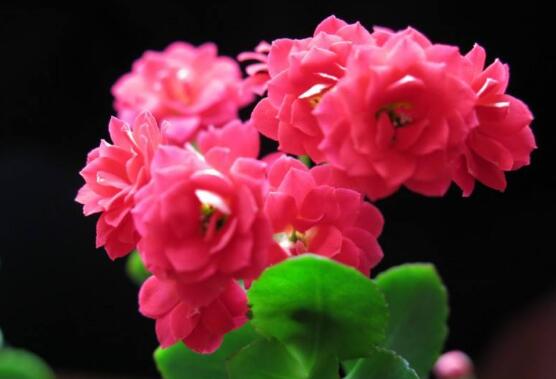
In the methods for growing Kalanchoe, we learned that Kalanchoe has specific requirements for soil, light, water and so on. Once these standards are not met, some disease and pest problems will appear. Because Kalanchoe has a long history of being grown at home, there are corresponding solutions for its diseases and pests. Below is the common pest and disease control for Kalanchoe. Flower lovers must read it~
(1) The four major diseases of Kalanchoe and their control
The main diseases of Kalanchoe are 4 kinds: leaf spot disease, black rot, mosaic virus and powdery mildew. As long as leaf spot disease and black rot are discovered early and treated promptly, there is basically not much of a problem, but powdery mildew is a fungal disease that is harder to deal with. Below are the symptoms and solutions:
① Leaf spot disease
Leaf spot disease mainly attacks the leaves of Kalanchoe. The affected parts of the leaves show brown spots. If not discovered in time, the spots will expand into dark brown patches.
Control method: You can use carbendazim, chlorothalonil or thiophanate-methyl powder, mix with water at 1:200 to make an aqueous solution, and pour it into the flower pot. You can also use a spray bottle to spray the front and back of the leaves, once every three to five days. Generally, it can be cured after three times.
② Black rot
Black rot is also one of the diseases of Kalanchoe. It shows up at the roots of the Kalanchoe. Under normal growth, the plant suddenly turns black for no reason, and then spreads rapidly upward. Because the blackened stem becomes soft and unable to support the upper branches, the branches droop down, and the leaves also become soft and wrinkled. If not discovered in time, after a few days, the upper branches will also turn black and die.
Control method: When encountering this situation, flower lovers should not worry. As long as you observe more and discover the disease in time, you can cut 1-2 cm or more above the blackened part near the root, use carbendazim, chlorothalonil or thiophanate-methyl powder mixed with water at 1:200 to make an aqueous solution, soak the branches for 2-3 hours, and then replant them in plain sand or vermiculite.
③ Mosaic virus (green island virus)
Mosaic virus is the most common virus in Kalanchoe, and it appears extremely widely in modern hybrid varieties. This virus only appears when the growing environment is poor and is transmitted to the plant body by severe root infection. It shows as light green to yellow mosaic spots or patches on the leaves, with an uneven surface. In severe cases, it inhibits plant growth. Feng Hua Xue Yue is the most susceptible to this virus.
Control method: Cut some branches, then remove the diseased spotted leaves, and soak the branches in a carbendazim aqueous solution for about 5-6 hours for sterilization. After the leaves perk up, move them to bright indirect light for care. Only after new leaves appear can they receive full sun.
④ Powdery mildew
Powdery mildew is one of the diseases of Kalanchoe. It mainly attacks the leaves and stems. The affected parts show a white powdery appearance that is difficult to wipe off with hands or a brush. The affected plant's leaves are weak and limp, growth stops, and it looks sickly, making you feel very distressed.
Control method: Mix sulfur powder with water into a paste, apply it to the affected leaves and stems with a soft brush, and also sprinkle some sulfur powder on the surface of the growing medium, combining with watering to promote root absorption. After one month, a miracle appeared: the powdery mildew on the leaves and stems faded in color and the affected areas shrank. After continuing treatment, the leaves also regained their luster, and then new branches gradually emerged, achieving success.
(2) The four major pests of Kalanchoe and their control
The main pests of home-grown Kalanchoe are four kinds: green caterpillars, red spider mites, aphids and scale insects. Control methods include manual control and chemical control. When there are few pests, manual control is mostly used; when there are many pests, chemical control is preferable. The specific symptoms and solutions are as follows:
① Green caterpillar
Green caterpillars are relatively large, about 1-2 cm, green fleshy worms. Green caterpillars mainly attack the leaves of Kalanchoe. When you find that the leaves are semi-transparent and there are some black droppings similar to silkworm feces between the plant's leaves, you should pay attention. At this time, there will definitely be green, fleshy green caterpillars inside, chewing the Kalanchoe leaves freely and enjoying this feast.
Control method: When encountering this situation, flower lovers should be decisive and immediately remove it together with the leaf and destroy it. No pesticide is needed.
② Red spider mite
Red spider mites mainly attack the leaf area. Red spider mites are relatively small, about 1-2 mm, reddish-brown. When you see countless white webs between the leaves, you should be alert that red spider mites are causing trouble. As long as you search carefully, it is not hard to find their traces. Once found, deal with them promptly.
Control method: Spraying the plant frequently will reduce red spider mite damage. Like green caterpillars, as long as they are discovered in time, they can almost be solved without chemical treatment. Very simple.
③ Scale insect
Scale insects mainly attack the stems and leaves. The affected plant's leaves are relatively soft and lack luster, and feel sticky to the touch. This is the secretion of scale insects. They are relatively small, about 1-2 mm. The larvae are light yellowish-brown, and the adults are dark brown. They are not easy to detect, and if not discovered in time, they can also spread to healthy plants.
Control method: When there are few scale insects, you can pick them off by hand, or gently remove them from the affected parts with a toothpick. If there are many, you must repot and replace the soil, and combine this with spraying a broad-spectrum systemic insecticide (Baichongling or Yibianjing, mixed with water at 1:200) for treatment.
④ Aphid
Aphids, commonly known as greasy bugs, are very small, about 1 mm, black-green, with wings, and reproduce quickly. They mainly attack the leaves, stems and top tender buds. Because the top buds of Kalanchoe are the tenderest, aphids most like to gather there for a meal. The top buds are small and tender and not easy to handle by hand, making this a headache and a very tricky matter.
Control method: You can spray with omethoate at a 1:150 solution. Omethoate is a systemic broad-spectrum insecticide that can be absorbed by the plant's stems and leaves and can be transported to parts not sprayed with the solution, causing the pests harming those areas to be poisoned and die. It can be cured in 1-2 times. When there are many aphids, it is recommended to slowly pour this solution once to eliminate future trouble.
Pest and disease control for Cymbidium ensifolium
1. Southern blight
Symptoms: Southern blight mostly occurs in the plum rain season and mainly harms the root and stem base of the plant, causing the roots to rot and die. There will be white fungal colonies on the soil surface. The plant gradually Lodges and withers.
Solution: After the disease occurs, replace the soil in time, spread in lime, wash and cut off the diseased plant parts, disinfect them, pay attention to ventilation and air permeability, control the amount of watering, and the plant will slowly recover.
2. Scale insect
Symptoms: Scale insects are the main pest of Cymbidium ensifolium, mostly caused by a high-temperature, high-humidity, poorly ventilated environment. Scale insects harm the branches of Cymbidium ensifolium, causing the leaves to turn yellow and the branches to wither.
Solution: You can choose to spray omethoate at 1000 times dilution, or rinse with clean water, repeatedly washing two or three times.
That is all for the introduction to winter care methods and pest and disease control methods for Cymbidium ensifolium. Cymbidium ensifolium is lively and beautiful, so how could it not be loved? Everyone should hurry and grow a pot too.
Disease control for Dahlia pinnata
Powdery mildew
Symptoms: Powdery mildew mainly attacks the plant's leaves, flower stalks and flower buds. When the plant develops the disease, round white powdery patches appear on the plant, causing the leaves to twist and wither.
Control method: Powdery mildew mostly occurs in autumn. When the disease occurs, you can spray a diluted solution of antimycin, which has a very good control effect.
Brown spot disease
Symptoms: Brown spot disease mainly infects the leaves, with yellow spots that gradually expand, and also produces black mold-like substances on the leaf surface.
Control method: Generally, the plant develops the disease from June to August. You can use Bordeaux mixture or chlorothalonil solution for treatment.
The above are the post-blooming treatment methods for Dahlia pinnata. I hope everyone's Dahlia pinnata grows healthier and more beautiful.