What to Do When Carnations Get Pests? Five Major Pest and Disease Control Methods
Carnations, there is no need to say much, everyone should know them, right? Grown at home, they can serve as a beautiful sight, and given to mothers, they can express love and respect. With so many uses, naturally many people choose to grow them, but during the growing process, various problems inevitably arise, such as diseases or pests. So what should you do when carnations get pests? Below is a selection compiled by the editor on carnation pest and disease control. Let's take a look together.
I. Pest and Disease Control of Carnations
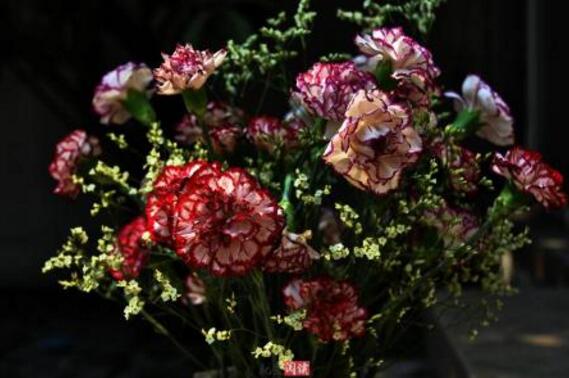
In carnation growing methods, we have learned that carnations have high requirements for soil, light, temperature, and so on. Once these standards are not met, carnations will get sick or be attacked by pests, causing leaves to turn yellow and dry up, or even die. When encountering this situation, we must not panic. First, identify whether it is a disease or a pest problem, then solve it accordingly. Carnation pest and disease control is mainly divided into diseases and pests. For specifics, keep reading below.
II. Carnation Diseases: Leaf Spot / Gray Mold
Carnation diseases include calyx rot, rust, leaf spot, gray mold, bud rot, root rot, etc., but the common diseases in home settings are leaf spot and gray mold, which need to be dealt with promptly once they occur. Below, the editor will introduce the symptoms and control methods of carnation diseases.
1. Leaf Spot
Symptoms: Carnations are very susceptible to leaf spot, which affects growth. When the disease occurs, elongated lesions appear on stems and leaves. In severe cases, the lesions girdle the stem, causing the upper branches and leaves to wither and die. If infected during the flowering period, flowers cannot open or become deformed.
Control methods: Disinfect during planting. When diseased plants are found, remove them promptly. Strengthen management, keep the plant surface as dry as possible, and plant in locations with good ventilation, light, and drainage. Keep greenhouses well ventilated, ventilating before dusk.
Special note: Leaf spot can occur year after year, so a preventive fungicide must be sprayed once a week, such as mancozeb, zineb, iprodione, chlorothalonil, etc. Especially during the peak flowering period, timely spraying is needed. Either 75% chlorothalonil, 50% captan at 500 times dilution, or 1% Bordeaux mixture can be used.
2. Gray Mold
Symptoms: When carnations are affected by gray mold, after gray mold-like substances cover the buds, petals, stems, and leaves, brown water-soaked lesions appear, causing petals to rot, buds to drop, and stems and leaves to wither. Infected buds cannot open, and infected flowers lose their vivid color. When temperature is high and humidity is high, the disease is severe, spreads rapidly, and causes rampant damage. Control is essential to protect stems, leaves, buds, and petals, so as to promote flowering, extend the flowering period, and improve ornamental value.
Control methods: Spray the foliage once a month with a 1000 times dilution of potassium permanganate solution, evenly wetting all leaves, buds, and petals until water droplets begin to drip down. If there is a lot of rain, high temperature, and high humidity, many gray mold-like substances will appear on stems, leaves, and buds. Spray the foliage 2-3 times consecutively with 1000 times dilution of procymidone, once every 7-10 days, to kill the pathogen and help the affected parts quickly return to normal growth, strengthening stems, leaves, buds, and petals, and promoting flowering.
III. The Five Major Pests and Diseases of Carnations
In carnation pest and disease control, besides diseases, pests are also something we need to pay attention to. Different potted carnation care methods lead to different types of pests. It is understood that carnations mainly have five major pests and diseases, namely aphids, slug moths, spider mites, longhorn beetles, and scarab beetles. The specific control methods are as follows:
1. Aphids
Aphids are small greenish-yellow insects that harm almost all flowers and trees. Between spring and summer, they often cluster on new shoots or flower buds of carnations and other plants. They use their mouthparts to suck sap, causing tender leaves to curl and shrink. In severe cases, they not only affect growth and flowering but also cause the plant to wither.
Control methods: Spray with 40% dimethoate emulsion at 3000 times dilution (that is, add 1 gram of dimethoate emulsion to 3 kg of water). In addition, there are two simple control methods: first, soak 5 grams of cigarette butts in 70-80 grams of water for 24 hours, rub slightly, filter out the residue with gauze, and then spray; second, use 1:200 laundry detergent water (soapy water). To improve the effect, add a few drops of rapeseed oil, stir thoroughly, and spray with a sprayer when no oil film is visible on the surface.
2. Slug Moths
Commonly known as stinging caterpillars or itch-inducing worms, these pests like to bite carnation leaves. When damage is severe, the leaves of an entire pot of flowers can be eaten up in just a few days. Slug moths specifically hide on the underside of leaves, and are often overlooked if one does not pay attention.
Control methods: If there are few pests and the damage is mild, remove the affected leaves and burn them. Spray with 90% crystalline trichlorfon at 1000-1200 times dilution (that is, add 1 gram or a little more of trichlorfon to 1 kg of water), or 50% fenitrothion emulsion at 500-800 times dilution.
3. Spider Mites
Also known as red spiders, they are one of the main pests of carnations. Spider mites are small and red, and very difficult to see with the naked eye. They like to suck sap on the underside of leaves. Affected leaves turn yellow and develop many small white spots, and soon wither, turn yellow, and fall off.
Control methods: Remove weeds from the pot and eliminate overwintering eggs. When damage occurs, spray with 40% dimethoate emulsion at 1000-1500 times dilution (that is, add 1-1.5 grams of dimethoate to 1 kg of water), or spray with 40% dicofol emulsion at 2000 times dilution.
4. Longhorn Beetles
Also known as trunk-boring insects or heart-boring insects, they are also one of the pests of carnations. Control methods: Cut off the affected trunk and capture and destroy them. Or use a small knife to remove insect frass and wood shavings, then inject omethoate at 1:50 dilution into the bore hole, and seal the hole with mud slurry.
5. Scarab Beetles
Also known as white grubs or white soil grubs. Their larvae are called white grubs and have a very mixed diet. They are the main underground pests of carnations. Control methods: Deep winter plowing can promote the death of the overwintering generation. During the active period, irrigate with 50% malathion emulsion at 800-1000 times dilution; protect natural enemies.
Growing Carnations: Carnations Are Starting to Wither, What to Do About Pests? How to Grow Carnations and Control Pests and Diseases?
Carnations are an excellent cut flower variety, with delicate and colorful blooms, fragrance, and a long flowering period, winning the affection of many flower enthusiasts. However, some flower enthusiasts encounter various problems after buying them, which is worrying.
Below, the editor has searched for some methods of growing and controlling pests and diseases, hoping to solve your urgent problem.
(1) If carnation leaves wither, control light and temperature well: A love of strong light is an important characteristic of carnations.Whether overwintering indoors, spending summer in pots, or forced cultivation in greenhouses, sufficient light is needed, and they should be placed in sunny positions with direct light. The most suitable environmental temperature for carnation growth is 13-25 degrees, and light conditions should be controlled at 6-8 hours per day. In midsummer, carnations are in a semi-dormant state and should avoid scorching sunlight. When the temperature is above 30 degrees, wilting symptoms are likely to occur.
(2) To avoid root rot in carnations, master the watering principle: Do not water if the pot surface is not dry; when watering, water thoroughly; avoid waterlogging. During the rainy season, pay attention to loosening the soil and drainage. Apart from timely watering during the peak growing and flowering seasons, water less at ordinary times, just enough to keep the soil moist. If conditions permit, keeping air humidity at around 75% is ideal.
(3) If you want carnations to grow healthily, pay attention to fertilizing: Before planting, apply sufficient base fertilizer containing potassium, calcium, nitrogen, and phosphorus at the bottom of the pot (or apply sufficient baked fertilizer and bone meal). During the growing period, continue to apply liquid fertilizer. Generally, apply a decomposed dilute fertilizer solution once every 10 days or so, and apply one top dressing after harvesting flowers. Do not fertilize during the high-temperature period in summer, otherwise they are prone to withering and death.
Common diseases of carnations include leaf spot, gray mold, etc.; the main pests are aphids and red spiders.
(1) Carnation leaf spot.
Also known as stem rot, it is a serious disease of carnations. It mostly occurs on leaves and stems, and sometimes also on buds and flowers. On leaves, the disease mostly starts from the lower part, first producing light green water-soaked small round spots, which gradually turn purple. As the lesions expand, the center of the lesion dies. The edges are brown. The lesions are round, oval, or irregular, about 4-5 mm in diameter. The dead central part is grayish-white to gray, and later black mold layers form on the lesions. When the plant is severely affected, the leaves wither and droop but do not fall off. On branches, after the lesion encircles the stem or branch for one full turn, the upper branches, leaves, and buds shrink and die.
This disease can occur from early April to early winter, and can occur year-round when cultivated in greenhouses. It is most severe during the rainy season in midsummer. If planting is too dense, it spreads very quickly.
Carnation Pest and Disease Control Methods:
① When planting in southern regions where the disease is severe, select disease-free branches from robust plants to prevent initial infection by the pathogen; you can also introduce fine-leaved varieties with strong antibacterial resistance from the north for planting.
② After pinching buds and cutting flowers, you can choose 75% chlorothalonil, 70% mancozeb, or 80% zineb wettable powder at 500 times dilution to spray, or spray 1% Bordeaux mixture for control. The results are all very good. If the disease occurs during the growing period, promptly remove diseased leaves or pull out diseased plants, and spray the above-mentioned chemicals to prevent the disease from spreading.
(2) Carnation gray mold.
This disease mostly occurs on petals and buds, and occasionally on stems and leaves. After petals are infected, light brown water-soaked areas first appear on the edges of the petals, and gradually most of the petals are invaded and colonized by gray fungi. At this time, if the temperature is relatively high and humidity is relatively high, rot is likely to occur. When disease occurs on buds, water-soaked irregular spots appear and gradually rot, preventing the entire bud from opening.
Control methods: ① Pay attention to indoor ventilation and light transmission, and reduce humidity; ② Remove diseased plants promptly when found; spray 75% chlorothalonil wettable powder at 500 times dilution once every 15 days or so, spraying 2-3 times consecutively, with good control results.
If rust occurs on carnations, spray with nabam at 800 times dilution.
When carnations are harmed by aphids, red spiders, etc., spray with 40% dimethoate emulsion at 1000 times dilution or 80% dichlorvos emulsion at 1000 times dilution for control.