Potted jasmine has bugs: what to do? 3 major pest control methods
Jasmine flowers are pure white and have a rich floral fragrance, making them a must-have potted plant in many plant lovers' homes. In daily life, although jasmine is easy to grow, during the cultivation process it will inevitably encounter some symptoms, such as bugs. So what should you do when jasmine has bugs? According to research, there are mainly 3 types of insects that harm jasmine. Below are the pest and disease control methods for potted jasmine selected by the editor. Let's take a look together!
I. Pest and disease control for potted jasmine
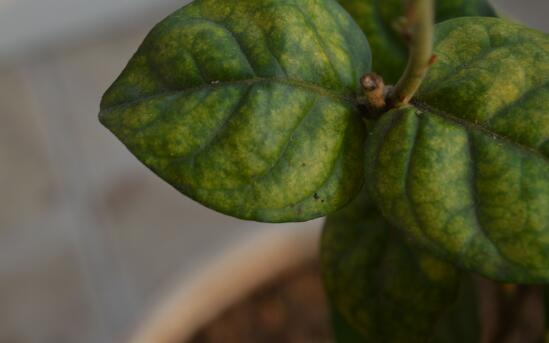
In the cultivation methods for jasmine, we know that jasmine is extremely easy to keep alive, and its plants are robust, so there are not many pests and diseases. According to research, the main diseases harming jasmine are chlorosis, damping-off, and red flower disease. Common pests include leaf-rolling caterpillars on branches and leaves, jasmine leaf borers, and red spider mites. Below we introduce in detail the pest and disease control and treatment methods for potted jasmine.
1. Chlorosis
This disease is one of the main pests and diseases of jasmine. It is a physiological disease that occurs on the leaves. The main feature is that the leaf surface gradually turns from green to yellow and develops wrinkles. In severe cases, the leaves fall off, and the plant itself gradually weakens.
The control method is to use 0.2-1% black vitriol water (ferrous sulfate solution) to spray the leaf surface or water the roots. Generally, the concentration for spraying the leaf surface is best at around 0.2-0.5%. The concentration for watering the roots can be higher, using 0.5-1%. Generally, after the morning dew has dried, use the prepared black vitriol water to spray the plant. When the yellowing of the leaves is severe, spray once a week.
2. Damping-off
Damping-off, one of the pests and diseases of jasmine, is also called neck rot. This disease is caused by pathogenic bacteria invading the root crown, causing the stem to soften and rot. When small cuttings that have survived are overwintering indoors or in a greenhouse, some plants rot at the junction between the potting soil and the stem and then fall over and die.
Control method: Pay attention to ventilation and air permeability, provide strong light exposure, water appropriately, and do not water until dry. Also, when the seedlings enter the greenhouse, spray the plants with a dilute solution of 0.2 degree lime sulfur mixture or 400--700 times dilution of thiophanate-methyl to kill pathogens. For plants that have already fallen over, remove them from the pot, disinfect the potting soil with 70% quintozene, and bury the plant.
3. Red flower disease
In some plants, after the petals open, they quickly turn red and rot. This disease is caused by a fungus. It is mostly caused by uneven watering with manure water, combined with exposure to hot winds. When this disease has already occurred, immediately stop watering and fertilizing, let the plant dry out a bit, and water again when the leaves appear slightly wilted, then apply light fertilizer.
Control method: Usually when watering and fertilizing, never let the amounts be uneven. Fertilizer should be applied lightly and frequently. Water only when dry, do not use untreated water, and pay attention to ventilation and light transmission.
II. What to do when jasmine has bugs
Throughout the entire growth process of jasmine, dozens of pest species cause damage, and each pest has its own ecological niche, such as termites harming the roots, scale insects harming the stems, and noctuid moths harming the flowers, and so on. Today let's look at the common pests and diseases of jasmine and their control methods, and deal with these arrogant pests and diseases!
1. Carmine spider mite, also known as cotton red spider mite
The cotton red spider mite can harm many flowers and many greenhouse plants, and jasmine is one of the commonly affected flowers. The leaves of affected flowers first show small yellow-white spots, gradually turn red, and then spread to the entire leaf, causing the leaves to curl, wither, and fall off. This mite develops very quickly and causes serious damage, affecting the growth and flowering of ornamental plants.
Solution: In winter, weed and clean the flower garden, and irrigate the garden soil to eliminate overwintering pest sources. During the period when red spider mites are causing damage, spray with 40% dicofol emulsifiable concentrate at 1500-2000 times dilution for control, spraying once every 7 days, 2-3 times in total, with good results. When spraying, spray the undersides of the leaves, and be sure to spray the inner branches and leaves in the middle and lower parts of the plant.
2. Jasmine leaf borer
It is one of the main pests of jasmine. Its larvae feed on and damage jasmine leaves, flower buds, small branches, and new shoots. After the bark of small branches is eaten, they die; after seedlings are damaged, they die, seriously affecting the growth and flowering of jasmine.
Solution: In winter or early spring, remove dead branches from the plants and fallen leaves on the ground, and burn them in a concentrated manner; appropriately thin the leaves to improve ventilation; promptly catch and kill eggs, larvae, and pupae on the leaves by hand; during the jasmine growing period, spray with 50% trichlorfon wettable powder at 6000 times dilution, which has a very good control effect.
3. Leaf-rolling moths and red spider mites
Leaf-rolling moths and red spider mites are also among the pests and diseases of jasmine. At this time, you can remove dead branches and fallen leaves, burn them in a concentrated manner, which can reduce part of the overwintering population base; in addition, of course, there are related pesticides. Red spider mites have strong reproductive ability and strong selection pressure on pesticides, and are prone to developing resistance, so pesticides should be applied promptly and rotated.
Chemical control: Commonly used chemicals and concentrations include 25% azocyclotin wettable powder 1000—2000 times; 50% bromopropylate emulsifiable concentrate 2000—3000 times dilution; 20% amitraz emulsifiable concentrate 1000—2000 times dilution; 5% flufenoxuron emulsifiable concentrate 500—1000 times dilution; 50% dichlorvos emulsifiable concentrate 1000 times dilution. Note that the above chemicals cannot be mixed with alkaline pesticides such as Bordeaux mixture.
Of course, the several pests above mainly appear indoors. Outdoors, there are still many pests harming jasmine, such as the double-striped snout moth, the tobacco cutworm, and the citrus gray weevil, which will not be described in detail here. In this way, jasmine really does have quite a few pests and diseases, and keeping it alive is not easy. The above is the content on pest and disease control for potted jasmine, for everyone's reference and understanding only. Specific conditions should be based on local actual situations!
Hydrangea has bugs: what to do? Pest and disease control for potted hydrangea / 4 pests 4 diseases
Hydrangea, also called hydrangea flower, is a highly ornamental plant, especially its hydrangea-like flowers, which make people like it from the bottom of their hearts at first sight. Hydrangea is very beautiful, but once improperly cared for, it will be attacked by pests and diseases, thereby affecting its ornamental value. So what should you do when hydrangea has bugs? Below are 8 pest and disease control methods for hydrangea. Follow the editor to learn more.
I. Hydrangea has bugs, spray with chemicals
Generally speaking, hydrangea has strong adaptability and is rarely attacked by pests and diseases, but if everyone does not follow hydrangea cultivation methods to grow it, it can still get bugs and diseases, and at that time plant lovers must be very anxious! What to do when hydrangea has bugs is actually very simple. First determine which kind of bug it is, then treat it accordingly. Below is the pest and disease control for hydrangea, with a total of 4 pests and 4 diseases. Let's continue reading.
II. Pest and disease control for hydrangea
1. Long-tube aphid
What flowers fear most is being infected by pests, and hydrangea is no exception. Among pests, long-tube aphids appear with the greatest probability. This insect mainly inhabits new shoots and survives by sucking sap. Symptoms of damage: hydrangea leaves become smaller and curl.
Control method: When a small number of aphids are found, wash them off with water, or scrape them off with a bamboo strip, then spray 1000-2000 times dilution of omethoate solution, or use tobacco leaf water to kill them: add 50 grams of tobacco leaves to 5 kg of water and boil.
2. Bat moth
One of the pests and diseases of hydrangea, it appears in June. It mainly erodes the stem area of hydrangea, spins silk to make a web to hide its body, and the leaves it excludes form a bag-like packet that continuously expands. Symptoms of damage: bat moths are active at night, bite and eat leaves, and the plant quickly withers and dies.
Control method: Promptly clean up dead leaves and do not give larvae a good place to inhabit. When the above symptoms are found, inject 200 times dilution of 80% dichlorvos into the main stem of the plant, or bury a small amount of aldicarb around the plant.
3. Red spider mite
One of the main pests of flowers, it mainly harms the undersides of hydrangea leaves and survives by sucking the sap of the plant's leaves. Symptoms of damage: hydrangea becomes nutritionally imbalanced, and may show symptoms such as yellowing or even falling of hydrangea leaves.
Control method: When red spider mites are found, rinse the entire hydrangea plant thoroughly with plenty of water, then spray 20% dicofol emulsifiable concentrate at 2000 times dilution. Several consecutive applications will be effective.
4. Brown soft scale
A type of scale insect, it mainly sucks the fresh sap of hydrangea. Symptoms of damage: hydrangea flowers and leaves fall off.
Control method: When a small number of brown soft scales are found, wipe them off with a brush or coarse linen; then cut off diseased leaves and burn them in a concentrated manner to reduce the source of disease; finally, spray imidacloprid emulsifiable concentrate at 1500 times dilution to kill them. Note that both the front and back sides of branches should be covered, which can increase the insect-killing rate.
5. Mosaic disease
One of the pests and diseases of hydrangea. After contracting this disease, hydrangea will produce ring spots, sometimes latent symptoms (observed but not treated). Symptoms: the plant grows and develops slowly and looks short overall, affecting its ornamental value.
Control method: When the above symptoms are found, spray 7.5% ribavirin aqueous solution at 600 times dilution or 3.85% virus-eliminating wettable powder at 700 times dilution for control. Alternating sprays are more effective.
6. Downy mildew
This disease mainly occurs in high-temperature and humid environments. Symptoms: hydrangea leaves and flowers begin to rot. If it is grown indoors, then downy mildew may be caused by poor ventilation in the home.
Solution: When rot is found, promptly cut off diseased branches and residual flowers, then use mancozeb for control.
7. Anthracnose
One of the main diseases of flowers. With slight negligence, hydrangea can also contract this disease. It mainly harms the plant's leaves. Symptoms: circular lesions with a diameter of 1-10mm appear on the leaves, with the center ranging from light yellow-brown to gray-white, with a slightly raised purplish-brown edge.
Control method: When the above symptoms are found, promptly remove diseased fallen leaves and bury them deeply or burn them in a concentrated manner. In the early stage of the disease, spray 25% carbendazim wettable powder at 500 times dilution or 25% prochloraz emulsifiable concentrate at 800 times dilution for control.
8. Leaf spot disease
One of the main diseases of hydrangea. It mainly infects its leaves. Symptoms: initially dark green water-soaked small spots, which then gradually expand and become dark brown, with gray-white lesions in the center. In the plum rain season or when ventilation is poor, the disease is severe.
Control method: Promptly remove diseased leaves and destroy them in a concentrated manner to reduce the source of disease; during the disease period, spray 65% zineb at 500 times dilution or 25% myclobutanil emulsifiable concentrate at 800 times dilution for control. In addition, after the hydrangea flowering period, cut off some branches and leaves, which is beneficial for ventilation.
That is all the editor has to introduce about pest and disease control for hydrangea. I believe everyone should know what to do when hydrangea gets bugs or becomes sick! In general, hydrangea is rarely troubled by pests and diseases, so as long as everyone cares for it carefully, these troublesome matters will not come knocking. Finally, may everyone's hydrangea bloom beautiful flowers.
Yesterday-today-and-tomorrow has bugs: what to do? Pest and disease control for yesterday-today-and-tomorrow / 3 pests 2 diseases
When cultivating yesterday-today-and-tomorrow, the last thing we want to encounter is pests and diseases. Such problems are extremely harmful to the plant, so when we discover them, we must deal with them promptly. What should you do when yesterday-today-and-tomorrow has bugs? How should pest and disease control for yesterday-today-and-tomorrow be done? Below the editor will take everyone to understand.
I. What to do when yesterday-today-and-tomorrow has bugs: find the cause
To know what to do when yesterday-today-and-tomorrow has bugs, we first need to understand what kind of bug it is, so that we can carry out targeted treatment, because the treatment methods for each pest and disease are different. The specifics, I believe, are introduced in detail in the following text. Friends troubled by this can take a look.
II. Pest and disease control for yesterday-today-and-tomorrow (pests)
1. Scale insect
Scale insects are a relatively common pest during the growth of yesterday-today-and-tomorrow. They mainly threaten the leaves, branches, and fruits of yesterday-today-and-tomorrow, causing its leaves to gradually turn yellow and fall off, and finally the entire yesterday-today-and-tomorrow plant gradually withers.
Control method: When dealing with this pest and disease of yesterday-today-and-tomorrow, we can directly use 40% omethoate emulsifiable concentrate at 1000 times dilution to spray and kill them, and the effect is very good.
2. Whitefly
Whitefly is a very small pest and one of the most harmful among the pests and diseases of yesterday-today-and-tomorrow. This pest mainly feeds on the sap of yesterday-today-and-tomorrow, gradually sucking the sap from the stems, causing a large loss of nutrients and finally causing withering.
Control method: When dealing with this pest and disease of yesterday-today-and-tomorrow, we can directly use 20% buprofezin wettable powder liquid to spray and kill them.
3. Red spider mite
Red spider mite is a relatively common pest for many plants, and yesterday-today-and-tomorrow is no exception. When this pest appears on the plant, the leaves gradually turn yellow and white. If it is not dealt with for a long time, it can also cause the plant to wither.
Control method: When dealing with this pest and disease of yesterday-today-and-tomorrow, we can avoid its reproduction by increasing the humidity of the environment. We can also directly use 10% fenbutatin oxide emulsifiable concentrate at 1000 times dilution to spray and kill them.
III. Pest and disease control for yesterday-today-and-tomorrow (diseases)
1. Stem rot
Stem rot, also known as bacterial wilt, is a disease caused by fungi. This disease generally appears on the new shoots of yesterday-today-and-tomorrow. When it occurs, a dark gray scald-like lesion appears on the sun-facing side of the new shoot relatively close to the ground.
Control method: When dealing with this pest and disease of yesterday-today-and-tomorrow, we can use 38% oxadixyl-propamocarb-kresoxim-methyl at 1000 times dilution to spray the plant. Generally spray once every 5-7 days, and after 3-4 times it can be cured.
2. Leaf spot disease
Leaf spot disease is a disease that exists in many plants, and yesterday-today-and-tomorrow is no exception. When it occurs, many oval and elongated brown lesions appear on its leaves, and over time they gradually spread, finally causing the plant to gradually wither and die.
Control method: When dealing with this pest and disease of yesterday-today-and-tomorrow, we can use 20% simeconazole·prochloraz at 1000 times dilution to spray the diseased plant. Generally spray once every 5-7 days, and after 2-3 times it can be cured.