What to Do When Beaucarnea recurvata Gets Pests? Control Methods for 3 Pests and 1 Disease
Beaucarnea recurvata (ponytail palm) is a plant with strong vitality, highly tolerant of both drought and cold. Of course, if grown improperly, Beaucarnea recurvata can also develop pests and diseases. Pests on Beaucarnea recurvata are actually quite easy to solve; just like in medicine, you need to treat the specific cause. The most effective method for pest and disease control on Beaucarnea recurvata is generally spraying with chemicals. For specific methods, please read on.
I. Pests on Beaucarnea recurvata: scale insects / mirid bugs / whiteflies
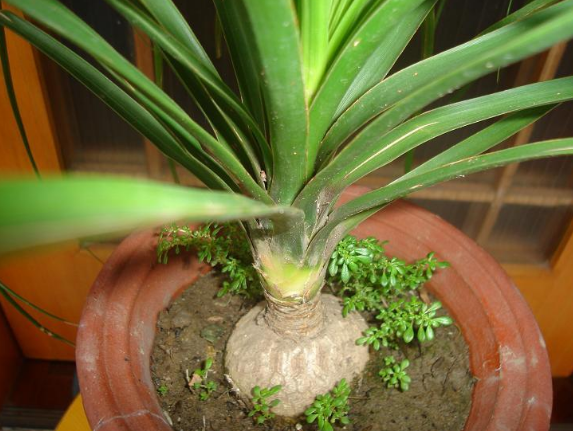
In the cultivation methods for Beaucarnea recurvata, we learned about its environmental requirements. Once these are not met, it will be attacked by insects. No matter how robust it grew before, once pests appear, Beaucarnea recurvata will enter a weakened state. It is known that the three most common pests on Beaucarnea recurvata are scale insects, mirid bugs, and whiteflies. For specific symptoms and control methods, let us continue reading.
Beaucarnea recurvata pest and disease control / chemical spraying
1. Scale insect damage
Scale insects are a type of parasitic insect. This pest causes great harm to the leaves and branches of Beaucarnea recurvata. It sucks the plant's sap, causing Beaucarnea recurvata to lose nutrients, leading to stunted growth, yellowing leaves, and eventually gradual withering.
2. Mirid bug damage
Generally, when Beaucarnea recurvata is attacked by mirid bugs, small holes first appear on the leaves, then they gradually turn yellow, and finally turn from yellow to black. Usually about 2-3 days after turning black, the Beaucarnea recurvata will drop and die. This is truly a highly destructive pest.
3. Whitefly damage
Whiteflies are relatively tiny; even the largest ones do not exceed 3mm, making them basically very difficult to see with the naked eye. You can only judge that Beaucarnea recurvata is suffering from whitefly damage through certain symptoms. When Beaucarnea recurvata develops this pest, first nutrients gradually drain away, leaves gradually shrivel, and finally the leaves drop off directly.
Beaucarnea recurvata pest control method: When the above three pests appear on Beaucarnea recurvata, you can choose 40% omethoate emulsifiable concentrate at 1500 times dilution for spraying. Generally spray once every 7-10 days, and 2-3 consecutive treatments will basically eliminate them.
4. Leaf spot disease (disease)
Leaf spot disease is the most common disease of Beaucarnea recurvata. When this disease first appears, oval-shaped reddish-brown spots appear on the leaves of Beaucarnea recurvata. Over time, they expand into irregular large patches, and black dots also appear on the spots.
Control method: When leaf spot disease appears on Beaucarnea recurvata, it is best to promptly remove the diseased tissue and burn it. It is best to start spraying from the early stage of the disease to prevent it from spreading. Generally use 41% polyact·pyrimethanil 20ml + 4% pyrimidine nucleoside antibiotic. When using, dilute with 15 kg of water, spray once every 7-10 days, and 2-3 treatments will basically eliminate this disease.
How to Grow Succulents (Ultra-Detailed)
Around us, there are many people who want to be lazy but also want to fiddle with some plants and flowers. Those green plants bought on personal preference often either turn yellow or rot before long. If you want "green plants that don't take time, don't take effort, and can still thrive on their own," succulents, known as "the cutest plants in history," are the top choice. So, how do you grow succulents? Let's take a look together below.According to statistics, there are over 10,000 species of succulents worldwide, originally all living in arid areas or places with high salt content. However, with the development of high-tech techniques, succulents that previously could not be grown due to climate and geographical environment can now be found everywhere. Regardless of the variety, whether it is the stem, leaf, or root, there is always one part that is plump, thick, and fleshy. Common succulents on the market also have pleasant names, such as Haworthia cooperi, Graptosedum 'Francesco Baldi', Graptoveria 'Titubans', Lithops, Sedum rubrotinctum, and Haworthia triebneriana, among others.How to Grow Succulents
I. Soil
Basic soil requirements for succulents
Loose and breathable, good drainage and water retention, containing a certain amount of humus, moderate particle size, no excessively fine dust, weakly acidic or neutral (a few species can tolerate slightly alkaline).
[Soil Mixing] Cinder is a commonly used ingredient, but almost all furnace slag contains sulfur. Succulents are not sensitive to sulfur, and sulfur has bactericidal and insecticidal effects. From years of planting comparisons, plants grown with cinder are more resistant than those without, and are less prone to root rot and root mealybugs. The best cinder to use is fully combusted granular raw coal cinder (whether it contains incompletely burned coal does not matter), with honeycomb coal cinder being second best. Honeycomb coal cinder contains a lot of soil, so if you want to use it, you should crush it and sift it. Rinse the cinder with water before use to remove dust and alkalinity. Using eggshells, with eggshells making up about 1/4 of the mix, works very well. Eggshells are an excellent breathable and drainage-promoting planting material, very useful for increasing soil breathability, and of course they also increase calcium content. Eggshells should be crushed to 2-3mm. The planting mix generally consists of about 1/4 garden soil and about 1/3 sand. But both garden soil and sand contain fine dust. Brick granules, vermiculite, perlite, orchid stone, and furnace slag must all be sifted to remove fine dust and repeatedly washed before use. The ingredients in the planting mix do not have to follow exactly what the experts list, nor does it have to be a single ingredient; rather, the more ingredients and the more varied, the better. If you have brick granules, vermiculite, perlite, orchid stone, and furnace slag on hand, then use all of them, with the total amount controlled at about 1/3. Similarly, if you also have eggshells, clam shells, bone meal, old lime, carbonized rice husks, and other calcium-containing materials, then use a little of each, with the total amount controlled at about 10-20%. Different planting materials have different physical functions and different nutritional components; using a more varied mix is definitely better than a single ingredient. Regardless of which ingredient, before use it must at minimum be exposed to sunlight for several days before it can be used.[Soil Mixing Substrates]
For succulents, most of the potting soil sold on the market has certain limitations, so experienced enthusiasts mostly mix their own. What kind of potting soil is considered high quality? Simply put, it should be a sandy loam that is loose and breathable, well-draining, has a certain granular structure, and can provide the nutrients needed during the plant's growing period. When mixing, pay attention to the reasonable combination of organic and inorganic planting materials, and avoid excessively fine and small dust. Below are some commonly used substrates for succulents:
1. Organic planting materials
① Leaf mold: You can use commercially available Clivia soil, or collect and compost bald cypress or zelkova leaves yourself, and disinfect before use.
② Peat: It is a lake and swamp plant buried underground for thousands of years. Currently, the best quality comes from Jilin and Heilongjiang. High-quality peat is brown in color, has high organic matter content, good fiber content, loose texture, is not sticky to the touch, has strong adsorption capacity, and a slightly acidic pH.
③ Sawdust: Good water permeability and water retention, but because it is high in carbon and low in nitrogen, it is generally not used alone. It can be mixed with some nitrogen-containing compounds such as soybean cake and composted for fermentation.
④ Rice husk ash: Rich in potassium fertilizer, with a slightly alkaline pH. Choose deep black ones, not whitish, and the structure should be uniform, not too fine.
⑤ Tree fern fiber: The processed stem of a fern (Cyathea). Hard in texture and brown in color, not easily rotting. Good drainage and with a certain fertility, it is a popular cultivation substrate in recent years.
⑥ Mountain soil: Huangshan soil: low organic matter content, average drainage; red mountain soil: high organic matter content, soil becomes sticky after watering, and easily compacts after drying; black mountain soil: high organic matter content, good drainage, and does not easily compact after watering. Generally, black mountain soil is used.
⑦ Silt soil: A commonly used orchid cultivation substrate. But practice has proven it is also quite good for succulents. Its characteristics are: complete nutrients, good drainage, no pollution, no weed seeds. After one year in a pot, the granular structure is still very good.
2. Inorganic planting materials
① Vermiculite: A golden lightweight material with a honeycomb-like structure. Strong water and heat retention, excellent breathability, and pathogen-free. High survival rate when used as a cutting substrate, but it has no fertility itself, so it should be mixed with other substrates. After long-term cultivation, its structure is easily destroyed. Used vermiculite should be sifted before reuse.
② Perlite: A volcanic rock containing aluminum silicate, expanded into a lightweight material by high-temperature heating. Good water permeability and aeration. However, its effective water content is low, so it is often used as an additive supplementary material.
③ Coconut coir: Palm fiber, loose in texture, with especially strong water retention. Often used for cuttings. What is commonly seen on the market is coconut coir compressed into small blocks, also called "expanded soil." Soak in water to expand before use.
④ Pond base stone: Made by high-temperature firing, often placed at the bottom of pots or mixed with other substrates. If mixed with other planting materials, the particles should not be too large; about 0.2cm is sufficient.
⑤ Kanuma soil: An orchid cultivation substrate, with more advantages than pond base stone. Rich in various minerals, it has remarkable results for cultivating succulents and can replace the former, but it is slightly more expensive.
⑥: Should choose one that does not contain salt, and the particles should not be too fine. Before use, rinse, sift, and mix with other substrates. Good water permeability, high oxygen content, and large day-night temperature differences make it suitable for the requirements of succulents. Other inorganic planting materials include volcanic rock, coal briquettes, etc. In addition, when mixing potting soil, some auxiliary materials are also commonly used, such as calcium-containing materials like shell powder and calcium supplement. There are also some base fertilizers such as chicken manure and cow manure. When mixing, pay attention to the reasonable combination of organic and inorganic planting materials, and avoid excessively fine and small dust.
[Soil Formulation] Regardless of which planting materials you choose and how you mix them, you must meet the basic requirements of the plants and consider all aspects, exercising flexibility.
① Formulate according to the cultivation site: For example, the soil for ground planting and pot planting differs. For ground planting, more consideration should be given to drainage, and more drainage-promoting materials such as gravel should be added. For pot planting, on the principle of ensuring looseness and breathability, appropriately supplement organic matter. If planting on a south-facing balcony, you should also consider the characteristics of relatively dry conditions and ample light, and appropriately add some substrates with strong water retention, such as vermiculite and coconut coir.
② Formulate according to different species: Different species may be "vastly different" in soil formulation. For example, epiphytic species need a certain amount of humus, while some terrestrial species whose native soil is barren and whose root systems are underdeveloped have lower humus requirements than the former. Not only do species in different families require different soils, but even species in different genera within the same family have different soil requirements. Take the Liliaceae plants Aloe vera from China and Gasteria verrucosa: the former belongs to the genus Aloe, is robust in habit, and grows quickly, so sufficient base fertilizer can be added at the bottom of the pot. The latter is a Gasteria plant, grows slowly, and basically does not need base fertilizer.
③ Formulate according to different cultivation regions: The northern climate is dry, with certain requirements for the soil's moisture retention capacity; the south has abundant rainfall and high air humidity, with higher requirements for the soil's drainage and aeration.
④ Formulate according to different growth stages: In the seedling stage, the root system is underdeveloped, the organic matter content should be slightly less, and the soil should mainly consist of lightweight materials mixed with some fine sand. Later, gradually increase the organic matter content.
Actually, soil formulation cannot be explained clearly with just a few simple principles. The following recipes can serve as references:
1) Kanuma soil 8 parts + silt soil 2 parts + a little shell powder (suitable for cultivating Lithops).
2) Coarse sand 10 parts + sawdust 2 parts + base fertilizer 1 part + garden soil 1 part (suitable for ground planting).
3) Leaf mold 1 part + peat 1 part + coarse sand 2 parts + lightweight material 1 part + a little base fertilizer (suitable for cultivating epiphytic types).
4) Pond base stone 3 parts + silt soil 2 parts + lightweight material 1 part + peat 1 part (suitable for cultivating Haworthia hard-leaved series varieties).
5) Garden soil 2 parts + leaf mold 1 part + coarse sand 4 parts + lightweight material 1 part + rice husk ash half part (suitable for cultivating common terrestrial types).
For Sedum soil mixing, I think the proportion of peat soil or grass peat soil can be slightly larger, supplemented with humus soil, river sand, perlite, vermiculite, etc. To promote rooting and robust growth, add an appropriate amount of rice husk charcoal, bone meal, fungicide, etc. to the soil; watering should be determined by weather and plant growth conditions, watering when dry and stopping when wet. Focus on managing those with good growth. Those with poor growth are mostly in a dormant period, so it is naturally best to manage them less.
Soil mixing: Sifted honeycomb coal cinder + garden soil + silt soil + sand + bone meal + shell powder + eggshells + ceramic pellets + orchid stone + activated carbon, sift out fine dust before planting. Full-sun care, water when dry and stop when wet. Add decomposed chicken manure at the bottom of the pot. The pot should be small, and the soil should be little and loose. After the soil dries completely, wait a few days before watering, and provide more sun. Water less in midsummer; most Crassulaceae succulents go dormant or semi-dormant in summer. [Source]
For strong-spined globular cacti like Echinocactus grusonii, ordinary flower soil + coal briquette ash + bone meal is sufficient. As for watering, once a month is enough.
Globular types: Ordinary flower soil + coal briquette ash (sifted into granular form) + vermiculite + appropriate amount of bone meal
Succulents with thick fleshy roots (such as Haworthia cooperi): Orchid stone + silt soil + appropriate amount of bone meal
Other succulents: Ordinary flower soil + leaf mold + tree fern + vermiculite + appropriate amount of bone meal
Put the mixed planting material into a stainless steel container, pour in rainwater to moisten the soil, then seal the container and heat it over a fire for a period of time to ensure the killing of insects, larvae, and eggs, but some beneficial soil microorganisms will survive, especially those that reproduce by spores.
[Pot Selection] Ceramic pots have excellent water absorption, so even if you water too much, it is not a big problem; it can alleviate the negative effects of overwatering. However, ceramic pots become heavy after absorbing water, requiring a sturdy plant stand. Purple clay pots have breathability between that of clay pots and porcelain pots, and are generally the most used for growing succulents and cacti. With purple clay pots, special attention should be paid to the thickness of the pot walls. The thinner the walls of the purple clay pot, the stronger the breathability; those with very thick walls have breathability similar to porcelain pots.
Generally speaking, the root systems of succulent and cactus plants are not very developed. Many succulents and cacti only have fibrous roots. Planting a variety with a very shallow root system in a relatively deep pot will only be detrimental to its growth, because the soil in the lower part that the roots cannot reach will retain moisture for a long time, making the potting soil sticky and waterlogged. If there is too much soil, the excess moisture cannot evaporate and transpire in time, easily leading to rot. Therefore, when selecting pots, follow the principle of "better small than large, better shallow than deep," and it is best to use half-height ratio or flat pots. Only those succulent and cactus varieties with tubers or taproots need deeper potting soil and will grow well in standard pots or deep pots. For medium to large globular types, the pot selection requires the ball diameter and pot diameter to be roughly equal, or the pot diameter slightly larger than the ball diameter by one or two centimeters. Small balls are best planted with multiple plants mixed together. The cultivation soil depth should be at most twice the ball diameter, meaning if the ball diameter is 5cm, a soil depth of 10cm is sufficient. For large balls, it can be even shallower. The larger the ball, the less water and nutrients it consumes; too much potting soil is not only useless but also easily leads to rot. If the flower pot is too deep, add more non-soil filler at the bottom as a drainage layer. You can arrange drainage material in several layers by particle size, with the largest at the very bottom. After placing the drainage material, first add coarse-grained ingredients, then fine-grained ingredients. After placing the plant, add soil while gently lifting the plant slightly upward to spread the roots. Do not fill the soil too full at once. Tamp the soil evenly along the pot edge, and finally tap the pot lightly a few times to level the potting soil.
[Repotting]
Because succulents mostly grow under artificial cultivation conditions, their root systems are confined within the pot and find it difficult to stretch freely. After a period of growth, the root system fills the entire pot, which is not conducive to drainage and aeration. Moreover, the soil in the pot is limited. After continuous absorption by the roots and repeated watering, the nutrients are depleted, and the potting soil changes from its original granular form to powder form. In addition, during the process of absorbing nutrients, the root system also continuously excretes acidic metabolites, acidifying the soil, all of which are very unfavorable for plant growth. Therefore, when the plant grows to a certain stage, it must be repotted and the soil changed. Depending on the variety and plant size, repot once every 1-2 years or 3 years (some small seedlings of certain varieties can even be transplanted several times a year, the so-called "move it, it grows"). For most varieties, repotting is generally done in mid-to-late March, combined with division propagation. Learn more: Succulent Repotting GuideII. Watering
Succulents must be supplemented with water in a timely manner to meet the needs of growth and development, and definitely not "better dry than wet" as some people believe. Of course, for ground-planted plants, watering frequency can be reduced. For most succulents and self-rooted cactus types, watering is difficult to master, mainly in terms of timing.
To master the watering techniques for succulents, you must first understand the dormancy habits of each species. Watering during the dormant period easily causes plant rot. For example, watering Lithops during summer dormancy will cause the plant to rot immediately; for winter-dormant cactus types, watering in winter will cause root rot or make them susceptible to freezing. Although they may not rot in winter, they will rot as soon as spring arrives.
Secondly, carefully observe the growth conditions of each plant. Some people, upon seeing some plants with red leaf color and dry leaf tips and old leaves, assume it is due to lack of water. In fact, this phenomenon can also occur due to too strong light, long-term lack of water in the potting soil, damaged root systems, rot at the root crown, or the root crown being bitten by insects and then self-repairing with scar tissue causing poor water transport. Therefore, being familiar with the plant's growth conditions is very helpful for mastering watering techniques. Generally, plants with particularly vigorous growth and plants in the flowering and bud stage have higher water requirements, and watering should be done as timely as possible; while some old large balls with basically stagnant growth should be watered less frequently.
Finally, watering should take into account temperature, air humidity, greenhouse ventilation, pot size and material, whether roots have extended down to the sand bed, etc. The purpose is to help determine whether the pot is lacking water. When cultivating other potted flowers, you can generally decide whether to water based on whether the surface potting soil has turned white, but for succulents, judging by this can cause errors, because the potting soil for succulents generally has sand, vermiculite, pumice, shell powder, and other substances mixed in, which easily causes the surface of the potting soil to turn white. Especially when these substances are in large proportions, the surface of the potting soil may already turn white the day after watering, while the soil below is not lacking water at all. Some experts point out that when the surface 1 cm of potting soil is already dry but the lower part of the potting soil is still moist, the root absorption of succulents reaches its maximum. If you follow the conventional practice of watering as soon as the potting soil turns white, it will cause overwatering and affect plant growth.
The best time for watering is early morning in summer, before noon on sunny days in winter, and either morning or evening in spring and autumn. Under normal circumstances, do not water from the top, otherwise over time ugly spots will appear on the globular body, the hairs of hairy columnar types will easily become dirty and matted, and water accumulating at the growth point of plants like Haworthia will cause rot. Pond water splashed on plants easily breeds algae, making them look like they have grown moss, which is very unsightly. Under normal circumstances, watering must be thorough. For this purpose, the soil must be loosened regularly so that the potting soil can evenly absorb enough water. For growing winter-type and intermediate-type plants, keep the potting soil moist but not waterlogged. Water thoroughly when dry, neither allowing waterlogging nor excessive dryness. Summer-type species can be watered appropriately, but not excessively. If there is rainy weather or a sudden temperature drop, stop watering.
How exactly to control the amount of watering
The source of this problem, I think, is mainly the lack of quantitative experience. The descriptions in many books are nothing more than "strictly control watering," "you can water more," "keep dry," "better dry than wet," etc. Everyone's understanding of such descriptions is certainly different. Some friends understand "dry" differently from another friend, so one waters and the other does not, and naturally the results differ. Although quantitative analysis can lead to dogmatic errors, it should be helpful for everyone in the process of becoming an expert grower to reduce losses. Below are two experiences I find quite practical. I have mentioned them before, but let me consolidate them here:
1. Bamboo skewer test method: Insert a bamboo skewer (or toothpick) to two-thirds the depth of the potting soil. When you want to water, pull out the bamboo skewer and check the dryness and moisture of the soil portion. This method is very helpful for watering plants that are dormant or semi-dormant, or about to enter dormancy or semi-dormancy;
2. Surface soil dryness and moisture test method: Generally speaking, when the surface soil turns white, you can water. This is the principle of "don't water until dry, water thoroughly when dry." So-called "dry thoroughly" means the surface soil has turned white, but when you push aside the surface soil, you can still see moisture. For succulents and cacti in the growing period, this judgment method is sufficient. For robust ones, you can water immediately; for those relatively afraid of water, wait two days before watering.
There are also other methods, such as the pot-lifting method, where friends with a good feel can lift the pot and if it feels light, they can water. For succulents and cacti grown in plastic pots with soil mainly composed of lightweight materials like peat, the weight difference after watering and when dry is quite noticeable. The pot-tapping method: lightly tap the pot wall with a finger; if it makes a hollow sound, it means the soil is dry.
After judging the soil moisture, it is time to water. When conditions permit, the bottom-watering method is best. Generally, immerse the pot to half its depth in water for just 15 seconds. Do not wait until moisture appears on the surface soil before taking it out. The looser and more breathable the soil, the less time needed, because the siphon effect is stronger. The advantage of this watering method is that it ensures the upper part of the soil is relatively drier than the lower part, making root rot less likely. Because the root tip of plants is divided into the root cap zone, growth zone, elongation zone, and root hair zone. Only the root hairs are the main site for absorbing water and have the strongest resistance to moisture. The old roots above the root hair zone have lost their water-absorbing function and mainly serve to transport water and nutrients and to anchor the plant, with poor resistance to moisture. Root rot often starts from here.III. Air Humidity
Some succulent and cactus enthusiasts often notice this problem: the succulent treasures they just bought from the flower market no longer look as impressive as when they first "moved in" after just a few days. Although they take great care of them, these little things are very uncooperative. This worries their owner greatly. Little do they know, this is a problem that every succulent and cactus enthusiast will encounter, and it often stumps some hobbyists. But growers with a little experience know that this is actually an air humidity problem.
If you are a succulent enthusiast in a dry northern region; if your cultivation site is your own open-air balcony or windowsill, this point is especially important. So why do the above problems occur? Why is air humidity so important? Let us analyze together: The succulents at the flower market are all produced in nurseries. Such plants grow up in greenhouses, and greenhouses are mostly closed cultivation most of the time, so the air humidity inside is relatively high. Plants cultivated this way are plump and full of vitality. However, after being purchased, because the home cultivation sites in most areas often cannot meet such conditions, the above problems occur. Some enthusiasts may ask: These succulents mostly come from harsh native environments with very little annual rainfall and dry conditions, so how do they use air humidity? First, let us exclude the higher air humidity during the rainy season. In their native habitats, the temperature is relatively high for several hours before the sun sets (especially at noon). But at night, the temperature drops sharply. This alternation of hot and cold causes the air to condense into mist. This is especially pronounced at dawn. This is also a way for them to absorb water, and this is when they are at their happiest. Now looking back, the conditions of most of our cultivation sites are still insufficient. This does not even include some epiphytic varieties and some Bromeliaceae plants with even higher requirements.
It is precisely because of the limitations of cultivation site conditions that many plants show fading, scorched leaf tips, shriveling, and premature aging. These phenomena are not seen in greenhouse cultivation. Although not fatal, the ornamental value is greatly reduced. The most effective solution is very simple: use a fine-nozzle spray bottle to mist. Many enthusiasts also use disposable plastic cups inverted over the pots (mostly in spring and winter). Or choose to cultivate in a glass tank, laying a layer of coarse gauze at the bottom and sprinkling water on it from time to time. This can increase humidity without making the pot constantly "flooded." In short, the regulation of air humidity should consider multiple aspects including species, season, and growth stage, and absolutely cannot be generalized. Too high humidity makes plants prone to rot and susceptible to scale insects; too low humidity reduces the ornamental value of plants and makes them susceptible to red spider mites.
1. Air humidity requirements for each season: Maintaining a certain air humidity during the growing period is quite important. When plants enter the growing period, the role of air humidity is obvious. Species native to tropical rainforests have even stricter requirements. Some horticultural varieties with rich color changes will have more vivid colors if considerable air humidity can be maintained. It can be said that basically most varieties need a certain humidity at this time. During the dormant period, the control of air humidity must be quite cautious. The first to bear the brunt are some highly succulent varieties that go dormant in summer. For example, summer in Shanghai is a typical "hot and humid" weather. The highly succulent varieties of Aizoaceae are quite prone to rot. How to get old varieties like Lithops and Dinteranthus through the summer is often the biggest headache for enthusiasts. Similarly, winter-dormant varieties also need to maintain a certain dryness. This point requires considerable attention after the temperature drops below 5°C. When the temperature continues to drop to 0°C or lower, if the humidity is on the high side, it is often fatal and can kill the plant overnight. However, most cities in the north are relatively dry in winter. This "wet and cold" climate is more common in some southern cities in China.
2. Air humidity during the seedling stage: Air humidity during the seedling stage is especially important; its significance exceeds that of soil moisture. Because during the seedling stage, there is a process of "hardening off seedlings." The purpose of controlling soil moisture is to promote new root growth. At this time, maintaining relatively high air humidity can prevent them from lacking water due to hardening off. Generally, the air humidity requirements during the seedling stage are higher than at other growth stages, but air humidity at this time is also the most difficult to control. Practice has proven that the smaller the seed, the smaller the seedling, and the poorer its resistance, often unable to tolerate high humidity. Typical examples are most varieties of Aizoaceae and some varieties of Crassulaceae (with Begonia semperflorens being the most prominent). After they mature, such phenomena will greatly improve, and the air humidity problem will not be so prominent.
3. Air humidity requirements for asexual propagation: The two commonly used asexual propagation methods at home are cuttings and grafting. Cuttings: Plant organs should be kept dry for the first few days after being separated from the mother plant. This time period depends on the variety. It can be as short as 4-5 days or as long as a month. After the wound has completely dried, it can be inserted into the substrate. At this time, relatively high air humidity can be maintained. On this point, there are mainly two schools of thought: one advocates creating a dry environment, which allows rooting in a shorter time but with greater consumption; the other advocates creating a humid environment, which causes less consumption of the cutting individual. As for grafting, the views are relatively unified: during the first two weeks after grafting is completed, dryness and ventilation must be maintained. Too high humidity has an impact on the survival rate of grafting.
4. For some caudiciform varieties such as Dioscorea elephantipes, Momordica types, and Adenia types. In their native habitats, their surfaces are often irregularly cracked and mostly uneven. But under artificial cultivation conditions, especially when starting domestication from seedlings, their uneven surfaces become very inconspicuous. However, the reason is not just a humidity issue; it is a comprehensive issue. This point is also an auxiliary basis used by some experienced enthusiasts to distinguish wild from artificially cultivated plants.
IV. Fertilizing
Winter-type and intermediate-type plants should be fertilized once every 20 days or so with decomposed dilute liquid fertilizer or compound fertilizer. Fertilizing time can be on a sunny morning, and be careful not to splash the fertilizer solution onto the plants. Summer-type species do not need fertilizing.
V. Temperature
The most suitable temperature is 15-28°C, and the plant's tolerance limit is 5-35°C.
VI. Propagation
After leaf cuttings have rooted, wait until the leaf withers, and after the bud grows larger, then transplant. Wait until the seedling grows to two or three cm before doing so. When doing leaf cuttings, use a large pot, do not mist, water when the soil is dry, and do not water onto them.
Beheading is best done in mid-April each year. Leave three to four leaves below, then let the cut-off part dry for five days, then do cuttings.
Many succulents can be propagated by cutting branches from the stem with a sharp knife for cuttings. Any tool used to cut plant tissue must be disinfected with alcohol beforehand. Learn more: Succulent Stem Cutting Propagation Methods
The best cutting location is below a node if the stem has nodes, or below the leaf petiole or new bud base on the stem. Be careful not to damage the aesthetic shape of the mother plant when taking cutting branches; it is best to take branches at least one node away. Insert the cutting into a high-temperature-sterilized sandy medium, which can be pure sand, coarse sand, or vermiculite. Sometimes the cutting can be planted directly after cutting, or it can be left to dry for one or two days to let the wound tissue heal and avoid fungal infection.
Many succulents only need one leaf to get a new plant through cuttings. Such as Crassulaceae Adromischus, Echeveria, Sansevieria, and many epiphytic Cactaceae plants. Gasteria plants can sometimes also be propagated through leaf cuttings. Let the removed leaf dry for a few days to let the wound close and produce healing tissue, then place the leaf in a propagation pot, only letting the base of the leaf contact the cultivation substrate. I feel this works better than inserting the lower part of the leaf into the substrate and is less prone to rot. After a period of time, you can observe new roots growing, and subsequently new buds and new leaves will also appear.
Cuttings are best done at the beginning of the growing period, usually in spring, except of course for winter-type plants. After cuttings are done, place them in a well-ventilated, brightly lit location at room temperature of 20°C, but avoid direct sunlight. Placing the cuttings in a closed environment that can maintain suitable humidity until they root is also a good method. A simple way is to put a large polyethylene plastic bag over a large flower pot, or cut off the upper half of a clean transparent plastic bottle and invert it over a pot of comparable size. Water the cuttings sparingly rather than generously, until obvious growth is observed, then increase watering.
Division propagation: Many succulents are clump-forming or have thick tubers, and they can be propagated through division. After taking the plant out of the pot, remove as much potting soil as possible. The specific method of division depends on the plant's growth type. For multi-headed varieties in Asclepiadaceae, Crassulaceae, and Cactaceae, division can be done when repotting. Well-grown offsets that have already developed independent roots can be separated and potted individually.
Offset propagation: Many cacti and succulents will produce offsets or small pups at the base of mature plants. They are usually easy to remove or cut off, and after drying for a few days, they can be potted separately. This is also good for the mother plant, as these offsets or pups consume quite a lot of nutrients from the mother plant. Some plants will sprout tillers on leaf edges or flower stalks, which can also be removed and cultivated.
VII. Pest and Disease Control
1. Red spider mites
Mainly harmful to Asclepiadaceae, Euphorbiaceae, Asteraceae, and Liliaceae succulents. They suck the sap of young stems and leaves with their mouthparts. Damaged leaves show yellow-brown spots or wither and drop off. These scars remain permanently. Generally, you can check whether there are spider webs on the underside of leaves, and whether there are very small red/white/dark-colored insects. If there are, it is usually red spider mites.
Control methods include increasing environmental humidity to reduce and avoid spread. You can use 40% dicofol at 1000-1500 times dilution for suction-killing, or abamectin.
Red spider mite removal method
Removing red spider mites by hand is low-cost, easy to obtain materials for, and extremely effective.
Materials: one bamboo skewer, a small amount of double-sided tape.
Method: Cut the double-sided tape into small pieces of 0.5-1CM square and place them flat on the tabletop; take a bamboo skewer and press one end onto the adhesive surface to fix it, then lightly roll the skewer in one direction so the double-sided tape wraps around one end of the skewer. This creates a simple miniature "lint roller." Place the plant with red spider mite damage under bright light (because the pests are too small, you cannot see them clearly in poor light), then roll the "lint roller" over the globular body. The red spider mites will find it very hard to escape. Because the "lint roller" is very small, it can flexibly move between ribs and spines, leaving red spider mites nowhere to hide. When one "lint roller" is covered with pests, you can take a short rest, then make a new one. This method is suitable for use in the early stages of damage when the globular body has not been extensively affected, and the results are quite good.
2. Scale insects
The scope of damage is very wide. They often harm succulents with tightly arranged leaves such as Agave and Haworthia, sucking stem and leaf sap, causing poor plant growth and, in severe cases, withering and death. Their peak period is earlier than that of red spider mites, and they often reproduce in large numbers as early as early spring. But there is also an easy-to-control aspect to their damage: they tend to concentrate on only a few plants. Sometimes one plant is covered with scale insects, while the neighboring plant has none at all.
Control methods: When the number is small, they can be removed with a brush. In addition, you can also spray with profenofos at 800-**** times dilution. Mixing a certain amount of carbofuran into the potting soil has a preventive effect, but the efficacy only lasts 3 months.
3. Whiteflies
The scope of damage is not large, mostly occurring on shrubby succulents in Euphorbiaceae such as Euphorbia trigona, Euphorbia milii, Euphorbia lactea, and Euphorbia neriifolia. They pierce and suck sap on the underside of leaves, causing leaves to turn yellow and drop off, while also inducing sooty mold. Large patches of unsightly black powder will appear on stems and leaves, directly affecting the plant's ornamental value.
Control methods: In addition to improving environmental ventilation, in the early stage of occurrence, you can spray with 40% omethoate emulsifiable concentrate at 1000-2000 times dilution. You can also use malathion at 500 times dilution or dimethoate mixed with dichlorvos at 1000 times dilution for spraying. Two days after spraying, use a strong water stream to wash off the dead insects together with the black powder.
Rot Treatment
Rot is a common disease of succulents, usually caused by fungal infection due to overwatering or an overly humid cultivation environment. Some insects such as mealybugs can also cause rot, especially root mealybugs. The wounds caused by these pests when sucking plant sap can lead to fungal infection.
Rot manifests in many forms, and by the time you discover it, it is often already too late. Always be vigilant for discolored areas on plants, as well as stems and leaves that have become soft and mushy.
Once a succulent has an area that has faded in color and become soft and mushy, it is rotting. If it is rotting, it must be cut off immediately. The cutting tool and hands must be disinfected before and after to avoid infecting other plants. If it is a fungal infection, spray the plant with fungicide. The wound must be completely dry before it can be put into soil.
There are many types of rot, briefly introduced as follows:
Crown rot: The plant rots internally, causing the plant to collapse;
Stem rot (mainly Euphorbiaceae): The stem rots, usually occurring at the base of the stem;
Stem spot rot: Caused by orange stink bugs;
Fungal rot: Brown, watery stains appear on the plant;
Aizoaceae rot: Occurs on branches and stems
Black rot: often occurs after infection by cotton aphids or root mealybugs.
Treatment methods for rotted succulents
When handling rotted plants, be sure to keep tools clean and sterile, and wash your hands thoroughly before touching other plants.
Crown rot: use a sharp knife to cut away the infected part, then stuff crushed charcoal and sulfur into the wound; the wound should be completely dry.
Neck rot: cut off the rotted part, and treat the remainder as a stem cutting. Remember that it can only be planted after the wound is completely dry.
Fungal rot: use a clean knife to cut off the damaged part and cover it with sulfur. Spray the plant with a mixed solution of Benlate (translator's note: a fungicide) and mancozeb.
Black rot: use a clean knife to cut off the infected part, spray with Benlate, and cover with sulfur.
If you don't have the above chemicals, some commonly used disinfectant and antibacterial drugs will also do. The most important thing is to cut off the rotted part, then place the plant in a ventilated spot and wait for the wound to dry and heal. As long as it is cut off, most succulents will survive thanks to their tenacious nature; some harder-to-grow varieties are the exception.
★ Spring care for succulents
In climatology, spring refers to when the average temperature remains stable above 10°C for 5 consecutive days. Although the Start of Spring solar term arrives around February 4 each year, because our country is vast, temperatures vary greatly from region to region; in addition, the climate of early spring and late spring also differs enormously. Therefore, spring care for succulents should be carried out according to the climate and timing of different regions.
In early spring in February, the northern regions are still icy and snowy, and succulents can still be cared for according to winter methods; while in the south, where spring has already arrived, daytime temperatures can reach 10°C-15°C. If the weather is clear, indoor temperatures can reach above 20°C, and at night there is still 3°C-5°C, but the temperature at this time is not yet stable, and cold spells often occur. This can be described as "suddenly warm, suddenly cold." Do not rush to move the flowers outdoors, and do not rush to open the flower shed, because the blowing of cold wind will make the plants "catch a cold." Pay attention to temperature stability, avoid temperatures rising and falling abruptly, but maintain a certain day-night temperature difference. Also prevent condensed water droplets from dripping onto the plants and causing rot. By sunny March, as temperatures continue to rise and the day-night temperature difference increases, "winter-type" and "intermediate-type" succulents that grow in spring and autumn both enter their peak growing season, and "summer-type" succulents also begin to awaken and prepare to grow. At this time, do not rush to move the flowers out. You can first open the windows of the greenhouse for ventilation, so that the flowers gradually adapt to the outside climate, especially when the weather is clear in the south, to avoid steaming the plants because the microenvironment temperature is too high. However, in northern regions, if cold spells, "late spring cold," or strong winds and temperature drops occur, doors and windows should still be kept tightly closed to prevent damage to the plants from freezing. In April, as the weather further warms, succulents enter the golden season of growth in the year. Winter-type and intermediate-type varieties continue to grow, and summer-type varieties also begin to grow. Some plants suitable for outdoor growth can gradually be moved out to receive sunlight and spring breezes. However, if there is continuous rainy weather, care should be taken to prevent prolonged rain exposure, so that low temperatures and dampness do not cause plant rot. When indoor temperatures exceed 30°C, windows should be opened for ventilation to lower the temperature, prevent high temperatures from damaging the plants, and increase air circulation to benefit plant growth.
In spring, watering "winter-type" and "intermediate-type" succulents in their growing period can follow the principle of "do not water if not dry; when watering, water thoroughly." In addition, pay attention to differences among varieties. For example, among Crassulaceae, Aeonium arboreum 'Zwartkop', Echeveria 'Chihuahuaensis', and Crassula 'Green Pagoda'; among Liliaceae, Gasteria 'Little Warty', Haworthia cooperi, Haworthia truncata, and Haworthia cooperi var. pilifera; and among Aizoaceae, Lithops and Conophytum are all in their growing period. The former two categories grow relatively quickly, so they should be watered somewhat more, and a certain air humidity should be maintained to make the leaves thick and plump and the colors bright; while the latter category grows relatively slowly and is in the "molting period," with low water requirements, so it should be watered less, and excessive air humidity that causes plant rot should especially be avoided. In short, it is necessary both to meet the plants' water needs for growth and to avoid water accumulation in the pot. According to differences in variety and growth vigor, apply some well-rotted dilute liquid fertilizer or "low-nitrogen, high-phosphorus, high-potassium" compound fertilizer as appropriate. By late April, the growth of "winter-type" succulents tends to slow, so fertilization should be stopped and watering should be controlled.
"Summer-type" succulents should have watering controlled in the relatively cold early spring. By mid-to-late March, as temperatures rise, the plants begin to grow slowly, and watering can be appropriately increased. After Qingming Festival, temperatures generally stabilize around 20°C, plant growth gradually becomes vigorous, and normal watering can resume, along with light fertilizer. Regardless of the type of succulent, fertilizer solution should be dilute rather than concentrated. Plants with relatively vigorous growth can be fertilized more and more frequently; weaker-growing varieties should be fertilized less, or even not at all; newly potted plants should also not be fertilized because their roots have not yet recovered their absorption capacity.
Regardless of the type of succulent, sufficient sunlight should be given in spring. If light is insufficient, plants will become leggy. Rosette-forming Crassulaceae plants will have loose shapes and dull, lusterless leaf colors, and the white powder on the leaf surfaces of some varieties will decrease; Aizoaceae plants such as Lithops and Conophytum will grow thin and tall, lacking vitality.
"Summer-type" succulents can be repotted at the end of March, "intermediate-type" can be moved up to early March, and "winter-type" generally is not repotted in spring. In short, repotting when the dormant period is about to end and the growing period has just begun is the best choice. When repotting, take the plant out of the pot, remove the soil from the roots, cut off rotten, hollow, old roots that have no absorption capacity, and replant with new growing medium. If it is a clustered plant, division propagation can also be carried out along with repotting. In addition, for some seedlings sown last autumn, if they are growing too densely, they should be separated and transplanted.
In addition to division propagation, spring is also a time when some succulent varieties can be propagated by cuttings and sowing. In mid-to-late April, after temperatures stabilize around 20°C, grafting propagation can be carried out for Cactaceae and Euphorbiaceae succulents. Succulents that have already bloomed can be hand-pollinated to obtain seeds, and hybridization can be used to improve and select superior plant quality; if you are lucky, you may even cultivate new varieties. Succulents that bloom in late autumn or winter will have mature fruits in spring, and attention should be paid to collecting the seeds so they are not scattered and lost.
Spring is the season when all things revive, and it is also a season when pests and diseases are relatively likely to occur, so attention should be paid to spraying chemicals for prevention and control.
★ Summer care for succulents
Summer refers to the period from the "Start of Summer" solar term around May 5 to the "Start of Autumn" solar term around August 7. This is the hottest season of the year. Due to regional differences, climates vary greatly from place to place. Generally speaking, summer in the south is humid and hot, while in the north it is dry and hot. Relatively speaking, from May to mid-to-upper June it is not yet so hot, and the day-night temperature difference is relatively large. After the dog days begin, however, not only are temperatures high, but the day-night temperature difference is small and it is muggy. Such an environment is very unfavorable for the growth of succulents, especially for the growth of "winter-type" and "intermediate-type" succulents. In addition, summer hail, and floods caused by heavy rain or continuous rainy weather, can also cause great damage to succulents, or even wipe them out completely.
In summer, "summer-type" succulents such as Echinocactus grusonii and Parodia scopa of Cactaceae; Agave victoriae-reginae, Agave 'Kissho Kan', and Agave isthmensis 'Ohi Raijin Shiro Nakafu' of Agavaceae; and Euphorbia tirucalli, Euphorbia mammillaris var. variegata, and Euphorbia neriifolia of Euphorbiaceae generally enter their peak growing season. Most cactus varieties can bloom beautifully in May and June, and some varieties bloom in July. Meanwhile, "intermediate-type" succulents that grow in spring and autumn, such as Haworthia cooperi var. pilifera, Haworthia cooperi, Haworthia retusa, and Haworthia truncata of Liliaceae; Sempervivum and Sedum spurium of Crassulaceae; and Fenestraria rhopalophylla and Oscularia deltoides of Aizoaceae, can continue to grow in May when temperatures are suitable and the day-night temperature difference is relatively large. By June, growth slows, and in the hotter south they may even stop growing. By July, except in a few relatively cool regions, in most areas of our country, "intermediate-type" succulents stop growing or grow extremely slowly. "Winter-type" succulents such as Lithops, Conophytum, Dinteranthus, and Lithops pseudotruncatella of Aizoaceae; Sedum 'Alice Evans' and Cotyledon undulata of Crassulaceae; and Dioscorea elephantipes of Dioscoreaceae begin to slow their growth as temperatures rise in summer, until they stop completely.
In terms of care, "summer-type" succulents should be given sufficient sunlight. If light is insufficient, the plants will not only become leggy but also have reduced flowering. For certain columnar or spherical varieties of Cactaceae, Euphorbiaceae, and Apocynaceae, the fleshy stems will become thinner; for foliage-type succulents, the plant shape will become loose and the leaf color dull. Especially for certain varieties whose leaves are red or whose leaf surfaces have patterns or white powder, the fleshy leaves will also turn green and the patterns or white powder on the leaf surfaces will decrease or even disappear. Therefore, it is best to place the plants outdoors in a spot with ample light and good ventilation. However, for certain delicate varieties, strong direct sunlight around noon in June-July should still be avoided to prevent burning the epidermis. When temperatures continuously exceed 38°C, ventilation and cooling should also be carried out. Shade nets can be added and white or light-colored stones can be laid on the surface of the potting soil to help lower the temperature. Plants that have long been kept indoors or cultivated in other places with insufficient light should also not suddenly be taken into strong light. They should first be cared for in semi-shade for a period, then moved to a place with stronger light, allowing them to gradually adapt to the environment. Watering should follow "do not water if not dry; when watering, water thoroughly," avoiding water accumulation in the pot. During the rainy season, pay attention to drainage and flood prevention, so that water accumulation in the soil does not cause root rot, but do not let the soil become too dry either; otherwise, although the plants will not die, growth will stop, the leaves will shrivel, and they will lack vitality. According to variety differences, apply a well-rotted dilute liquid fertilizer or "low-nitrogen, high-phosphorus, high-potassium" compound fertilizer every 10-15 days.
("Intermediate-type") succulents can be cared for in summer in a bright place without direct sunlight. At home, they can be placed on the inner side of a balcony or under the shade of trees in a courtyard. Watering can be done according to differences in climate and variety as well as plant growth conditions. In May and early June, when temperatures are not yet too high and the plants are still growing, normal watering can be done, with some light fertilizer applied as appropriate. By late June and July, when plant growth has basically stopped, watering should be controlled, keeping the potting soil from becoming excessively dry, and fertilization should be stopped.
("Winter-type") succulents basically stop growing in summer. Strong direct sunlight should be avoided, good ventilation should be provided, watering should be strictly controlled, and they should especially not be exposed to rain, particularly prolonged rain and heavy rain. For varieties with extremely fleshy leaves, such as Lithops, Conophytum, Ophthalmophyllum, Dinteranthus, and Pleiospilos of Aizoaceae, a little water can still be given in early-to-mid May. After June, watering should be strictly controlled, and water can even be cut off completely, to prevent plant rot.
In summer, regardless of the type of succulent, good ventilation is required. If ventilation is poor, combined with damp soil and air, root rot is very likely due to muggy heat and humidity, and in severe cases the entire plant may rot away. If ventilation is poor and the air is dry, spider mite damage may result. Although spraying chemicals can control it, the damaged areas will turn brown and are very difficult to eliminate. Therefore, in greenhouse cultivation, the surroundings of the greenhouse must be opened up to facilitate ventilation, and if necessary an electric fan can also be installed inside the greenhouse. Home cultivation should also be placed in well-ventilated balconies, windowsills, or courtyards for care. For Haworthia and certain cactus varieties that like relatively high air humidity, in early summer in May the plants can be covered with transparent, colorless beverage bottles for care, but by June these must be removed to avoid suffocating the plants. If the air is dry, spray a little water on the plants in the morning or evening to increase air humidity.
Most types of succulents are afraid of water accumulation, and summer is also a season with relatively high rainfall during the year. Therefore, drainage and flood prevention are also an important aspect of summer succulent care. Succulents placed in courtyards, on rooftops, or in greenhouses are best placed on shelves or raised platforms, and bricks can also be used to prop up the flower pots so that heavy rain does not submerge the pots. Plants planted in the ground inside greenhouses should also be well protected to prevent water from entering the greenhouse. In addition, in summer, attention should also be paid to preventing hail damage to plants. Pay frequent attention to weather forecasts and prepare early, so that severe weather does not damage the plants.
Summer has high temperatures and high humidity, and is also a season when various pests and diseases easily occur. The main diseases of succulents include stem rot, root rot, and rust. The main cause is infection by pathogens due to poor ventilation in the cultivation site and excessive soil moisture. In addition to improving cultivation conditions, chemicals such as carbendazim can also be sprayed regularly for prevention and control. The main pests of succulents include woodlice, snails, spider mites, scale insects, and root mealybugs. If discovered, chemicals should be sprayed promptly for control.
In May to early June, repotting or grafting, cutting, division, and sowing propagation can still be carried out for intermediate-type, summer-type, and certain winter-type succulent varieties. If temperature and humidity are suitable and methods are correct, such work can also be done in July. For flowering varieties, plants with good appearance can be selected for hand pollination. After the fruits mature, they should be harvested promptly so that seeds are not scattered and lost. If you are lucky, superior varieties can also be selected and bred from the seedlings grown from these seeds.
★ Autumn care for succulents
In phenology, autumn refers to when, after the heat has passed, the average temperature remains stable below 22°C for 5 consecutive days. This is a relatively cool season of the year. Among our country's traditional twenty-four solar terms, "Start of Autumn" is around August 7, and "Start of Winter" around November 7 represents the end of autumn and the beginning of winter. However, because our country is vast, climates vary greatly from place to place, so autumn in the true sense may be long or short, and the time autumn begins and ends also differs from place to place.
In early autumn in August, the "autumn tiger" is still raging, especially in the south. Therefore, in most areas of our country the climate is still mainly "muggy and humid," and this climate is very unfavorable for the growth of succulents. Care can still be carried out according to summer methods, focusing on ventilation and cooling. By late August and early September, as temperatures drop and the day-night temperature difference increases, the climate becomes cool and pleasant. This is a good season for succulent growth. After Frost's Descent around October 22, northern regions begin to gradually turn cold, and frost occurs; in early November some northern regions may even have snow. In short, autumn has clear skies and crisp air, abundant sunlight, and a relatively large day-night temperature difference, which is very favorable for succulent growth. At the same time, however, autumn is also a season of relatively large climate changes, sometimes with continuous autumn rain, sometimes with the "autumn tiger" raging, and in late autumn there may also be frost and cold spells that damage succulents. Attention should be paid to prevention to avoid losses.
In autumn from August to September, "summer-type" succulents such as Agave potatorum, Agave 'Kissho Kan', Agave victoriae-reginae, Agave filifera, and Sansevieria of Agavaceae; Opuntia salmiana, Lophophora williamsii, and Cereus pitajaya of Cactaceae; and Euphorbia mamillaris, Euphorbia horrida, Euphorbia spiralis, and Euphorbia neriifolia of Euphorbiaceae are still in their peak growing season, and some varieties can still bloom with delicate flowers, while by October growth slows and finally stops completely. Meanwhile, "intermediate-type" succulents that grow in spring and autumn, such as Aeonium decorum, Aeonium 'Emerald Ice', Aeonium 'Cornish Pixie', Aeonium arboreum 'Zwartkop', and Cotyledon tomentosa of Crassulaceae; Senecio mandraliscae, Senecio scaposus, and Senecio rowleyanus of Asteraceae; and most varieties of Haworthia of Liliaceae, begin to grow in late August in the relatively cool northern regions, but the growth rate is relatively slow, while in the hot southern regions they are still dormant. After mid-September, they generally enter their peak growing season. "Winter-type" succulents such as Lithops, Conophytum, Dinteranthus vanzylii, and Gibbaeum heathii of Aizoaceae; Bowiea volubilis and Gasteria of Liliaceae; and Crassula 'Buddha's Temple', Crassula 'Green Pagoda', and Crassula 'Morgan's Beauty' of Crassulaceae are completely dormant in August, begin to grow slowly in September, and enter a vigorous growing period from October to early November. Most varieties of Aizoaceae succulents such as Lithops and Conophytum bloom in this season.
In terms of care, "summer-type" succulents should be given sufficient sunlight. Most varieties can be placed outdoors in a sunny spot for care, allowing them to grow robustly, maintain a beautiful plant shape and attractive epidermis, and have good appearance. However, in early autumn, seedlings are best cared for in a bright place without direct sunlight, so that excessive light does not make the young seedlings turn red and slow or halt their growth. From August to September, watering should follow "water when dry, stop when wet." Both water accumulation in the soil and excessive dryness are unfavorable for normal plant growth. If continuous autumn rain occurs, watering should be stopped, and attention should be paid to drainage and flood prevention. Fertilization should be carried out according to variety differences. In northern regions, after October watering should be controlled and fertilization stopped, so that the plant stems and leaves become substantial and lay a good foundation for overwintering. Because the southern climate is relatively warm, water control can be postponed until late October.
"Intermediate-type" succulents begin to grow in late August in the relatively cool northern regions, while in the south growth begins only in early-to-mid September, but the initial growth rate is relatively slow. They can be watered appropriately, but not too much, and should not be fertilized, so that excessive fertilizer and water do not cause root rot. After the plants have fully resumed growth, normal water and fertilizer management can be carried out. According to variety differences, apply a dilute liquid fertilizer every 15 to 20 days. For succulents of Haworthia and Gasteria of Liliaceae that have somewhat higher air humidity requirements, the plants can be misted in the morning and evening, or a transparent, colorless beverage bottle with the top cut off can be placed over the plant to increase air humidity, making the leaves thick and plump and the color bright. In terms of light, from August to September they can be cared for in a bright place without direct sunlight, and from October to November they should be given sufficient light, allowing them to absorb as much sunlight as possible, making the plants substantial and benefiting the beauty of the plant shape.
"Winter-type" succulents generally begin to grow in early-to-mid September. For varieties with extremely fleshy leaves, such as Lithops, Conophytum, and Pleiospilos of Aizoaceae, sufficient light can be given to make the plants grow robustly. Other "winter-type" succulent varieties should avoid harsh sun exposure. In the early stage of growth, because the growth rate is relatively slow and the requirements for water and fertilizer are not so high, a little water can be given, and after the plants recover their growth vigor in late September, normal water and fertilizer management can be carried out.
In autumn, watering succulents can follow the principle of "water more for varieties in the growing period, water less for dormant varieties; water more for vigorous, healthy plants, water less for weak-growing plants." In short, it is necessary both to meet the plants' water needs for growth and to avoid water accumulation in the soil, so as not to cause root rot, or in severe cases even the entire plant rotting away. From August to September, many areas of our country still have hail and heavy rain, and the south also has severe weather such as typhoons and strong storms, while in late autumn the north also has frost and cold spells. These can all cause great damage to succulents, and in severe cases even "wipe them out completely," destroying plants cultivated for many years in an instant. Therefore, extra care should be taken, weather information should be monitored frequently, and preventive work should be done well to prevent severe weather from harming the plants.
In late autumn in early November, apart from moving some frost-sensitive varieties indoors, other varieties should, if temperatures are not too low, be kept outdoors as much as possible to undergo training in cold weather and enhance their cold resistance during overwintering. The saying "keep covered in spring, freeze in autumn" also applies to plants. If temperatures drop below 10°C, all succulents should be moved indoors. If cold spells or other severe weather occur, regardless of whether it is south or north, and regardless of the type of succulent, all should be moved indoors to prevent damage. Before bringing them indoors, an insecticide can be sprayed once, and the indoor cultivation site should also be sterilized and treated for insects, to kill overwintering pests and harmful fungi and prevent them from spreading in the greenhouse.
From September to October, repotting and soil changing can be carried out for winter-type and intermediate-type succulents, and young seedlings can be separated into pots. When repotting, the root system can be pruned, removing rotten, hollow old roots and shortening overly long roots to promote the growth of robust new roots. Newly planted plants should not be given too much water, but air humidity should be appropriately higher, and the plants can be misted frequently to help the root system recover and new roots grow. "Winter-type" succulents such as Lithops, Conophytum, Dinteranthus vanzylii, and Dinteranthus microspermus, as well as certain "intermediate-type" succulent varieties, can also be propagated by sowing, cuttings, and division in September in autumn. Some varieties of Cactaceae and Euphorbiaceae succulents can also be propagated by grafting from mid-August to late September. For varieties that bloom in autumn, hand pollination should be carried out to obtain seeds for propagation. Because most succulents bloom when the weather is clear and sunlight is abundant, pollination should be timed well, and some varieties should be selected in a targeted way for hybridization. Only in this way can seeds of excellent quality and relatively high germination rate be produced.
★ Winter care for succulents
Succulents are diverse in variety and form. According to differences in their habits, they can roughly be divided into three types: winter-type, which grows in the cool season in winter and goes dormant at high temperatures in summer; summer-type, which grows when it is warm in summer and goes dormant when it is cold in winter; and in addition, "intermediate-type," which is dormant or semi-dormant both at high summer temperatures and cold winter temperatures, and grows only in spring and autumn. Therefore, winter care should also be carried out according to the different plant types.
Common varieties of winter-type succulents include Gasteria 'Little Warty' and Gasteria 'Shakki' of Liliaceae; Crassula 'Buddha's Temple', Crassula 'Green Pagoda', and Crassula 'Morgan's Beauty' of Crassulaceae; and Lithops, Conophytum, Gibbaeum heathii, Dinteranthus vanzylii, and Dinteranthus microspermus of Aizoaceae. Their main growing period is in the relatively cool seasons of winter, early spring, and late autumn. For overwintering, the temperature is best maintained at around 10°C at night and above 20°C during the day. Under these conditions, watering should follow "do not water if not dry; when watering, water thoroughly," avoiding water accumulation in the pot to prevent root rot. According to variety differences and growth conditions, apply some well-rotted dilute liquid fertilizer or compound fertilizer as appropriate, but do not overdo it, so as not to cause fertilizer damage. If such high temperatures cannot be maintained, watering should be controlled, but water should not be cut off completely, and fertilization should be stopped, allowing the plants to go dormant; they can also tolerate low temperatures around 5°C.
Common summer-type succulents include Beaucarnea recurvata, Sansevieria, and Agave of Agavaceae; Aloe of Liliaceae; Kalanchoe beharensis, Echeveria 'Black Prince', and Kalanchoe thyrsiflora of Crassulaceae; Portulacaria afra and Portulacaria afra 'Medio-picta' of Portulacaceae; Hoya of Apocynaceae; and Astrophytum asterias, Astrophytum myriostigma, and Echinocactus grusonii of Cactaceae. These plants are dormant in winter and should be kept at 5°C-10°C. Although some varieties will not die even below 5°C, and can even survive around 0°C, unsightly yellow spots are likely to appear on the plant surface, affecting appearance and ornamental value. However, temperatures should also not be too high; otherwise their dormancy will be broken, which is instead unfavorable for the next year's growth. Stop fertilization and strictly control watering; for some varieties, water can even be cut off completely, to ensure sufficient dormancy. For example, for varieties such as Echinocactus horizonthalonius and Opuntia salmiana of Cactaceae, if winter temperatures are too high and the soil is moist, the plants cannot fully enter dormancy, which instead affects later flowering.
Intermediate-type succulents that grow in spring and autumn mainly include Haworthia of Liliaceae; Aeonium arboreum 'Zwartkop', Aeonium haworthii, and Cotyledon orbiculata of Crassulaceae; Oscularia deltoides and Glottiphyllum linguiforme of Aizoaceae; and Blossfeldia liliputana of Cactaceae. Their winter care is relatively easy. At higher temperatures, they can be managed as winter-type plants, allowing them to continue growing; if temperatures are lower, they can be managed as summer-type plants, allowing them to go dormant, but care should be taken that temperatures are not too low, preferably maintaining above 5°C.
Regardless of the type of succulent, sufficient sunlight should be given in winter. If light is insufficient, varieties that are in their growing period will become leggy, with loose plant shapes. Especially for some spherical types, the apical growing point will suddenly become thin, forming a small protrusion approximately conical or cylindrical in shape, seriously affecting ornamental value. This situation is even more likely when insufficient light is combined with high temperatures and damp potting soil, and varieties in their flowering period may also have difficulty opening their flowers. Therefore, during cultivation, try to avoid this environment unfavorable for plant growth. If temperatures are too high and light is insufficient, appropriately lower the temperature and control watering so they grow more slowly, which may instead produce good results. If dormant plants receive insufficient light, their cold resistance will decrease. They can be managed according to the specific environment. If the cultivation environment has poor light conditions, water should be cut off completely; as long as it is not too shady, they can overwinter safely. In terms of insulation facilities, professional growers have large greenhouses, whose heat retention and light transmission are both very good; home growers can place the plants in a relatively sunny south-facing window or an enclosed south-facing balcony, and hobbyists with the means can also build a small greenhouse or small insulation box on a rooftop or in a courtyard. Relatively speaking, "summer-type" plants have slightly higher light requirements, so when placing them they can be put closer to the window to increase light.
In winter, succulents can be watered between 10-12 in the morning on clear days. The water temperature should be close to room temperature; you can put your hand in the water, and it is best if it does not feel icy cold. For growing plants such as Haworthia, Gasteria, and Aloe of Liliaceae; Aeonium and Echeveria of Crassulaceae; and Schlumbergera and Epiphyllum of Cactaceae, a certain air humidity is also needed. In northern homes, because there is indoor heating, the air is often too dry. The plants can be placed in an enclosed glass fish tank for care to increase air humidity and prevent leaf tips from drying out. Warm water can also be sprayed around the plants, but water droplets should be prevented from remaining on the leaves for a long time, especially near the central growing point of the plant, otherwise it will cause leaf rot, or even the whole plant rotting away.
If insulation facilities are complete and a continuously warm environment can be provided, cutting propagation can also be carried out. Of course, this is limited to certain varieties, such as Echeveria 'Black Prince' and Echeveria 'Chihuahuaensis' of Crassulaceae; and Haworthia cooperi var. pilifera, Haworthia truncata, and Haworthia cooperi of Liliaceae.
It is worth mentioning that even for the same type of succulent, care should be carried out according to variety differences. For example, winter-type plants of Crassula and Cotyledon of Crassulaceae should keep the potting soil moist in winter; while plants of Lithops and Conophytum of Aizoaceae, which are also winter-type, should have watering appropriately controlled in winter and should not be misted either. (Author: Dui Baofeng)Author: A Dai
Autumn and winter cultivation and care of succulents
According to the ecological habits of succulents, they can generally be divided into winter-type, summer-type, and spring-autumn type. The so-called winter-type means dormant in summer and growing in winter. Summer-type means dormant in winter and growing in summer. Spring-autumn type means dormant in summer and winter, and growing in spring and autumn.
In September, most succulents enter the second stage of their growing period, so once the potting soil dries out, they should be watered thoroughly. At this time, summer-type plants can reduce shading and ventilation, but topdressing can be added. As for winter-type plants, ventilation and watering should still be maintained.
When the autumn rainy season arrives, once some moisture-fearing varieties and varieties native to tropical regions show stalled growth, the plants should be prevented from being directly exposed to rain. In September, sowing, grafting, and cutting are all very suitable. For varieties that bloom in winter, repotting can be done at this time. Unlike repotting in spring, at this time there is no need to heavily prune the plant's root system.
In October, sunlight is abundant and the temperature difference between morning and evening is large. Peony-type plants and some Aizoaceae plants enter their flowering period. The leaves of Crassulaceae plants begin to turn red.
Regardless of whether the variety is summer-type or winter-type, watering should be done as thoroughly as possible before noon. Winter-type varieties should be given attention to ventilation; only in this way can the plants grow healthily. When the leaves of summer-type tuberous-root varieties placed outdoors turn yellow, they should be moved into the greenhouse.
In late October, because temperatures drop, some cold-intolerant varieties should be protected from frost damage. At this time, Lithops and Conophytum can be sown. By November and December, the air becomes dry and sunshine duration is relatively shortened, so succulent care should focus mainly on cold protection, insulation, and increasing light. Summer-type plants growing in the greenhouse should be given attention to watering, and the watering time is best chosen in the evening. For Lithops and Conophytum whose flowering period has ended, division of clusters can be carried out at this time.
December represents the arrival of winter. When temperatures drop below zero, varieties with relatively poor cold resistance should stop being watered, and insulation work should be done well. Sunny days should be used as much as possible to give the plants sunlight, and the pots should be turned at irregular intervals so that the plants can receive sunlight evenly. If light is insufficient, artificial light sources can be used as a supplement.
January is the coldest month of the year.
However, sunlight in late January is slightly stronger than in December. At this time, winter-type varieties grow very vigorously, so do not be reluctant to water. Special attention should be paid to thawing the plants: it is best to place the plants in a shaded, dark place to let them thaw slowly; this is better than placing them in sunlight. After late January, if the greenhouse encounters high temperatures, scorching of young seedlings often occurs. For Lithops and Conophytum, they may turn yellow or even stop growing. Therefore, on clear days the greenhouse vents or doors should be opened to maintain air circulation.
By late February there is already a hint of spring. In places where temperatures are relatively warm, young seedlings can be repotted, which is very helpful for their growth. As for small and medium seedlings and mature plants, it is still best to do this from March to May.
Four-season care for succulents
Succulents themselves are basically made of water. Plants that can store water themselves can survive even if they are not watered much. On the contrary, if too much water is given, they cannot store the excess water and it will cause rot, and they will slowly wither. Therefore, each time you water, pay attention to observing the condition of the plant. If the plant becomes thin and shriveled, this is a sign that it needs water. If it already has sufficient water, then it will look plump. This is a simple way to distinguish.
Next, how much sunlight there is in the placement location is also a very important point. Not only succulents, but all plants cannot survive in places with completely no light. Without light, plants will grow like bean sprouts, frail and weak, and the color of the leaves will slowly fade. If you want them to maintain a healthy and good posture, you must give them the most appropriate sunlight. Artificial light cannot replace sunlight; this point should be noted.
SPRING Spring (March-May)Within a year, most types grow relatively quickly in spring. After temperatures rise, the plant roots become more active, and the soil in the pot also dries out relatively quickly. Therefore, water should be replenished actively; once the surface is dry, you can water thoroughly.
Plants that have been cooped up indoors all winter can also be moved outdoors in this season to fully enjoy the sunlight and the caress of the wind. However, at this time sunlight becomes stronger, and if they are suddenly taken outdoors they are still very likely to get sunburned. You can first choose cloudy days to take them out, or when taking them out on sunny days, first cover them with newspaper, and after the plants have adapted to the light, remove it. On days with cold spells or frost, it is still better to put them indoors at night.
SUMMER Summer (June-August)Summer is a season that is relatively difficult for succulents to get through. During this period, humidity is relatively high and there is more moisture in the air, and succulents can survive just on the moisture in the air. Watering can be controlled. However, if the plant is too small, 3 months without water will also cause it to dry up. Therefore, you can judge by the condition of the leaves and choose cool nights to replenish water.
When succulents are placed in a room, attention should be paid to ventilation. Please try not to place them in a closed room. If the room has air conditioning, it is not a big problem, but air conditioning will also put pressure on the plants, so try not to place them directly in the path of the air conditioning outlet.
AUTUMN Autumn (September-November)Let those succulents that suffered in summer slowly recover their health. As the weather gradually cools, succulents also begin to slowly show red. First, water the plants; after the shriveled leaves absorb water, they will slowly recover their health and sprout again.
The succulents that were moved to shade in summer to avoid strong sunlight begin to be moved back to places with ample sunlight. If they are kept in a place without sufficient sunlight, the leaves cannot turn a beautiful red. With sufficient sunlight, you can feel the beautiful colors that autumn brings to succulents.
WINTER Winter (December-February)People have the impression that succulents are not cold-resistant and not easy to get through winter. When temperatures are low, in order to prevent frost damage, the watering frequency should be reduced. When there is less water, the concentration inside the succulent becomes higher, and it is less likely to freeze. As in summer, control watering. In particular, varieties that are not cold-resistant can be not watered at all.
Cold-intolerant varieties will drop their leaves, completely stop growing, and enter dormancy. For these varieties, water can be completely cut off until spring, waiting for new buds to revive. They must overwinter indoors, placed by a window with light, with as much sunlight as possible. At night, place the plants slightly farther from the window to prevent freezing.
Succulent care guide
Translation: Qiuhan
This is a comprehensive discussion of care methods, from which you can find answers to most problems. This article starts from a practical perspective and explains how to satisfy and make use of the basic habits of succulents. It is not some simple 1-2-3-4 kind of guide.
This article aims to teach you how to fish, not to give you a fish. With just a little practice, you will soon be able to solve problems on your own and grow perfect plants.
Table of contents
Light and coping strategies
Temperature
Watering
Dormancy
Timing of repotting
Key points of potting
Growing medium, nutrition, containers
Pests
Basic equipment list
For many people, the biggest obstacle to entering the world of succulents is the Latin nomenclature used to describe the natural world, so much so that they encounter great obstacles when collecting and trading plants. But do not shrink back!
Knowing the scientific names of your treasures and the rules of pronunciation is a required lesson for aspiring enthusiasts. Do not keep mentioning those common names anymore, such as "snake plant" and "pencil cactus"; you should call them "Sansevieria" and "Euphorbia." Common names and plant varieties do not correspond one-to-one, and using them only causes unnecessary confusion.
Through scientific names, you can grasp whether each plant is an independent species or a hybrid, and classify it into a larger category, namely the "genus," such as "Pachypodium." Of course, "genera" with similar characteristics also form a higher-level "family," such as "Apocynaceae," which includes Pachypodium and Adenium. Genus and species names make up a plant's scientific name, so the so-called "Madagascar palm" should actually be called Pachypodium lamerei, while the "desert rose" has the scientific name Adenium obesum.
When you read these strange names, do not feel embarrassed or shy. No one can avoid making any mistakes at all, but as long as you practice a few more times, you will certainly become familiar with these words. At the beginning, you can watch the TV program "Victory Garden" more; it uses very standard Latin scientific names.
◆ Light and coping strategies
Undoubtedly, the most important factor in growing perfect plants is light. Succulents need very abundant sunlight, which means south-facing exposure is essential, and it is best if nothing is between the plants and the sunlight except glass or greenhouse covering film. So-called south-facing exposure means being able to enjoy all-day sunlight for most of the year, and avoiding being blocked by trees or buildings.
Under ideal conditions, your plants are best able to receive abundant south-facing sunlight, and the light should come from a 360-degree direction. Of course, this means a perfectly positioned greenhouse, or an outdoor growing environment in a climate without frost. Such requirements are unrealistic for most enthusiasts, but that does not mean that first-rate appearance cannot be achieved without them. At this time, a little strategy is necessary.
Your strategy is to give the plants the sunlight they need only when they need it; timing is very important. Many succulents have a dormant period, and during dormancy they do not require the most ideal sunlight environment.
If you are growing indoors, it is best to move them outdoors during the growing season, and place them under a south-facing window during dormancy.
If you can only be limited to an indoor environment all year round, then you can only compromise. No matter how good your window position is, the plants can only receive sunlight from one direction, and not all succulents can accept such non-ideal light.
If you have a greenhouse or can grow outdoors in a frost-free area, then sunlight is not a problem at all. In fact, in the southwestern United States, the light may instead be too strong, and young plants need appropriate shading.
Artificial light sources can indeed keep most (not all) succulents alive, but only at the level of basic survival. For example, plants that have lived under fluorescent tubes for one or two months will be very soft and weak, and their appearance will be far worse than before. Supplemental lights are best used only as a supplementary light source for indoor cultivation in winter.
Of course, for varieties that grow in winter, providing sufficient light during the growing season is even more of a problem, but this is not impossible either.
How do you tell whether your plants are receiving sufficient light? This depends on whether their shape is compact, whether the distance between leaves is very short, and whether the leaves are short, thick, sturdy, and not drooping. Varieties such as Echeveria with leaves arranged in a rosette should have a compact plant shape, and thick varieties such as Lithops should be short and strong with brilliant colors, not plump and weak.This is a negative example of a good variety under poor light.
These two Pachypodium horombense are the same age. The one on the right enjoys sufficient sunlight, while the one on the left has become leggy due to lack of light. This kind of pathological leggy growth can never recover.
Succulents that are very sensitive to light include Crassulaceae (Echeveria, Crassula, Graptopetalum, Kalanchoe, Sedum, etc.), Aizoaceae (Lithops, Conophytum, etc.), and Apocynaceae (Pachypodium, Adenium), while those with lower light requirements include Liliaceae (Aloe, Haworthia), many Euphorbiaceae varieties, Sansevieria, and milkweed.
If you want to grow extremely beautiful plants, light is the most important. Nothing reflects a grower's lack of skill more than a leggy succulent. Leggy growth is irreversible unless you behead it and start over. Therefore, once it becomes leggy, the succulent is ruined. Study your growing environment well, and be sure to find a suitable light supply strategy; this is irreplaceable. [Experience book]
◆ Temperature
Many succulents sold on the market are not cold-resistant. Although some Agave and Sedum can tolerate slight frost to some degree, they are not resistant to freezing.
The minimum temperature we give plants year-round is 55°F (about 12°C), and for some sensitive varieties it is maintained above 60°F (15°C).
The maximum temperature depends on the weather. Most succulents can adapt well to temperatures of 100°F (38°C). Prolonged high temperatures at most make them go dormant.
Of course, excessively high temperatures will still damage the plants, especially for fully sunlit growing environments such as greenhouses. At this time, good air circulation is very necessary. High heat and still air will quickly kill succulents.
◆ Watering
When to water and how much to water has always been a controversial topic. Although for succulent growing this is a very basic element that everyone has to go through, it is actually very complex. The key is that watering needs to match your growing environment and habits; other people's experience cannot be copied directly. You must observe carefully - watering is the kind of thing where only you can help yourself.
Basically, when to water is more important than how much to water, and timing depends on your environment. If your growing conditions are ideal and your medium is scientifically mixed, most potted plants will dry out within a few days. So the first principle is: never let a potted plant dry out to the point of smoking. Really. Water, and when the plant has used up the water you gave it, water again.
How do you know the plant has used up its water? Lift the pot. If the pot feels very light, water thoroughly until water flows out of the drainage holes. With just a little experience, you can tell by eye whether a plant needs watering.
Don't think of watering as an exact science where every drop must be precisely measured. It's not that strict. Make sure your plants have water to drink, then forget about it. There are indeed some succulents that are very sensitive to how much water they get, but as long as you observe more and build up experience, you will soon be able to handle them well.
When watering, be sure to use a fairly good nozzle, or pour the water gently. This prevents the water flow from washing away the substrate and damaging the roots. And never stick anything into the pot to gauge the moisture of the potting soil, including your finger or any odd objects (translator's note: such as toothpicks). This is a bad habit. Succulent roots are very delicate; sticking things in will only injure the roots, and injured roots rot easily.
◆ Dormancy
The dormant period is a dangerous time for succulents, and somewhat mysterious for growers. Many plants die during or shortly after dormancy, mostly because they were too dry during dormancy or were not carefully monitored.
Dormancy is part of their life cycle. When light and temperature are no longer suitable for them to be active, they need to rest in order to maintain a healthy state. And your task is to accompany them through this period.
The first sign that a plant is entering dormancy is that it stops growing. Then the leaves quickly turn yellow and fall off, and the rosette closes up. Some types of succulents (such as the Aizoaceae) retract their entire bodies into the soil and grow a papery outer skin to protect themselves.In October, this Pachypodium densiflorum (summer-growing type) showed signs of dormancy, with leaves beginning to fall from the bottom.This Haworthia cooperi (winter-growing type) enters dormancy in June, and its rosette closes up.
Although it cannot be seen from the outside, the plant is actually not idle during dormancy. Transpiration continues, and the water supply cannot stop. Their roots need a certain amount of moisture, so they cannot be kept completely dry, otherwise the roots will dry out and die. For slow-growing varieties, signs of decline may not appear until early spring. What you do to them in winter will come back to haunt you in April or May, although this revenge may be delayed by several months.
So how should you water during dormancy? Again, it depends on your growing environment, that is, how quickly the potting soil dries out. If winters where you are are fairly cold and there is heating indoors, the soil will dry out quickly, so watering once or twice a week is reasonable. If you live in a mild climate, watering once every other week may be more appropriate. The key is to water, wait until the moisture has completely disappeared, that is, when the pot becomes light but has not yet dried to the point of smoking, then water again.
So how should summer-dormant plants be cared for? Since these guys choose to sleep during the hottest time of the year, their potting soil dries out faster than in winter, and they need more frequent watering. Generally speaking, in summer you can water once for winter-growing types for every two waterings for summer-growing types. But again, this depends entirely on your environment. In especially hot weather, they may even need watering every day.
Note that you cannot control whether a plant goes dormant by controlling how much water you give. Of course, there is one exception, namely the saying that "succulents should be cut off from water completely during dormancy." If you really do that, then of course they will go dormant, and they will never wake up.
To better understand the dormancy situation of your plants, it is very important to know when they go dormant. According to their nature, succulents can be divided into summer-growing types (grow in summer, dormant in winter) and winter-growing types (grow in winter, dormant in summer). The table below lists the dormancy times of common genera, but individual species may be exceptions.
Dormancy Schedule
Dormant in winter, growing in summer - summer-growing types
This group of succulents is often called summer-growing types. They grow in the Northern Hemisphere and are dormant from November to February of the following year. But during the hottest part of summer, they also enter a false dormancy, which usually lasts several weeks, and then they put on another burst of growth in September and October.
Adenia
Adenium
Agave
Alluaudia
Brachystelma
Bursera
Calibanus
Ceropegia
Cissus
Cyphostemma
Didieria
Dorstenia
Echeveria
Encephalartos
Euphorbia
Ficus Fockea
Huernia
Ibervillea
IpomoeaJ
athropha
Lithops
Monadenium
Moringa
Operculicarya
Pachypodium
Pedilanthus
Plumeria
Pseudolithos
Pterodiscus
Raphionacme
Siningia
Stapelianthus
Synadenium
Tillandsia
Trichocaulon
Trichodiadema
Xerosicyos
Dormant in summer, growing in winter - winter-growing types
Usually called "winter-growing types," these genera go dormant when it is warm, from May to August. Their growing season is actually in spring and autumn, and growth slows significantly in winter. Many varieties also show weak growth in summer, especially the Liliaceae and Crassulaceae plants.
Adromischus
Aeonium
Aloe
Anacampseros
Astroloba
Avonia
Bowiea
Bulbine
Ceraria
Conophytum
Cotyledon
Crassula
Dioscorea
Dudleya
Fouqueria
Gasteria
Gibbaeum
Graptopetalum
Graptoveria
Haemanthus
Haworthia
Kalanchoe
Neohenricia
Othonna
Pachycormus
Pachyphytum
Pachyveria
Pelargonium
Peperomia
Portulacaria
Sansevieria
Sarcocaulon
Sedeveria
Sedum
Senecio
Stomatium
Talinum
Tylecodon
◆ Timing of repotting
Repotting, pruning, beheading, or any other practice that physically alters the plant must take dormancy seriously into account. Succulents are very different from many other plants and do not want any disturbance during dormancy. Some very slow-growing varieties are especially sensitive, and ill-timed repotting can be fatal.
If you want to repot, wait until you see signs of growth before doing it. Pruning should be done when the growing season is about to begin. For summer-growing types, March is a good time; for winter-growing types, August. But some tough varieties can be repotted or pruned at any time of the year.
Key points of potting
Potting succulents is very different from potting other plants. Whether the size of the container is appropriate has a great effect on the plant's appearance. A common misconception is that you want to use a large pot to give the roots plenty of room to grow, thinking that this way they will grow faster and better. In fact, the opposite is true: many succulents actually slow down their growth rate under such conditions. Some slow-growing rare varieties may even stop growing completely, because they simply do not like sitting in so much moist soil. Many experienced growers have already reflected on this issue and given up using oversized containers.
When repotting, increasing the pot size by just 0.5 inches (1.27 cm) is enough. For larger pots of 5 inches (12.7 cm) or more, upgrading by 1 inch (2.54 cm) is also sufficient. If you use an oversized container, the growth of the roots and the rest of the plant will be disproportionate, causing energy to be spent on branches and leaves. Some plants have crowns that are too large, weak branches, and limp leaves, and you can tell at a glance that the pot used is too large.
The size of the container is very important to the plantThe Cissus tuberosa on the left has been sitting in a 3-inch (7.62 cm) pot for four years, and it has grown a thick stem. The one on the right came from the same mother plant as the left one and was cut at the same time, but it was planted from the start in a 4-inch (10.16 cm) pot.
When repotting, try to avoid damaging the roots. Usually, the roots cling tightly to the soil and form a ball. Just leave it like that. Don't treat it like a tropical plant and strip away all the soil or untangle the root system, as this will only cause the plant to decline and can easily lead to fatal root rot. Also do not put old potting soil or gravel at the bottom of the pot; in fact, this will cause the root tips to decline. Simply covering the drainage holes with mesh (window screen, insect netting) is enough.
◆ Growing medium, nutrition and containers
Growing medium - Growing medium is what horticulture calls the material used for planting, and its selection has always been controversial. Those strange formulas and contradictory recommendations always leave beginners completely confused. To grow beautiful plants, a good medium is very important. Don't think that what you put in the pot is just so-called "soil."
Should you buy a medium already mixed by a vendor, or mix it yourself? Of course, buy one already mixed by a vendor. Please note that we are talking about professional products here, not some "succulent soil" sold in discount stores on the market. The process of making growing media is very complex, and it is best left to professional manufacturers. If you want to mix your own medium, remember that there are many problems we usually do not think of.
In the last 15 years, commercially sold media have made great progress and moved toward being soil-free. These media have a wide variety of formulas, among which mixing in bark is the best. Nowadays few people still use media mixed with garden soil - who can blame them when soil-free media are so easy to use?
Simply put, a soil-free formula medium consists of particles of uniform size to ensure healthy plant growth, and then nutrients are added in liquid or solid form. The medium scientifically blends composted bark (not ornamental bark), horticultural-grade peat (no more than 20%), perlite (expanded lightweight stone), vermiculite, and additives used to adjust soil pH. It does not contain any garden soil or aggregate.
Two important criteria for judging whether a medium is excellent are drainage and weight. Legend has it that a good succulent medium must allow all water to drain away quickly and retain no water, in order to avoid root rot. You can of course choose a medium that dries especially fast to prevent rot, but this also prevents normal plant growth. A medium with excessively good drainage will make your succulents grow as slowly as glaciers moving. A good medium must retain a certain amount of moisture and nutrients; one that dries too fast cannot meet this standard.
Very heavy media are bad and should be avoided at all costs. Root growth and function require breathing, and breathing requires oxygen. A good medium allows oxygen to enter the soil and carbon dioxide and other waste gases to escape, so it is very light in weight. Good breathing is necessary for developing a strong and robust root system and is an indispensable element for maintaining plant health.
Heavy media suffocate the roots and are usually aggregates, which must be avoided. Common aggregates include sand, crushed stone, montmorillonite and pumice. Horticultural pumice is relatively commonly used as a growing medium in the southwestern United States because it is readily available. The climate in these areas is hot, and plants grown in pumice dry out quickly enough. But for milder regions, such as the northern and eastern United States, pumice is too heavy and retains too much water. The structure of pumice is hollow and easily stores water. By comparison, perlite is much better because its structure is closed.
For hobbyists, finding a suitable soil-free medium is difficult. Some well-stocked nurseries do sell growing media, but it is best to ask local commercial greenhouses. The owners of these greenhouses are usually experienced plant enthusiasts and are generally quite willing to sell you a bag or two.
Their medium is designed for greenhouse potting, and a little perlite needs to be added when using it for succulents. Try mixing three parts medium with one part perlite. You do not need to change the basic ratio of the medium, and do not add too much perlite. Never add other ingredients, such as garden soil or aggregates, otherwise you will destroy the concept of a soil-free medium.
There is another creative way of thinking about growing media, namely that it should leave a certain margin for error in watering. People often hear it said that different environments need different media, but in fact a good medium is good under any conditions. If your plants often die unexpectedly, you need to seriously reflect on whether there is a problem with your medium. Change the medium ratio step by step, first experimenting with a few plants, until you are familiar with the effects of using various materials.
Nutrition - Providing some nutrition during the growing season is necessary, then gradually reduce the nutrient supply, and do not fertilize during dormancy. It is best to mix in some soluble liquid fertilizer each time you water.
Choose reliable commercial brands for fertilizer, such as Peters, and do not use counterfeit or cheap products. Good fertilizers are usually sold in garden stores and come in many different formulas. For succulents, 20-20-20 or 20-10-20 formulas both work quite well. Some fertilizers also have trace elements added and are specially designed for soil-free media, which is very useful. If you choose the method of applying weak fertilizer at every watering, using one quarter of the standard concentration each time is enough, which can provide 50 ppm of nitrogen. If you fertilize less frequently, then adjust to a higher concentration.
An alternative to the method of applying weak fertilizer at every watering is slow-release fertilizer. Slow-release fertilizer can be buried in the medium or sprinkled on the soil surface, and its effect lasts for a period of time. Reliable brands include Nutricote and Osmocote's 13-13-13, 180-day formula.
Not all succulents need fertilizer. Many varieties look soft and unhealthy after fertilizing, worse than they look when grown in a poor medium. These varieties include most Crassulaceae (Echeveria, Crassula, Sedum, Graptopetalum, etc.), almost all Aizoaceae (Lithops, etc.) and Senecio.
Containers - As said earlier, the right container size is very important. But should you use plastic pots or terracotta pots? Many people think this is purely an aesthetic issue, but it is far from that.
Plants simply grow better in plastic pots because plastic pots retain more water. If you use terracotta pots, you will need to water three to four times as often as with plastic pots, because terracotta pots dry out far too quickly, especially small ones.
Many growers use plastic pots when they need pots of 6 inches (15.24 cm) and below, and terracotta pots above 6 inches (15.24 cm). This method works very well. In addition, roots develop better in round pots than in square pots. Most importantly, all containers must have drainage holes.
◆ Pests
Fortunately, succulents do not attract insects too much. Fungal and viral infections also rarely occur, so as long as you keep a firm watch on pest conditions, you are fine. Plants and insects are born best buddies; as long as you have plants, there will inevitably be insects. If you find some kind of insect on your plants, do not panic. Just keep the infestation under control. Completely eliminating insects is almost impossible.
So far, the most common and most persistent pest on succulents is the ubiquitous mealybug. There are many kinds of mealybugs, but the ones that like succulents are usually the citrus mealybug and the greenhouse mealybug. Their adults are about one-eighth of an inch (three millimeters) in size, with a white powdery outer covering. Their larvae form white flocculent masses on the undersides of leaves and also squeeze into the tender new leaves. They secrete a sticky honeydew that attracts many other insects to carry their larvae to other plants, such as ants. Pay attention to the presence of ants, and in this way you will naturally be able to monitor other pests as well.Mealybugs are the number one enemy of succulents, and once infected, they can easily break out over a large area. Carefully watch the undersides of leaves, new leaves and flowers. If you do not look carefully, you may well miss hundreds of tiny larvae lying there.
Mealybugs are easy to control, and as long as they are not simply left alone, they are rarely fatal. Mites, scale insects and whiteflies occasionally also take a liking to succulents, causing greater trouble and being difficult to remove. Mites are not actually insects; they like to suck plant sap and often appear in hot, dry places. If there are many water-stressed plants in a poorly ventilated greenhouse, that is simply their paradise. Scale insects and whiteflies are very stubborn, and unless you can strike at a specific stage of their life cycle, they are difficult to eradicate. There is a lot of information on the prevention and control of these pests; with just a little effort you can identify and control them well. The internet and local agricultural technicians are good sources of help.
Convenient pest control - A cotton swab dipped in some alcohol can harmlessly remove a small number of mealybugs. But a severely infested plant may have hundreds of small insects on it, especially near the growing point. At this time, try washing with water, using an adjustable nozzle and a hose with a shutoff. A few minutes of close-range pulsed tap water washing is enough to clean most plants inside and out. This method can even remove scale insects with their damned waxy surface, which are usually very hard to drive away.An adjustable nozzle is a wonderful tool for bathing plants. Whether dealing with insects, weeds or withered leaves, it works like a cure. Paired with a hose with a trigger switch, you will be invincible against pests.
Adjustable nozzles are not expensive and can be bought in any garden supply store. Choose the blue high-power type rated at 4 gallons per minute. You can even use a bathroom shower head in an emergency, but one with a rubber hose is more common. This may sound too simple, but just try it and you will know how useful it is.
Chemical control - If the situation gets out of control and you have to deal with several severely infested plants at the same time, chemical treatment becomes necessary. The first rule is never, and I repeat, never use petrochemical products on succulents. These things are usually labeled "liquid" this or that, with "EC" or just an "E." EC chemical products will severely burn succulents and are strictly forbidden. Systemic insecticides have recently become popular, but making the entire plant toxic also exposes the grower to chemical pesticides, and many growers find this unsafe.
Many wettable powder and water-based suspension insecticides can be safely used on succulents. But what exactly to use depends on the type of pest, and this is something you have to research yourself. Merely listening to the advice of garden store staff or friends is not enough. When trying new products, proceed gradually and never apply an untested pesticide to your entire collection. Try it on a few plants first.
Finally, if you are a very avid collector who always buys plants from different sources, your collection will inevitably bring in new insects frequently. A handheld magnifying glass or a 6-10x magnifying glass is a must, so that you can better inspect new arrivals and existing plants one by one.
◆ Basic equipment list
Watering - A watering device with a gentle flow is recommended, but a hose or watering can will also do. We like to use a hose with adjustable flow and a nozzle specially made for potted plants. This kind of nozzle has a short wand and can produce a very gentle stream, and it is sold in many garden supply stores.
Tweezers - A small pair of tweezers is invaluable, and horticultural tweezers are of course even better.
Magnifying glass - A 4-10x magnifying glass is enough. Whether it is a simple magnifying glass or an optical microscope, both will do. This is essential for pest control and studying plants.
Labels - It is important to label each plant with its family and genus, variety, purchase date and source. If you unfortunately lose a true love, with this information you can at least get another pot. Writing on plastic labels with pencil can last a long time; sunlight will blur labels made of other materials.
Transplanting tools - Good trays and scoops are very useful. The large trays used in restaurants are very handy and can be obtained from any restaurant. We like to use the size that holds exactly 1 cubic foot of medium.
Containers - Always have a reliable source for buying pots. Whether you prefer plastic pots or terracotta pots, keep a little of every size at intervals of every half inch (1.27 cm) in diameter.