What to Do When Roses Get Bugs? Prevention and Treatment of 2 Common Pests and 4 Diseases
Everyone who has seen roses knows how beautiful they are, not only for their lovely flower shape but also for their beautiful meaning, symbolizing romantic love. However, if gardeners do not follow the proper methods for growing roses, yellowing and withering leaves and bug infestations will follow. So what should you do when roses get bugs? Below is a carefully compiled guide to the prevention and treatment of common rose pests and diseases. Let's take a look!
I. What to Do When Roses Get Bugs: Find the Cause
The beauty of roses lies in their flowers, but once bugs target them, the leaves will yellow and dry up, and the plant may even die. The result is that the flowers cannot bloom, and their ornamental value is basically gone. So once you discover bugs on your roses, gardeners should be on alert. In the prevention and treatment of common rose pests and diseases, there are mainly 2 pests, spider mites and aphids. The specific symptoms and solutions are as follows:
1. Aphids
As one of the common pests of flowers, aphids appear all year round and harm the growth of roses. It is understood that aphids mainly harm the young branches and leaves of roses. Symptoms of damage: in mild cases, the rose leaves lose their green color; in severe cases, the rose leaves curl, become hard and brittle, cannot absorb nutrients, and flowering is affected.
Solution: After discovering aphids, immediately spray omethoate pesticide. However, prevention of aphids is key. During the vigorous budding period, gardeners should spray a variety of insecticides, all of which have good control effects. The key spraying sites are the growing points and the undersides of the leaves.
2. Spider Mites
This pest is one of the pests and diseases of roses. It mainly gathers on the undersides of rose leaves and sucks the plant's sap. Symptoms of damage: the chlorophyll in the rose leaves decreases, photosynthesis weakens, and over time the plant stops growing.
Solution: In the early stage of occurrence, spray with a 600-fold dilution of Mite-Death; if there are few spider mites, you can directly remove the leaves and clean them up; when there are many spider mites, use a 2000-fold dilution of 20% dicofol emulsifiable concentrate for spraying and killing, and spray several times.
II. Prevention and Treatment of Rose Pests and Diseases - 4 Diseases
What to do when roses get bugs? After reading the above, everyone should know what to do! However, besides being attacked by bugs, diseases also constantly threaten roses. Among the pests and diseases of roses, there are mainly 4 diseases: powdery mildew, downy mildew, dieback, and black spot. The specific symptoms and solutions are as follows:
1. Powdery Mildew
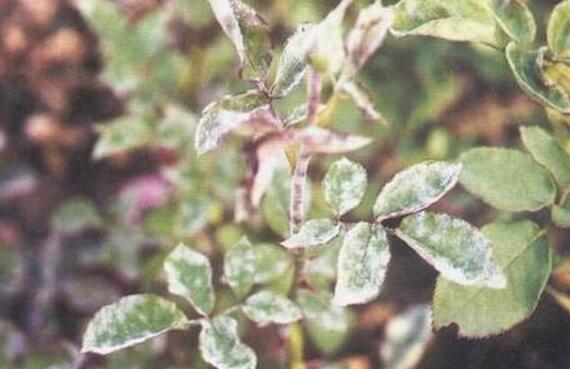
One of the common diseases of roses, it mostly occurs on young leaves. Symptoms of damage: the leaves appear raised, the raised areas become lighter in color and have a powdery white substance, the leaves become uneven and gradually curl, the pathogen spreads, and the entire underside of the leaf is covered with a layer of grayish-white mold.
Solution: In the early stage of the disease, spray a 1500-fold dilution of 25% triadimefon wettable powder; or spray a 0.02-0.03% potassium permanganate solution, spraying once every 7-10 days, and after several consecutive treatments it can be cured. In addition, gardeners should cut off the diseased branches and leaves as soon as possible to reduce the chance of further spread.
2. Downy Mildew
Another disease of roses, it mainly harms the leaves, new shoots, stems, pedicels, and petals of roses. Symptoms of damage: the leaves turn purple to brown-black, then gradually wither or fall off, and the diseased shoots dry up. In addition, after the flowers, pedicels, and petals of roses are infected, similar spots appear.
Solution: After discovering the above symptoms, promptly spray 72% Kelu, etc. To eliminate the occurrence of this disease, gardeners should preferably choose disease-resistant varieties before growing, take careful care, pay attention to ventilation, and avoid one-sided or excessive application of nitrogen fertilizer.
3. Black Spot
This disease mainly harms rose leaves and, in severe cases, can cause the plant's leaves to fall off. Symptoms of the disease: black spots of varying sizes appear on the leaves, then expand and become yellow-brown or dark purple, and finally turn gray-brown; in severe cases, the new shoots die.
Solution: In the early stage of the disease, spray a 1000-fold dilution of 50% carbendazim wettable powder; or spray a 1000-fold dilution of 50% amobam, both are effective. In addition, after discovering this disease, spray water as little as possible, and when necessary do so only in the morning when the weather is clear and the temperature begins to rise, avoiding prolonged wetting of the leaf surface.
4. Dieback
Dieback, one of the common diseases of roses, mainly harms the branches and in severe cases can cause twigs to shrivel and die, so it needs careful prevention. Symptoms of the disease: in the early stage, small red spots appear, then turn black; in severe cases, the lesions girdle the stem, and the branches below the diseased area shrivel and die.
Solution: In autumn and winter, gardeners should thoroughly cut off diseased and dead branches and burn them in a centralized manner. After discovering this disease, spray a 600-fold dilution of 25% carbendazim wettable powder; or spray a 1000-fold dilution of 50% thiram wettable powder, both are effective.
What to Do When Baby's Breath Gets Bugs: Prevention and Treatment of Baby's Breath Pests and Diseases (Diluted Essential Balm Spray)
I. What to Do When Baby's Breath Gets Bugs: Spray After Diluting Essential Balm
Prevention method: Any plant can get bugs, including some common green plants kept at home. Baby's breath can also be grown as an indoor potted plant, and it can get bugs. Many netizens do not know what to do when baby's breath gets bugs. In fact, the prevention and treatment of baby's breath pests and diseases is very simple; just dilute essential balm or spray with laundry detergent.
Pest and disease problems in baby's breath are not very common; generally there are occasionally aphids or snails. At this time, you can spray with diluted essential balm or neutral laundry detergent, and this method can kill aphids. For snails, you can spray metaldehyde granules onto the potting soil. Note that for root rot, you must prevent water accumulation in the potting soil, and drench the roots with green copper emulsion or an 800-fold dilution of Root Rot Spirit.
Because baby's breath grows relatively quickly, and most of what is on the market is cultivated for cut flowers, the time is relatively short and there will basically be no pest problems. It can also be cultivated all year round, generally mainly in spring, autumn, and winter. In summer, when the weather is hot and stuffy with continuous rain, cultivating it with soil gives a relatively high survival rate.
II. Prevention and Treatment of Baby's Breath Pests and Diseases
1. Common pests and diseases: Baby's breath has very few pests; common ones include aphids, mites, and spider mites, and their damage symptoms are basically the same, mainly harming the leaves, and in severe cases a large number of pests will also gather on the flowers. When the disease occurs, promptly remove the branches, or spray a 1000-fold dilution of 40% omethoate emulsifiable concentrate to kill them, or spray a 1000-fold dilution of dicofol and a 1500-fold dilution of fenvalerate to kill them.
Baby's breath is mainly harmed by leaf spot disease, which can be sprayed with a 600-fold dilution of 65% zineb wettable powder. Stem rot and stunting disease are fatal diseases of baby's breath, and the soil must be disinfected with formaldehyde solution before planting. What to do when baby's breath gets bugs, now you know!
III. The Art of Baby's Breath in Flower Arrangement
1. The snow-white, fluffy baby's breath flowers are extremely small and light, and in floral art they are often used as a supporting role, paired with roses, lisianthus, and others to form a typical bouquet of love. In fact, simply appreciating baby's breath is also very distinctive; tie it tightly into a bunch and use it as the main flower in a vase, and you can immediately feel a relaxed and lively atmosphere. After natural air-drying, it can also be made into dried flowers; the whole plant can be dyed or pressed, offering even more variations in use.
2. Baby's breath is generally used as a supporting material for the main flower and is often called the "bridesmaid flower." With its support, the main flower becomes even more brilliant. Just like a supporting role in a movie, only with the contrast of the supporting role does the lead become more vivid and full. The lead and supporting roles depend on each other and bring out the best in each other, so that the theme's ideas can be expressed most vividly.
3. Baby's breath has small flowers and leaves, and each time it blooms it is like a sky full of stars, densely packed and very beautiful. It rarely suffers from pests and diseases, but there are still some relatively common pests and diseases. The above is what the Flower Encyclopedia editor has introduced to you about what to do when baby's breath gets bugs, as well as methods for preventing and treating baby's breath pests and diseases. We hope it is helpful to everyone.
Techniques for Growing Chinese Roses: A Few Simple Points to Teach You
Chinese roses are very beautiful, also known as "monthly red," and are even called the "queen of flowers." Chinese roses do not grow tall, but they bloom every month of every year, with bright red, pink, carmine, yellow, white, and more. They are not as petite as multiflora roses, nor as dazzling as roses; they always bloom in large patches, forming a "sea" of flowers in the yard. How many girls would not want a garden with a patch of Chinese roses blooming like this?
Besides ornamental value, Chinese roses also have medicinal value. They can be steeped in water to drink, used as an ingredient in dishes, used as a medicinal guide, and more, because they have the effects of invigorating blood and reducing swelling, reducing inflammation and detoxifying, and beautifying the face. Chinese roses can be planted in patches or grown in pots, and they are also very convenient to grow.
First is the choice of soil. The soil for planting Chinese roses must be soft sandy soil. Whether planting directly in the ground or in pots, appropriately fertile soil is needed. Therefore, we can mix appropriate fertilizer, wood chips, and other materials into the soil where the Chinese roses will be planted.
Then transplant the Chinese rose seedlings bought back. Generally, the roots of seedlings bought from the market are wrapped; there is no need to shake this off. Directly and gently take the whole clump out and put it into the soil hole (the soil wrapped around the roots is fertilizer wrapped by the grower who cultivated the seedlings), cover with soil, and water thoroughly.
Next, find ways to help it survive and sprout smoothly. You should clearly know what the Chinese rose lacks, and apply fertilizer with whatever element it lacks; pay attention to pruning the branches, cut off crooked and slanted branches, and let the good branches absorb sufficient nutrients.
Finally, pay attention to removing diseases and pests for it. Because Chinese roses have dense branches and leaves, they are relatively prone to illness and bugs (such as green caterpillars, aphids, black spot, and so on), so attention should be paid to applying some liquid medicine and supplementing appropriate elements. At the same time, pay attention to pruning the Chinese roses, not only to make their shape more attractive, but also to increase the air circulation between the Chinese roses and prevent pest problems.