What to Do When Azaleas Get Pests? 4 Pests and 5 Diseases and How to Prevent Them
The azalea, named after the cuckoo bird that cries blood, is a very beautiful flower, ranked among China's top ten famous flowers and deeply loved by flower enthusiasts. However, due to improper care, many people's azaleas fall victim to pests and diseases. So what should you do when azaleas get pests? First, stay calm, then find the cause, and finally solve it accordingly. Below is a guide to azalea pest and disease control - follow along with the editor to learn more.
I. What to Do When Azaleas Get Pests - Find the Cause
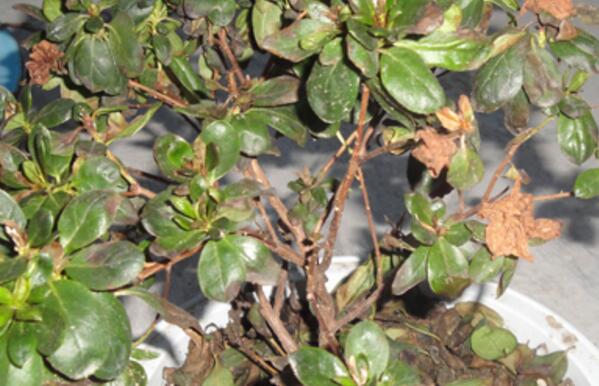
No matter how beautiful a flower is, once it's been bitten by insects, it basically loses its ornamental value. So once you discover pests on your azaleas, flower enthusiasts should deal with them immediately. As for what to do when azaleas get pests, identifying which insect is the key. It is understood that azaleas mainly suffer from 4 types of pests: red spider mites, lace bugs, aphids, and short-bearded moths. The specific symptoms and solutions are as follows:
1. Red Spider Mites
As one of the main pests of flowers, red spider mites also harm azaleas. Once care is improper, they will latch on, causing extreme frustration. It is understood that red spider mites mainly gather on the undersides of azalea leaves, sucking the plant's sap. Symptoms of infestation: grayish-white spots appear on the leaves. In severe cases, the leaves turn yellow and drop off, weakening the plant's vigor.
Solution: When a small number of red spider mites are found, promptly remove the affected leaves and clean them up; when there are many red spider mites, use a 20% dicofol emulsifiable concentrate at 2000 times dilution for spraying, applying several times.
2. Lace Bugs
This insect is also one of the pests of azaleas. It is very small and difficult to see with the naked eye, mainly piercing and sucking leaf sap from the undersides of azalea leaves. Symptoms of lace bug infestation: yellow-white spots appear on azalea leaves, and in severe cases, the leaves drop off.
3. Aphids
When it comes to azalea pests and diseases, everyone thinks of aphids, because any flower can fall victim to them. It is understood that aphids mainly harm azalea young shoots and leaves. Symptoms of infestation: in mild cases, the leaves lose their green color; in severe cases, the leaves curl, become hard and brittle, cannot absorb nutrients, and flowering is affected.
Solution: After discovering aphids, immediately spray omethoate pesticide. However, aphid control focuses on prevention, so flower enthusiasts should spray lime sulfur mixture once after winter begins to eliminate the eggs.
4. Azalea Slugs
Yet another azalea pest, mainly harming the plant's roots, and sometimes the leaves as well. If grown outdoors, slugs generally appear from July to September; if grown indoors, slugs harm azaleas year-round.
Solution: Because slugs fear light and are active from 10-11 PM, flower enthusiasts can use strong light to shine on them, and they will be killed within 2-3 hours.
II. Azalea Pest and Disease Control - 5 Diseases
What to do when azaleas get pests - after reading the above content, everyone should know what to do! However, besides pest infestation, diseases also constantly threaten azaleas. It is understood that azaleas mainly suffer from 5 diseases: leaf gall disease, gray mold, brown spot disease, chlorosis, and root rot. The specific symptoms and solutions are as follows:
1. Azalea Leaf Gall Disease
This disease is one of the common diseases of azaleas, mainly harming flower buds, tender leaves, and new shoots. Symptoms: the color of azalea leaves changes, initially appearing as pale yellow semi-transparent round spots, then turning yellowish-brown, and then the leaf undersides become thick and swollen. In severe cases, the spots merge together, causing deformity and thickening.
Solution: When the above symptoms are found, promptly remove diseased leaves and prune diseased branches and shoots; in severe cases, spray 80% zineb wettable powder at 700 times dilution, spraying once every 7-10 days, and recovery will occur before long.
2. Azalea Gray Mold
Another common disease of azaleas, mainly harming leaves and flowers. Symptoms: necrotic spots appear on the petals and quickly expand into large interconnected lesions.
Solution: After discovering the above symptoms, promptly remove and burn diseased leaves and flowers; in severe cases, spray 50% dicloran at 1000 times dilution for treatment.
3. Azalea Brown Spot Disease
This disease often occurs during the plum rain season and in high-humidity weather, and is one of the main diseases of azaleas. Symptoms: small brown spots appear on the leaf surface, gradually forming irregular large spots, followed by leaf drop.
Solution: Before azaleas contract this disease, promptly apply organic fertilizer or NPK compound fertilizer to strengthen the plant's disease resistance. After discovery, remove the leaves and spray Bordeaux mixture.
4. Azalea Chlorosis
Azalea chlorosis is mainly caused by iron deficiency, generally occurring in areas with alkaline soil. Symptoms: in the early stage, the plant shows delayed greening; in severe cases, the leaf edges become scorched yellow.
Solution: When severe chlorosis is found, flower enthusiasts can use chopsticks to poke several holes about 15 cm deep in the potting soil, and water with a 1:30 ferrous sulfate solution, which can greatly increase the iron content in the soil.
5. Azalea Root Rot
One of the 5 common diseases of azaleas. Symptoms: brown water-soaked spots appear on the root crown area, later gradually becoming wet and rotting, and gradually spreading upward.
Solution: After discovering this disease, promptly spray fungicide. In severe cases, remove the plant from the pot and wash the roots.
What to Do When Western Azalea Leaves Get Pests - Pest and Disease Control for Western Azaleas / 2 Pests and 2 Diseases
In the process of growing Western azaleas, the most feared problem is pests and diseases. Such problems are extremely harmful to the plant, not only greatly affecting its ornamental value, but also causing the plant to wither and die if left untreated for a long time. So what should you do when Western azalea leaves get pests? How should pest and disease control for Western azaleas be done? Let the editor guide you through it below.
I. What to Do When Western Azalea Leaves Get Pests
To know what to do when Western azalea leaves get pests, we first need to understand what kind of pest it is, so we can deal with it in a targeted way, because the treatment methods for each pest and disease are different. Specific details are described in the pest and disease control section for Western azaleas below. Let's take a look.
II. Pest and Disease Control for Western Azaleas
Pests
1. Red Spider Mites
Among the pests and diseases of Western azaleas, red spider mites are a relatively common one. Their peak period is around May each year, so everyone must pay special attention at this time. When this pest appears on the plant, the leaves gradually turn yellow and white, and if not dealt with for a long time, the plant will wither.
Control method: When controlling red spider mites, we can use dicofol at 1000 times dilution for spraying.
2. Aphids
Aphids are a type of phytophagous insect that mainly sucks the sap from Western azalea leaves, causing the leaves to gradually lose their green color. In severe cases, the leaves continuously shrivel and drop off, and flowering is also affected.
Control method: When controlling aphids on Western azaleas, we can use 40% omethoate mixed with 1200 times water to make a solution and spray it on the Western azaleas, generally spraying once every 5-7 days. After 3-4 applications, this pest can be eliminated.
Diseases
1. Brown Spot Disease
Brown spot disease is a fungal disease that mainly threatens Western azalea leaves. When it occurs, many brown spots of varying sizes appear on the leaves. Over time, the spots gradually expand, eventually causing the leaves to gradually wither and drop off.
Control method: When controlling this disease on Western azaleas, we can use 50% thiophanate-methyl at 1000 times dilution for spray control.
2. Chlorosis
Chlorosis is mainly a disease that occurs due to iron deficiency in Western azaleas. In the early stage of the disease, the leaves of Western azaleas show loss of green color. In severe cases, the leaves all turn yellow, and the leaf edges become scorched and withered, greatly affecting the ornamental value.
Control method: When controlling this disease on Western azaleas, we can use a 1:30 ferrous sulfate aqueous solution to pour into the soil, thereby increasing soil acidity and reducing soil alkalinity.
Summary: After reading the above content, I believe everyone has gained some understanding of what to do when Western azalea leaves get pests. In fact, such problems mainly arise from improper cultivation. When you have time, you can read more about Western azalea cultivation methods, which contain reliable instruction. That's all the editor has to share about pest and disease control for Western azaleas. Hope it helps.
A World of Flowers Refreshes the Spirit
The colorful and splendid flowers of summer should not exist only in cool silk garments and fresh mountain fields; they should also bloom in our homes, adorning our surroundings, sharing a space with us, and creating a room filled with fragrance - a "world of flowers." Petal by petal, wisp after wisp of delicate fragrance surrounds the body, and a pleasant, refreshing mood naturally emerges. In leisure time, carefully tending to the infinitely vital flowers and plants, the process of harvesting is always accompanied by an optimistic spirit of self-enjoyment. Gloom and stuffiness are swept away, leaving only refreshment and a room full of fragrance. Flowers in the Home Have Many BenefitsBenefit One: Filtering the Air
In summer, air conditioning is used heavily in homes, with doors and windows closed, and air circulation becomes poor. Therefore, it is suitable to keep some flowers that can filter the air at home. Most flowers carry out photosynthesis during the day, absorbing carbon dioxide and releasing oxygen, and respire at night, absorbing oxygen and releasing carbon dioxide, while cacti and orostachys are the opposite. Keeping these air-filtering flowers together with other flowers in the same room can effectively balance the indoor oxygen and carbon dioxide levels, keeping indoor air fresh.
Benefit Two: Removing Toxins
Spider plants, aloe vera, and snake plants can absorb large amounts of indoor pollutants such as formaldehyde, eliminating and preventing indoor air pollution. Spider plants especially - place one in a room, and within 24 hours, its leaves will "eat" harmful gases such as carbon monoxide from the indoor air, with an effect even surpassing that of an air filter. Milan, orchids, lilacs, cacti, and asparagus ferns can all effectively purify the air.
Camellias can resist harmful substances such as sulfur dioxide, and crape myrtles have strong resistance to toxic gases such as indoor sulfur dioxide, hydrogen chloride, chlorine, and hydrogen fluoride. Plum blossoms have the ability to monitor pollution from sulfur dioxide, hydrogen fluoride, hydrogen sulfide, ethylene, benzene, and aldehydes in the environment. Once sulfides appear in the environment, spots will appear on their leaves, and they may even turn yellow and drop off.
Because flowers have these functions, newly renovated homes are even more suitable for keeping these flowers. It should be pointed out that these functions of plants have certain limits, so windows should still be opened frequently to allow air convection.
Benefit Three: Killing Bacteria
The volatile oils produced by aromatic flowers such as roses, osmanthus, violets, jasmine, lemons, roses, dianthus, lily of the valley, and crape myrtles have significant bactericidal effects. Plants such as crape myrtles, jasmine, and lemons can kill diphtheria bacteria and dysentery bacteria and other native bacteria within 5 minutes.
The fragrances emitted by plants such as roses, dianthus, lily of the valley, violets, roses, and osmanthus have obvious inhibitory effects on the growth of tuberculosis bacilli, pneumococci, and staphylococci.
It should be noted that although flowers have many benefits, do not turn your home into a "flower house." Most flowers release carbon dioxide and absorb oxygen at night, and at night most rooms are closed off. Combined with the carbon dioxide from the soil in flower pots, the human body, and pets, the carbon dioxide concentration will increase, causing oxygen deprivation and affecting health.
Tips on Getting Flowers Through Summer
Veteran grower: Mr. Xie, 61 years old, retired, 40 years of growing flowers.
Key tip: Pay attention to placement.
Deciding placement based on habits is very important. Flowers are divided into shade-loving and sun-loving types, and in summer especially, placement should be decided according to each flower's habits. Orchids, azaleas, camellias, and clivias are shade-loving and should be placed at the base of a south wall or on a north-facing balcony; morning and evening light is sufficient. Roses, lotus, osmanthus, jasmine, and orchids are sun-loving and should be placed in sunny spots whether on a balcony or downstairs, so that they can bloom more, have a stronger fragrance, and grow vigorously.
Veteran grower: Miss Liu, 25 years old, university lecturer, 5 years of growing flowers.
Key tip: Water at the right time and in the right amount.
When watering flowers in summer, water at the right time and in the right amount - water in the morning and evening, not at noon. It is best to water with stored rainwater; when there is no rainwater, tap water can be used, but it should be left in the sun for more than a day before watering. The frequency of watering depends on whether the pot is dry or wet; the potting soil should be kept alternately dry and moist to ensure the roots can breathe normally, generally watering 1 to 2 times per day. The leaves can also be appropriately misted. For acid-loving flowers, it is best to water with 0.2% to 0.3% ferrous sulfate solution to prevent iron deficiency and chlorosis. Some flowers with fleshy roots, such as clivias, cannot withstand strong sun exposure, so the leaves can be appropriately misted at noon when it is relatively dry. Some drought-tolerant flowers, such as cacti and succulents of the Crassulaceae family, should "drink" less water; too much water easily causes root rot.
Veteran grower: Ms. Zhang, 37 years old, civil servant, 14 years of growing flowers.
Key tip: Pay attention to moisture retention and sun protection.
The key to growing flowers on apartment balconies is the humidity issue, that is, moisture retention and sun protection. Summer sunlight is intense; moving flowers indoors will cause them to lack sunlight and grow poorly. Sun-loving flowers do not fear strong sunlight, but still need shading at noon. If neutral, appropriate shading is needed. If they are balcony potted flowers, they can be moved indoors from 10 AM to 3 PM each day. If shade-loving, absolutely prevent contact with strong light. It is best to set up a shade net for the flowers, protecting against sun and also preventing hail damage. Additionally, depending on the variety, place a water tray under the pot to maintain humidity.
Veteran grower: Mr. Sun, 43 years old, doctor, 32 years of growing flowers.
Key tip: Prevent and control pests and diseases.
The rainy season is a time when potted flower pests and diseases frequently occur. Spray 20% thiophanate-methyl wettable powder at 1000 times dilution, or 50% carbendazim wettable powder at 1000 times dilution, about once every half month to prevent pests and diseases. When pests such as aphids, red spider mites, and scale insects occur, spray 40% dimethoate emulsifiable concentrate at 1000 to 1500 times dilution, or 20% fenpropathrin emulsifiable concentrate at 1500 to 2000 times dilution, once every 10 days, for 3 consecutive sprays.
Veteran grower: Grandma Guo, 74 years old, retired, 53 years of growing flowers.
Key tip: Fertilize in appropriate amounts.
In summer, fertilize in appropriate amounts. Too much fertilizer cannot be absorbed by the flowers and instead damages the roots. Generally, flowers that bloom in summer are relatively heat-tolerant and can be given a moderate amount of extra fertilizer, such as crape myrtles, jasmine, impatiens, cockscomb, and dahlias; fertilizer can be applied during the flowering period to make them lush and thriving. For fruit-bearing ornamental flowers such as kumquats and ornamental peppers, applying phosphorus fertilizer after the flowers fade can help them bear more fruit. For tropical foliage plants such as rubber trees and monstera, nitrogen fertilizer should be applied to make the leaves greener. Apply thin fertilizer frequently; too high a concentration easily causes fertilizer burn.
Expert Tips
How to Protect Flowers from Pests and Diseases
Preventing and controlling pests and diseases is an important part of growing flowers. On this issue, the experts' solution is:
1. Detergent kills whiteflies. Whiteflies not only suck leaf sap but also secrete a sticky substance that causes leaves to wither. Mix one spoonful of detergent with 4 liters of water, spray on the leaves, and repeat every 5-7 days until the whiteflies are completely eliminated.
2. Milk kills mites. Mites often attach to flower stems and leaves, causing the branches and leaves to discolor and wither. Mix half a cup of fresh milk, 4 cups of flour, and 20 liters of water, then filter through gauze. Spraying the liquid on the branches and leaves can not only kill mites but also kill eggs.
3. Flour controls pests. If potted flowers develop pests or diseases, take a small amount of flour, first mix it with cold water into a paste, then mix it with an appropriate amount of boiling water to cook it, making a 1:50 solution. Spray on sunny days for good results.
4. Watermelon rind plus cigarette butts can also control pests. Place a washed watermelon rind upside down on the potting soil; you can go several days without watering, and it is excellent nutrients for potted flowers. If you place a few cigarette butts under the melon rind, the tar and nicotine will seep into the potting soil and can kill many common small insects.
5. Additionally, drying used tea leaves in the sun and sprinkling them on the soil surface can also prevent flowers from getting pests.
Clever Summer Flower Care
Jasmine: Summer is the peak blooming season for jasmine; sufficient water and fertilizer promote abundant flowers and lush leaves. Spraying the leaves with clean water on sunny days can noticeably stimulate flowering.
Orchids: Summer is the peak growing season for orchids; ensure adequate water and nutrients. When disease occurs, spray with thiophanate-methyl once every 10 days.
Azaleas: In summer, azaleas grow slowly and are in a semi-dormant state. Avoid scorching sun exposure and excessive fertilization; provide shade. Water 1 to 2 times daily, and mist the leaves and ground to retain moisture and lower temperature.
Peonies: They dislike heat and fear dampness. In summer, place the plant in a ventilated, cool location. No need to water excessively; just keep the potting soil moist to avoid root rot.
Roses: They love fertilizer and water; ensure an adequate supply. Apply decomposed soybean cake water once every half month, and stop fertilizing in mid-July. In summer, black spot disease and powdery mildew easily occur. Use Bordeaux mixture for the former and carbendazim for the latter, spraying once every half month for control.
Milan: They love light and heat; in summer, Milan grows vigorously. Before and after flowering, apply dilute alum fertilizer water once every 10 days, and frequently mist the leaves.