What to Do When Snake Plants Get Pests? 3 Pests and 5 Diseases and Their Control Methods
Snake plants are a fairly common plant in people's daily lives, with a tremendous air-purifying effect for the home, able to effectively clear harmful substances from the air. Although snake plants offer great benefits to people's lives, their leaves are also the favorite habitat of various pests. As for what to do when snake plants get pests, there are actually many treatment methods. How exactly should pest and disease control for snake plants be carried out? Below, the editor will explain it to everyone.
I. What to Do When Snake Plants Get Pests
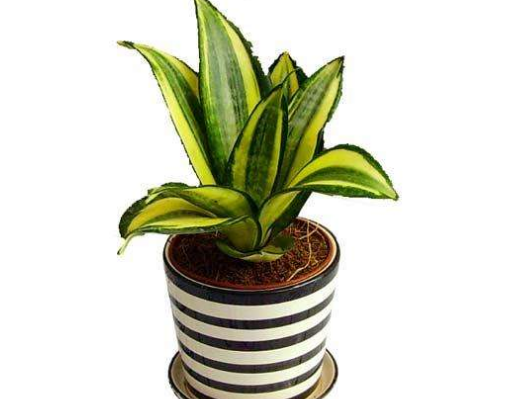
If you want to know what to do when snake plants get pests, you first need to know which pests and diseases there are. Once you know that, of course, it becomes easier to deal with them. As the saying goes, you must suit the remedy to the case. As for what specific pests and diseases snake plants have, and how pest and disease control for snake plants should be done, let's read on.
II. Pest and Disease Control for Snake Plants
1. Scale insects
Damage: They usually live by sucking sap on the leaves or stems of snake plants.
Chemical solution: During the peak nymph stage before the scale shell has formed, spray with 40% omethoate 1000x solution, or 50% malathion 1500x solution, or 255 imidathion 1000x solution, or 50% dichlorvos 1000x solution, or 2.5% deltamethrin 3000x solution to kill them, spraying once every 7-10 days, for 2-3 consecutive times.
Manual solution: When cultivating flowers, for leaves with scale insects, you can cut off the infested leaves and burn them together; never throw them away carelessly.
2. Slugs
Damage: They feed on leaves, leaving holes. They are a harmful animal with complex feeding habits and a large appetite.
Chemical solution: Use 6% metaldehyde molluscicide granules 0.5kg-0.6kg or 3% methiocarb granules 1.5kg-3kg, mix with dry fine soil 10kg-15kg and evenly broadcast around the plants.
Manual solution: Place food that slugs like, such as tender cabbage leaves, as bait in the area for manual capture.
3. Mites
Damage: They harm the leaves of plants, piercing and sucking the stems and leaves. In the early stage, there are a large number of pinhead-sized yellow-brown spots of lost green on the front of the leaves. Sometimes it starts from the middle leaves of the plant, and the leaves gradually turn yellow.
Chemical solution: When the above symptoms are found, you can use 40% dicofol emulsifiable concentrate 1000x-1500x solution, or 1.8% abamectin emulsifiable concentrate 6000x-8000x solution, etc., all of which can achieve ideal control effects.
4. Leaf spot disease
Symptoms: It mainly occurs on the leaves. The leaf spots are nearly round to oblong, light reddish-brown, with light yellow edges, slightly sunken, and sometimes the lesions merge. When a single ring cuts through the leaf, the upper part of the lesion tends to die. In the later stage, the lesions often fall off and form holes. Leaves near the ground that are infected often cause local rot, and in severe cases cause stem base rot or the whole plant to topple and break. It is prone to occur in hot and rainy seasons.
Treatment: In the early stage of the disease, you can choose Bordeaux mixture, 53.8% Kocide 2000 dry flowable 1000x solution, spraying 2-3 times consecutively, once every 5-7 days, and it can recover to health in about a month.
5. Rot disease
Symptoms: It occurs on the leaves. In the early stage, the lesions are water-soaked spots; after expansion, the lesions range from round to irregular, dark gray, soft rot, slightly sunken; in the later stage, the lesions dry and sink, gray-brown, with reddish-brown edges, and black mold spots appear under humid conditions.
Treatment: Replace the potting soil in time or mix quintozene into the soil, or spray the soil with soil fungicide; in the early stage of the disease, spray 50% carbendazim or thiophanate-methyl 800x solution.
6. Bacterial soft rot
Symptoms: After infection, the leaves change from green to light yellow to grayish yellow. Water-soaked soft rot appears at the stem base near the ground, and in the later stage the affected leaves tend to topple and break. When the rhizome is infected, it shows grass-yellow soft rot, and the roots rot and die. The root system also turns black and rots to death when waterlogged. It is especially severe in spring and summer with high temperature and rain, and in typhoon and heavy rain weather.
Treatment: When the above symptoms are found, flower lovers should promptly cut off and burn them. In the early stage of the disease, you can choose medical streptomycin sulfate 2000x solution or 30% Lude suspension concentrate 500x solution, spraying once every 5-7 days, for 2-3 consecutive sprays for control.
7. Anthracnose
Symptoms: Anthracnose lesions begin at the leaf tip or leaf margin, brown, with obvious or unobvious concentric rings on the spot surface, and scattered or regularly arranged small black dots form on the diseased leaves. The pathogen is a fungus of the subphylum Deuteromycotina, called Colletotrichum sansevieriae. The hot and humid shaded conditions in the south favor the disease, especially from April to June when the disease is more severe.
Treatment: In winter and spring, cut off the diseased leaf parts and withered diseased leaves, increase the application of phosphorus and potassium fertilizer, and in the early stage of the disease promptly spray 50% thiram wettable powder 800x solution, or 75% chlorothalonil + 70% thiophanate wettable powder (1:1) 1000x solution.
8. Sunscald
Symptoms: The affected leaves show unclear wrinkling and wilting, and in severe cases the wilted area becomes water-soaked, the diseased area necroses, turns yellow and rots until the patches dry up.
Treatment: From June to October, proper shading is needed. Ventilation should be strengthened or water introduced to lower the temperature. Do not spray water on plant leaves around noon, and it is not easy to harvest plants at high temperatures. Reduce mechanical damage during harvest.
What to Do When Variegated Snake Plants Get Pests? Pest and Disease Control for Variegated Snake Plants / Spray with Pesticide
Variegated snake plant (Sansevieria trifasciata 'Laurentii'), as the name suggests, is a type of snake plant, characterized by golden-yellow edges on the leaves, looking very beautiful. However, the beauty of the variegated snake plant requires everyone to care for it carefully. Once it gets pests or disease, all of this will be destroyed. So what should be done when the variegated snake plant gets pests? The following is the pest and disease control for variegated snake plants. Follow the editor and take a look!
I. When Variegated Snake Plants Get Pests, Spray with Pesticide
As a common foliage plant, the cultivation method of the variegated snake plant is not difficult, but because there are many beginners, many of them do not care for it as required, resulting in symptoms of pests and disease, seriously affecting the plant's ornamental value. As for what to do when the variegated snake plant gets pests? It is actually very simple: find the specific pest, and then spray the corresponding pesticide.
II. Pest and Disease Control for Variegated Snake Plants
1. Scale insects
With proper water and fertilizer, the variegated snake plant will grow very luxuriantly, which is good, but if the indoor space happens to be poorly ventilated, over time the plant is likely to be attacked by scale insects. Symptoms of damage: the plant's leaves lose their luster, the golden edges also become dull, and in severe cases the entire plant will die.
Control method: First move the plant to a ventilated place, and cut off the diseased leaves to reduce the source of insects; when there are very many scale insects, it is necessary to spray 40% omethoate 1000x solution, or 50% malathion 1500x solution for control.
2. Mites (red spider mites)
Besides scale insects, mites are also one of the pests and diseases of the variegated snake plant, among which red spider mites are the most common. Symptoms of damage: yellow-white small spots appear on the leaves of the variegated snake plant, then gradually turn red and spread to the whole leaf, and may even cause the leaves to curl, turn yellow and fall off.
Control method: After discovering red spider mites, pesticide should be sprayed immediately for control. The agent can be 40% dicofol emulsifiable concentrate 1500-2000x solution, or 1.8% abamectin emulsifiable concentrate 6000x solution, spraying once every 7 days, 2-3 sprays is enough, with good results.
3. Slugs
After ruling out scale insects and red spider mites, the insects attacking the variegated snake plant are generally only slugs. This insect is a harmful animal with complex feeding habits and a large appetite, and will eat the leaves of the variegated snake plant into holes, seriously affecting the plant's ornamental value.
Control method: After discovering slugs, you can use tender cabbage leaves for manual trapping; or you can use 6% metaldehyde molluscicide granules 0.5kg-0.6kg, mix with dry fine soil 10kg-15kg and evenly broadcast around the plants, and the slugs will soon go away.
4. Leaf spot disease
Besides getting pests, under improper care the variegated snake plant can also get diseases, among which leaf spot disease is the most common. Symptoms: In the early stage, nearly round or oblong spots appear on the leaves; in the later stage, the lesions fall off and form holes, and lesions near the ground easily rot, thereby causing stem base rot or the whole plant to topple and break.
Control method: During normal care, watering should be reduced to lower the soil humidity; when the above symptoms are found, you can spray Bordeaux mixture, 53.8% Kocide 2000 dry flowable 1000x solution, spraying 2-3 times consecutively, once every 5-7 days, and it can recover to health in about a month.
5. Anthracnose
One of the common diseases of the variegated snake plant, it mainly occurs under conditions of high humidity and stuffiness, water accumulation in the pot, and poor ventilation, and the affected part is the leaves. Symptoms: Yellow-brown sunken small spots appear on the leaves of the variegated snake plant, then expand into dark brown round spots, the leaf tip dries up, and then the whole plant dies.
Control method: Cut off the diseased leaves and burn them together to reduce the source of disease; in severe cases, spray 50% carbendazim 1000x solution or 70% thiophanate-methyl 1000x solution for antisepsis, and it takes effect after 2-3 times.
Overall, the variegated snake plant is not difficult to grow. You only need to place it in a ventilated place and be careful not to water it too much, and it will not easily get pests or disease. Of course, if you find pests and diseases on the variegated snake plant, do not be afraid; just solve them according to the control methods above. That is all the editor has to introduce about pest and disease control for variegated snake plants. We hope it can help everyone.
Succulent Plant Care for Beginners - Fertilizing, Temperature, Propagation, and Pest and Disease Control
FertilizingFor winter-growing and intermediate-type plants, apply a decomposed dilute liquid fertilizer or compound fertilizer about once every 20 days. The fertilizing time can be on a sunny morning, and be careful that the fertilizer solution does not splash onto the plants. Summer-growing types do not need fertilizing.
Temperature
15-28 is the most suitable, and 5-35 is the plant's tolerance limit.
Propagation
After leaf cuttings take root, you must wait until the leaf withers, and after the buds grow larger, then transplant. Wait until the seedlings grow to two or three cm before doing so. When doing leaf cuttings, use a large pot, do not spray, and water when the soil is dry, but do not water onto them.
Beheading is suitable in mid-April each year; just leave three to four leaves below, then dry the cut-off part for five days before taking cuttings.
Many succulents can be propagated by cutting a branch from the stem with a sharp knife and taking a cutting. Any tool used to cut plant tissue must first be sterilized with alcohol. The best cutting location is, for example, below a node on a stem with nodes, or below the leaf petiole or the base of a new bud on the stem. Be careful not to damage the beauty of the mother plant's shape when taking cutting branches, and it is best to take branches more than one stem node away. Plant the cutting into a high-temperature-sterilized sandy medium, which can be pure sand, coarse sand, or vermiculite. Sometimes the cutting can be planted directly after being cut, or it can be dried for one or two days first to let the wound tissue heal and avoid fungal infection.
Many succulents can produce a new plant from just one leaf through leaf cuttings. For example, Crassulaceae genera Adromischus, Echeveria, Sansevieria, and many epiphytic Cactaceae plants. Gasteria plants can sometimes also be propagated by leaf cuttings. Dry the removed leaf for a few days so that the wound closes and healing tissue forms, then place the leaf into a propagation pot, so that only the base of the leaf touches the growing medium. It feels that this works better than inserting the lower part of the leaf into the medium, and it is less likely to rot. After a period of time, new roots can be observed growing, and then new buds and new leaves will also appear.
Cuttings are best taken at the beginning of the growing season, usually in spring, except of course for winter-growing plants. After taking cuttings, place them in a well-ventilated, brightly lit place at room temperature 20°C, but avoid sunlight. Putting the cuttings into a closed environment that can maintain suitable humidity until they root is also a good method. A simple way is to put a large polyethylene plastic bag over a large flower pot, or cut off the upper half of a clean transparent plastic bottle and invert it over a pot of comparable size. Water the cuttings sparingly rather than generously, and only increase watering after obvious growth can be observed.
Division propagation: Many succulents are clustered, or have thick large tuberous roots, and can be propagated by division. After taking the plant out of the pot, remove the potting soil as much as possible. The specific method of division depends on the plant's growth type. For example, multi-headed varieties in Asclepiadaceae, Crassulaceae, and Cactaceae can be divided when repotting, and young plants that are growing well and have already rooted independently can be separated and potted individually.
Offset propagation: Many cacti and succulents will produce offsets or pups at the base of the mature plant, which are usually easy to pick or cut off, and after drying for a few days can be potted separately. Doing this is also good for the mother plant, because these offsets or pups consume a lot of nutrients from the mother plant. Some plants will sprout tiller buds on the leaf edges or flower stalks, which can also be picked off and cultivated.
Pest and disease control
1. Red spider mites
They mainly harm succulents in Asclepiadaceae, Euphorbiaceae, Asteraceae, and Liliaceae. They suck the sap of young stems and leaves with their mouthparts. The affected leaves show yellow-brown marks or wither and fall off, and such scars remain forever. Generally speaking, you can check whether there are spider webs on the back of the leaves, and also very small red/white/dark insects. If there are, it is usually red spider mites.
Control measures can be taken by increasing environmental humidity to reduce and avoid spread. You can use 40% dicofol 1000-1500x solution to suck and kill them, or abamectin. Methods for removing red spider mites
Manually removing red spider mites has low cost, readily available materials, and excellent effect.
Materials: one toothpick, a small amount of double-sided tape.
Method: Cut the double-sided tape into small pieces 0.5-1CM square and place them flat on the tabletop; take one toothpick, press one end onto the adhesive surface to fix it, then gently roll the toothpick in one direction so that the double-sided tape wraps around one end of the toothpick; this makes a simple miniature "lint roller". Place the plant with red spider mite damage under bright light (because the pests are too small, they cannot be seen clearly at all in poor light), then roll the "lint roller" over the body. The red spider mites will find it very hard to escape. Because the "lint roller" is very small, it can flexibly move between ribs and spines, leaving red spider mites nowhere to hide. When a "lint roller" is covered with pests, you can take a short rest and then make a new one. This method is suitable for use in the early stage of the disease, when the body has not been extensively damaged, and the effect is quite good.
2. Scale insects
They have a very wide range of damage, often harming succulents with tightly arranged leaves such as Agave and Haworthia, sucking the sap of stems and leaves, causing poor growth of the plant, and in severe cases withering and death. Their peak period is earlier than that of red spider mites, and they often already multiply in large numbers in early spring. But there is also an easy-to-control aspect to their damage, namely that they often concentrate only on a few plants; sometimes one plant is covered with scale insects, while a neighboring plant has not even one.
Control measures: When there are few, they can be removed with a brush. In addition, they can also be sprayed and killed with Supracide 800-****x solution. Mixing a certain amount of carbofuran into the growing soil has a preventive effect, but the efficacy only lasts 3 months.
3. Whiteflies
Their damage range is not large, and they mostly occur on shrubby succulents in Euphorbiaceae such as Euphorbia tirucalli, Euphorbia milii, Euphorbia neriifolia, and Euphorbia mammillaris, piercing and sucking sap on the back of leaves, causing leaves to turn yellow and fall off, while also inducing sooty mold, with large patches of unsightly black powder on the stems and leaves, directly affecting the plant's ornamental value.
Control measures: Besides improving environmental ventilation, in the early stage of occurrence you can spray and kill with 40% omethoate emulsifiable concentrate 1000-2000x solution, and you can also use malathion 500x solution or dimethoate mixed with dichlorvos 1000x solution for spraying. Two days after spraying, use a strong water stream to wash off the dead insects together with the black powder.
Rot Treatment
Rot is a common disease of succulents, usually a fungal infection caused by overwatering or an overly humid growing environment. Some insects such as mealybugs can also cause rot, especially root mealybugs. The wounds caused when these pests suck plant sap can lead to fungal infection.
Rot has many forms of manifestation, and by the time you discover it, it is often already too late. Always be alert to discolored areas on the plant, as well as softened, mushy stems and leaves.
Once a part of a succulent is discolored and softened into mush, it is rotten. If it is rotten, it must be cut off immediately. The knife and hands must be sterilized before and after to avoid infecting other plants. If it is a fungal infection, spray the plant with fungicide, and the wound must be completely dry before being put into soil.
There are many kinds of rot, briefly introduced as follows:
Crown rot: the inside of the plant rots, causing the plant to fall over;
Stem rot (mainly Euphorbiaceae): the stem rots, usually appearing at the bottom of the stem;
Spotted stem rot: caused by orange stink bugs (Orange stink bugs);
Fungal rot: brown, watery stains appear on the plant;
Aizoaceae rot: occurs on branches and stems
Black rot: often occurs after cotton aphid or root mealybug infection.
Treatment methods for rotted succulents
When handling rotted plants, be sure to keep tools clean and sterile, and be sure to wash your hands carefully before touching other plants.
Crown rot: Use a sharp knife to cut away the infected part, then stuff crushed charcoal and sulfur into the wound, and the wound should be completely dry.
Neck rot: Cut off the rotten part, and treat the rest as a stem cutting. Remember that it can only be put into soil after the wound is completely dry.
Fungal rot: Use a clean knife to cut off the damaged part, and cover with sulfur. Spray the plant with a mixed solvent of Benlate (translator's note: a fungicide) and mancozeb.
Black rot: Use a clean knife to cut off the infected part, spray with Benlate, and cover with sulfur.
If you do not have the above agents, some commonly used disinfectant and antiseptic medicines will also do. The most important thing is to cut off the rotten part, then place the plant in a ventilated place and wait for the wound to dry and heal. As long as it is cut off, with the tenacious nature of succulents, they generally survive. Some varieties that are harder to cultivate are not included here.