How to deal with worms on calla lilies? 3 pest and 3 disease control methods
Calla lily, a flower with beautiful meaning and beautiful flower colors, is one of modern people's favorites. However, due to improper care, many people's calla lilies develop various problems, such as being attacked by insects. So how do you deal with worms on calla lilies? It is actually very simple: identify which insect it is, then solve it accordingly. The following is pest and disease control for calla lilies; follow along with the editor to learn more.
I. How to deal with worms on calla lilies, spray pesticide to kill them
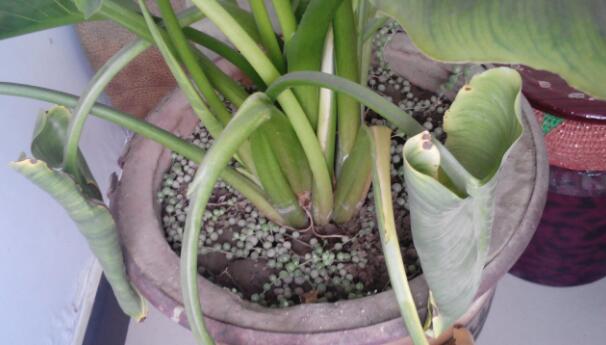
Calla lily has a long flowering period and is a highly ornamental flower, so once it is infested by insects, its beauty will be seriously affected. As for how to deal with worms on calla lilies, it is actually not difficult; as long as you carefully find out which insect it is, then solve it accordingly.
(1) The three major pests of calla lily
When calla lilies are kept at home, the most feared thing is worms. Good fresh flowers turning into withered branches and fallen leaves is really a headache. According to what is known, calla lily mainly has three pests: scale insects, two-spotted spider mites, and seed flies. The specific symptoms and solutions are as follows:
1. Scale insects
Scale insects are one of the main pests of calla lily. They mainly damage the leaves of bromeliads, and in severe cases the leaves turn yellow, wither, and even fall off. How to deal with yellowing calla lily leaves has been introduced earlier, so it will not be discussed further here.
Solution: When the above symptoms are found and scale insects are confirmed, flower lovers should solve it immediately. When there are few scale insects, they can be scraped off directly. When there are many scale insects, 50% parathion can be used for spray killing.
2. Two-spotted spider mite
This insect is also called the cotton red spider mite. It is also one of the common pests of calla lily. It generally sucks leaf sap on the underside of calla lily leaves. When infested by two-spotted spider mites, in mild cases the leaves turn red, as if burned; in severe cases, leaves fall.
Solution: When this pest is found, diseased leaves should be removed and disposed of centrally; medication can also be used by spraying 40% dicofol 1000-fold solution, or 20% amitraz 2000-fold solution to solve it.
3. Seed flies
One of the most important pests of calla lily, it is also a type of maggot. In the larval stage, it erodes young seedlings, causing them to rot and then die. Once entangled by this insect, the consequences are very serious.
Solution: When this pest occurs, some insecticidal powder can be sprayed, or its soil and seeds can be treated with chemicals at the very beginning when preparing to plant.
(2) The four major diseases of calla lily
How to deal with worms on calla lilies? After reading the above, everyone should know what to do. However, besides being attacked by insects, diseases also constantly endanger calla lilies, and calla lily mainly has 3 diseases: gray mold, soft rot, and leaf spot. The specific symptoms and solutions are as follows:
1. Gray mold
This disease is one of the diseases of calla lily. It mainly harms the leaves, peduncles, and flowers of calla lily. Symptoms: leaves produce yellow-green to dark-green water-soaked spots, which gradually expand; when humid, they become soft and rot, and gray, earthy-yellow mold layers appear on the affected parts.
Solution: When this disease is found, diseased leaves should be removed promptly to avoid contact infection. If necessary, spray 50% carbendazim 500-fold solution or 75% chlorothalonil 500-fold solution. After several applications, it can basically be solved.
2. Soft rot
When suffering from this disease, the part of the calla lily near the soil surface develops soft rot and separates, the roots also rot, and the whole plant suddenly wilts and dies. If the leaves are diseased, they will become soft and wet-rotted; when the peduncle is attacked: the flower turns brown, and the peduncle soft-rots and falls off. It is a bacterial disease.
Solution: When this disease is found, flower lovers should remove the diseased corms and disinfect the soil around the diseased plants with 40% formaldehyde 40-fold solution.
3. Leaf spot
Leaf spot is one of the diseases of calla lily and often occurs during growth. Symptoms: tiny lesions on the leaves, nearly round, gray, and gradually expanding and merging into irregular large rotten patches, sometimes opposite the flowers and peduncles.
Solution: When this disease is found, flower lovers should promptly remove residual diseased leaves to avoid excessive water. In severe cases, use 1000-1500-fold emulsion, or 80% Daconil 500-fold, spraying 25% every 7-15 days for 2-3 times.
How to deal with worms on dahlias, pest and disease control for dahlias / 3 pests and 2 diseases
Dahlia is a plant with high ornamental value, and it can be seen in many gardens in our country. However, even plants with high ornamental value will wither if pests and diseases appear. Regarding how to deal with worms on dahlias and how to carry out pest and disease control for dahlias, the editor below will take everyone to learn about it.
I. How to deal with worms on dahlias / chemical treatment
Regarding the question of how to deal with worms on dahlias, first you need to understand what pest or disease has appeared. Only by finding the cause can you treat it in a targeted way. The most effective method is that we can choose chemicals for prevention and control.
II. Pest and disease control for dahlias
1. Dahlia stem borer pest
In the pest and disease control of dahlias, the dahlia stem borer is the most common one. The peak period of this pest is from August to September each year, so special attention must be paid at this time. This pest mainly harms the stems of dahlias, gradually eating the sap in the stems, and if it does not come out for a long time, it will cause the plant to wither and die.
Control method: This pest is easiest to deal with in its young stage. We can choose 50% fenitrothion emulsion 1000-1500-fold solution to spray the whole plant for control.
2. Fruit borer pest
The peak period of the fruit borer pest is around May to June each year. It mainly harms the young leaves and flower centers of dahlias, gradually biting and eating them, thereby causing the plant to wither.
Control method: When this pest appears, it must be dealt with promptly. We can choose 4% parathion 1500-fold solution to spray the plant, generally spraying once every 7-10 days. After 1-2 times, this pest can basically be eliminated.
3. Aphid pest
There are many plants harmed by aphids, and dahlia is one of them. This pest is very small, mostly only about 2 mm, and is difficult to detect with the naked eye, so it can only be judged by symptoms. This pest mainly sucks the sap in the stems of the plant, causing the plant to lose nutrients and wither and die.
Control method: When this pest appears, it is best to prevent and control it in the early stage. If delayed for too long, it may become impossible to cure. For this pest, we can use 50% fenitrothion emulsion 1000-fold solution for spray killing.
4. Root nodule disease
As the name suggests, this disease mainly harms the roots of dahlias. In the early stage of the disease, a white nodule-like object appears on the roots. As time goes on, its volume gradually increases, and finally the plant withers.
Control method: When this disease is found in the early stage, we should promptly cut off the diseased nodules, then use 00-fold copper sulfate solution to disinfect the wounds, and this disease can basically be eliminated.
5. Brown spot disease
Brown spot disease is a fungal disease that appears during the growth of many plants. This disease mainly harms the leaves of dahlias. In the early stage, some dark disease spots appear on the leaves. As time goes on, they gradually spread, and finally cause the leaves to continuously fall off, thereby withering and dying.
Control method: When this disease appears, we should promptly spray dahlias with 0.2-0.3°Be lime sulfur mixture, generally spraying once every 7-15 days. After 2-3 times, this disease can basically be completely eliminated.
How to deal with worms on gladiolus, pest and disease control for gladiolus / 3 diseases and 1 pest
The reason gladiolus is popular is related to the extremely high ornamental value of its flowers. However, when flower lovers plant it, improper care can cause worms to grow on gladiolus plants, not only causing leaves to turn yellow and flowers to be fewer, but in severe cases also causing the whole plant to die. Therefore, we need to find ways to avoid this situation. So how to deal with worms on gladiolus? Let us look at the pest and disease control methods for gladiolus.
How to deal with worms on gladiolus
Thrips: This is the most common pest on gladiolus plants. It generally hides by day and comes out at night, hiding between leaf axils during the day, and coming out on nights with weaker light or on cloudy and rainy days to harm leaves, feeding on leaves, rhizomes, and flowers, making leaves change from green to yellow, causing white-gray spots on the corolla, and finally the petals curl.
Control method: For thrips control, attention should be paid to fertilization in gladiolus cultivation methods, applying more phosphorus and potassium fertilizer to improve disease resistance. When the disease occurs, it is necessary to spray 40% dimethoate emulsion 1000-fold solution.
Pest and disease control methods for gladiolus
1. Mosaic disease
The main affected parts are leaves and flowers. At first, round spots or angular spots appear on the leaves, then expand into polygonal shapes and turn brown. After the leaves become diseased, they turn yellow and curl, the plant becomes shorter, the flower spike also becomes shorter, and the flowers are difficult to bloom.
Control method: When planting, choose robust corms that do not contain virus. They can be disinfected with potassium permanganate solution. After the disease occurs, promptly pull out diseased corms, then spray the leaf surface with 58% mancozeb wettable powder 500-fold solution or 75% chlorothalonil wettable powder.
2. Leaf spot
Although the main affected part is the leaves, if not treated promptly it will infect the corms. Leaf spot causes brown disease spots to appear on the leaf surface of gladiolus. The spots will continuously expand, and the color will continuously deepen. Finally, the entire leaf will wither, and if the corms are infected, it will affect the reproduction and growth of gladiolus.
Control method: Like mosaic disease, in gladiolus pest and disease control, the preventive measure for leaf spot is also to choose excellent disease-free varieties for planting. Medicines used after the disease occurs include 75% chlorothalonil 800-fold solution, or 65% zineb solution.
3. Fusarium wilt
It mainly harms the corms of gladiolus, and later infects the whole plant. In the early stage of the disease, small reddish-brown spots appear on the corms, then continuously expand, sink, and shrink, causing the corms to rot, and white filamentous bodies also appear. In severe cases, the plant grows poorly, and the flowers produced are also deformed.
Control method: During propagation, the seed corms are best soaked in formalin solution for 2 hours, then washed clean with 40-degree warm water, dried in a cool place, and refrigerated. When sowing, they still need to be disinfected again, for example, soaked in 500-fold carbendazim solution, which can prevent the occurrence of Fusarium wilt.