What to Do When Potted Honeysuckle Gets Bugs? Pest and Disease Control and Spraying Methods
Honeysuckle is a very fragrant flower, and its unique floral scent is deeply loved by people. With advances in potting techniques, honeysuckle can now be grown at home too. Any plant in nature can get bugs, and of course honeysuckle is no exception. What should you do when honeysuckle gets bugs? The common pests of honeysuckle include red spider mites, wood leopard moths, winter round-tailed aphids and so on. Below, let us take a look at honeysuckle pest and disease control.
I. What to Do When Honeysuckle Gets Bugs, Spray Insecticides to Kill Them
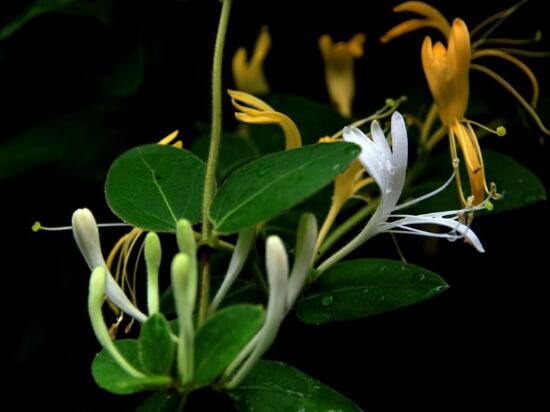
When it comes to honeysuckle, everyone is surely familiar with it. Honeysuckle has very strong vitality, but improper care can also lead to pest problems. Earlier we talked about what to do when honeysuckle leaves turn yellow; now let us look at what to do when honeysuckle gets bugs. Honeysuckle has many kinds of pests and diseases, and below we explain the solutions one by one.
II. Honeysuckle Pest and Disease Control
1. Red spider mite
This pest is one of the main pests of honeysuckle, though it is not very common. But once honeysuckle is infested by red spider mites, it is very troublesome. They harm the plant by piercing their mouthparts into the flower's leaves and sucking the sap, destroying the chlorophyll, causing the leaves to show grayish-yellow spots or patches, and the leaves become withered and yellow, or even drop off.
Solution: What should you do when honeysuckle gets bugs? When the above symptoms are found, pay attention. If only a few leaves are affected, the infested leaves can be removed. When many leaves are affected, spray pesticide as early as possible for control. Commonly used pesticides include propargite, dicofol, dimethoate, huachongjing, and fenvalerate.
2. Coffee tiger longhorn beetle
The coffee tiger longhorn beetle is an important stem-boring pest of honeysuckle. It is mainly distributed in the old honeysuckle-producing areas of Shandong, especially in Pingyi and Feixian. Surveys show that more than ten-year-old flower clumps have an infestation rate of 80%. Honeysuckle affected by this pest grows weak and will die completely after a few years.
Solution: For honeysuckle pest and disease control, during the adult emergence period from April to May, and the first stage of newly hatched larvae, spraying with 80% dichlorvos emulsion at 1000 times dilution has a certain effect in controlling adults and newly hatched larvae.
3. Winter round-tailed aphid and carrot micro-tube aphid
These pests use adults and nymphs to pierce and suck leaf sap, causing leaves to curl and turn yellow. If damaged during the bud stage, the flower buds become deformed. During the damage process they secrete honeydew, which leads to sooty mold, affecting the leaves' photosynthesis. In October, these insects migrate from the primary host plants of the Apiaceae family to honeysuckle, where males and females mate and lay eggs to overwinter. Damage is most serious in early to mid-May, severely affecting the yield and quality of honeysuckle. They generally migrate back to the primary host in June.
Solution: Spray with 40% dimethoate emulsion at 1000 times dilution or 80% dichlorvos emulsion at 1000-1500 times dilution, once every 7-10 days, for 2-3 consecutive times. Do not spray pesticide at least half a month before harvesting honeysuckle flowers, to prevent pesticide residue on the honeysuckle.
4. Leopard wood leopard moth
After the leopard wood leopard moth (dù) larvae hatch, they bore in from branch forks or new shoots. After 3-5 days, the damaged new shoots of honeysuckle wither. After the larvae grow to 3-5 mm, they expel frass from the entry hole, making the pest damage easier to spot at this time. The larvae bore and chew between the xylem and phloem, making the branches easy to break in the wind. The damaged side of the branch often has several frass holes, with frass in the shape of long cylinders, light yellow. In September to October, dead plants appear in the flower clumps. This pest has the habit of moving between plants to cause damage.
Solution: Clean up promptly and observe carefully. After harvesting the second flush of flowers, be sure to combine pruning in late July to early August and cut off infested branches. If pruning is too late, the larvae will bore into the lower thick branches, and cutting the branches again will affect the growth vigor of the flower clump. Spray pesticide. I believe everyone now knows what to do when honeysuckle gets bugs.
III. Honeysuckle Disease Prevention
1. Brown spot disease
It mainly harms leaves. At the initial stage, many yellow-brown small round spots appear on the leaves, which later gradually expand into round or polygonal lesions. When humid, gray-black mold-like substances grow on the underside of the leaves. When dry, they easily crack. In severe cases, the leaves wither and yellow, then drop off, affecting plant growth and flowering.
Control method: Keep things clean, promptly remove diseased branches, sweep up fallen leaves, and during the disease period cut off diseased leaves at any time, then take them outside the garden and burn them in a centralized manner. In the early stage of disease, spray with 1:15:200 Bordeaux mixture, or use 50% carbendazim wettable powder at 800 times dilution, or 75% chlorothalonil wettable powder at 1000 times dilution, spraying once every 7 to 10 days, for 2 to 3 consecutive sprays.
2. Rust disease
A leaf disease that easily occurs under high humidity. After infection, tea-brown or dark-brown small spots appear on the underside of the leaves, and some nearly round lesions also appear on the leaf surface, with a small blister in the center. In severe cases, it can cause the leaves to wither and die within a short period.
Control method: In cultivation management, apply more phosphorus and potassium fertilizer and less chemical nitrogen fertilizer to promote vigorous plant growth and improve disease resistance. For chemical control, spraying must be done at the early stage of disease. Fungicides that can be used include 50% triadimefon wettable powder at 800 times dilution, or 50% dinitrocreosol at 200 times dilution, spraying once every 7 to 10 days, for 2 to 3 consecutive sprays. During the growing season, spreading 400 times zineb around the plants has a relatively good control effect. The above is all the content on honeysuckle pest and disease control and what to do when potted honeysuckle gets bugs. We hope it can help everyone.
What to Do When Potted Cactus Gets Bugs, Cactus Pest and Disease Control (Spray Pesticides to Kill Insects)
I. What to Do When Potted Cactus Gets Bugs, Spray Pesticides to Kill Insects
Although cactus is very easy to grow, improper care can still lead to pests and diseases. Common pests and diseases of potted cactus include: locusts, red spider mites, scale insects and so on. Many people do not know what to do when cactus gets bugs. In fact, the control methods for each pest and disease are different. Let us take a look at cactus pest and disease control methods.
II. Cactus Pest and Disease Control
1. White armored scale insect
Cactus white armored scale, also known as cactus scale, belongs to Homoptera, Diaspididae. The female's scale is nearly round, about 2 mm, grayish-white. It occurs 2 to 3 generations a year, and in greenhouses or plastic sheds it occurs for multiple generations a year, causing damage all year round. In spring, from mid-January to early February, hatched nymphs can be seen gathering on the fleshy stems. From April to September, it enters the peak hatching period, the insect population grows rapidly, the bodies densely cluster together, and overlapping generations are serious. The growth and development of damaged plants are inhibited, and in severe cases part or all of the fleshy stem rots.
Solution: If cactus is damaged by armored scale, immediately remove by hand the scale insects parasitic on the cactus's fleshy stems, and pay attention to maintaining the plant's ventilation and light transmission to reduce pest occurrence. Chemical control measures can be adopted. Seize the peak hatching period of nymphs, when nymphs have weak resistance to pesticides, and choose 40% omethoate at 1000 times dilution, or 50% fenitrothion at 1000 times dilution, or 40% profenofos emulsifiable concentrate at 1500 times dilution, or 20% fenvalerate emulsifiable concentrate at 2500 times dilution. Spraying any of these on cactus plants damaged by white armored scale can achieve good control effects.
2. Red spider mite
Red spider mite, commonly known as fire dragon, is a type of mite. Its individual body is very small, less than 1 mm long, round or oval, orange-yellow or reddish-brown. Try your best to guard against red spider mites, so the cultivation environment must be well ventilated with suitable humidity, and avoid dryness and stuffiness as much as possible.
Solution: The pesticides for controlling it include 40% omethoate at 1500 times dilution and 40% dicofol at 1000 times dilution. In summer, maintain spraying on a 1-2 week cycle, and carry out thorough spraying before overwintering.
3. Aphids
There are many kinds of aphids, usually differing in green, yellow, black, and tea color. Aphids occur all year round, and generally reproduce fastest at around 29°C. They mostly gather on the plant's buds, tender leaves, or tender branches, endlessly sucking sap. Damaged plants have yellowing and deformed branches and leaves, ruined flower buds, shortened flowering period, faded flowers, and in severe cases the plant wilts and dies.
Solution: Bury 30% carbofuran or 30% aldicarb granules 5 to 10 cm deep in the pot soil, and effects can be seen in 2 to 3 days (highly toxic, take strict precautions). For aphids, soak tobacco shreds in 20 times their volume of water for 48 hours, then add another 20 times water and 1/10 laundry powder, stir, filter out the residue, and it can be used for spraying to kill them. You can also mix laundry powder, urea, and water in a ratio of 1:4:100, stir into a mixed solution, and use it to spray the plants, achieving the dual benefit of killing pests and fertilizing.
4. Thrips
When thrips lodge on tender leaves, they can cause the tips to die, preventing growth. If they feed on the underside of leaves and also excrete brown substances, they cause the underside of the leaves to become deformed, and gray-white or gray-brown streak spots also appear on both sides of the midrib, with deformation and bending.
Solution: For this kind of cactus pest and disease control, spraying pesticide can be used for treatment, choosing one containing active ingredients such as imidacloprid, acetamiprid, or thiamethoxam. The above are the methods for what to do when cactus gets bugs. Do you know them now? Below let us look at cactus diseases.
III. Cactus Disease Control
1. Anthracnose
Symptoms: Anthracnose is an important disease of cactus-type flowers. It is a fungal disease, characterized by pink sticky substances at the lesions. This disease often causes stem segments or spherical stems to rot and dry up, affecting normal plant growth. When a plant first becomes infected, localized water-soaked lesions (or light brown small spots) appear on the flat stems, the affected area sinks, while the edges are slightly raised, with small black dots on top, arranged in a slightly concentric pattern.
Solution: Note that anthracnose spreads through the spores of pathogenic fungi. These spores are very light and easily float in the air. Therefore, isolate diseased plants and cut off and burn affected diseased leaves. Otherwise, not only will the diseased plants be difficult to cure, but nearby healthy plants will also become infected with anthracnose.
In the early stage or pre-onset stage of disease, spray once every 10 days with 50% thiophanate-methyl at 600 to 1000 times dilution, or 75% chlorothalonil at 800 times dilution, or 1% Bordeaux mixture (choose any one of the above). To increase the effectiveness of the application, the pots and cultivation site should also be treated while spraying.
2. Stem rot
Symptoms: Stem rot, also known as Fusarium wilt, is a fungal disease that can infect many varieties and is a common disease to which cactus is prone. Young cacti and grafted plants are especially sensitive to this disease. The disease occurs near the ground at the stem base and can gradually spread upward, or it can also occur at the upper stem segments.
Solution: When a diseased plant is found, immediately cut out the diseased tissue, apply sulfur powder or charcoal powder to the cut surface for disinfection, and at the same time reduce watering, repot, eliminate the diseased roots, and disinfect the soil with 20% lime milk or 50 to 100 grams of bleaching powder per square meter. In the early stage of disease, spray the plant base with 1:1:100 Bordeaux mixture or 4000 times agricultural streptomycin, once every half month, for 2 to 3 consecutive sprays. The above are the solutions for cactus pest and disease control. Have you learned them? We hope the answers on what to do when cactus gets bugs can help everyone.
What to Do When Potted Camellia Gets Bugs, Camellia Pest and Disease Control (Spray Pesticides to Kill Insects)
With advances in potting techniques, camellia has become a scenic feature in many people's homes. Any plant can get bugs, and of course camellia is no exception. What should you do when camellia gets bugs? Common pests of camellia include aphids, stem borers, and red spider mites. For each different pest, the control method is also different. Below let us look at camellia pest and disease control.
I. What to Do When Camellia Gets Bugs, Spray Pesticides to Kill Insects
Camellia is very common in daily life, and its unique flowers and floral scent are deeply loved by people. Earlier we talked about how to grow camellia and the effects and functions of camellia. Now let us talk about a very common problem: what to do when camellia gets bugs, and camellia pest and disease control. Camellia has many common pests, and the control method for each is different. Below we explain them one by one.
II. Camellia Pest and Disease Control
1. Aphids
Aphids are divided into winged aphids and wingless aphids. Aphids gather on the tender shoots of camellia to suck sap, causing the buds and leaves of the damaged camellia to shrink and growth to be seriously affected. At the same time, the aphids' excrement can also cause sooty mold.
Control method: In the early stage of aphid damage, spray the camellia plant with 50% phosphamidon emulsion at 2000 times dilution or 50% dimethoate emulsion every 3-5 days. Generally about 3 times can eliminate the aphids. Another method is to use 0.5 kg tobacco stems, 0.25 kg quicklime, add water (about 10-15 liters), soak for a day and night, filter out the residue, and then spray for control.
2. Scale insects
What should you do when camellia gets bugs? It is very likely this kind of insect. There are many kinds of scale insects, among which the three most seriously harmful to camellia are cottony cushion scale, red wax scale, and chaff scale. Scale insects lay a large number of eggs, with each female capable of laying around a thousand eggs, and they can lay 3-5 times a year. So in severe cases, branches and leaves are covered with scale insects sucking leaf sap. Damaged leaves change from green to gray-green, and finally to yellow, causing the whole plant to wither and yellow to death.
Control method: Because these insects are mostly concentrated, they are relatively easy to find. When numbers are small in the early stage, you can directly crush the insect bodies on the branches and leaves. If the number of insects is relatively large, seize the characteristic that newly hatched nymphs have weak resistance to pesticides and grasp the right timing for application. (Adults have a waxy surface, so the effect of spraying is poor.)
3. Stem borers
They harm the branches and shoots of camellia, causing the damaged shoots to wither and die. Damage is generally severe in March to April and August to September.
Control method: Cut off and centrally burn branches with stem borers, and use light traps to kill adults. During the peak emergence period of adults, spray with 20% dimethoate emulsion at 500 times dilution or 90% trichlorfon at 1000 times dilution. During the larval stage, 90% trichlorfon at 500 times dilution can also be sprayed.
4. Black spiny whitefly
This insect sucks sap from leaves and harms camellia leaves. Its secretions can also cause a large outbreak of sooty mold, seriously affecting the normal photosynthesis of camellia, and in severe cases causing a large number of flowers to drop.
Control method: In winter or early spring, cut off insect-infested branches and leaves and burn them centrally. During the peak hatching period of nymphs, spray with phosmet, malathion, or dimethoate, once every 7 days, for effective control. Through the above answers, I believe everyone now knows what to do when camellia gets bugs and camellia pest and disease control. Below let us look at camellia disease control.
III. Camellia Disease Control
1. Anthracnose
This disease is one of the common diseases of camellia. It generally occurs from June to July on the leaves of the current year's seedlings, and the lesions mostly start from the leaf tip or leaf margin. At the initial stage, water-soaked green-brown lesions appear on the edges of the basal leaves, then expand into irregular large patches with a layer of small black dots arranged in a pattern spreading over the entire leaf, finally causing the leaves to drop.
Control method: Strengthen cultivation management, pay attention to applying organic fertilizer and phosphorus-potassium fertilizer to improve plant disease resistance, and promptly remove and burn diseased leaves. After spring shoots emerge, spray with 1% Bordeaux mixture to prevent pathogen infection. In the early stage of disease, spray with 65% zineb wettable powder plus 600 times water solution; or spray with 70% thiophanate-methyl wettable powder at 1000-1500 times dilution.
2. Sooty mold
This disease can damage both branches and leaves, and is more obvious on leaves. In the early stage, sooty small mold spots appear on the diseased parts, then gradually expand and connect into patches, covering most of the plant with a sooty mold layer. After the pathogen parasitizes, it not only absorbs flower nutrients but also seriously affects the plant's photosynthesis and respiration, causing the plant to drop a large number of leaves.
Control method: Do not plant too densely, and keep ventilation and light transmission between plants good. Do not let humidity become too high, and control conditions that breed the pathogen. During the disease period, spray with 0.3 degree Baume lime sulfur mixture, once every 10-15 days, for a total of 3 sprays. You can also spray with 50% thiophanate wettable powder at 500 times dilution, once every 7-10 days, for 3 sprays, which can achieve a therapeutic effect.
3. Root-knot nematode disease
This disease harms the roots of camellia, turning the roots dark brown, and the root nodules rot and rupture. The main root swells, new fibrous roots do not grow, the aboveground plant stops growing, and gradually the whole plant dies.
Control method: Before potting, disinfect the growing soil to kill the pathogenic microorganisms. ② After discovering the disease, immediately use disinfected growing soil as the potting soil and repot. Before repotting, the potting soil can be exposed to the hot sun for 2-3 days before use. A solution made with dibromochloropropane plus 100-150 times water can be used to spray and disinfect the soil, but soil treated with this chemical must be piled for 20 days before it can be used for potting. Otherwise, it will damage the root system. The above is all the content on camellia pest and disease control and what to do when camellia gets bugs. We hope it can help you.