What to do when morning glory gets bugs? Aphids cause great harm, here is how to prevent and control common pests and diseases
Morning glory is one of the most common flowers in daily life. It is mostly seen along roadsides in the wild, and is now grown in pots at home by many flower lovers. But indoors is not the same as outdoors, and the morning glory's environment needs to be created by us. With the slightest mistake, morning glory will be troubled by pests and diseases, so what should be done when morning glory gets bugs? It is very simple, find out which kind of bug it is and deal with it accordingly. The following is the prevention and control of common pests and diseases of morning glory, come in and take a look.
1. What to do when morning glory gets bugs, spray with pesticide to kill them
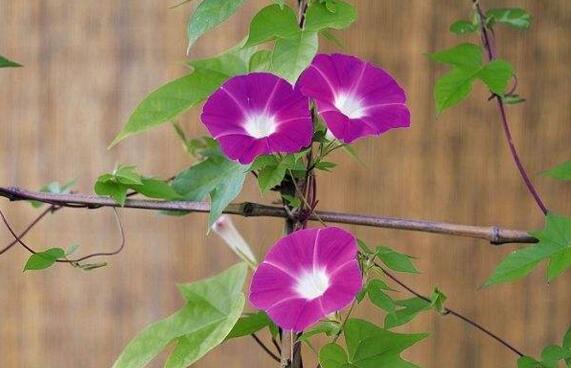
In the cultivation methods of morning glory, we learned that morning glory has requirements for soil, water, light, and so on. Once these do not meet the standard, bugs will come. As for what to do when morning glory gets bugs, it is very simple, just spray with pesticide to kill them. The prevention and control of pests and diseases of morning glory is something flower lovers should master. As for which pests and diseases there are, let us continue reading below.
(1) Pest symptoms and solutions for morning glory
For potted morning glory, generally speaking, it is rarely troubled by bugs, but if your home is especially messy, it will naturally attract many pests. Overall, the common pests of morning glory are aphids and leaf-roller moths, and after discovering them you can spray with relevant pesticides to kill them. The specifics are as follows:
1. Aphids
Aphids are the most common and also the main pest of morning glory. They mainly harm the leaves and tender stems of morning glory, causing fairly serious erosion. Not only that, the honeydew secreted by aphids will attract ants, causing sooty mold or other fungal diseases.
Solution: Natural enemies can be used to kill them, such as the red-spotted ladybird beetle, Japanese square-headed beetle, red-ringed ladybird beetle, and so on, which play a good role in preying on aphids. However, when a large number of aphids appears, isolation measures should be taken, and omethoate or pyrethrin 1000x solution should be sprayed alternately to kill them.
2. Red spider mites
This pest is one of the main pests of morning glory, though it is not very common. But once troubled by red spider mites, it is very troublesome. Their mode of harm is to pierce their mouthparts into the flower leaves and suck the sap, causing the flower's chlorophyll to be destroyed, the leaves to show gray-yellow spots or patches, and the leaves to become withered and yellow, or even fall off.
Solution: When the above symptoms are found, attention should be paid. If only individual leaves are damaged, the infested leaves can be removed; when more leaves are damaged, pesticide should be sprayed early for prevention and control. Commonly used pesticides include propargite, dicofol, dimethoate, huachongjing, fenvalerate, and so on.
(2) Disease symptoms and solutions for morning glory
What to do when morning glory gets bugs, after reading the above content everyone should know what to do! However, besides being harmed by bugs, diseases also constantly endanger morning glory. The common diseases of morning glory are: white mold disease, leaf spot disease, viral disease and seedling damping-off disease. The specific symptoms and solutions are as follows:
1. White mold disease
This disease is one of the main diseases of morning glory. It mainly harms the leaves of morning glory. The symptoms are: patches of white spots appear on the leaves, and in the later stage when it worsens, it causes the infected leaves to fall off.
Solution: After discovering the above symptoms, remove the diseased leaves as soon as possible, and promptly spray 75% chlorothalonil 600-800x solution.
2. Leaf spot disease
Leaf spot disease generally appears after wind damage, sunscald and frost damage. It mainly harms the leaves of petunia, and in severe cases it can likewise cause the death of the entire plant.
Solution: Promptly remove the diseased leaves and burn them, and the fallen leaves around should also be cleared away as soon as possible; spray 50% concentration amobam 1000x solution.
3. Brown spot disease
This disease is also one of the main diseases of morning glory. When it occurs, round or polygonal lesions appear on the leaves, with a dark gray center and a dark brown edge. Many pale black mold layers are produced on the surface of the lesions. In severe cases the lesions will not cover the whole leaf, and the leaves wither.
Solution: Promptly remove diseased leaves when found; in the early stage of the disease, promptly spray Guoguang Bixian, once every 7-10 days, and spraying continuously 2~3 times is enough.
4. Viral disease
Viral disease, one of the main diseases of morning glory. Symptoms of the disease: morning glory shows slow growth and weak roots and stems, and so on. It is very likely infected with viral disease, and in severe cases the leaves will show yellowing.
Solution: Remove the diseased leaves, and in addition spray 40% omethoate 1000x solution.
What to do when Philodendron bipinnatifidum gets bugs, prevention and control of common pests and diseases of Philodendron bipinnatifidum / care is very important
When we grow Philodendron bipinnatifidum, if care is improper or the environment is unsuitable, it may cause pests and diseases. The harm to the plant is enormous, so what should be done if Philodendron bipinnatifidum gets bugs? Today we will learn about the correct methods for preventing and controlling common pests and diseases of Philodendron bipinnatifidum.
What to do when Philodendron bipinnatifidum gets bugs
Usually, if we are familiar with the cultivation methods and precautions of Philodendron bipinnatifidum, it rarely gets bugs or diseases. Once pests and diseases appear, corresponding measures should be taken promptly according to the pests and diseases. The bugs that mainly appear on Philodendron bipinnatifidum are red spider mites and scale insects; the diseases are leaf spot disease, anthracnose, and so on.
1. Common pests of Philodendron bipinnatifidum
1. Red spider mites
Red spider mites can spread with the help of wind. Once this pest is found on Philodendron bipinnatifidum, it should be removed promptly, otherwise it may quickly threaten other plants. The cause of red spider mites is generally low humidity and dry, hot conditions. Mix 15 grams of washing powder, 15 milliliters of 20% sodium hydroxide, and 7.5 kilograms of water, then spray, and after 2 days the red spider mites can be killed.
Note: After killing the red spider mites, we also need to prevent them from appearing again. Do not let Philodendron bipinnatifidum remain in a dry and hot environment for a long time. Watering frequently and ventilation can prevent the appearance of red spider mites.
2. Scale insects
Scale insects are the most common among the pests of Philodendron bipinnatifidum, and are more likely to appear than red spider mites. Scientific research shows that the appearance of scale insects is very likely caused by poor ventilation and insufficient light, so reasonable care should be taken after clearing the scale insects.
Note: Mix white liquor and water at a ratio of 1:2 to prepare a solution, then pour it on the surface of the potting soil. Doing this once every half a month can prevent and control scale insects. In addition, in the prevention and control of common pests and diseases of Philodendron bipinnatifidum, attention should also be paid to giving the plant enough light and keeping it in a ventilated environment.
2. Diseases of Philodendron bipinnatifidum
1. Leaf spot disease
Leaf spot disease is the most common among the diseases of Philodendron bipinnatifidum. Its specific manifestation is round leaf spots on the leaves, with colors from brown to tan, dark brown edges, and a yellow halo on the outer edge, and spots of different sizes on the lesions.
Control measures: A solution made by diluting 50% carbendazim to 1000 times can be sprayed, or wettable powders such as thiophanate-methyl and zineb can also be used for prevention and control.
2. Anthracnose
Round or oval reddish-brown spots appear on the leaves, then gradually expand, and the edges turn purplish-brown. Finally the lesions turn blackish-brown, causing the leaves to dry up and fall off. In severe cases it makes the leaves of Philodendron bipinnatifidum turn yellow, and even more than half of the leaves die.
Control measures: Cut off the diseased leaves, and spray 75% thiophanate-methyl wettable powder 1000x solution. Generally spray once every 7-10 days, and about 3 consecutive times can achieve a good effect. In addition, attention should be paid to fertilizing and watering.
Summary: When planting Philodendron bipinnatifidum, the prevention and control of common pests and diseases of Philodendron bipinnatifidum is something that must be understood. In fact, many diseases are caused by the environment and care, so in order to reduce pests and diseases, you also need to pay more attention to care in ordinary times, and keep the environment where Philodendron bipinnatifidum is located clean and hygienic.
What to do when Buddleja gets bugs, prevention and control of common pests and diseases of Buddleja / 2 pests 2 diseases
When we grow Buddleja, the last thing we want to encounter is pests and diseases. Such problems are very harmful to the plant. They not only affect the beauty of its plant shape, but in severe cases can also cause the plant to wither and die. So what should be done when Buddleja gets bugs? What also needs to be done for the prevention and control of common pests and diseases of Buddleja? Below the editor will take everyone to learn about it.
1. What to do when Buddleja gets bugs, find the cause
To know what to do when Buddleja gets bugs, first we must understand what kind of bug it is, so that we can handle it in a targeted way, because the treatment methods for each pest and disease are different. The details are introduced in the text below, and friends troubled by this can take a look.
2. Prevention and control of common pests and diseases of Buddleja
1. Whiteflies
Whiteflies are a kind of tiny phytophagous pest belonging to the order Hemiptera. They mainly harm the new buds, leaves and flowers of Buddleja. They insert their piercing-sucking mouthparts from the underside of the leaves, then gradually suck the sap inside, causing the plant to lose a large amount of nutrients and show yellowing and withering.
Control method: For this pest and disease of Buddleja, we can use 25% buprofezin emulsifiable concentrate 1500x spray to directly spray and kill them. It can kill eggs, nymphs and adults.
2. Aphids
Aphids are one of the most destructive pests on Earth, harming many plants, and Buddleja is one of them. The harm of this pest is mainly that adult and nymph aphids suck the sap of leaves, stems, tender tips and tender ears, causing the plant to lose a large amount of nutrients and show withering.
Control method: When handling this pest and disease of Buddleja, we can use 50% pirimicarb wettable powder 3000x solution or 2.5% fenpropathrin emulsifiable concentrate 3000x solution to spray and kill them.
3. Soft rot
Among the pests and diseases of Buddleja, soft rot is a relatively common disease. When it occurs, many water-soaked lesions appear on the roots of the plant. As time goes on, the roots and stems gradually rot, and also give off waves of foul odor, finally causing it to gradually rot to death.
Control method: When preventing and controlling this disease, we can use 38% oxadixyl, pyrimethanil and copper fungicide diluted to 1000x solution for root irrigation treatment. Generally apply once a week, and after 2-3 times it can be controlled.
4. Leaf spot disease
Leaf spot disease is a common plant disease. Its peak period is generally in spring and autumn. When it occurs, many oval brown lesions appear on the leaves of Buddleja, and as time goes on the lesions gradually spread, and the color slowly deepens, finally causing the plant to be unable to carry out photosynthesis and wither to death.
Control method: For this pest and disease of Buddleja, we can use 20% silylazole · prochloraz 1000x solution to spray the diseased plant. Generally spray once every 7-10 days, and after 2-3 times it can be cured.