What to do when potted osmanthus gets pests? Spray pesticides to control different diseases and pests
Any plant can get pests, and of course osmanthus is no exception. With the advancement of potting techniques, osmanthus can also be grown at home. Osmanthus is one of the flowering plants that easily gets pests, so what should you do when osmanthus gets pests? There are many kinds of pests that affect osmanthus, and the control methods for each are different. Let's take a look together at the control of osmanthus diseases and pests.
I. What to do when potted osmanthus gets pests: spray pesticides to kill the insects
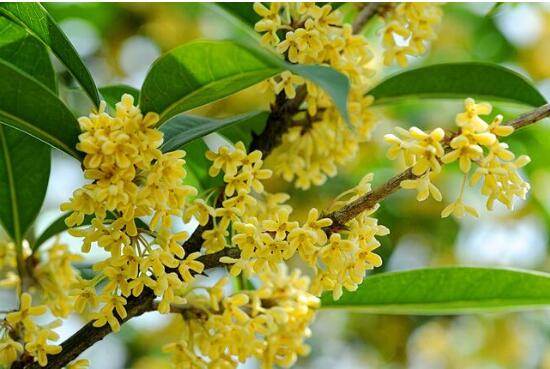
Any flowering plant can be harmed by diseases and pests, and potted osmanthus naturally cannot avoid the problem of getting pests. What should you do when potted osmanthus gets pests? Don't panic. First, look clearly at what kind of insect your osmanthus has. Common pests include scale insects, whiteflies, red spider mites, and so on. The pesticides sprayed for different pests are also different. Below we will explain the control of osmanthus diseases and pests one by one.
II. Control of osmanthus diseases and pests
1. Scale insects
Adults are 5-7 mm long. Females are oval, orange-red, flat on the ventral side and raised on the back, and before laying eggs they secrete a white egg sac behind the abdomen. Males are slender over the whole abdomen, about 3 mm long, with a black thorax and an orange-red abdomen. Most female adults gather and fix themselves in one place, secreting a white waxy egg sac at the end of the abdomen. The egg-laying period lasts more than 30 days, and each female can lay several hundred to 2000 eggs. After hatching, the larvae disperse and move about, then migrate from tender shoots and leaf backs to branches and trunks where they gather and cause damage, sucking tree sap and excreting honeydew, which induces sooty mold. Because insects and disease damage occur together, osmanthus plants often develop yellowing leaves and withered shoot tips.
Control method: Usually use less pesticide and protect natural enemies. When a small number of insects are found, promptly wipe them off and crush them to death. In winter, spray 0.3-0.5 degrees Baume lime-sulfur mixture to kill overwintering pests; at the peak of egg hatching, spray with 1000 times dilution of Zhongjie, or 1000 times dilution of Jieqing, or 800 times dilution of Kuangshajie.
2. Whiteflies
The whitefly pests that harm osmanthus mainly include whitefly, black whitefly, orange-yellow whitefly, and so on. They mainly use the mouthparts of adults and larvae to pierce into the leaf tissue on the underside of leaves and suck sap, causing osmanthus leaves to curl, lose green color and turn yellow, and even dry up. The large amount of honeydew they excrete seriously pollutes osmanthus branches and leaves and can trigger sooty mold, causing poor growth of osmanthus, thereby affecting the plant's normal flowering and display value.
Control method: Whiteflies have strong pesticide resistance. When choosing pesticides for control, be sure to adhere to the principle of alternating use and mixing. For example, you can alternately use 1000 times dilution of Feisao, 2000 times dilution of 10% imidacloprid wettable powder, 1500 times dilution of 40% omethoate emulsifiable concentrate, 1000 times dilution of Yashilanda, and so on.
3. Red spider mites
Red spider mites, commonly known as fire dragons, are one of the most common pests of osmanthus. They are very small, less than 1 mm long, round or oval, orange-yellow or red-brown. Try your best to defend against red spider mites, so the growing environment must be well ventilated and have suitable humidity, avoiding dryness and stuffiness as much as possible.
Control method: What should you do when osmanthus gets pests? During dry weather, pay attention to irrigation and combine it with fertilization to promote strong plant growth and enhance pest resistance. When using chemical pesticides, be careful to rotate them frequently, because after the application of certain highly toxic pesticides, resistance will develop. You can spray with 1000 times dilution of Manke or 1500 times dilution of 40% dimethoate emulsifiable concentrate, with good control effects.
4. Carmine spider mites
Adult carmine spider mites are 0.5-0.6 mm long. Females are oval, vermilion to rust-red, or dark brown to black-brown; males are slightly diamond-shaped, pale yellow, slightly smaller, and 0.3-0.4 mm long. Hot and dry seasons are most favorable for major outbreaks, causing the leaves of an entire plant or a patch of osmanthus grove to become gray-yellow, seriously affecting the growth, flowering, and display value of osmanthus.
Control method: Protect natural enemies, such as small black ladybirds, flower bugs, six-spotted thrips, Chinese green lacewings, large green lacewings, and so on; in winter, clear weeds under the trees and burn them, and use 0.3-0.5 degrees Baume lime-sulfur mixture to kill overwintering adult mites, nymphs, and eggs; use 1000 times dilution of Manke or 800 times dilution of Aweidamanling. Now you know what to do when osmanthus gets pests, right? Below let's look at the control of its diseases.
III. Prevention and control of osmanthus diseases
1. Brown spot disease
In the early stage of the disease, small yellow spots appear on the leaves and gradually expand into circles with a diameter between 2 mm and 10 mm. The lesions are yellow-brown to gray-brown, with a yellow halo around the lesion. Generally, April to October each year is the season of frequent occurrence.
2. Blight spot disease
Blight spot disease mostly invades from the leaf margin and leaf tip, occurring at the edges and tips of leaves. In the early stage of the disease, light brown small spots appear on osmanthus leaves and gradually expand into circular or irregular lesions, with dark brown edges. It mostly occurs between July and November.
3. Anthracnose
Osmanthus anthracnose infects osmanthus leaves. In the early stage of the disease, small chlorotic spots appear on osmanthus leaves and gradually enlarge to form circular, semicircular, or elliptical lesions. The lesions are light brown to gray-white, with a red-brown ring around the edge. Under humid conditions, pale pink sticky spore discs appear on the lesions. Anthracnose occurs from April to June. The above is what to do when osmanthus gets pests and the control methods for osmanthus diseases and pests. Below let's look at the treatment methods for the diseases.
Control methods for osmanthus diseases:
1. The control of the following diseases must first reduce sources of infection. For example, thoroughly clear fallen diseased leaves in autumn, and for potted osmanthus, promptly remove diseased leaves.
2. Strengthen the management of osmanthus trees. Choose fertile soil or substrate with good drainage for planting osmanthus; increase the application of organic fertilizer and potassium fertilizer; the planting density should be appropriate so as to allow ventilation and light penetration, reduce leaf surface humidity, and decrease the occurrence of diseases.
3. In the early stage of the disease, spray 1:2:200 Bordeaux mixture, and afterward spray 1000 times dilution of 50% carbendazim wettable powder or 1000 to 1500 times dilution of 50% benlate wettable powder.
4. In severely affected areas, when seedlings leave the nursery, soak them in 1000 times potassium permanganate solution for disinfection. The above is the control of osmanthus diseases and pests and what to do when potted osmanthus gets pests. We hope it can help everyone.
What to do when potted lavender gets pests, lavender disease and pest control (spray pesticides to kill insects)
Lavender is a common flowering plant in life. Any plant in nature can get pests, and lavender is no exception. Lavender has gradually developed into a potted plant, and many people do not know what to do when lavender gets pests. In fact, there are many reasons lavender gets pests, and the most common is the red spider mite. Below let's take a look together at lavender disease and pest control.
I. What to do when lavender gets pests: spray pesticides to kill the insects
Lavender's unique floral fragrance is deeply loved by people. Its flower language is waiting for love, and lavender is one of young people's favorite flowers. Earlier we talked about how to grow lavender and when lavender blooms. Now let's talk about a very common problem: what to do when lavender gets pests. There are several common pests of lavender, and different pests require different control methods. Below we introduce lavender disease and pest control one by one.
II. Control of lavender diseases and pests
1. Red spider mites
Red spider mites, commonly known as fire dragons, are one of the most common pests of lavender. They are very small, less than 1 mm long, round or oval, orange-yellow or red-brown. Try your best to defend against red spider mites, so the growing environment must be well ventilated and have suitable humidity, avoiding dryness and stuffiness as much as possible.
Solution: The pesticides for controlling them include 1500 times dilution of 40% omethoate and 1000 times dilution of 40% dicofol. In summer, spraying should be carried out in cycles of 1-2 weeks, and thorough spraying should be done before overwintering.
2. Scale insects
Scale insects are one of the insects that all flowers hate, and the insects on lavender may be them. It is understood that these insects often gather on branches, leaves, and fruits. The mouthparts of adults and nymphs pierce into the leaf and branch tissues of flowers to suck sap, causing symptoms of withered and deformed branches and leaves, and inducing sooty mold, causing great harm.
Solution: When there are few scale insects, gently brush them off with a soft brush or wipe them away with a cotton ball or loofah stem. For this kind of lavender disease and pest control, you can choose 800-1000 times dilution of 40% omethoate, 50% malathion, or 80% dichlorvos emulsifiable concentrate, spraying once every 7-10 days for 2-3 consecutive times, which can effectively prevent damage by scale insects.
3. Spider mites
Spider mites mainly harm lavender leaves, piercing and sucking sap, causing leaves to lose green color and develop withered, dry yellow rust spots, resulting in lavender being unable to flower and head normally. The peak period of spider mite damage is July-August, during which timely drip irrigation should be carried out to regulate the field microclimate, which can effectively suppress spider mite damage. In biological control, first, protect natural enemies. The main natural enemies of spider mites include green lacewings, mite-eating ladybirds, six-spotted thrips, and predatory mites.
Solution: In the early stage of spider mite occurrence, evenly spray 1000 times dilution of 0.26% matrine; when occurring over a large area, evenly spray 1000-2000 times dilution of 20% dicofol emulsifiable concentrate, or 3000-4000 times dilution of 1.8% abamectin emulsifiable concentrate, which can effectively reduce the population base of spider mites with good control effects. I believe everyone now knows what to do when lavender gets pests. Below let's look again at lavender disease prevention and control.
III. Prevention and control of lavender diseases
1. Lavender root rot
Symptoms: This is a root disease. In spring, lavender seedlings do not turn green or do not turn green well, and then gradually dry up and die. When the roots of diseased plants are dissected, a large amount of vascular bundle necrosis can be seen; or infected plants may still turn green normally in spring, but flower spikes wilt from budding to early flowering, and then flowers continuously drop until all have fallen. In autumn, some branches can still normally sprout new buds, and dissection of the root crown also shows a large amount of vascular bundle necrosis.
Solution: In chemical control, after uncovering soil in spring, before burying soil in autumn, and in the early stage of the disease, spray leaves with 400 times dilution of 70% thiophanate-methyl wettable powder or 500 times dilution of 50% carbendazim wettable powder.
2. Leaf spot disease
The symptoms of one-year-old seeded seedlings and cuttings are wilting, water loss, dull color, curved branches, and in severe cases root withering and rotting, with stem vessels turning brown. In addition to the above symptoms, seedlings more than three years old also show wilting symptoms spreading from the center or edge of the plant outward, with branches wilting and dying until the whole plant dies.
Solution: Spray 1:200 Bordeaux mixture 2-3 times for prevention, or 500-800 times dilution of zineb. The above is all the content brought to you on lavender disease and pest control and what to do when potted lavender gets pests. We hope it can help you.
What to do when potted lotus gets insects, lotus disease and pest control / cut dead leaves and spray pesticide to kill insects
In nature, any plant can get insects, and lotus is certainly no exception. Lotus is one of China's top ten famous flowers. Lotus emerges from mud unsoiled and is deeply loved by people. Now many families grow lotus, but they do not know what to do when lotus gets insects. Below let's take a look together at lotus disease and pest control.
I. What to do when lotus gets insects: spray pesticides to kill the insects
Lotus is one of China's top ten famous flowers. With the advancement of potting techniques, many people have started growing lotus at home. What to do when lotus gets insects is the most common problem. Common pests of lotus include aphids, water maggots, stinging caterpillars, tobacco cutworms, and so on. Different pests require different control methods. Below let's take a look together at lotus disease and pest control.
II. Control of lotus diseases and pests
1. Aphids
Aphids generally begin to harm lotus floating leaves and small standing leaves in early May, often concentrating on leaf buds, flower buds, and leaf backs, where larvae and adults gather to suck sap, with the heaviest damage in late spring and autumn. Control method: You can use 2000 times dilution of 20% fenvalerate.
2. Pear green stinging caterpillars and brown stinging caterpillars
Pear green stinging caterpillars and brown stinging caterpillars, commonly known as stinging caterpillars, mainly harm standing leaves as larvae, generally from mid-June to September. Control method: Remove insect-infested leaves and burn them. Spray with 800-1000 dilution of 90% trichlorfon, or 3000 times dilution of 2.5% deltamethrin.
3. Water maggots
The larvae suck sap on the stem nodes and roots of lotus, causing diseased leaves to turn yellow. Control method: Generally lime can be used to drive them away and kill them. Scatter 10-15 kg per 667 sq m (1 mu), but do not use excessively.
4. Large bagworms
They mainly harm standing leaves. In severe cases, twenty or thirty can hang on the underside of lotus leaves, eating new and old lotus leaves into countless holes, or even completely eating them bare.
Control method: You can catch and remove them manually and promptly pick off diseased leaves. Spray with 1500-2000 times dilution of 90% trichlorfon plus 800 times dilution of Bacillus thuringiensis. Clear weeds around the lotus field and carry out disinfection treatment. Let's continue looking below at lotus disease and pest control.
5. Tobacco cutworms
Also known as lotus cutworm and tobacco cutworm. Newly hatched larvae gather on the underside of leaves and feed, leaving only the upper epidermis and veins, and the damaged leaves look like window screens. After the third instar they disperse to cause damage, eating leaves into notches, and when numerous they can eat leaves bare and even bite tender stems. During major outbreaks, after larvae eat one field bare, they can migrate in groups to neighboring fields to cause damage.
Control method: Spray with 500-800 times dilution of domestic B.t. emulsion or Qingchongjun No. 6 liquid. Spray with 1000 times dilution of 50% phoxim emulsifiable concentrate, or 3000 times dilution of 2.5% deltamethrin emulsifiable concentrate, or 4000 times dilution of 21% mieshabi emulsifiable concentrate. Through the above introduction, now you know what to do when lotus gets insects, right? Below let's look at lotus disease control.
III. Prevention and control of lotus diseases
1. Black spot disease
In the early stage of the disease, chlorotic yellow lesions appear on the leaves, later becoming circular or irregular, turning brown with concentric rings, sometimes with a yellow-green halo at the edge, and black mold layers growing on top, with a diameter of 5-15 mm. In severe cases, the lesions join into patches, and except for the veins, the whole leaf withers and turns yellow. This disease is caused by fungi and occurs severely in the rainy season. Under conditions such as continuous cropping in lotus ponds or pots, excessive nitrogen fertilizer application, or excessively high summer water temperature, the disease is very severe.
Control method: Strengthen cultivation management and promptly remove diseased leaves. For severely affected plants, replace with new soil before replanting, and do not apply excessive nitrogen fertilizer. When the disease occurs, spray 600-800 times dilution of 75% chlorothalonil for control.
2. Rot disease
It mainly harms leaves, flower stalks, and lotus rhizomes. When harming leaves, green wilt-colored patches first appear along the leaf margin. Soon the lesions spread inward, and finally the whole leaf turns brown and necrotic. When flower stalks are affected, they turn brown along the stomatal lines and become sunken. When lotus rhizomes are affected, they first turn brown, gradually spread to the whip nodes, and become longitudinally necrotic, and white filamentous matter or pink powder masses can also be seen growing from diseased lotus nodes. This disease is usually more severe under continuous cropping and in poor soil, and if leaves are often submerged in water, they are also prone to the disease.
Control method: Fertilize appropriately, and note that the water surface should not be too high, so as to avoid soaking leaves and causing disease. When black spots are found on leaves, remove diseased leaves as early as possible, but retain the junction between the leaf and petiole to prevent rainwater from invading the plant through the petiole wound. Spray 500 times dilution of 50% carbendazim, or 500 times dilution of 50% Yimeijing for control.
3. Brown spot disease
It mainly harms lotus leaves. Circular spots 0.5-8 mm in diameter appear on diseased leaves, light brown to yellow-brown, with darker edges. In the later stage of the disease, many small black mold spots grow on the lesions. It is more severe in rainy autumn. The pathogen mostly overwinters on residues.
Control method: Clear residual leaves to reduce sources of disease. For severe cases, spray 500 times dilution of 50% carbendazim, or use 500-800 times dilution of 80% zineb for control. The above is all the content on lotus disease and pest control and what to do when lotus gets insects. We hope it can help you.