What to Do When a Peace Lily Gets Pests? Pest and Disease Control and Leaf Spot Treatment Methods
Because the peace lily has an auspicious meaning, many flower lovers choose to grow it indoors. However, indoors is certainly no match for the wild, and because conditions are poorer, the peace lily can be troubled by insects, so what should you do when a peace lily gets pests? Soil, light, water and other factors may cause the peace lily to become sick. Below is a carefully compiled guide to peace lily pest and disease control; if you love flowers, you must come and take a look~
I. What to Do When a Peace Lily Gets Pests: Find the Cause
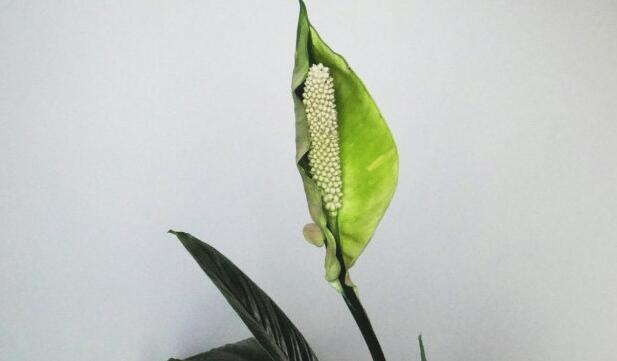
In the peace lily growing methods, we explained that when grown indoors, the peace lily has requirements for soil, light, water and so on, and once these standards are not met, insects or disease will appear on the leaves. As for what to do when a peace lily gets bugs, it is actually very simple: we just need to find out what kind of insect it is and then deal with it accordingly. Below are the symptoms and solutions for several kinds of pest damage, as follows:
1. Scale insects
Scale insects are one of the pests that all flowers and plants dislike, and the bugs on a peace lily may well be them. It is understood that these insects often gather in groups on branches, leaves and fruit. The mouthparts of adults and nymphs insert into the leaf and branch tissues of the plant to suck sap, causing symptoms of withered and deformed branches and leaves, and inducing sooty mold, doing great harm.
Control method: When there are few scale insects, gently brush them off with a soft brush or wipe them away clean with a cotton ball or loofah stem; when there are many scale insects, you can use 40% omethoate, 50% malathion, or 80% dichlorvos emulsifiable concentrate at 800-1000 times dilution, spraying once every 7-10 days for 2-3 consecutive times, which can effectively prevent scale insect damage.
2. Red spider mites
As one of the peace lily diseases, red spider mites are very troublesome. Their method of damage is to pierce the flower's leaves with their mouthparts and suck the sap, destroying the chlorophyll of the plant, causing the leaves to show grayish-yellow spots or patches, and the leaves to become withered and yellow, or even drop off.
Control method: Usually pay attention to observing the plant, and when you find abnormal leaf color, carefully check the underside of the leaves. When only a few leaves are affected, you can remove the infested leaves; when many leaves are affected, spray pesticide as early as possible for control. Commonly used pesticides include propargite, dicofol, dimethoate, huachongjing, and fenvalerate.
That is basically all there is to know about what to do when a peace lily gets pests. In fact, as long as we pay a little more attention during care, insects will not appear. But it does not matter if it is attacked by insects; everyone should stay calm, find the cause, and deal with it accordingly. A tiny insect cannot stir up much trouble.
II. Peace Lily Disease Symptoms and Control Methods
Besides being attacked by insects, diseases are also something we need to watch out for. It is understood that peace lilies mainly have three kinds of disease: bacterial leaf spot, brown spot, and blight. Among these, once it gets leaf spot it is basically impossible to save. The specific symptoms and solutions are as follows:
1. Brown spot
This disease is one of the main diseases of the peace lily. It mainly harms the plant's leaves, and usually starts from the basal leaves. In the early stage, small round water-soaked spots of pale green appear, which gradually turn brown or black over time. As time goes on, the spots gradually expand, the affected leaves wither accordingly, and finally dry up and die.
Control method: In the early stage of the disease, spray with agents such as 75% chlorothalonil, 50% mancozeb, or 50% captan. The concentration is generally 800-1000 times aqueous solution, sprayed once every 7 days for 2-3 consecutive times; or use 50% shajunwang at 1000 times solution, spraying 3-4 consecutive times every 7-10 days, which has a very good control effect.
2. Bacterial leaf spot
Bacterial leaf spot has two infection modes: the first infection type starts on the leaves and is called leaf infection. Leaf infection usually begins at the leaf margins and the lower part of the leaf where there are more stomata. In the early stage, water-soaked spots can be seen on the underside of the leaves; in the later stage, brown spots appear at the leaf margins, with a yellow halo at the edges.
The second infection type starts on the stem and rapidly spreads through the vascular system to the entire plant, and is called systemic infection. Systemic infection can be detected by yellowing leaves; in the early stage of bacterial infection, the new leaves are dull in color. In a relatively short time, this type of infection can cause the peduncles and leaves to drop from the plant, the growing point to rot rapidly, and bacterial ooze to seep out. Systemic infection cannot be saved.
3. Blight
This disease manifests as leaf spots, seedling damping-off, root and stem rot, crown rot, branch and trunk cankers and rot, etc. The affected parts of the plant produce dark brown water-soaked lesions with indistinct edges, which can rapidly cause necrosis and rot of the diseased parts.
Control method: (1) Choose a well-drained location for planting or place the flowerpot there. Avoid overly dense clumps of plants and ensure good ventilation and light. (2) Promptly pull out diseased plants and burn them. Disinfect the soil before planting, and water with 95% Lüheng No. 1 premium product at 3000 times solution.
What to Do When a Calathea Gets Pests: Pest and Disease Control for Calathea / Watch Out for Leaf Spot
The beauty of the Calathea lies in its evergreen leaves all year round, and also in the peacock-tail pattern on its leaves. In daily life, many people like to grow Calathea as potted plants at home, but for certain reasons it can get pests and diseases, thus losing all its ornamental value. So what should you do when a Calathea gets pests? Below are 4 pest and disease control methods for Calathea; follow along with the editor to learn more.
I. When a Calathea Gets Pests, Spray with Pesticide
As a common indoor potted plant, the growing method for Calathea can be said to be very simple: just place it in a warm, ventilated, semi-shaded environment, and water it frequently to keep the potting soil moist. But because most growers are beginners, they often cause pest and disease problems through improper care, thus affecting the plant's ornamental value. Next, let's take a look at how many kinds of disease and pest damage Calathea has.
II. Pest and Disease Control for Calathea
1. Calathea leaf spot
Calathea has strong adaptability and can be said to rarely get sick, but in a high-temperature, poorly ventilated environment, it can also suffer from leaf spot.
Symptoms: In the early stage, small yellowish-brown spots appear on the Calathea leaves, with halos at the edges; in severe cases, the spots rapidly spread to every branch and leaf of the Calathea, ultimately causing the Calathea to wither and die.
Control method: After discovering Calathea leaf spot, in order to reduce the source of the disease, everyone should cut off all diseased branches, then spray relevant agents. You can choose 38% oxadixyl-cymoxanil-kresoxim-methyl at 800-1000 times solution, or 4% flusilazole at 1000 times solution, spraying once every week for three consecutive times to see results.
2. Scale insects
Besides disease, Calathea can also be troubled by pest damage, and the most commonly encountered is scale insects, which attach to the leaves and absorb the nutrients and water within.
Symptoms of damage: The Calathea will grow poorly, and the scale insects chewing on the leaves can also cause other diseases, and in severe cases can directly cause the Calathea to wither and die.
Control method: When there are few scale insects, you can use a brush for manual removal; if you find a large number of scale insects, you need to spray pesticide for control. Optional agents include 50% malathion at 1500 times solution, or 25% phosmet at 1000 times solution for control, spraying once every week for two consecutive times.
3. Red spider mites
A mite pest of the arachnid class, it is one of the common pests harming Calathea. This pest often occurs when ventilation is poor, and harms the top of the plant.
Symptoms of damage: The top of the Calathea turns reddish-brown and has spider webs, affecting the plant's growth and development.
Control method: After discovering the pest, you can treat it with deltamethrin, or use sprays such as 25% anti-mite emulsifiable concentrate at 800 times solution, or 73% propargite at 2000 times solution and other agents.
4. Aphids
If you find that your Calathea has pests, it is very likely aphids. They generally appear on tender leaves and newly grown buds, and live by sucking the sap from the leaves.
Symptoms of damage: The Calathea leaves turn yellow, and black or yellow lesions also appear.
Control method: In the early stage of aphid occurrence, you can spray 40% omethoate at 1500 times solution or 90% trichlorfon solution for control. Usually pay attention to reasonable watering and fertilizing to improve its resistance to pests and diseases.
In the process of growing Calathea, for various reasons, you will inevitably encounter situations where it gets pests and diseases. At this time everyone should not panic, but should calmly find the cause and then solve it according to the control methods above. That is all the editor has to introduce about Calathea pest and disease control, and I hope it can be of help to everyone.
Common Pests and Diseases of Cypress Vine: Control Methods for Powdery Mildew / Leaf Spot / Aphids / Scarab Beetles
Although cypress vine has very strong vitality and is not weak in adapting to the environment, during the planting process it can sometimes become infected with pests and diseases due to neglect of management, sudden environmental changes and other reasons. Once this happens, the consequences are unimaginable. Here the editor will tell everyone a few common pest and disease control methods for cypress vine, so as to avoid tragedy.
Common Pest and Disease Control for Cypress Vine
1. Leaf spot
Main symptoms: Blackish-brown lesions appear on the leaves of the cypress vine, and the lesions on the stems and petioles are elongated and brown in color. They are initially small but keep expanding, finally becoming irregular in shape, and the lesions also develop concentric rings, causing the leaves to wither and yellow, and the plant's growth to weaken.
Control method: Usually pay attention to pruning to ensure the branch and leaf density of the cypress vine is moderate, increase the ventilation of the environment, and reduce air humidity. After the disease occurs, spray with 38% oxadixyl-cymoxanil-kresoxim-methyl at 800-1000 times solution, or 50% thiophanate at 1000 times solution.
2. Powdery mildew
Main symptoms: Small yellow dots appear on the cypress vine leaves, and these dots gradually expand into round or oval shapes. The surface of the lesions has a white powdery mold layer, and usually the lower leaves are more severely affected. Because the leaves are covered with powder, the plant lacks photosynthesis, and decline comes earlier.
Control method: Among the common pests and diseases of cypress vine, powdery mildew is relatively easy to prevent. Its occurrence pattern is excessive nitrogen fertilizer application, overly dense branches and leaves that block light, and so on. Avoiding these two situations can prevent powdery mildew very well, and when the disease occurs you need to spray 15% triadimefon at 1000 times solution.
3. Scarab beetles
Scarab beetles are a pest with a very large number of species. They chew on the roots and stems of the cypress vine, causing damage to the underground parts. Especially during the reproduction process, they are likely to be invaded by scarab beetles, causing the reproduction success rate to drop. In addition, they may also harm the leaves, flowers, fruit and so on of the cypress vine.
Control method: When planting, choose relatively superior and robust cypress vine varieties. Usually do a good job of environmental sanitation, ensure moderate air humidity and not-too-high temperature, and at the same time let the cypress vine receive sufficient light. After the disease occurs, you can use 10% chuchongjing emulsifiable concentrate at 2500 times solution to spray and kill scarab beetles.
4. Aphids
Aphids are very small in size but reproduce very quickly, and are one of the most common pests. They suck the sap from the cypress vine leaves, causing nutritional deficiency in the plant. They are one of the most troublesome pests when growing flowers, but the control methods for them are relatively mature.
Control method: When there are few aphids, you can gently scrape them off with a brush to reduce the harm aphids do to the plant, then cut off the affected branches and leaves. After that, you still need to spray agents to thoroughly eliminate the aphids. Commonly used agents include 40% omethoate emulsion at 2000 times solution and so on.