How to divide a bird of paradise? One cut, one pot, one soil mix is all it takes to propagate
The human heart is always full of all kinds of dissatisfaction, so when one bird of paradise blooms, we always want to grow a few more, looking forward to the scene of them blooming together. This requires us to master the propagation methods of the bird of paradise, the more commonly used being division and sowing, of which division has the higher survival rate. So how do you divide a bird of paradise? Let the editor introduce it in detail below.
I. Propagation methods of the bird of paradise, division/sowing
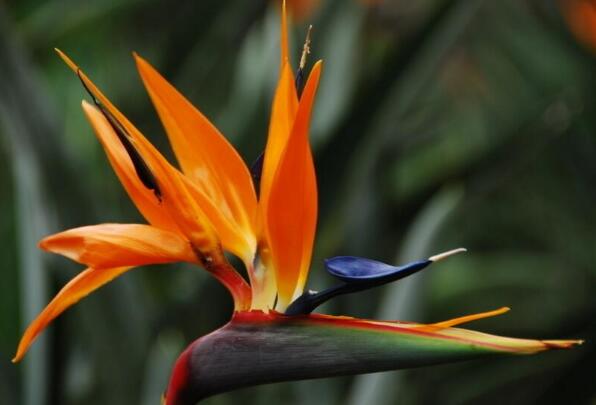
In the flower world, the bird of paradise is a high-end variety with a peculiar flower shape. Its beautiful leaves and crane-like flowers both display its unique beauty. Besides its ornamental value, the bird of paradise also has many effects and uses, so it is often propagated in large quantities. In general, there are two main propagation methods for the bird of paradise: one is division, the other is sowing. Let's read on.
II. How to divide a bird of paradise, timing/method
Materials: bird of paradise, scissors, leaf mold, clay pot, tile shards
1. Division timing
How to divide a bird of paradise: first we must confirm that the plant is more than three years old and healthy and dense, so as to ensure its root system is dense, which is what makes it suitable for propagation. After confirming, choose the division timing, generally best carried out from April to June.
2. Pot and soil selection
Flower pot: when dividing a bird of paradise, it is best to choose a deep clay pot for it, because the bird of paradise plant is thick and long, and a deep pot is good for the roots to extend and grow. In addition, we should also place about 3 cm of broken tile shards in the clay pot as a bottom layer, which helps with water control and drainage.
Soil: according to the cultivation methods for the bird of paradise, when dividing it we should best use leaf mold or peat soil as the main component, mixed with one quarter coarse sand, and a small amount of bone meal can also be added, blended into a slightly acidic soil. Then put about one half of the soil into the pot.
3. Division selection
After choosing the timing, picking the pot soil, and preparing the materials, the division propagation of the bird of paradise officially begins. We pull out the entire bird of paradise plant, being very careful to pull it up from the roots and by no means damaging the branches and leaves. After the plant is pulled out, first shake off the soil from the mother plant's roots to expose the old roots and fibrous roots, then use the prepared scissors to divide the mother plant into several clumps according to the root fibers.
Note: each clump must have at least three stems, more than 10 leaves, and must carry roots.
4. Division method
Next, we plant the divisions in the prepared pot soil, being careful not to plant too deep; let the lower leaves touch the soil and keep the roots at the 3/4 position. After planting, firm the soil, leaving two or three cm of space between the soil level in the pot and the upper rim of the pot, which helps with watering.
5. Care management
How to divide a bird of paradise: after completing the above steps, it is basically done, and what follows is care management. After the division is complete, we should clean the surface and inner rim of the flower pot, place it on a plastic tray, then water thoroughly and place it in a cool place for care. Only after the seedlings begin to sprout new leaves can they be moved to normal management.
III. Sowing method for the bird of paradise
Besides division, sowing is also one of the propagation methods for the bird of paradise. After the bird of paradise's flowering period, take the seeds, soak them in water for 4-5 days at a water temperature of 15°C. Once the seeds have absorbed enough water, sow them in a clay pot, with the substrate temperature ideally at 18-22°C, then cover with glass. After that, spray water to keep them warm, and seedlings will emerge in about 20 days. When the seedlings grow to 5-7 cm, they can be transplanted into a clay pot.
Soil selection: use garden soil, orchid soil, portions of sandy soil, and mountain soil mixed in a 4:3:2:1 ratio.
After transplanting, be sure to water the seedlings thoroughly; after July, apply 1% nutrient solution once every half month to help them grow; from September, begin to control water to avoid over-moisture. In the same year they can produce 4-5 leaves, with a height of about 20 cm. Repot and add soil every year; when 12-14 leaves have grown, they shift from the seedling stage to the flowering stage. Note: throughout the growth process, avoid direct sunlight and excessive drought.
In general, the bird of paradise requires careful care. Both propagation methods described above are easy to survive, but when it comes to convenience and survival rate, division is still the best. Of course, methods are fixed while people are flexible; everyone can choose a method to propagate according to the actual situation. That is all the editor has to introduce about the propagation methods of the bird of paradise, and I hope it can be of help to everyone.
Bird of paradise propagation methods, division propagation care matters
The bird of paradise, also known as the paradise bird, is evergreen all year round with a distinctive plant form, and its long leaf stalks give an elegant feel; it is an excellent indoor ornamental variety. Below we introduce the propagation methods of the bird of paradise.
Propagation methods of the bird of paradiseThe bird of paradise (Strelitzia reginae Aiton), also known as the paradise bird flower or bird of paradise flower, is a plant of the Strelitziaceae family and the genus Strelitzia, native to South Africa. Its scientific name was chosen to commemorate Queen Charlotte, wife of King George III of England. It resembles a crane holding its head up and gazing into the distance, hence the name. It is known as the "king of cut flowers." Its peculiar flower shape has a unique charm; whether for display and appreciation or for use as a cut flower, people's demand for the bird of paradise is very high, so the bird of paradise needs to be propagated and cultivated. Below let's look at the propagation methods of the bird of paradise:
1. Division propagationDivision propagation of the bird of paradise is generally best done from April to June. Choose a robust adult plant with more than 5-6 root tiller buds and no pests or diseases. Division can use either the method of retaining the mother plant or the method of not retaining the mother plant. Plant the divisions in a nutritious, well-ventilated, slightly acidic sandy loam or a special cultivation substrate, and do not plant too deep. The root crown of the leaf clump must be exposed above the ground, but the fleshy roots must not be exposed above the ground. After planting, water thoroughly immediately and protect with a shade net for a few days; only after the seedlings begin to sprout new leaves can they be moved to normal management.
2. Sowing propagationThe seeds of the bird of paradise are hard and black like peas, with orange-red fuzz attached to the tip. They need to be soaked in water for 4-5 days at a water temperature of 15°C. After fully absorbing water, sow them in a clay pot or a hard plastic tray, with the substrate temperature reaching 18-22°C being best. Cover the container with glass to avoid rodent damage. Spray water to keep warm, and seedlings emerge in about 20 days; shade is needed. When the seedlings grow to 5-7 cm, they can be transplanted into a clay pot. A mix of 4 parts garden soil, 3 parts orchid soil, 2 parts sandy soil, and 1 part mountain soil is best. Water thoroughly; after July, apply dilute soybean cake or 1% nutrient solution once every half month to aid growth, and monopotassium phosphate compound fertilizer at a 1:250 solution can also be applied. From September, begin to control water to avoid over-moisture. Throughout the entire growth process, avoid direct sunlight and excessive drought. In the same year they can produce 4-5 leaves, about 20 cm tall. Repot and add soil every year; when 12-14 leaves have grown, they shift from the seedling stage to the flowering stage.
3. Tissue culture propagationFor tissue culture propagation of the bird of paradise, the explant uses the leaf stalk or the shortened stem, rinsed with 70% alcohol for 5 minutes, then sterilized in a 0.3% mercuric chloride solution for 15 minutes, and finally rinsed with sterile distilled water. The medium uses MS liquid culture solution, with 2.5 mg/L indolebutyric acid, 1.0 mg/L naphthaleneacetic acid, 5 mg/L kinetin, and 0.5 mg/L 2,4-D added. The explant can also use the terminal bud, the inflorescence axis, and the stem node.
Division propagation is currently the best propagation method for the bird of paradise. The bird of paradise is quite popular on the market, mainly because of its peculiar flower shape, long flowering period, and excellent ornamental effect; used to decorate an environment, it can give people an elegant and fresh feeling.
Bird of paradise propagation: division method matters. The bird of paradise can often only be propagated by division to obtain new plants. In order to make the bird of paradise sprout more side buds, which is good for division, plant it relatively shallowly so that the root crown of the plant is slightly above the pot soil. In this way side buds can occur every year, and division can be carried out in the high-temperature, high-humidity months of June to July. 1. Mother plant selection for the bird of paradiseThe mother plant of the bird of paradise should be a robust adult plant with many tillers, neat leaves, and no pests or diseases. The mother plant used for whole-plant digging and division is generally chosen from plants grown for more than three years with more than 4 buds and a total leaf count of no less than 16. For potted plants after division, plants with more rooted tiller seedlings can be chosen.
Flower arranging: exquisite small-pot flower arrangements, wonderful times for flowers and the dining table
2. Division timingWhen planted in a greenhouse, the time can be any from May to November. The most suitable time is May to June. For field seedlings used for potting, the suitable time is also May to June.
3. Division methoda. Division method without retaining the mother plant
That is, whole-plant digging and division. After several years of cultivation, the bird of paradise, because the plants are too dense and affect each other's growth, reduces flower yield, and lack of ventilation makes it prone to pests and diseases. At this time, part of the plants can be used as mother plants for division propagation, so one should keep the poor and dig up the good, or dig up the poor and keep the good. Our experience is that one should dig up the good and keep the poor, and the poor ones left behind should then be given strengthened management. Dig up the entire clump of the plant from the soil (bringing as many roots as possible), carefully brush away the old soil by hand and peel off the old leaves; after the root system and the gaps between buds can be clearly distinguished, according to the size of the plant, on the premise of ensuring each small division clump has 2-3 buds, reasonably choose the cutting entry point, and use a sharp knife to divide the mother plant into 2-3 clumps from the gaps in the rhizome. Minimize root damage to help the plant recover its growth. The cut should be dipped in plant ash and dried in a ventilated place for 3-5 hours; overly long roots can be appropriately shortened, and the cuts also need to be dipped in plant ash before planting. During the division process, note that the new plant's root system should not be fewer than 3 roots, the total leaf count should not be fewer than 8-10, and generally 2-3 buds are needed. If there are too few roots or too few side buds, several plants can be combined and planted together.
b. Division method retaining the mother plant
When field-planted seedlings are growing too vigorously and thinning is not needed, the mother plant can be left undug, and the plants on the side of the mother plant can be split directly in the field with a sharp knife into several clumps (method as above). This has relatively little effect on the growth and flowering of the original mother plant. If potting is needed, only a few well-growing side clumps should be peeled off from the mother plant for planting. For already potted, lush plants, division propagation can be carried out together with repotting.
Growing flowers for Spring Festival: common indoor flower and plant care in the north in spring
4. Cultivation management of division seedlingsa. Planting
The bird of paradise requires fertile, well-drained and breathable, slightly acidic sandy loam, with sufficient base fertilizer applied. Cover with soil, tread firm in layers, and water thoroughly. After planting, promptly form furrow ditches to ensure no water accumulation. The lower leaves of the planted seedlings should be cut in half, and flower stalks removed to reduce nutrient consumption and improve the survival rate of division seedlings.
For plants after cutting, whether new plants or old plants, if the roots are too long when potting, they should all be appropriately shortened. Apply plant ash or sulfur powder to the cut, leave in a cool place for half a day, then plant directly into the "three-mix soil" suitable for bird of paradise potting, water thoroughly, and place in a semi-shaded place. After that, do not water unless dry, and water thoroughly when watering. After about 45 days, fertilizer and water management can proceed as normal. Dividing in this way, the old plant's flowering in the same year is unaffected, and the new plant can flower the following year.
b. Fertilizer and water management
In the first week after planting, water once a day, and thereafter water whenever dry. If wilting occurs after planting, frequently spray water on the leaves and surrounding ground to increase environmental humidity and let the plant recover its growth as soon as possible; if conditions permit, a sprinkler head can be installed for spraying. For autumn divisions, do not water too much after they survive. One month after planting, apply dilute liquid fertilizer (mainly human waste or nitrogen fertilizer) 1-2 times. Then enter routine fertilizer and water management. Information provided by Yuhuagu.
c. Light and temperature management
After the division seedlings are planted, a shade net should be pulled up to provide appropriate shade to prevent overly strong sunlight from scorching the leaves. After growth has recovered, remove the shade net and manage under full light. For autumn divisions, attention should be paid to keeping warm. During the winter from November to March, a greenhouse should be set up and covered with 1-2 layers of plastic film. After the temperature rises in March of the following year, pay attention to ventilation at noon, and the greenhouse can be removed in April to May. Potted plants can be managed in a greenhouse or shed in winter.
Division propagation techniques for the bird of paradise
The bird of paradise (Strelitzia reginae Banks), also known as the paradise bird, is a perennial herbaceous plant of the Strelitziaceae family and the genus Strelitzia, native to South Africa. It is a sought-after, precious cut flower on the market, and its flower stalks are high-end cut flower material. Our garden is one of the first units in the country to introduce it. The bird of paradise can be propagated by sowing, division, and tissue culture. Seed propagation, due to lack of seed sources (requiring artificial pollination to set seed), a long seedling growth period (generally requiring more than 3 years to flower), and uneven quality of seedlings, causes great differences in flower stalk quality. Therefore, seed propagation is not ideal. The tissue culture propagation method can only use buds as explants, and often fails due to oxidation and browning of the explants; tissue-cultured seedlings are also very prone to variation, and it is still difficult to apply in production. South African literature also states that the division method is the best propagation method. In recent years we have adopted the division method to propagate the bird of paradise, steadily and continuously expanding our production scale. Currently we have 1/2h sq m of flowering clumps, with an annual output of more than 20,000 cut flowers. The division propagation techniques are introduced below:
I. Mother plant selection
The mother plant should be a robust adult plant with many tillers, neat leaves, and no pests or diseases. The mother plant used for whole-plant digging and division is generally chosen from plants grown for more than 3 years with more than 4 buds and a total leaf count of no less than 16. For potted plants after division, plants with more rooted tiller seedlings can be chosen.
II. Division timing
When planted in a greenhouse, the time is May-November. The most suitable time is May-June. For field seedlings used for potting, the suitable time is also May-June. III. Division method
(1) Division method without retaining the mother plant That is, whole-plant digging and division. This method is suitable when field-planted seedlings are too dense and thinning is needed. After several years of cultivation, the bird of paradise, because the plants are too dense and affect each other's growth, reduces flower yield, and lack of ventilation makes it prone to pests and diseases. At this time, part of the plants can be used as mother plants for division propagation, so one should keep the poor and dig up the good, or dig up the poor and keep the good. Our experience is that one should dig up the good and keep the poor, and the poor ones left behind should then be given strengthened management. Dig up the entire clump of the plant from the soil (bringing as many roots as possible), carefully brush away the old soil by hand and peel off the old leaves; after the root system and the gaps between buds can be clearly distinguished, according to the size of the plant, on the premise of ensuring each small division clump has 2-3 buds, reasonably choose the cutting entry point, and use a sharp knife to divide the mother plant into 2-3 clumps from the gaps in the rhizome. Minimize root damage to help the plant recover its growth. The cut should be dipped in plant ash and dried in a ventilated place for 3-5h; overly long roots can be appropriately shortened, and the cuts also need to be dipped in plant ash before planting. During the division process, note that the new plant's root system should not be fewer than 3 roots, the total leaf count should not be fewer than 8-10, and generally 2-3 buds are needed. If there are too few roots or too few side buds, several plants can be combined and planted together.
(2) Division method retaining the mother plant When field-planted seedlings are growing too vigorously and thinning is not needed, the mother plant can be left undug, and the plants on the side of the mother plant can be split directly in the field with a sharp knife into several clumps (method as above). This has relatively little effect on the growth and flowering of the original mother plant. If potting is needed, only a few well-growing side clumps should be peeled off from the mother plant for planting. For already potted, lush plants, division propagation can be carried out together with repotting.
IV. Cultivation management of division seedlings
(1) Planting The bird of paradise requires fertile, well-drained and breathable, slightly acidic sandy loam. For single-row planting, the density is generally a bed width of 60-80cm, a bed height of 20-30cm, and a plant spacing of 100-120cm. A bed width of 100-120cm with double-row planting can also be used. The planting ditch is 60cm wide and 50cm deep. Apply sufficient base fertilizer; for each 180 sq m arched shed, apply 600kg of fermented soybean cake fertilizer, 40kg of superphosphate, and 1kg of carbofuran, turned into the soil together with intertillage. Plant in a staggered triangle arrangement according to the selected plant and row spacing. In order to make the bird of paradise sprout more side buds, which is good for division, it should be planted relatively shallowly, with the root system spread out according to its shape, so that the roots do not protrude from the bed soil. Cover with soil, tread firm in layers, and water thoroughly. After planting, promptly form furrow ditches to ensure no water accumulation. The lower leaves of the planted seedlings should be cut in half, and flower stalks removed to reduce nutrient consumption and improve the survival rate of division seedlings.
(2) Fertilizer and water management In the first week after planting, water once a day, and thereafter water whenever dry. If wilting occurs after planting, frequently spray water on the leaves and surrounding ground to increase environmental humidity and let the plant recover its growth as soon as possible; if conditions permit, a sprinkler head can be installed for spraying. For autumn divisions, do not water too much after they survive. One month after planting, apply dilute liquid fertilizer (mainly human waste or nitrogen fertilizer) 1-2 times. Then enter routine fertilizer and water management.
(3) Light and temperature management After the division seedlings are planted, a shade net should be pulled up to provide appropriate shade to prevent overly strong sunlight from scorching the leaves. After growth has recovered, remove the shade net and manage under full light. For autumn divisions, attention should be paid to keeping warm. From November to March, a greenhouse should be set up and covered with 1-2 layers of plastic film. After the temperature rises in March of the following year, pay attention to ventilation at noon, and the greenhouse can be removed in April-May. Potted plants can be managed in a greenhouse or shed in winter.
(4) Pest and disease control In poorly drained places, damping-off is likely to occur; attention to drainage can prevent it. If root rot occurs during the plum rain season, pesticide should be sprayed promptly, and severely diseased and weakened plants should be pulled out and the original planting hole disinfected. The main insect pests are scarab beetles, scale insects, and snails, which can be controlled with the corresponding agents.
In summary, when using the division method to propagate the bird of paradise, as long as attention is paid to division handling, controlling temperature and light, strengthening fertilizer and water management, and preventing and controlling pests and diseases well, larger division seedlings planted and transplanted in spring generally can flower in the autumn and winter of the same year, and some superior plants under good management will also sprout new buds; those transplanted in autumn can also flower in May-June of the following year.