How to propagate crown of thorns (Euphorbia milii)? Cutting method with high survival rate
Crown of thorns (Euphorbia milii) is a plant with high ornamental value and is also a must-have plant in the homes of many growing enthusiasts, so its propagation methods are also a concern for many people. How to propagate crown of thorns, and what propagation methods are there? Let me walk you through it below.
I. How to propagate crown of thorns
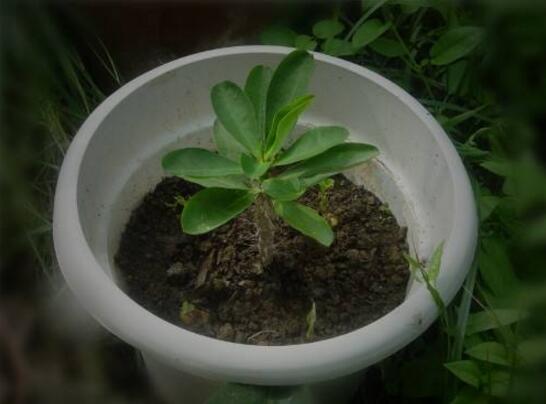
As for the question of how to propagate crown of thorns, we can generally choose cutting propagation, and the survival rate of this propagation method is relatively high. Below is a detailed explanation of this crown of thorns propagation method, and those interested can take a look.
II. Propagation methods of crown of thorns
Cutting propagation
1. Cutting time
When carrying out cutting propagation of crown of thorns, it is generally best to choose around April to June, because the temperature at this time is most suitable for the growth of crown of thorns, and choosing this time for cutting propagation will also greatly increase the survival rate.
2. Soil selection
When taking cuttings of crown of thorns, we first need to choose the soil. We can choose soil with good drainage, which is more conducive to it absorbing nutrients. For this point, you can refer to the article on crown of thorns growing methods, and I will not introduce too much here.
3. Cutting selection
Choosing cuttings is also a relatively important step in the propagation methods of crown of thorns. It is best to choose branches that grow robustly and are free of pests and diseases, so the success of the cutting will be greatly increased.
4. Cutting method for crown of thorns
When cutting, it is best to keep the ambient temperature at around 15-28°C, so the success rate is higher, and it is best not to carry it out when the temperature is too high. When cutting, we should first spray the soil moist, because cutting when the soil is too dry can easily damage the cuttings.
5. Follow-up management
After the cutting is completed, we should place it in a well-ventilated environment for care. Generally, watering once every 3-4 days is enough. If it is summer and the temperature is relatively high and water evaporates quickly, you can also choose to water once a day.
Regarding the question of how to propagate crown of thorns, cutting is generally used. As long as everyone remembers the methods above for cutting, the success rate is still very high. That is all for the propagation methods of crown of thorns. When you have time, you can try it yourself.
How to propagate wintersweet (Chimonanthus praecox), propagation methods of wintersweet / grafting is the easiest to survive
As everyone knows, wintersweet has very many effects and uses, so more and more people are growing it. After wintersweet blooms, propagation issues often come up. As a rather distinctive plant, how is wintersweet best propagated? Today let us look at the propagation methods of wintersweet.
How to propagate wintersweet
The propagation methods of wintersweet include grafting, division, sowing, cutting and layering, among which grafting is the most commonly used. It is more convenient to operate, and the other methods are also relatively common. It can be said that each has its own characteristics. Let us look at the specific methods below.
I. How to graft wintersweet
1. Grafting time
The time is generally chosen from March to April, that is, after the flowers fade, when the buds sprout to the size of a wheat grain. At this time, grafting is easiest to survive and is also more conducive to the sprouting of flowering branches. If the buds are too large, the success rate of grafting will be relatively low.
2. Method
One month before grafting, select relatively thick and longer one-year-old branches from a robust mother tree, then cut off the top shoot so that nutrients are concentrated in the middle section of the branch, which can provide sufficient nutrients after grafting.
Cut the leaf buds into scions about 6 cm long, then prepare a 5-year-old wintersweet seedling as the rootstock. The cut on the rootstock should be slightly longer. Join the scion and rootstock, then smear with mud.
Cover the treated joined plant with soil. After one month, you can open the soil and cultivate the surviving ones. After cultivation, the grafted seedlings should be pinched in time, which can promote the proliferation and sprouting of the seedlings.
Note: If using grafting among the propagation methods of wintersweet, after it survives, first cut off the scion below the joint, then cut off the rootstock branch tips above the cut.
II. Sowing propagation
1. Sowing time
The time to harvest the fruit is June to July of that year. After picking the fruit, extract the seeds, then store them with wet sand for later use, and carry out seed propagation in March of the second year.
2. Specific method
When using the sowing method, how is wintersweet propagated? First take out the stored seeds, then rinse them in water together with the sand, and wash off the waxy substance as well, then spread them evenly on a sand bed. During the seedling stage, pay attention to fertilizing and weeding. After 2 years of cultivation, they can be transplanted.
III. Division propagation
1. Division time
Division is usually carried out from February to March. If the flowering period is delayed, then you need to wait until the flowers fade before dividing.
2. Specific method
When the leaf buds have just emerged, division propagation can be carried out. At this time, how is wintersweet propagated? First dig out the robust mother plant, and use a knife to split the stems, so that each part retains at least three or more stems.
Plant the divided stems into a prepared pot with fertile soil, then water lightly. After the plant begins to grow normally, manage it according to the wintersweet growing methods.
IV. Cutting propagation
Cutting propagation of wintersweet is usually chosen in November, rather than in spring as with most other plants. Wintersweet has strong cold resistance, so cuttings in November are still easy to survive. Generally, softwood summer branches are best. Choose relatively robust branches as cuttings. After dipping the cuttings in 1×10⁻⁴-α-naphthaleneacetic acid for 1 min, insert them in a shaded plastic film shed to root more easily.
How to propagate purple heart (Tradescantia pallida), illustrated propagation methods of purple heart / cutting survival rate 100%
Purple heart (Tradescantia pallida) is named for its overall purple plant body and flower shape like plum blossom. It is a plant that combines ornamental and medicinal uses and is deeply loved by flower lovers. But does one pot of purple heart feel monotonous? It is time to propagate a few more pots. So how is purple heart propagated? Below are three propagation methods for purple heart, among which cutting has the highest survival rate. Today I will explain them in detail for everyone.
I. How to propagate purple heart, cutting/division/sowing
As a common indoor potted plant, purple heart is not difficult to grow; you just need to put in some effort to master it perfectly. But if you want to master the propagation methods of purple heart, then you need to put in more effort. As for how purple heart is propagated, there are mainly three methods: cutting, division and sowing.
Ps: Although there are many propagation methods for purple heart, division requires digging up the entire purple heart plant, which is rather troublesome; after purple heart blooms, seeds are relatively difficult to obtain, and sowing propagation is not suitable for indoor operation, so the most suitable method for flower lovers is cutting. Next, I will focus on the cutting method for purple heart.
II. Illustrated cutting method for purple heart
1. Cutting time
It is understood that the optimum temperature for rooting purple heart cuttings is 18-25℃, so the best time for purple heart cutting is spring and autumn.
2. Cutting selection
Purple heart cutting naturally cannot do without cuttings, that is, the purple heart branches used for cutting. From the purple heart potted plant, select healthy branches free of pests and diseases, cut them into sections 5-8 cm long, each section with more than three leaf nodes. These branches are the cuttings.
3. Cutting medium
For the cutting medium for purple heart, materials such as river sand and peat soil can be used. In addition, medium-coarse river sand can also be used, but it should be rinsed several times with clean water before use. However, before use, everyone had better disinfect it first, which can improve the survival rate of purple heart cuttings.
4. Starting the cutting
After making the preparations above, purple heart cutting can officially begin: moisten the cutting medium a little, then insert the dried cuttings into it. The depth should be 1/2-2/3 of the cutting.
5. Cutting management
The most important thing after cutting is to maintain relative humidity, so it is best to spray water on the cuttings 1-3 times a day for moisture retention. If it is a sunny day with relatively high temperature, then spray two more times. In addition, after cutting, 50-80% of sunlight must be blocked. Overall, purple heart cutting is not difficult, and with a little care the survival rate can reach 100%.
Overall, purple heart propagation is not difficult. Cutting, division and sowing can all take root and survive, but when it comes to survival rate, cutting is still the best. Of course, methods are fixed while people are flexible. Everyone can choose a method to propagate according to the actual situation. That is all for the propagation methods of purple heart, and I hope it can help everyone.