How to Propagate Serissa japonica? Three Propagation Methods, 100% Survival Rate with Cuttings
As a highly ornamental plant, Serissa japonica not only has pure white flowers like snow, but its lovely emerald green leaves are also captivating. One pot of Serissa japonica is a picturesque sight, but what about multiple pots? That requires us to propagate Serissa japonica. So how do you propagate Serissa japonica? Here are three propagation methods for Serissa japonica, among which cuttings are the most practical. Let's take a look together.
I. How to Propagate Serissa japonica: Cuttings / Division / Broadcast Cuttings
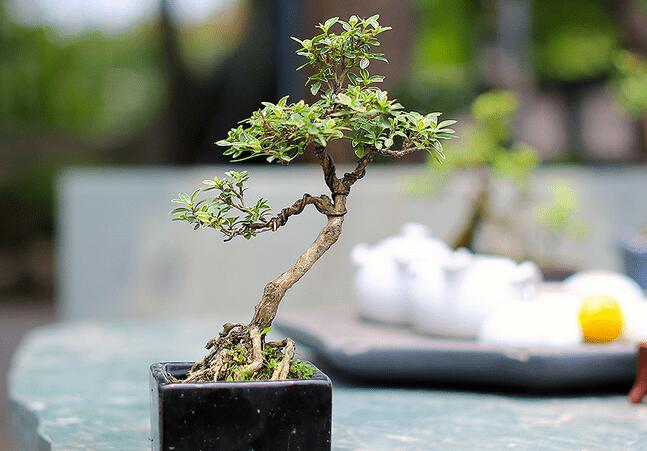
If you have grown Serissa japonica well, some flower enthusiasts might find it boring. At this point, you can try propagating a few more pots! As for how to propagate Serissa japonica, as far as the editor knows, there are three common methods: cuttings, division, and broadcast cuttings, among which cuttings are the most practical and have the highest survival rate. For specific operations, let's continue reading.
II. Three Propagation Methods for Serissa japonica
(1) Cutting Propagation Method for Serissa japonica
① Cutting Time
Serissa japonica is very tough and easy to propagate by cuttings. Basically, it can be done year-round. However, to achieve a high survival rate for Serissa japonica cutting propagation, it is best to choose February to March in spring (dormant branches) or June to July during the plum rain season (semi-mature branches).
② Cutting Substrate
In the cutting propagation of Serissa japonica, the choice of soil is also very important. Based on the habits of Serissa japonica and according to the soil requirements in the cultivation methods of Serissa japonica, we can choose loose, fertile, well-drained, slightly acidic fine sandy loam soil as the cutting substrate.
③ Selection of Cuttings
For cutting propagation, first you need to choose the right time, and second, you need to select good cuttings. Their quality will directly determine the success rate of the entire propagation. For Serissa japonica cuttings, we can cut healthy branches 6-8 cm long as cuttings; during the plum rain season, hard branches and old branches can both be used for cuttings.
④ Starting the Cuttings
After completing the above preparations, the cutting propagation of Serissa japonica can officially begin. Insert the cuttings into the prepared substrate at an appropriate depth, then cover them with plastic film for shade. Remember to poke some small holes in the film.
In addition, you can also combine several cuttings and insert them together. After insertion, they can be potted and transplanted in October to November. The seedlings from combined cuttings should be separated into individual plants for transplanting.
⑤ Post-Cutting Management
After cutting, pay attention to watering to keep the seedbed moist. For winter cuttings, also pay attention to cold protection. Overall, cuttings are extremely easy to root. With proper operation, the survival rate of Serissa japonica cutting propagation can reach 100%.
(2) Division Propagation Method for Serissa japonica
① Division Time
Division is one of the propagation methods for Serissa japonica. It is usually carried out around March in early spring before budding, or in late autumn when the plant stops growing.
② Division Method
In February to March, dig out the mother plant of Serissa japonica with roots from the soil, use your hands (preferably scissors) to divide it into several small clumps, and transplant them separately into flower pots. The division propagation method for Serissa japonica has a relatively high survival rate, and flower enthusiasts can also give it a try.
Note: Each small clump must have 1—3 branches with roots at the bottom.
(3) Broadcast Cutting Propagation Method for Serissa japonica
In addition to cuttings and division, there is another propagation method for Serissa japonica: the broadcast cutting method. Specific operation: Use an open space, loosen the soil, break up soil clumps, and level the ground. Evenly scatter the trimmed branches of about 3 cm on the previously prepared ground, press the soil surface firmly with your feet, then water thoroughly. After that, spray water once every other day.
After broadcast cutting, roots begin to form in 10 days, and buds sprout; after 25 days, apply the first diluted liquid fertilizer; at 50 days, apply a 1:1000 dilution of urea to promote seedling growth; after two months, they can be transplanted and planted; after four months, they can be potted for cultivation, and initial cutting can also be carried out; after one year, an ideal tree stump bonsai with exposed roots can be formed. If used as a hedge, it can take shape in just half a year.
Overall, Serissa japonica has strong vitality, and all three propagation methods are easy to succeed. However, in terms of convenience and survival rate, cuttings are still the best. Of course, methods are fixed, but people are flexible. Everyone can choose a method to propagate based on actual circumstances. That's all the editor has to introduce about the propagation methods of Serissa japonica. Hope it helps everyone.
How to Propagate Serissa japonica: Cutting and Division Propagation Methods for Serissa japonica
Serissa japonica is extremely easy to root. When making small or miniature bonsai, to promote rapid shaping, it is often done in June to July during the plum rain season. The flowering period of Serissa japonica is generally June to July each year, but some flower enthusiasts' Serissa japonica can bloom until October. Generally speaking, with good management, friends can grow it at home. Next, let's look at the propagation methods of Serissa japonica.
How to Propagate Serissa japonicaCutting and division methods are commonly used for propagation, and layering can also be used
Cutting Method for Serissa japonicaIt can be done year-round, with the highest survival rate achieved by hard branch cuttings in February to March of spring and soft branch cuttings during the plum rain season. Cuttings during the plum rain season should be shaded, and winter cuttings need cold protection. Division is best done in early spring before budding, or in late autumn when growth has stopped. Dormant branch cuttings are done in February to March, and semi-mature branch cuttings in June to July. Generally, hard branches are used in early spring, but during the plum rain season, both hard branches and old branches can be used, and shade frames need to be set up. After cutting, pay attention to watering to keep the seedbed moist. They are extremely easy to root.
Broadcast Cutting Method for Serissa japonicaUse green space, loosen the soil, break up soil clumps, and level the ground. Evenly scatter the trimmed one to two node (about 3 cm) branches on the previously prepared ground, press the surface soil firmly with feet or objects, and water thoroughly. After that, spray water once every other day. Roots begin to form after 10 days, and buds sprout. After 25 days, apply the first diluted liquid fertilizer. At 50 days, apply a 1:1000 dilution of urea to promote seedling growth. After two months, they can be transplanted and planted. After four months, they can be potted for cultivation, and initial cutting can also be carried out. After one year, an ideal tree stump bonsai with exposed roots can be formed. Used as a hedge, it can take shape in just half a year.
How to Grow Serissa japonica? Introduction to Propagation and Cultivation Methods of Serissa japonica
Serissa japonica fears strong light, prefers warm climates, and can also tolerate some cold and drought. It prefers well-drained, fertile, moist, and loose soil. It has low environmental requirements and strong growth vigour. Grown indoors, it is pleasing to the eye and is a common household plant. Below, the editor will introduce the cultivation methods of Serissa japonica!
Propagation Methods of Serissa japonica
Serissa japonica is commonly propagated by cutting and division methods, and layering can also be used. The cutting method can be done year-round, with the highest survival rate achieved by hard branch cuttings in February to March of spring and soft branch cuttings during the plum rain season. Cuttings during the plum rain season should be shaded, and winter cuttings need cold protection. Division is best done in early spring before budding, or in late autumn when growth has stopped.
Dormant branch cuttings are done in February to March, and semi-mature branch cuttings in June to July. Generally, hard branches are used in early spring, but during the plum rain season, both hard branches and old branches can be used, and shade frames need to be set up. After cutting, pay attention to watering to keep the seedbed moist. They are extremely easy to root.
Serissa japonica can also use the broadcast cutting method. Use green space, loosen the soil, break up soil clumps, and level the ground. Evenly scatter the trimmed one to two node (about 3 cm) branches on the previously prepared ground, press the surface soil firmly with feet or objects, and water thoroughly. After that, spray water once every other day. Roots begin to form after 10 days, and buds sprout. After 25 days, apply the first diluted liquid fertilizer. At 50 days, apply a 1:1000 dilution of urea to promote seedling growth. After two months, they can be transplanted and planted. After four months, they can be potted for cultivation, and initial cutting can also be carried out. After one year, an ideal tree stump bonsai with exposed roots can be formed. Used as a hedge, it can take shape in just half a year.
Cultivation Methods of Serissa japonica
1. Transplanting and Potting: Generally, February to March is the best time for transplanting, though the plum rain season and late autumn are also good times. When transplanting, it is best to use purple clay pots or glazed pots, and the pot colour should be dark to create a striking contrast with the flower colour. The potting soil should be sandy soil, preferably loose, rich in organic matter, and well-drained and aerated. In addition, for fertilizer selection, pine needle soil, leaf mould, and peat can be mixed together, with about 10% rice husk ash added for best results.
2. Water and Fertilizer Management: The water and fertilizer management of Serissa japonica should be appropriate, neither too dry nor too wet. Keep the potting soil at an appropriate moisture level. In winter, reduce watering frequency. In summer, generally spray water on the leaves, 1-2 times is fine. In addition, April to May each year is the best time for fertilizing. You can water with a 0.5% phosphorus-potassium fertilizer solution. In winter, additional fertilizing can be done by irrigating with diluted organic fertilizer. Apart from this, no fertilizing should be done. Concentrated fertilizer is a major taboo.
3. Light and Temperature Requirements: Serissa japonica likes sunlight, warmth, moisture, and ventilation. Therefore, during the growing season, it should be maintained under these conditions. In summer, it should be properly shaded, and never placed in direct sunlight. In winter, it should be moved indoors and kept at a certain temperature, for example, 5 to 12°C is fine.
4. Repotting and Pruning: Repotting every other year can make the soil looser and more suitable for plant growth. At the same time, removing old soil and properly pruning the roots can also enhance its ornamental value. In winter, shaping and pruning should be carried out, trimming long and short branches, and thinning or thickening branches. This can not only remove messy branches and leaves to improve the aesthetic appeal, but also cut off diseased and pest-infested branches and leaves. At the same time, through pinching, bud removal, and branch removal, maintain a certain shape that is elegant and charming.
5. Pest and Disease Control: Serissa japonica generally has few pests and diseases, with occasional aphids. At this time, you can spray with essential balm to kill the aphids, but the concentration should not be too high; diluting 500 to 600 times is more appropriate. In addition, root rot sometimes occurs. At this time, irrigate with 800 times dilution of root rot remedy or 600-1000 times dilution of 12% copper resin acid emulsion. Spray once every few days, three times in a row is sufficient.
Efficacy and Benefits of Serissa japonica
Serissa japonica, also known as baby's breath and, belongs to the Rubiaceae family and is a medicinal flowering plant. Its nature and flavour are bitter and cool. It has the effects of dispelling wind and dampness, relaxing muscles and activating collaterals, clearing heat and detoxifying, and regulating the spleen and qi. It has certain therapeutic effects on rheumatism, migraine, toothache, sore throat, stomatitis, neurodermatitis, damp-heat jaundice, shingles, and abnormal vaginal discharge.