How to propagate Chinese Ixora? Among the three propagation methods, cuttings have the highest survival rate
Chinese Ixora, an ornamental plant, is not only abundant in flowers but also rich in flower colors, making it very appealing. It is grown as a potted plant in many flower lovers' homes. However, besides its ornamental value, Chinese Ixora also has many effects and uses, which is why it is widely propagated. So how do you propagate Chinese Ixora? Below are three propagation methods for Chinese Ixora carefully compiled by the editor. Let's take a look!
I. How to propagate Chinese Ixora: cuttings/layering/seeds
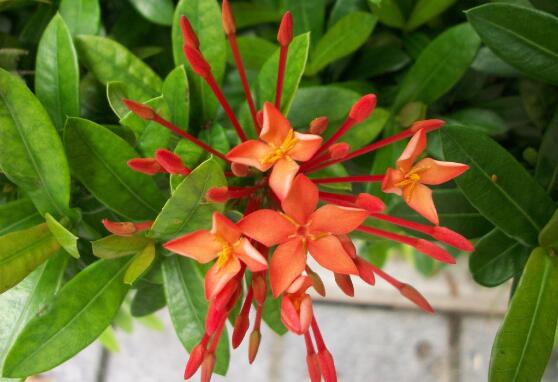
Growing Chinese Ixora as a potted plant at home is the choice of many flower lovers, but is one pot of Chinese Ixora too monotonous? Propagating a few pots to grow together is what's really exciting! So how do you propagate Chinese Ixora? According to research, there are mainly three propagation methods for Chinese Ixora: cuttings, layering and seeds. Because cuttings have a high survival rate, below we cover the cutting method for Chinese Ixora.
(1) Cutting method for Chinese Ixora
The best time for cuttings is not spring, but rather June-July. When taking cuttings, choose semi-mature branches, 10-15 cm long, insert them into a sand bed, with an optimum temperature of 24-30°C. Usually they will root in about a month and a half (if you want to shorten the rooting period, you can soak the cuttings in 0.5% indolebutyric acid solution for 3-5 seconds).
① Cutting time: June-July
When Chinese Ixora is propagated by cuttings, the survival rate is very high, but to achieve 100% survival, the choice of timing is crucial. Chinese Ixora can be propagated by cuttings from March to October after the weather warms up each year, and June-July is best.
② Cutting soil: strong permeability
In the cutting method for Chinese Ixora, the cutting soil is very important, as it greatly affects the rooting rate of the cuttings. In the cultivation method for Chinese Ixora, the soil requirements are stated very clearly, and in cutting propagation, the soil requirements are even higher. The standards are: water retention, strong permeability, cleanliness, etc.
Substrate selection: In daily life, the substrates commonly used for Chinese Ixora include perlite, vermiculite, river sand, etc., and it is best to use them mixed. If used alone, it is suitable for intermittent mist propagation.
③ Cutting selection: 10-14 cm long
In the cutting method for Chinese Ixora, the selection of cuttings is crucial. Choose them well, and the entire propagation process is half successful. You can cut tender branch cuttings in spring and summer. Specific requirements: robust growth, disease-free, uniform-sized branches. Cutting size: 10-14 cm long, diameter of 3 mm or more.
Cutting treatment: After selecting the cuttings, generally no treatment is needed, but for large-leaved tall varieties, because rooting is more difficult, before cutting, you should treat the cuttings with growth hormone substances such as indolebutyric acid or naphthaleneacetic acid, which can significantly promote rooting.
④ Starting the cuttings
Insert the cuttings into the prepared potting soil, water after inserting to keep the soil moist, and roots will emerge in about 50 days. After about another ten days, they can be transplanted or potted. At that time, place the Chinese Ixora in a semi-shaded area for care. After rooting and surviving, move it to a sunny area for normal care.
(2) Layering propagation of Chinese Ixora
Besides cuttings, layering is also one of the propagation methods for Chinese Ixora, and it is also carried out before early spring. Specific operation: Choose a plant with many dense branches, perform ring-barking at 20 cm from the top, then wrap with peat and plastic film. It will heal and root in about 2 months.
(3) Seed propagation of Chinese Ixora
Plants that can bear fruit can basically all be propagated by seeds, including Chinese Ixora. In winter, collect Chinese Ixora seeds and sow them the following spring. It is understood that the optimum germination temperature for Chinese Ixora seeds is 22-24°C. The drainage holes at the bottom of the sowing pot should be enlarged, and a drainage layer should be made. They germinate 20-25 days after sowing. When 3-4 pairs of true leaves have grown, the seedlings can be moved to 8 cm pots.
Chinese Ixora Chinese Ixora illustrated guide: how to grow Chinese Ixora/how to propagate Chinese Ixora
Chinese Ixora profileChinese Ixora Chinese Ixora
Cultivation methods and precautions for Chinese Ixora, introduction to Chinese Ixora
Aliases: Yingdan, Xiandan flower, Hundred-day red, Shandan, Yingdan flower, Water hydrangea, Hundred-day red.
Chinese Ixora (scientific name: Ixora chinensis), also called Xiandan flower, is the evergreen shrub commonly known as dwarf Xiandan. It also has other aliases such as red hydrangea, Maizimu, Maizimu, three-segment flower, etc. Its English name is Chinese ixora, and its formal scientific name is Ixora chinensis. It is native to southern China and Malaysia. The most commonly seen ones generally have orange-red flowers, so it is also called red hydrangea. But there are also other varieties with white flowers or yellow flowers, or peach red, pink, etc., which are mostly foreign Xiandan flowers native to India and other regions. It is one of the "three famous flowers of Okinawa" and is the city flower of Uruma City, Okinawa Prefecture.
Morphological characteristics of Chinese Ixora
Evergreen shrub, whole plant hairless, 0.5-2 m tall. Branchlets dark brown. Old stems black with cracks, young stems smooth and hairless. Leaves opposite, almost sessile, thinly leathery or papery, elliptical or obovate, 7.5-13 cm long, 3-3.5 cm wide, apex acute, base cuneate, margin entire, main vein prominent on both sides; petiole short, about 5 mm long; stipules borne between the two petioles, green, stem-clasping, apex with soft spine-like projections. Cyme terminal, densely clustered into a corymb, peduncle dark red, bracts very small, red, tooth-like; cyme terminal, inflorescence with short pedicel, with red branches, 6-7 cm long, inflorescence diameter 6-12 cm, with many red to orange flowers, very beautiful. Flowers 1-2 cm in diameter, corolla tube 3-3.5 cm long, with 4 lobes, corolla red or orange-red; calyx persistent, dark red, smooth and hairless, 4 shallowly lobed, lobes obtusely toothed; corolla lobes and stamens both 4; corolla salverform, slightly fleshy, red, lobes 4, nearly circular, apex rounded, about 1 cm in diameter when open, corolla tube slender, corolla red or orange-yellow; stamens 4, borne at the mouth of the tube, filaments extremely short, anthers yellow; pistil 1, red, ovary inferior, 2-locular, style slender, stigma 2-shallowly lobed, slightly spreading. Berry nearly spherical, black-red or purple-red when mature. The flowering period of Chinese Ixora is very long. Generally, flowering can be seen from late April each year to around late January of the following year, with the peak flowering period roughly from mid-May to late November. Spherical berries also form. Flowering period year-round.
The side branches of the whole Chinese Ixora plant grow upright and smooth, and the leaf surfaces are smooth, leathery, opposite, entire, and obovate or elliptical. The length is generally about 9 cm-12 cm, and the width is about 4 cm-5 cm. The surface is dark green, and the underside is lighter in color. The leaf shape of foreign Xiandan flowers is triangular or long-elliptical stipules, and the veins on the surface are more obvious. The first leaf flushing period is about March-June each year, and the second is about August to early October.
The flowers belong to terminal corymbose inflorescences. Each flower cluster has about 20-30 small flowers growing from the corolla tube and then splitting into 4-5 elliptical petals. The corolla tube is about 2.5 cm long, and the corolla is mostly brick red. The 20-30 clustered small flowers as a whole present a large spherical shape, a mass of flowers, shaped like a hydrangea, hence the alias "red hydrangea." It is also famous because it is native to Shandan Mountain in South China, so it is also called "Shandan flower." As for foreign Xiandan flowers, although they also have 20-30 small flowers growing together, their appearance is mostly semicircular, and the petals are relatively pointed and long. In Okinawa, Japan, because this flower has three flowering periods a year, and the pedicels are in a three-segment overlapping state, it also has the alias "three-segment flower."
Shrub, 0.8-2 m tall, hairless; branchlets initially dark brown, glossy, gray when old, with lines. Leaves opposite, sometimes nearly 4-whorled due to extremely short internodes, lanceolate, oblong-lanceolate to oblong-obovate, 6-13 cm long, 3-4 cm wide, apex obtuse or rounded, base shortly acute or rounded; midvein flattened and slightly sunken above, raised below, lateral veins 7-8 on each side, slender, distinct, connected to each other near the leaf margin, transverse veins loose, distinct; petiole extremely short and thick or absent; stipules 5-7 mm long, base broad, connate into a sheath, apex long acuminate, the acuminate part conical, longer than the sheath. Inflorescence terminal, many-flowered, with short peduncle; peduncle 5-15 mm long, red along with branches, rarely powdery pubescent, base often supported by 2 small leaves; bracts and bracteoles minute, paired at the base of the receptacle; flowers pedicellate or not; calyx tube 1.5-2 mm long, calyx limb 4-lobed, lobes extremely short, 0.8 mm long, acute or obtuse; corolla red or red-yellow, 2.5-3 cm long when fully open, apex 4-lobed, lobes obovate or nearly circular, spreading or recurved, 5-7 mm long, 4-5 mm wide, apex obtuse or rounded; filaments extremely short, anthers oblong, about 2 mm long, base 2-lobed; style shortly exserted beyond the corolla tube, stigma 2, appressed at first, forked when fully open, slightly downward-curved. Fruit nearly spherical, paired, with 1 groove in the middle, red-black when mature; seeds 4-4.5 mm long and wide, convex above, concave below. Flowering period May-July.
Ecological habits of Chinese Ixora
Chinese Ixora prefers a high-temperature, humid and sunny environment. When planting, it is best to place it outdoors where it can receive sunlight. Water it after the soil surface in the pot is clearly dry. When the weather begins to cool in late autumn, it can be moved indoors for growing, preferably placed by a window, and the temperature should be kept at least above 7°C. Chinese Ixora is native to China, Myanmar and Malaysia. It likes a warm, humid and sunny environment. It is not cold-tolerant, tolerates semi-shade, and is not tolerant of waterlogging and strong light. It likes a warm, humid and sunny environment. It is not cold-tolerant, tolerates semi-shade, and is not tolerant of waterlogging and strong light. The optimum growth temperature for Chinese Ixora is 15-25°C, 24-30°C from March to September, and 13-18°C from September to the following March. The winter temperature should not be lower than 0°C, as too low a temperature can easily cause frost damage. On the contrary, Chinese Ixora is heat-tolerant and grows normally above 32°C. Overall, Chinese Ixora has relatively strong adaptability to temperature. Chinese Ixora likes moisture and fears dryness. During the stem and leaf growth period, sufficient water is needed to keep the potting soil moist, which is beneficial for branch sprouting and leaf growth. However, being too wet for a long time can easily cause partial root rot, affecting growth and flowering. If the soil is too dry or alternates between dry and wet, and water is not supplied in time, leaf drop will occur.
Chinese Ixora needs sufficient sunlight, especially during the stem and leaf growth period. Under sufficient sunlight, the leaves are emerald green and glossy, which is beneficial for inflorescence formation, neat flowering, and vivid flower colors. It can also grow in a semi-shaded environment, but the leaves are pale green, lack luster, fewer flowers are produced, and the flower color is lighter. However, appropriate shading during strong summer sunlight can prolong the viewing period of the flowers.
Introduction to Chinese Ixora
To date, it is widely used for potted ornamental purposes in China and abroad, being small and exquisite, with lush flowers and leaves. Potted plants are especially suitable for placement on windowsills, balconies and living rooms. The clustered flowers have a sense of steadiness and overall boldness. During storage and transportation, Chinese Ixora is prone to flower drop, mainly caused by ethylene. Spraying 0.3-0.4 mmol/L silver thiosulfate solution 10 days before storage and transportation can prevent or reduce flower drop and increase the marketability of Chinese Ixora.
Meaning
As the saying goes, the moon is not full for a hundred days, and flowers are not red for a hundred days, but Myanmar's national flower, Chinese Ixora, is precisely because of its long flowering period that people call it "hundred-day red." The Yistha people of Myanmar have a particularly romantic and interesting marriage custom. Since ancient times, they have lived by the water. Every family with a daughter would early on build a floating small garden with bamboo and wood on the water near the house, plant it full of Chinese Ixora, and then tie it with a rope. On the day the daughter marries, she is dressed up beautifully, then seated in this floating small garden, and finally the rope is cut, letting it drift downstream. The groom waits early in the morning on the bank downstream, ready to welcome the small garden carrying the bride as it drifts over. When the small garden drifts over, the groom grabs the rope and pulls it ashore, then leads the bride home together to hold the wedding.
When Chinese Ixora has not yet bloomed, it looks very much like tiny slender hairpins pointing straight into the blue sky. After blooming, the four petals spread out flat into crosses. In ancient times, the cross shape represented charms to ward off evil spirits and drive away disease and plague. Therefore, every year during the Dragon Boat Festival, in order to ward off evil spirits, drive away disease and plague, and seek good fortune, the people rowing dragon boats inserted this flower together with calamus and mugwort on the dragon boats. Over time, this flower came to be called Chinese Ixora.
Distribution area of Chinese Ixora
Produced in Taiwan, China, Fujian Province, Guangxi Province, Guangdong and other places, and also in Malaysia and Indonesia. It grows in mountain thickets and open forests at an altitude of 200-800 m, and sometimes also grows on hillsides near villages and roadsides in open country. It is distributed in tropical regions such as Vietnam, the Philippines, Malaysia, Indonesia, etc. The type specimen was collected from China.
Chinese Ixora is native to southern China and Malaysia. It was introduced to the UK at the end of the 17th century and later spread to European countries. It is widely used for potted ornamental purposes. At present, the Netherlands, the United States and Japan cultivate it more extensively. In addition, Australia's AusPacific Plants company and Israel's Agrexco Agricultural Export Company are also important international enterprises mainly producing Chinese Ixora. To date, the sales volume of Chinese Ixora has been increasing year by year.
The cultivation of Chinese Ixora in China should have been in the late 16th century, as an ornamental cultivation in southern courtyards. At the end of the 17th century, Taiwan, China first introduced Chinese Ixora from Guangdong. By the 1920s, Guangdong and Taiwan, China introduced new Chinese Ixora species from Singapore. Starting in the 1980s, hybrid new varieties were introduced from Europe and the United States, making the cultivated varieties of Chinese Ixora in China more abundant, and shifting more from southern courtyard ornamentation to potted ornamentation. At present, Chinese Ixora can be seen in hotels and flower markets in many cities in China.
Medicinal or dietary therapeutic value of Chinese Ixora
The medical information and health dietary therapy information on Huahua Network is for reference only and cannot be used as a basis for diagnosis or medical treatment. Any health issues should be consulted with professional medical staff, and the treatment of any disease should follow a doctor's advice.
Ultimate flower-protecting task: To love yourself, start from reality and strictly follow a doctor's advice. For illness, do not be careless, do not delay, do not give up hope, face it bravely, warm the silent world with love, and care for the flower field in your heart with your heart.
The medical content on Huahua Network is for reference only and cannot be regarded as professional advice. Any health issues should be consulted with professional medical staff. Medicinal information (1)
[Chinese name] Chinese Ixora, Maizimu, red hydrangea, Shandan, May flower, Maizimu, Yingshanhong, Niulan, Zhutong, Fanhaitang, Dajiangjun, Luosanmu, red cherry blossom, soil red flower, hundred-day red, Xiandan flower
[Chinese pinyin] Longchuanhua
[English name] Chinese Ixora
[Latin scientific name] Ixora chinensis Lam.
[Family and genus classification] Rubiaceae, Ixora
[Plant morphology] Evergreen shrub, 0.5-2 m tall. Branchlets dark brown. Leaves opposite, petiole about 5 mm long; stipules green, 6-8 mm long, stem-clasping, apex with soft spine-like projections; leaf blade thinly leathery, elliptical or obovate, 7.5-13 cm long, 3-3.5 cm wide, apex acute, base cuneate, margin entire. Cyme terminal, densely aggregated into a corymb; peduncle dark red; bracts very small, red, tooth-like; calyx dark colored, smooth and hairless, 4 shallowly lobed, lobes obtusely toothed; corolla slightly fleshy, red, corolla tube 3-3.5 cm long, 4-lobed, lobes nearly circular, apex rounded, about 1 cm in diameter when open; stamens 4, filaments extremely short; pistil 1, red, ovary inferior, 2-locular, stigma 2-lobed, slightly spreading. Berry nearly spherical, 7-8 mm in diameter, purple-red when mature. Flowering period April-August.
[Habitat and distribution] Scattered under open forests, in thickets or by roadsides in open country. Distributed in Fujian, Taiwan, Guangdong, Guangxi.
[Medicinal parts] Flowers and roots are used as medicine. Chinese medicine names: flower: Chinese Ixora. Root: Chinese Ixora root.
[Harvesting and processing] Flower: can be collected year-round, used fresh or dried in the sun. Root: dug after autumn, sliced and dried in the sun.
[Main components] Leaves contain phenols, amino acids, organic acids, and sugars.
[Pharmacological effects] Purgative effect.
[Nature, flavor and functions] Flower: sweet and bland, cool. Root: bitter, slightly astringent, cool. Flower: clears heat and cools blood, dissipates blood stasis and relieves pain. Root: clears heat and cools blood, invigorates blood and relieves pain.
[Indications and usage] Flower: hypertension, irregular menstruation, amenorrhea, traumatic injuries, sores and boils. Root: cough, hemoptysis, rheumatic joint pain, stomach pain, women's amenorrhea, sores and swelling pain, traumatic injuries. Flower: internal use: decoct in water, 10-15 g. External use: appropriate amount, mash and apply. Root: external use: appropriate amount, grind into powder and mix for application. Internal decoction, 10-35 g.
Treating irregular menstruation and amenorrhea: Chinese Ixora 3-5 qian, decoct in water. (Guangzhou Military Region "Common Chinese Herbal Medicine Manual")
Medicinal information (2)
Effects: clears the liver, invigorates blood, relieves pain.
Used for hypertension, irregular menstruation, tendon and bone fractures, sores.
Nature, flavor and meridian entry: sweet and pungent, cool. ① "Bencao Qiuyuan": "Bland and pungent, neutral." ② Guangzhou Military Region "Common Chinese Herbal Medicine Manual": "Sweet and bland, cool."
Aliases: Maizimu ("Tang Bencao"), red hydrangea, Shandan ("Xuepu Zashu"), May flower ("Shengcao Yaoxing Beiyao"), Yingshanhong ("Bencao Qiuyuan"), Niulan, Zhutong, Fanhaitang ("Lingnan Caiyao Lu"), Dajiangjun ("Guangxi Zhongyao Zhi"), red cherry blossom (Guangzhou Military Region "Common Chinese Herbal Medicine Manual")
Medicinal parts: The root of this plant (Chinese Ixora root) and stems and leaves (Chinese Ixora stems and leaves) are all used medicinally, each detailed in separate entries.
Distribution of animal and plant resources: wild or cultivated. Distributed in Guangdong, Guangxi, Taiwan, Fujian and other places. The root of this plant (Chinese Ixora root) and stems and leaves (Chinese Ixora stems and leaves) are all used medicinally, each detailed in separate entries.
Harvesting and storage of medicinal materials: can be collected year-round.
Functions and indications: dissipates blood stasis and stops bleeding, regulates menstruation, lowers blood pressure.
Root, stem: pulmonary tuberculosis hemoptysis, stomach pain, rheumatic joint pain, traumatic injuries.
Flower: irregular menstruation, amenorrhea, hypertension.
Usage and dosage: root, stem 0.5-1 liang, flower 3-5 qian.
Caution: contraindicated for pregnant women.
Treating traumatic injuries, sores, boils and carbuncles.
"Tang Bencao": "Mainly treats fracture injuries with internal blood depletion, reconnects severed tissues, supplements bone marrow, relieves pain, and calms the fetus."
Supplementary formulas:
① Treating various toxic sores and damp scabies, removing dead flesh and promoting new flesh: Take twenty or thirty Chinese Ixora leaves in a stack, pierce several dozen holes with a silver hairpin, place in a bowl of good vinegar, steam together with the leaves in the vinegar. After cooling, take one leaf and apply it to the poisoned area, replacing it when dry. ("Lingnan Caiyao Lu")
② Treating traumatic injuries, blood stasis pain, sores, boils and carbuncles: Mash Chinese Ixora stems and leaves for external application, or dry the whole plant in the sun, grind into powder, and mix with water to apply to the affected area. (Guangzhou Military Region "Common Chinese Herbal Medicine Manual")
Medicinal name: Chinese Ixora root
Pinyin: LONGCHUANHUAGEN
Source: The root of the dicotyledonous medicinal plant Chinese Ixora in the Rubiaceae family.
Effects: moves qi and stops bleeding, invigorates blood and unblocks collaterals, cools blood and stops bleeding, astringes and promotes wound healing.
Indications: treats stomach pain, rheumatic swelling and pain, traumatic injuries, amenorrhea, hemoptysis, sores.
Nature, flavor and meridian entry: Guangzhou Air Force "Common Chinese Herbal Medicine Manual": "Bitter and slightly astringent in taste, cool in nature." Enters the lung and stomach meridians.
Usage and dosage: internal use: 30-60 g, decocted.
Aliases: Hongyinghua tree root ["Guangdong Chinese Medicine" 4(9):378, 1959]
Latin name: Ixora chinensis Lam.
Textual research: From Guangzhou Air Force "Common Chinese Herbal Medicine Manual."
Medicinal name: Chinese Ixora stems and leaves
Source: The stems and leaves of the Rubiaceae plant Chinese Ixora.
Collection: can be collected year-round.
Chemical components: Leaves contain phenols, amino acids, organic acids and sugars.
Processing: "Leigong Paozhi Lun": "After collecting Maizimu, coarsely pound it, stir-fry with butter until the butter is fully absorbed, then use. For every 1 liang, use 2 fen of butter as the measure."
Nature and flavor: "Tang Bencao": "Sweet and slightly salty in taste, neutral (also written as 'slightly warm, salty and neutral') and non-toxic."
Functions and indications: treats traumatic injuries, sores, boils and carbuncles.
"Tang Bencao": "Mainly treats fracture injuries with internal blood depletion, reconnects severed tissues, supplements bone marrow, relieves pain, and calms the fetus."
Selected formulas: ① Treating various toxic sores and damp scabies, removing dead flesh and promoting new flesh: Take twenty or thirty Chinese Ixora leaves in a stack, pierce several dozen holes with a silver hairpin, place in a bowl of good vinegar, steam together with the leaves in the vinegar. After cooling, take one leaf and apply it to the poisoned area, replacing it when dry. ("Lingnan Caiyao Lu")
② Treating traumatic injuries, blood stasis pain, sores, boils and carbuncles: Mash Chinese Ixora stems and leaves for external application, or dry the whole plant in the sun, grind into powder, and mix with water to apply to the affected area. (Guangzhou Military Region "Common Chinese Herbal Medicine Manual")
Landscape uses of Chinese Ixora
Chinese Ixora is native to southern China, and there are wild original species in southern Guangxi. It is widely used for potted ornamentation. Chinese Ixora is very suitable for landscaping and courtyard beautification planting, and is also suitable for potted ornamentation. Chinese Ixora has a beautiful plant shape, dense flowering, rich flower colors, and flowers to enjoy all year round. It is an important potted woody flower, is the national flower of Myanmar, has a low plant height, beautiful flowers and leaves, and rich flower colors including red, orange, yellow, white, and bicolor. When planted in the open in southern China, it is suitable for courtyards, hotels, and scenic area arrangements, with heights staggered and bright flower colors, giving an excellent landscape effect. In southern Guangxi Province, China, people customarily call it water hydrangea. Chinese Ixora has a relatively long flowering period and can bloom from March to December each year.
In the season of dragon boat racing, a kind of "flower-shaped" Chinese Ixora that slightly resembles a red hydrangea also blooms brilliantly. Because it is a woody plant, some places call it woody hydrangea. Chinese Ixora is also called Xiandan flower, in the Rubiaceae family, Ixora genus, an evergreen shrub or small tree. This genus has more than 20 varieties and is not rare in the southeastern coastal areas of China. However, not all Chinese Ixora flowers are bright red; there are also peach red, orange, yellow, and even white. Because the plant height is generally 1-2 m, it is suitable for courtyard landscaping.
Because Xiandan flower has a very long flowering period, and the inflorescence arrangement is quite beautiful, and the color is also relatively vivid, it is most often used as a potted plant to beautify gardens. If effectively fertilized and managed during planting, it is easy to grow beautiful flower clusters full of blooms. Also because it belongs to terminal inflorescences, generally speaking, as long as new branches appear, inflorescences may grow. So with just a little pruning and tidying, the whole plant can have a joyful appearance. The main propagation method is cuttings. Because growth is relatively rapid and luxuriant during the peak flowering periods in summer and autumn, this is the most suitable time for propagation.
Xiandan flower prefers a high-temperature, humid and sunny environment. When planting, it is best to place it outdoors where it can receive sunlight. Water it after the soil surface in the pot is clearly dry. When the weather begins to cool in late autumn, it can be moved indoors for growing, preferably placed by a window, and the temperature should be kept at least above 7°C. When planted in the open in the south, it is suitable for courtyards, hotels, and scenic area arrangements. Potted plants are especially suitable for placement on windowsills, balconies and guest rooms.
Chinese Ixora is quite common in southern China and is now widely planted in tropical cities for garden ornamentation; its flower color is bright red and beautiful, and its flowering period is long. Hemsley merged I. blanda and I. rosea into this species. But the species produced in China has red or yellow-red flowers, definitely not white like I. blanda. Also, Zhao Zheming merged this species with I. philippenensis in "Flora of Taiwan" and adopted the latter's name. According to our observations, comparing the Philippine specimen Bur. Sci. 43958 identified by Merr. as I. philippinensis with I. chinensis, its leaf shape and flower shape and color are very different, so the author believes that I. philippinensis and I. chinensis should be independent species.
Propagation methods of Chinese Ixora
Propagated by cuttings or seeds. It likes a warm, humid and relatively sunny environment. It is an indicator plant of acidic soil and must be grown in acidic soil, requiring loose soil with good drainage. When cultivated in the north, shade must be provided in summer. During the growth period, pay attention to fertilizing and pinching to promote branching. In the north, it is grown in greenhouses as potted ornamentals, and in warm regions it is grown and arranged in courtyards.
Propagation mostly uses cuttings
Cutting propagation can be carried out from March to October after the weather warms up each year. Select robust one-year-old branches (too tender ones are not easy to survive, and old branches with black skin and spots are not easy to root), cut into 10-15 cm sections, remove the basal leaves, and insert into a sand bed. Water after inserting to keep the soil moist, and roots will emerge in about 50 days. About ten days after rooting, they can be transplanted or potted, placed in a semi-shaded area for care, and after rooting and surviving, moved to a sunny area for care. After sprouting, apply topdressing. During the growth period, apply topdressing twice a month. When the seedlings are 15-20 cm tall, pinch the top once to encourage more side branches and form a full shape early. Old plants need to be repotted and soil changed once a year, and shaping and pruning should be carried out in early winter.
June-July is best. Select semi-mature branches, 10-15 cm long, with a cutting room temperature of 24-30°C, insert into a sand bed, and roots will form 40-50 days after insertion. If before cutting, soak the base of the cuttings in 0.5% indolebutyric acid solution for 3-5 seconds, the rooting period can be shortened and the root system will be particularly developed.
Seed propagation
Collect seeds in winter, sow the following spring, with an optimum germination temperature of 22-24°C. Sow in indoor seedling trays, and germination occurs in about 20-25 days. When 3-4 pairs of true leaves have grown, the seedlings can be moved to 8 cm pots. When there are many dense branches, layering propagation can also be used. At 20 cm from the top, perform ring-barking, bind with peat and plastic film, and healing and rooting will occur in about 2 months.
For potted Chinese Ixora, 10-20 cm pots are commonly used, depending on the size of the seedlings and the number of plants. Potted plants must be lush, bloom neatly and have uniform flower color. After the seedlings are planted, pinch when the seedlings are 25 cm tall to promote more side branches. During the growth period, fertilize once every half month or use "Huiyou" 21-7-7 acid fertilizer. If yellowing leaves are found, apply alum fertilizer water. When potted indoors in winter, the temperature must be kept above 15°C so growth can continue. If the temperature is too low, leaf drop will occur. Potted old plants should be repotted after winter, and pruned and shaped to maintain a beautiful plant shape.
For potted old plants, repot after they are moved out each year, and increase the application of soybean cake, dried manure, etc. as base fertilizer. In daily care, do not let the soil become too dry; keeping it moist regularly is best. If you want more flowers, fertilizer and water must be sufficient. Apply 20% cake fertilizer water or superphosphate soaking solution once a week. In summer, do not let direct sunlight hit them; bright scattered light is best. After flowering, the plant should be pruned, removing weak branches to promote new shoots and make it bloom multiple times. During the flowering period, due to poor ventilation and other reasons, aphids and scale insects often cause damage, and early control should be noted. In winter, move indoors to a sunny place, with the temperature not lower than 0°C, and water about once a week, just keeping the soil slightly moist.
Chinese Ixora can be propagated by seeds, layering or cuttings. Cuttings can be taken during the growing season, especially in June-July. Take 2-3 nodes of full one-year-old branches; insert into sand, shade and keep warm, and roots will form in about 50 days. Layering is carried out in early spring. For newly propagated small seedlings, after potting, place them in a semi-shaded area for care. After they survive and send out new shoots, apply a light fertilizer once every 10-15 days. When the weather is dry, pay attention to spraying water to increase humidity. When the seedlings grow to about 15 cm, pinch them to promote side branches and make the plant shape full.
Cultivation techniques for Chinese Ixora
The main propagation method is cuttings. Because growth is relatively rapid and luxuriant during the peak flowering periods in summer and autumn, this is the most suitable time for propagation. The soil is best if it is fertile, loose and well-drained acidic sandy loam. For potting, use a mixed soil of culture soil, peat soil and coarse sand, with a pH of 5-5.5 being suitable.
Disease and pest control for Chinese Ixora
Chinese Ixora is often harmed by leaf spot and anthracnose, which can be sprayed with 1000 times dilution of 10% antiseptic 401 acetic acid solution. Pests include scale insects, which can be killed by spraying with 1500 times dilution of 40% omethoate emulsifiable concentrate. Sometimes aphids harm young tender stems and leaves, and can be killed by spraying with 1200 times dilution of 2.5% derris extract emulsifiable concentrate.
Variety Classification of Ixora
Ixora borbonica (I. borbonica) is the only foliage type in the genus Ixora; its leaves are lanceolate, light blue, covered with pale green spots, and very beautiful.
White Ixora (I. chinensis cv. Alba), flowers pure white.
Fraseri (Fraseri), flowers large, orange-red.
Red Ixora (I. coccinea), flowers bright red.
Herrea's Pink (Herrea's Pink), flowers light pink.
Finlayson's Ixora (I. finlaysonian), flowers small, pure white.
Java Ixora (I. javanica), flowers orange-red.
Yellow Ixora (I. lutea), flowers yellow.
King Ixora (I. macrothyrsa), flowers rose red turning dark red.
Super King Ixora (I. macrothyrsa cv. Super King), flowers orange-red.
Fragrant Ixora (I. odorata), flowers light pink with a red base, very fragrant.
Wavy Ixora (I. undulata), flowers red.
Small-flowered Ixora (I. parviflora), flowers white.
Aureo-Rosea Ixora (I. williamsii cv. AureoRosea), a bicolor variety.
Declorens Ixora (I. williamsii cv. Declorens), flowers bright deep color.
Dwarf Ixora (I. williamsii cv. Dwarf Salmon), leaves small, dense, oblong, flowers orange-red.
The Flower Language of Ixora
The flower language and symbolic meaning of Ixora: striving to be first.
Ixora Pictures
Cutting Propagation Techniques for Southern Ground Cover Plants in Bag Seedlings
News from the China Landscape Web on July 12: There are four propagation methods for ground cover plant bag seedlings: seed propagation, grafting propagation, cutting propagation, and tissue culture. In southern regions, the most widely used, lowest cost, and most readily accepted by seedling farmers everywhere is cutting propagation.
Influencing Factors
I. Internal Factors
1. Tree Species Characteristics
Due to genetic differences, different tree species vary greatly in morphological structure, growth and development patterns, and ability to adapt to the external environment, resulting in differences in cutting survival; some root easily from cuttings, while others root with difficulty.
2. Mother Plant and Cuttings
Age: As a plant grows, its metabolism gradually weakens, and its vitality and adaptability gradually decline. Generally, the rooting ability of cuttings decreases as the mother plant ages. Therefore, the younger the mother plant, the stronger its vitality, and the higher the survival rate of cuttings taken from its branches. Similarly, on the same plant, cuttings taken from one- to two-year-old branches root more easily than those from perennial branches.
3. Cuttings
Development status: How well a branch develops, that is, how much nutrients it contains, has a certain influence on cutting survival. Generally, branches on the main axis develop best, and using them as cuttings gives stronger rooting than using side branches; among branches of the same age, the thicker the better; branches on the sunny side of the crown are better than those on the shaded side; basal sprouting branches are better than upper branches. In production practice, for some tree species, taking part of a two-year-old branch, that is, heel cuttings, helps increase the survival rate, which is related to the greater nutrients stored in two-year-old branches.
The buds and leaves on the cuttings can supply the nutrients and growth hormones necessary for rooting, so when taking cuttings, while preventing excessive water evaporation, retain as many leaves and buds as possible to facilitate rooting.
II. External Factors
1. Temperature
The optimum rooting temperature for most seedlings is 15°C to 25°C, with 20°C being the most suitable. When the substrate temperature is 3°C to 5°C higher than the air temperature, it is most favorable for cutting rooting.
2. Moisture and Aeration
After cutting, the cuttings need appropriate substrate moisture and air humidity, which is the key to rooting. First, ensure relatively high air humidity, generally 80% to 90% relative air humidity; second, maintain appropriate substrate moisture, but not too much, to avoid mold and rot at the base of the cuttings caused by poor substrate aeration. Measures such as shading and watering can be used to increase the survival rate. In modern seedling-raising techniques, enclosed cutting beds and full-sun automatic intermittent misting facilities are often used, with good results.
3. Light
Sufficient light can raise soil temperature and air temperature and promote rooting. However, too strong light can dry out or scorch the branches. Therefore, in the early stage of cutting rooting, proper shading should be provided. As the root system grows, the light duration can be gradually extended. However, plants do not all have the same light requirements; they differ in their requirements for light intensity depending on the variety. According to their light intensity requirements, we can divide seedlings into three types: sun-loving, neutral, and shade-loving ornamental seedlings.
Sun-loving seedlings prefer strong light and cannot tolerate shade; they have a relatively high light compensation point and can only grow and develop normally under conditions of sufficient sunlight. If light is insufficient, the branches become slender, the leaves turn yellow and thin, the flowers are small and dull, and flowering is poor. Common tree species include golden forsythia, Fujian tea, purple peony, Ixora, Aglaia, Chinese rose, hibiscus, and so on.
Neutral seedlings relatively prefer light and grow best in sufficient sunlight, but they also have varying degrees of shade tolerance, such as camellia, rhododendron, Schefflera octophylla, Cordyline, and Podocarpus.
Shade-loving seedlings have strong shade tolerance and grow well under moderately shaded conditions, such as Taxus, Fatsia japonica, ivy, flower butterfly, and Boston fern.
Therefore, they should be placed according to the different light requirements of each plant. Place sun-loving seedlings in an open, unobstructed environment; place neutral seedlings beside large trees or under sparse forest, allowing them to receive 70% to 80% sunlight; place shade-loving seedlings under multiple layers of shade netting, allowing them to receive 40% to 70% sunlight.
4. Cutting Substrate
The cutting substrate only needs to meet the cuttings' requirements for soil moisture and aeration. Considering cost needs, local materials are often used, choosing loose, breathable sandy loam rich in humus. When the soil is too sticky and heavy, an appropriate amount of sand, coconut coir, peat, etc. can be added to adjust it. In actual production, use a hoe to slowly break up the sandy loam, and it is best to spread it out and sun-dry it for two or three days for high-temperature sterilization and disinfection.
Methods to Promote Rooting
I. Physical Treatment
1. Mechanical Treatment
Commonly used methods include ring girdling, scoring, and constriction. After the new shoots stop growing, score, girdle, or tie the base of the branch with wire or similar materials to prevent nutrients in the upper part of the branch from being transported downward, so that nutrients are stored in the branch; then cut the branch for cuttings during the dormant period.
2. Etiolation Treatment
Cover the cuttings with black cloth, paper, or plastic film to etiolate and soften the branches, which is beneficial to the growth of root tissue and promotes rooting of the cuttings.
3. Heating Treatment
Use facilities such as electric heating wires or hot water pipes to heat the seedbed so that the substrate temperature of the seedbed reaches 20°C to 25°C, which can increase the survival rate of cuttings. For seedlings whose branches contain more resin, such as pines and spruces, soak the cuttings in warm water for 2 hours to remove the resin and promote rooting.
II. Hormone Treatment
1. Types
Plant growth hormones can promote rooting of cuttings. Commonly used ones include indoleacetic acid (IAA), indolebutyric acid (NAA), 2,4-dichlorophenoxyacetic acid (2,4-D), ABT rooting powder, and so on.
2. Treatment Methods
There are many such products on the market; we only need to buy them from regular pesticide stores and strictly follow the instructions.
Precautions
To prevent the seeds of annual grassy weeds from sprouting, pour butachlor aqueous solution onto the substrate before cutting; generally add 20 grams of butachlor liquid per 50 kg of water.
Considering economic benefits, after bagging, seedlings must be produced as quickly as possible, so when cutting, we insert several cuttings into the same bag at the same time. First, if one or two cuttings fail to survive, the others may still survive; second, if all survive, seedlings can be produced and leave the nursery quickly, reducing the time accumulated in the nursery waiting for bag seedlings to become ready.
Post-Cutting Maintenance
1. Temperature
Cutting branches generally root best at 15°C to 25°C, so in summer, misting should be used appropriately to lower the temperature. Especially at noon when the temperature is very high, mist several times, once every one or two hours, and strengthen ventilation. In winter, some seedlings cannot withstand severe cold, such as large-leaf red grass, canna, and Coleus, so on the seedbed use bamboo poles or iron rods to arch into a semicircular shape, cover it with agricultural film, and only at noon when the temperature is relatively high should the film door be properly opened for ventilation.
2. Moisture
The substrate must not be too wet; it is best if it can be squeezed in the palm without water droplets overflowing. In summer, with high temperature and high humidity, besides the necessary misting to lower temperature, when the substrate is found to be in a wet state, do not replenish water to the cutting bed. In summer, watering should be done in the morning or evening, because at that time the soil temperature and water temperature are similar, while at hot noon the soil temperature is at least 3°C higher than the water temperature, sometimes even more than 5°C, so watering at that time harms flowers and trees. In winter, because the weather is dry and substrate moisture evaporates easily, misting is needed at noon when the temperature is relatively high to maintain moisture. It is absolutely forbidden to water flowers and trees in the morning or evening, because in winter the water temperature in the morning or evening is generally lower than the soil temperature; if flowers and trees are irrigated in the morning or evening, it has a relatively strong adverse stimulating effect, and over time, it will cause the death of the flowers and trees.
3. Weed Control
Once the cuttings are inserted into bags, non-selective herbicides such as Roundup or glyphosate cannot be used to control weeds. Broadleaf weeds can only be removed manually at this time, while annual and perennial grassy weeds can be controlled with haloxyfop or Whip Super when they emerge, while the target plants, which are broadleaf crops, remain safe.
4. Topdressing
This depends on the growth of the flowers and trees. When the plants are growing well, topdressing may be omitted. Generally, after more than one month of cutting, a small amount of compound fertilizer can be applied, and watering must follow after application.