What to do when hibiscus gets bugs? Pest and disease control and anthracnose spraying methods
Hibiscus, a highly ornamental plant, has a long flowering period, and its fiery red flowers are especially charming, making it deeply loved by flower enthusiasts. However, when hibiscus is grown in pots at home, bugs often appear, causing many flower enthusiasts endless frustration. So what should you do when hibiscus gets bugs? Below, the editor will introduce several common hibiscus pests and diseases for everyone. If you love flowers, you must take a look~
I. When hibiscus gets bugs, spray with pesticide
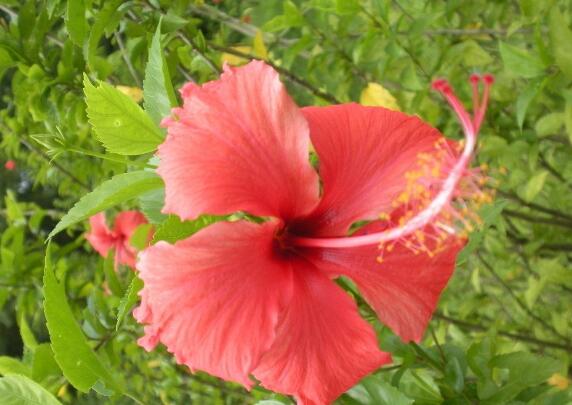
As an excellent choice for indoor cultivation, many people keep hibiscus at home. But if you don't follow the hibiscus growing methods, it will get bugs and fall ill, and flower enthusiasts must be very anxious! As for what to do when hibiscus gets bugs, it's actually very simple. First, determine which kind of bug it is, then solve it accordingly. Regarding pest and disease control for hibiscus, the editor will discuss pests and diseases separately.
(1) Hibiscus pests and diseases, 3 pests
Red spider mites, scale insects, whiteflies
1. Red spider mites
Damaged parts: One of the main pests of hibiscus, it mainly harms the underside of leaves, surviving by sucking the sap from hibiscus leaves.
Symptoms of infestation: The plant will suffer from nutrient imbalance, and hibiscus leaves may turn yellow and even fall off.
Control method: After discovering this pest, rinse the entire plant thoroughly with a strong stream of water, then spray a targeted pesticide, such as 20% dicofol emulsifiable concentrate at 2000 times dilution. Spraying several times should be sufficient.
2. Scale insects
Damaged parts: Another pest of hibiscus, it generally appears in May-June, mainly harming the stems, leaf stalks, and other areas.
Symptoms of infestation: Leaves will yellow, wither, and even drop, seriously affecting the indoor ornamental effect of hibiscus.
Control method: When there are few scale insects, they can be brushed off with a toothbrush or wiped clean with a cloth; when there are many pests, you can use 550% malathion and 40% dimethoate 0.1% solution alternately for spraying.
3. Whiteflies
Damaged parts: This pest also harms the health of hibiscus. It parasitizes on the underside of plant leaves, surviving by piercing into the leaf tissue and sucking sap.
Symptoms of infestation: Hibiscus leaves will curl, lose green color and turn yellow, and even dry up and drop off.
Control method: When this pest is discovered, promptly spray pesticide. You can choose 25% buprofezin wettable powder at 1500-2000 times dilution for spraying, then spray once more after 15 days, and the plant will basically recover its health.
(2) Hibiscus pests and diseases, 4 diseases
Anthracnose, leaf spot disease, stem rot, sooty mold
1. Anthracnose
Damaged parts: The most common disease of hibiscus, it mainly harms the plant's leaves.
Symptoms: Nearly circular or irregular circular lesions appear on leaf edges. As the disease worsens, the lesions turn dark brown and spread outward. At this point, the center of the lesion is grayish-white and the edges are dark red, making it easy to identify.
Control method: When diseased leaves are found, remove them immediately; during the disease progression, promptly remove dead branches and diseased branches and burn them together to reduce the source of infection. In addition, you can spray Bordeaux mixture for control, spraying once every 10 days or so, and spraying 3-4 times should basically bring improvement.
2. Leaf spot disease
Damaged parts: Leaf spot disease is a fungal disease that mostly occurs in late autumn when the weather turns cold. It is one of the main diseases of hibiscus, and the damaged parts are also the leaves.
Symptoms: Pale yellow and reddish-yellow spots appear on leaves, then expand into circular or oval shapes; if the environment is relatively humid, black granular substances may appear on the lesions, and in the later stage the leaves dry up and drop off.
Control method: After discovering this disease, promptly remove diseased leaves and residual water to avoid excess water. In severe cases, use 25% emulsifiable concentrate at 1000-1500 times dilution for control, spraying 2-3 times every 7-15 days, and results will be seen after several applications.
3. Stem rot
This disease is also one of the diseases of hibiscus. It mostly occurs during the rainy season, and is severe under high temperature and rainy conditions. Symptoms: The cortex of the affected area shrinks and appears dark brown, while the tissue underneath has actually begun to rot; in severe cases, the plant may dry up and die.
Control method: The key to controlling this disease is to prevent heavy rain from washing over the plant for extended periods; if the disease is severe, you can, before and after the rainy season, apply 200-500 times dilution thiophanate for trunk painting and spraying control every 10 days or so.
4. Sooty mold
Damaged parts: Another disease of hibiscus, the damaged parts are the branches and leaves.
Symptoms: Dark brown stains appear on branches and leaves, then gradually expand, forming a large area of black soot-like fungal layer, affecting the plant's photosynthesis and thereby preventing hibiscus from growing normally.
Control method: When diseased branches and leaves are found, you can wash them with 1000 times dilution carbendazim solution or burn them. In addition, usually strengthen indoor ventilation to reduce the air humidity in the greenhouse and prevent the disease from spreading.
That's all the editor has to introduce about pest and disease control for hibiscus. I believe that when you encounter it getting bugs or falling ill in the future, you should know what to do! Overall, during the growth process of hibiscus, pests and diseases are unavoidable, so to avoid unnecessary trouble, flower enthusiasts should keep in mind the above symptoms and control methods.
What to do when Jerusalem cherry gets bugs, pest and disease control of Jerusalem cherry / aphids and anthracnose
Jerusalem cherry, an indoor potted plant with excellent ornamental value, has strong adaptability and is very easy to grow at home, so it is deeply loved by flower enthusiasts. However, during cultivation, because most flower enthusiasts are beginners, improper care easily occurs, resulting in the plant getting bugs and falling ill. So what should you do when Jerusalem cherry gets bugs? Below are 2 pest and disease control methods for Jerusalem cherry. Follow the editor to learn more.
I. When Jerusalem cherry gets bugs, spray with pesticide
The beauty of Jerusalem cherry should leave a deep impression on those who have seen it, which is also why so many people keep it at home. But if Jerusalem cherry gets bugs, its ornamental value will be seriously affected, so once bugs are found, pesticide should be sprayed immediately for control. In this regard, you first need to determine which pest or disease it is, so next let's take a look at pest and disease control for Jerusalem cherry.
II. Pest and disease control of Jerusalem cherry
1. Aphids
Once Jerusalem cherry gets bugs, it can basically be confirmed to be aphids. These insects are very small, generally black or green, and they reproduce rapidly. Once infested, they will seriously harm the health of the plant.
Symptoms: Aphids mainly nibble on the tender leaves of Jerusalem cherry and absorb nutrients from them, causing nutrient deficiency in the plant. If aphids nibble on the roots of Jerusalem cherry, it can even lead to the death of the plant in severe cases.
Manual control: In spring, when aphids are found, use a brush dipped in water to brush them clean; in winter, promptly clean up residual branches and fallen leaves to reduce overwintering eggs; in addition, you can also combine this with pruning and burn the damaged branch tips and residual flowers together to reduce the source of infection. As for how to prune, you can refer to the pruning methods for Jerusalem cherry.
Chemical control: In addition to manual pest removal, generally when aphids appear, ordinary plant insecticides can be used. You can use 40% omethoate emulsifiable concentrate at 2000 times dilution or 50% dichlorvos emulsifiable concentrate at 1500-2000 times dilution for spraying.
2. Anthracnose
Cause: Anthracnose is caused by fungal infection. In June-July, which is the rainy season of the year, the air humidity is very high and the temperature is relatively high, and this environment is very suitable for bacterial growth! So in the hot summer season, Jerusalem cherry is very prone to anthracnose.
Symptoms: This disease mainly harms Jerusalem cherry leaves. In the early stage, circular lesions appear on diseased leaves, then change from circular reddish-brown to grayish-white, then to dark brown with black dots arranged in concentric rings; in severe cases, the leaves wither, turn black, and die.
Control method: Once Jerusalem cherry contracts anthracnose, promptly cut off the diseased branches and leaves and destroy them together to avoid re-infection; at the same time, spray the sick Jerusalem cherry with chemicals such as 50% carbendazim wettable powder at 700-800 times dilution or 75% chlorothalonil at 500 times dilution.
That's all the editor has to introduce about pest and disease control for Jerusalem cherry. I believe that when you encounter Jerusalem cherry getting bugs or falling ill again, you should know what to do! Overall, Jerusalem cherry is not difficult to grow; you just need to care for it according to the Jerusalem cherry growing methods. After doing so, bugs won't come knocking. Finally, may everyone's Jerusalem cherry grow beautifully~
What to do when wax plant gets bugs, pest and disease control of wax plant / 2 pests 2 diseases
In the process of growing wax plant, the thing people least want to encounter is definitely pest and disease problems. Such problems not only greatly affect the appearance but also pose a great threat to the plant itself. So what should you do when wax plant gets bugs? What needs to be done for pest and disease control of wax plant? Below, the editor will take everyone through it.
I. What to do when wax plant gets bugs
II. Pest and disease control of wax plant
Pests
1. Scale insects
Scale insects are a relatively common pest among the pests and diseases of wax plant. They mainly feed on the sap in wax plant leaves, using their mouthparts to penetrate deep into the leaves and gradually suck the sap, causing wax plant to wither due to insufficient nutrients.
Control method: When controlling this pest, we can use 3% pyrethrin at 1000 times dilution for spraying.
2. Aphids
Aphids are a pest that appears on many plants, and wax plant is no exception. They mainly threaten wax plant seedlings, gradually sucking the sap from the seedlings, causing the seedlings to be unable to grow and die. From this, it can be seen that among the pests and diseases of wax plant, the harm of aphids is still very great.
Control method: The aphid damage period is during the transition between spring and summer each year, so everyone must pay special attention during this time period. When dealing with this pest, we can use trichlorfon at 1000 times dilution for spraying. Generally, spraying three times in succession can completely eliminate this pest.
Diseases
1. Anthracnose
Among the pests and diseases of wax plant, anthracnose is a relatively high-incidence disease. In the early stage of the disease, many black lesions appear on wax plant leaves, and they gradually spread over time, ultimately causing the plant to wither and die.
Control method: When controlling this disease, we can use 70% thiophanate-methyl at 1000 times dilution to spray wax plant. Generally, spray once every 7-10 days, and after 2-3 times it can basically recover.
2. Soft rot
The peak period of soft rot is every summer, so everyone must pay extra attention during this time period. When the disease occurs, many water-soaked lesions appear on wax plant leaves, and they spread extremely quickly, ultimately causing the plant to rot and die.
Control method: When controlling this disease, it must be done promptly. If it drags on too long, it will be difficult to cure. During treatment, we can use methyl thiophanate at 1000 times dilution for spraying to control wax plant.