What to Do If Orange Jessamine Gets Bugs? 3 Pests and 3 Diseases and How to Spray for Control
Orange jessamine (Murraya paniculata) is a highly ornamental plant with a long blooming period, and the scenery when it flowers is very charming, making it deeply loved by flower enthusiasts. In daily life, many flower lovers grow orange jessamine, but due to careless maintenance and other reasons, pests and diseases can be attracted. So what should you do if the leaves of orange jessamine get bugs? Below is the pest and disease control for orange jessamine. If you love flowers, you must take a look~
I. Orange Jessamine Leaves Get Bugs - Spray with Pesticide
As an excellent choice for indoor cultivation, many people grow orange jessamine at home, but if you don't follow the proper cultivation methods for orange jessamine, it will get bugs and diseases. Flower lovers must be very anxious! Regarding what to do when orange jessamine gets bugs, we should first determine which type of bug it is, then address it specifically. For the pest and disease control of orange jessamine, the editor will discuss pests and diseases separately.
(1) Pests and Diseases of Orange Jessamine - 3 Pests
Red spider mite, light-shield green longhorn beetle, arrowhead scale
1. Red spider mite
This pest is one of the main pests of orange jessamine. It harms the plant's leaves, surviving by sucking the leaf sap of orange jessamine. Symptoms of infestation: the plant will become nutritionally imbalanced, and the symptom of yellowing leaves on orange jessamine will appear.
Solution: If there are few red spider mites, you can directly remove the leaves and clean them up; when there are many red spider mites, promptly use chemicals for spraying and killing. You can use 20% dicofol emulsifiable concentrate at 2000 times dilution for spraying and killing. Spraying several times will suffice.
2. Light-shield green longhorn beetle
Another one of the pests and diseases of orange jessamine. The part it harms is the plant's branches and tips. Symptoms of infestation: the branches of orange jessamine will easily break, or gradually dry up and die.
Solution: After discovering the above symptoms, you can inject 50-80 times dilution of dichlorvos emulsifiable concentrate into the lowest hole in the branch. After injecting, seal the hole opening with mud; in June-July, if you find adult light-shield green longhorn beetles, you can spray 10% imidacloprid at 2000 times dilution to eliminate them.
3. Arrowhead scale
This pest mainly harms the tender leaves of orange jessamine, sucking the sap of the flowers. Symptoms of infestation: the leaves of orange jessamine change from green to grayish-green, and finally to yellow. In severe cases, the branches and leaves are covered with scale insects, causing the entire plant to wither and die.
Solution: If there are few scale insects, you can directly scrape them off or pick them off with a toothpick; if the density of scale insects is high, you can use 550% malathion, 40% dimethoate 0.1% solution, etc. for spraying and killing.
(2) Pests and Diseases of Orange Jessamine - 3 Diseases
Powdery mildew, gray leaf spot, leaf blight
Regarding orange jessamine leaves getting bugs, after reading the above content, I believe everyone knows how to handle it! However, besides being attacked by bugs, diseases also constantly threaten orange jessamine. It is understood that the main diseases of orange jessamine are 3 types: powdery mildew, gray leaf spot, and leaf blight. The specific symptoms and control methods are as follows:
1. Powdery mildew
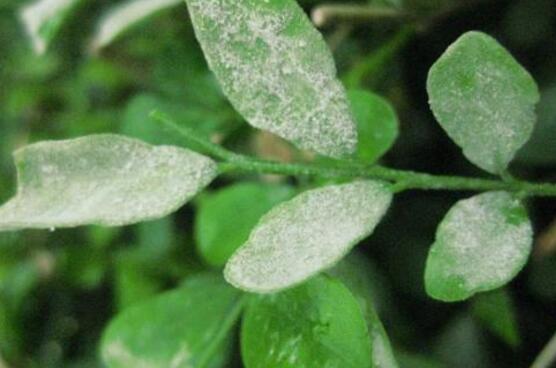
One of the main diseases of orange jessamine. It mainly harms the plant's leaves. Symptoms of the disease: in the early stage, small yellow spots appear on the leaf surface, followed by white powdery substances; in the late stage, orange jessamine will stop growing, and may even fail to bloom or bear fruit.
Solution: When the above symptoms are found, you can spray 50% sulfur suspension concentrate at 300-400 times dilution; when the condition is severe, appropriately prune the branches and tips of severely affected plants, and spray 29% azinphos-ethyl at 800 times dilution, spraying once every 7-10 days. After several times, it will recover.
2. Gray leaf spot
This disease mainly harms the leaves of orange jessamine, forming disease spots with a diameter of 1-6 mm. Symptoms of the disease: in the early stage, brownish-black circular or elliptical disease spots appear on the leaves, with darker edges and slight protrusion on both sides; in the later stage, the center of the leaf becomes white, with small black dots appearing on the surface.
Solution: When the above symptoms are found, immediately spray. You can choose to spray 60% zineb wettable powder at 600-800 times dilution. Continuous spraying several times will resolve it.
3. Leaf blight
Another one of the pests and diseases of orange jessamine. It mainly harms the leaves, and in severe cases will also spread to branches, tips, and tender stems. Symptoms of the disease: in the early stage, the disease spots on the leaves are chlorotic green, then infect the entire leaf, turning it yellow-brown. In the later stage, the leaves dry up and are covered with black granular substances.
Solution: When the above symptoms are found, you can spray 70% thiophanate-methyl at 1500 times dilution or 65% zineb wettable powder at 600 times dilution for control.
That's all the editor has to introduce regarding the pest and disease control of orange jessamine. I believe that when encountering the above symptoms in the future, everyone will know what to do! In general, during the growth process of orange jessamine, pests and diseases are unavoidable, so to avoid unnecessary trouble, flower lovers should keep the above methods in mind.
Control Methods for Pests and Diseases of Orange Jessamine
Orange jessamine is a common plant, generally planted more in courtyards, and also grown in pots indoors. Improper maintenance of orange jessamine can cause various pests and diseases. Today, I will introduce the control methods for pests and diseases of orange jessamine.
Control methods for pests and diseases of orange jessamine:
1. Red spider mite: Red spider mites occur when temperatures are relatively high. They attach to leaves and pierce and suck the sap, causing nutritional deficiency in the plant, resulting in leaf chlorosis, yellowing, and massive leaf drop.
Solution: They easily occur during high temperature and drought. Pay attention to checking the leaves. When you find needle-head-sized red bugs crawling on the leaf surface or underside, continuously spray 2-3 times with 1000 times dilution of chlorpyrifos aqueous solution, or 1500 times dilution of mite-killing aqueous solution, or 2000 times dilution of fenpropathrin aqueous solution for control, spraying once every 10-15 days. For household potted orange jessamine, you can use 25-30 times dilution of red chili pepper aqueous solution, or 25-30 times dilution of dried tobacco leaf infusion for spraying, or spray the leaves with clean water and then sprinkle a layer of sulfur powder.
2. Longhorn beetle: Longhorn beetles bore in from the epidermal layer to cause damage, forming insect tunnels, weakening the tree's vigor. In severe cases, branches, trunks, and tips break, or even die.
Solution: During the growing season of orange jessamine, pay attention to frequently checking the branches, trunks, and tips. When you find insect frass being expelled, find the insect hole, then dip cotton in undiluted dichlorvos and plug the hole opening, so that the longhorn beetle in the branches and tips is suffocated to death inside the tunnel. During the egg-laying and hatching season of branch-tip longhorn beetles, generally in autumn, spray chlorpyrifos aqueous solution or 1000 times dilution of chlorpyrifos aqueous solution on the branches, trunks, and tips once every 7-10 days, continuously spraying 2-3 times, which can kill the eggs and newly hatched larvae.
3. Scale insects: Scale insects suck the tree's sap and can also cause sooty mold, causing poor tree growth, yellowing of branches and leaves, and premature leaf drop. They can be eliminated by manual brushing, or sprayed with dimethoate, trichlorfon, or dichlorvos.
4. Scarab beetles, swallowtail butterflies: Scarab beetles and swallowtail butterflies mainly harm the leaves, primarily by chewing the tender leaves, reducing leaf count, weakening the tree's vigor, and affecting normal growth.
Solution: During the growth period of tender leaves, you can spray once with 800 times dilution of trichlorfon aqueous solution, or 1000 times dilution of Yibianjing aqueous solution for control. For household potted orange jessamine, you can use manual capture as a control method. The captured pests can be killed by scalding with hot water.
5. Leaf roller moths, aphids: Leaf roller moths and aphids mainly harm tender leaves, causing leaves to curl and then die, or causing growth points to shrink and stop growing, affecting normal leaf growth.
Solution: During the growth period of tender leaves, you can spray once with 1500 times dilution of aphid-whitefly-net aqueous solution, or 1500 times dilution of Dagongchen aqueous solution, or 1500 times dilution of Anlubao aqueous solution for control, killing the larvae.
6. Powdery mildew: Powdery mildew occurs on the leaves. It can be controlled by spraying with azoxystrobin, triadimefon, thiophanate-methyl, and other agents.
7. Rust disease: Rust disease is a common branch and trunk disease, causing the core of branches and trunks to rot. It can be controlled by spraying with triadimefon.
The cultivation of orange jessamine requires considerable attention to avoid pests and diseases that affect the growth and ornamental value of orange jessamine. That's all for the introduction of pests and diseases of orange jessamine and their solutions. I hope it is helpful to everyone.
Main Pest and Disease Control Methods for Orange Jessamine
I. Powdery mildewIt often covers the leaf surface and underside with white powdery substances, causing leaves to lose green color, yellow, and drop. It causes serious damage during the period of new shoot growth. When there is much rain and high humidity, it is especially prone to occur and spreads rapidly. During the period of new shoot growth, you must spray the new shoot leaves once with 1500 times dilution of fenbuconazole aqueous solution, or 800 times dilution of triadimefon aqueous solution, or 1000 times dilution of powdery mildew net aqueous solution, etc., when the new shoots have just sprouted, evenly wetting all branches and leaves (until water droplets begin to drip down). When there is much rain and high humidity, seize the sunny day and promptly spray once with 800 times dilution of thiophanate-methyl aqueous solution. For household potted orange jessamine, you can spray the leaf surface with 25-30 times dilution of dried pure plant ash infusion, or 0.1% potassium permanganate aqueous solution, or 0.5% baking soda aqueous solution, or 25-30 times dilution of dried star anise infusion or 0.1% lime water clarified solution. These are non-toxic, non-irritating in smell, and will not pollute the environment. If it rains four hours after spraying, re-spray once to improve the control effect.
II. Red spider mite
It harms leaves by attaching to them and piercing and sucking the sap, causing nutritional deficiency in the plant, resulting in leaf chlorosis, yellowing, and massive leaf drop. It easily occurs during high temperature and drought. Pay attention to checking the leaves. When you find needle-head-sized red bugs crawling on the leaf surface or underside, continuously spray 2-3 times with 1000 times dilution of chlorpyrifos aqueous solution, or 1500 times dilution of mite-killing aqueous solution, or 2000 times dilution of fenpropathrin aqueous solution for control, spraying once every 10-15 days. For household potted orange jessamine, you can use 25-30 times dilution of red chili pepper aqueous solution, or 25-30 times dilution of dried tobacco leaf infusion for spraying, or spray the leaves with clean water and then sprinkle a layer of sulfur powder.
III. Branch-tip longhorn beetle
It harms branches, trunks, and tips, boring in from the epidermal layer to cause damage, forming insect tunnels, weakening the tree's vigor. In severe cases, branches, trunks, and tips break, or even die. During the growing season of orange jessamine, pay attention to frequently checking the branches, trunks, and tips. When you find insect frass being expelled, find the insect hole, then dip cotton in undiluted dichlorvos and plug the hole opening, so that the branch-tip longhorn beetle is suffocated to death inside the tunnel. During the egg-laying and hatching season of branch-tip longhorn beetles, generally in autumn, spray chlorpyrifos aqueous solution or 1000 times dilution of chlorpyrifos aqueous solution on the branches, trunks, and tips once every 7-10 days, continuously spraying 2-3 times, which can kill the eggs and newly hatched larvae.
IV. Scarab beetles, swallowtail butterflies
They harm leaves, primarily by chewing tender leaves, reducing leaf count, weakening the tree's vigor, and affecting normal growth. During the growth period of tender leaves, you can spray once with 800 times dilution of trichlorfon aqueous solution, or 1000 times dilution of Yibianjing aqueous solution for control. For household potted orange jessamine, you can use manual capture as a control method. The captured pests can be killed by scalding with hot water.
V. Leaf roller moths, aphids
They harm tender leaves, causing leaves to curl and then die, or causing growth points to shrink and stop growing, affecting normal leaf growth. During the growth period of tender leaves, you can spray once with 1500 times dilution of aphid-whitefly-net aqueous solution, or 1500 times dilution of Dagongchen aqueous solution, or 1500 times dilution of Anlubao aqueous solution for control, killing the larvae.