What to Do When Bugs Appear on the Flower Buds of Cymbidium ensifolium: Pest and Disease Control for Cymbidium ensifolium / 1 Pest, 3 Diseases
Cymbidium ensifolium is a highly ornamental plant. Because of its elegant, understated character, it has been loved by many scholars and literati, and today it can often be seen in many gardens in our country. But even the most beautiful flower, if pests or diseases appear, will have its beauty affected. What should be done when bugs appear on the flower buds of Cymbidium ensifolium? And how should pest and disease control for Cymbidium ensifolium be carried out? Below, the editor will walk everyone through it.
I. What to Do When Bugs Appear on the Flower Buds of Cymbidium ensifolium / Chemical Treatment
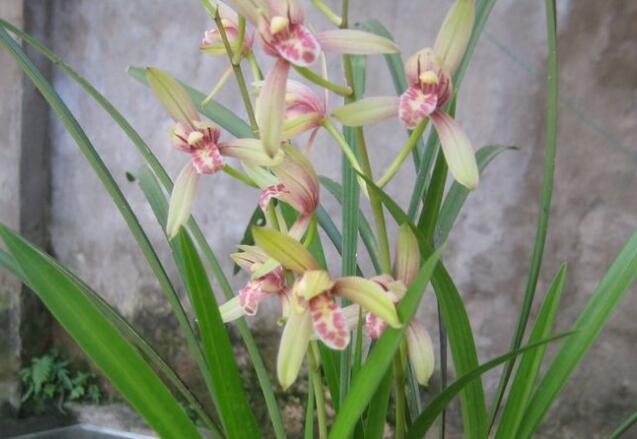
As for what to do when bugs appear on the flower buds of Cymbidium ensifolium, the most direct method is to use chemicals for spraying and killing. Of course, first you have to know what kind of pest it is, so that you can prescribe the right remedy. In fact, if the cultivation process is fairly careful, or the methods are correct, this situation generally will not occur. There is a detailed introduction to this in the article on how to grow Cymbidium ensifolium, which everyone can refer to; the editor will not go into too much detail here.
II. Pest and Disease Control for Cymbidium ensifolium
1. Scale insect pest
Scale insects are one of the main pests harming garden plants, and they are also one of the most common pests of Cymbidium ensifolium. This pest generally appears in relatively stuffy environments with higher temperatures, mainly harming the leaves and flower buds of Cymbidium ensifolium, and in severe cases it can even cause the entire plant of Cymbidium ensifolium to wither and die.
Control method: As mentioned above, this pest generally appears in environments with poor air circulation, so when growing Cymbidium ensifolium, be sure to pay attention to ventilation. Of course, if this pest has already appeared, treatment is still needed. Generally, we can choose a 1000-times dilution of omethoate to spray the plant, spraying once every 7-10 days, and after 2-3 times it can be resolved.
2. Anthracnose disease
Anthracnose is one of the main diseases of Cymbidium ensifolium, and it is also a disease that must be emphasized in pest and disease control for Cymbidium ensifolium. This disease mainly occurs in summer. In the early stage of onset, the leaves of Cymbidium ensifolium gradually turn yellow, then change from yellow to black, and finally gradually cause the entire plant to die.
Control method: When this disease appears, it must be treated promptly, because the earlier it is discovered, the easier it is to control. To control this disease, we can choose a thiophanate-methyl solution to spray the entire plant, not missing any place, so as not to overlook the diseased areas.
3. Root rot disease
Root rot is a disease that exists in many plants, and Cymbidium ensifolium is no exception. This disease mainly harms the roots of Cymbidium ensifolium, gradually causing the rhizome to weaken, then gradually rot until death. It can be said to be an extremely harmful disease.
Control method: When controlling this disease, first we must keep Cymbidium ensifolium in a ventilated environment, and then choose Bordeaux mixture to spray and treat the plant. There is one more thing everyone must remember: after treatment, the plant must be disinfected to avoid reinfection.
4. Southern blight disease
Southern blight mainly harms the roots of Cymbidium ensifolium. In the early stage of onset, many white colonies appear on the soil surface, and over time it can even cause the plant to gradually wither and then fall over.
Control method: When this disease appears, promptly remove the diseased soil, then disinfect Cymbidium ensifolium. The disinfection method is to use quintozene powder to clean the entire plant, then replace it with new soil and transplant it.
Is Lily of the Valley Prone to Bugs? Pest and Disease Control for Lily of the Valley / 1 Pest, 3 Diseases
Lily of the valley is a highly ornamental plant, originally originating from the northeastern region of our country. But even the most beautiful flower, if it encounters pests or diseases, will still have its beauty affected, and it may even cause the plant to wither and die. So is lily of the valley prone to bugs? If cared for improperly, bugs can still appear. As for how pest and disease control for lily of the valley should be done, below the editor will walk everyone through it.
I. Is Lily of the Valley Prone to Bugs? / Improper Care Makes Bugs Likely
The question of whether lily of the valley is prone to bugs is rather contradictory, because there is no real prone or not prone. Generally, if the cultivation methods are correct, bugs rarely appear; otherwise, pests are very likely to appear, so care methods are still key. On this point, everyone can refer to the article on how to grow lily of the valley flowers, where you can find the answer.
II. Pest and Disease Control for Lily of the Valley
1. Red wax scale pest
Red wax scale is a relatively common pest of Cymbidium ensifolium. This pest mainly harms the branches and leaves of plants. It mainly sucks the sap from the plant's branches and leaves, causing lily of the valley to gradually lack nutrients, and finally gradually move toward withering and death.
Control method: In the early stage of this pest's appearance, manual control can be chosen: promptly cut off the branches and leaves that have been affected by the pest, then disinfect the plant. Of course, if everyone finds this method troublesome, chemical control can also be chosen. This method is more direct. You can choose a 100-times dilution of Huabao to spray the plant to achieve an insecticidal effect.
2. Stem rot disease
Stem rot is one that requires relatively more attention in pest and disease control for lily of the valley. Its harm is extremely great, mainly harming the plant's rhizome. At first it makes the rhizome appear dark brown, then it gradually spreads to the whole plant, causing the entire plant to wither and die.
Control method: When stem rot disease appears in lily of the valley, be sure to discover it promptly and treat it promptly. If it is late, it may be impossible to control. The best control method is to choose a 1000-times dilution of 38% oxadixyl-cymoxanil-kresoxim-methyl to spray the plant. After spraying for a few days, then disinfect the lily of the valley.
3. Leaf spot disease
Leaf spot is a disease that exists in many plants. This disease mainly harms the leaves of lily of the valley. In the early stage of onset, irregular round lesions appear on the leaves. As time goes by, they gradually expand and also produce concentric rings. In the later stage of development, they can directly cause the entire plant to die.
Control method: When this disease is discovered, it must be eliminated as early as possible. Generally, if discovered in the early stage, it is very easy to control. You can directly choose to use a 1000-times dilution of 20% simeconazole · prochloraz to spray the plant, spraying once every 7 days. Generally after 2-3 times, this disease can be completely eliminated.
4. Anthracnose disease
Anthracnose is a relatively rare disease among the pests and diseases of lily of the valley, but there is still a certain chance of it appearing. This disease generally mainly harms the leaves of lily of the valley. When it occurs, dark brown round spots appear on the edges of its leaves, and as time goes by they gradually spread, ultimately causing the plant to die.
Control method: When treating this disease, you can choose to use an 800-times dilution of 80% thiophanate-methyl wettable powder to spray and kill the plant, generally spraying once every 10-15 days. After 1-2 times, this disease can be completely eliminated.
In the process of growing plants, the most important things are method and care. Generally, as long as you care for them attentively, pests and diseases rarely appear, so everyone must remember this point. That is all the editor has to introduce about pest and disease control for lily of the valley, and I hope this article can bring everyone some help.
Pest and Disease Control for Cymbidium ensifolium
1. Southern blight
Symptoms: Southern blight mostly occurs during the plum rain season, mainly harming the rhizome part of the plant, causing the roots to rot and die. There will be white colonies on the soil surface, the plant gradually falls over, and the plant withers.
Solution: After onset, promptly replace the soil, sprinkle in lime, wash and prune the diseased plant, disinfect it, pay attention to ventilation and air permeability, control the amount of watering, and the plant will slowly recover.
2. Scale insects
Symptoms: Scale insects are the main pest of Cymbidium ensifolium, mostly caused by a high-temperature, high-humidity, non-breathable environment. Scale insects harm the branches of Cymbidium ensifolium, causing the leaves to turn yellow and the branches to wither.
Solution: You can choose to spray a 1000-times dilution of omethoate, or rinse with clean water, repeatedly washing two or three times.
That is all for the introduction to the winter care methods and pest and disease control methods for Cymbidium ensifolium. Cymbidium ensifolium is lively and beautiful, how could it not be lovable? Everyone should hurry and grow a pot too.