How to propagate the money tree? A guide to cutting propagation methods, with a high survival rate
The money tree (Zamioculcas zamiifolia), an ornamental foliage plant with an auspicious meaning, has thick, plump, round and glossy leaves that hang on the branches like strings of copper coins, looking extremely beautiful from afar! In everyday life, people usually just buy an existing money tree to grow at home, but if you know how to propagate a money tree, you won't need to buy one~ So how do you propagate a money tree? Division and cutting are the most common methods; follow along with the editor to learn more.
1. How to propagate the money tree: division / cutting
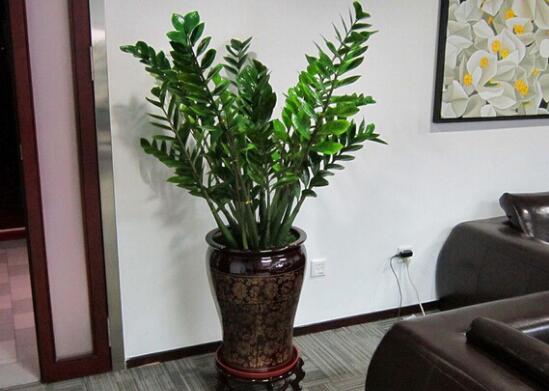
Everyone probably knows about how to grow a money tree, but how many people know about how to propagate it? Growing plants is all about the fun of it; buying from a flower shop is not as good as doing it yourself. As for how to propagate the money tree, there are two methods: division and cutting. Next, the editor will explain them in detail for everyone.
(1) Division propagation of the money tree
① Time for division
Propagation is very particular about timing, which to a certain extent determines the success rate of the whole process. As for when to divide the money tree, the most suitable time is April, when the temperature reaches above 18°C, and the survival rate of division is high.
② Removing from the pot and dividing
After choosing the time, pull out a strong, healthy money tree by hand, being careful not to damage the plant. After removing it from the pot, clean the soil off the roots properly, then at the tuber at the base of the stem, slowly separate the divisions by hand or with a tool.
③ Planting the divisions
After dividing, coat the wounds with plant ash or sulfur powder, then plant them in pots, not too deep, 2 cm is enough. Note: divisions with buds should be planted separately, buried in moist fine sand, and moved into pots for planting after they grow roots.
④ Later care
After completing the above steps, the division propagation of the money tree is basically done, and next comes the care. Place the pot in a cool, shady spot, maintain a temperature environment of 26°C, then water, paying attention to soil moisture, and mist the leaves with water every day, which can give the divided money tree a higher survival rate.
(2) Illustrated guide to money tree cutting methods
For money tree propagation, the usual method is division, but there is another one everyone is surely familiar with, which is cutting, specifically using money tree leaves for cuttings. The specific steps are as follows:
① Choosing cuttings
Choose healthy money tree leaves and cut them off together with the petiole and a bit of stem; you can also skip the stem and use just the petiole; or you can cut a section of stem, remove the leaves from the lower part of the stem, and keep 4 leaves at the top.
② Cutting medium
According to how the money tree is grown, we know its soil requirements: loose, fertile and well-draining. So the cutting medium for the money tree is generally fine sand, or you can also use a medium mixed from 3 parts peat soil, 1 part perlite and 1 part river sand.
③ Starting the cutting
Insert the cutting into the prepared medium, with the inserted depth being 1/3 to 1/2 of the cutting length, leaving only the leaves outside the medium. After spraying with water until thoroughly wet, place it in a shaded spot.
④ Care and management
After completing the above steps, the cutting propagation of the money tree is basically done. Next, we keep it in an environment of 25-27°C and mist the leaves 1 to 2 times a day, keeping the medium slightly moist, and never overly wet. After a few months, you will find that the leaves really have grown small roots, which basically means the cutting was successful.
Overall, propagating the money tree is not difficult, and both propagation methods are easy to keep alive, but when it comes to convenience and survival rate, cutting is still the best. Of course, methods are fixed but people are flexible, so everyone can choose a method to propagate according to the actual situation. That is all the editor has to introduce about money tree propagation methods, and I hope it can be helpful to everyone.
Money tree propagation methods: the methods and precautions for money tree cutting propagation and division propagation
Speaking of the money tree, everyone is surely familiar with it. The money tree is a woody plant with an auspicious meaning, and it also has extremely high ornamental value. It is often used for decorating offices and living rooms, and is deeply loved by many plant enthusiasts. Today, the editor will introduce the propagation methods of the money tree in detail for everyone.
Division
In April, when the outdoor temperature reaches above 18°C, take the large money tree plant out of the pot, shake off most of the old soil, separate it at the weak points between the tubers, and apply sulfur powder or plant ash to the wounds, then plant it separately in a pot. Note that when planting, do not bury it too deep; burying the top of the tuber 1.5 cm to 2 cm below the soil surface is enough. In addition, based on the characteristic that the money tree tuber has dormant buds, a large single tuber can be cut into small pieces with 2 to 3 dormant buds, and after the wounds have dried, bury them first in slightly moist fine sand, and after the cut small tubers grow into independent plants, then plant them in pots.
Cutting
For money tree cuttings, the cuttings can be a single small leaf, a section of leaf rachis with 2 leaves, or a separate section of leaf rachis. From the perspective of rooting effect, cuttings made from a leaf rachis with leaves root faster and have a higher sprouting rate, and more easily form new, larger tubers. Insert a single leaf into a mixed medium of half river sand and half vermiculite; after about 10 to 14 days, a small rooted bulbous stem forms at the leaf base, and after 2 to 3 months of cultivation, it can grow into a small plant, but under normal circumstances the seedling formation rate is not high. If a leaf rachis or a leaf rachis with leaves is used as the cutting, the medium can be ordinary fine sand, or a medium mixed from peat soil, perlite and sand in a 3:1:1 ratio. The insertion depth of the cutting is 1/3 to 1/2 of the cutting length, leaving only the leaves outside the medium. After spraying with water until thoroughly wet, place it in a shaded spot, maintain an ambient temperature of 25°C to 27°C, and depending on how dry or wet the medium is, mist the leaves 1 to 2 times a day, keeping the medium slightly moist, and never overly wet, otherwise the cutting will rot and the cutting will fail. To reduce the number of mistings, you can also cover with plastic film to retain moisture; roots will form in one month, and after 3 months the seedling emergence rate reaches above 85%. If the lower cut end of the cutting is treated with a 100 mg/l naphthaleneacetic acid (NAA) solution, the budding rate, the average number of buds per corm and the average number of roots per cutting can be significantly increased. If conditions permit, cutting propagation can be carried out in a light box, with even better results.
The above is all the content I have learned today about the money tree. I hope plant enthusiasts will find it helpful after reading this article. To learn more about the money tree, please continue to follow Duorou Huapu, and we will provide you with more related knowledge!
How to propagate the money tree, the propagation methods of the money tree
How to propagate the money tree; the money tree is generally propagated by division propagation and cutting propagation. Both propagation methods of the money tree are explained one by one below. Plant enthusiasts can choose the propagation method they like, and I hope the following money tree propagation methods are helpful to plant enthusiasts.
1. Money tree division propagation methodIn April, when the outdoor temperature reaches above 18°C, remove the large money tree plant from the pot, shake off most of the old soil, separate it at the weak points between the tubers, and apply sulfur powder or plant ash to the wounds, then plant it separately in a pot. Note that when planting, do not bury it too deep; burying the top of the tuber 1.5 to 2 cm below the soil surface is enough.
Based on the characteristic that the money tree tuber has dormant buds, a large single tuber can be cut into small pieces with 2 to 3 dormant buds, and after the wounds have healed and dried, bury them first in slightly moist fine sand, and after the cut small tubers grow into independent plants, then plant them in pots.
2. Money tree cutting propagation methodFor choosing money tree cuttings, you can use a single small leaf, a section of leaf rachis with 2 leaves, or a separate section of leaf rachis. From the perspective of rooting effect, cuttings made from a leaf rachis with leaves root faster and have a higher sprouting rate, and more easily form larger tubers. Insert a single leaf into a mixed medium of river sand and vermiculite; after 10 to 14 days, a small rooted bulbous stem forms at the leaf base, and after 2 to 3 months of cultivation, it can grow into a small plant, but under normal circumstances the seedling formation rate is not high.
a. Pot soil preparationIf a leaf rachis or a leaf rachis with leaves is used as the cutting, the medium can be ordinary fine sand, or a medium mixed from peat soil, perlite and river sand in a 3:1:1 ratio. The insertion depth of the cutting is 1/3 to 1/2 of the cutting length, leaving only the leaves outside the medium.
b. Temperature and humidity control: after spraying with water until thoroughly wet, place it in a shaded spot, maintain an ambient temperature of 25°C to 27°C, and depending on how dry or wet the medium is, mist the leaves 1 to 2 times a day, keeping the medium slightly moist, and never overly wet, otherwise the cutting will rot and the cutting will fail.c. Money tree rootingWhen the cutting has formed a certain root system, the middle of the root gradually swells to form a small spherical tuber, and the tuber gradually enlarges. Some of the more tender cutting leaves will turn yellow and die after being potted due to high temperatures or poor water management, but the tuber can survive, and old mature leaves and cuttings with a whole leaf stalk can also stay green and vigorous. A small number of tubers can sprout and grow new leaves in the same year, but their growth vigor is weak and growth is slow; the following year the tuber will grow thick new shoots and grow normally.