How to propagate violets? Seed propagation gives better flowering
Since violets have so many uses and benefits, some people want to keep growing them forever, and that brings up the question of propagation. What is the scientific way to propagate violets? There are currently two mainstream violet propagation methods, namely seed sowing and cuttings.
How to propagate violets
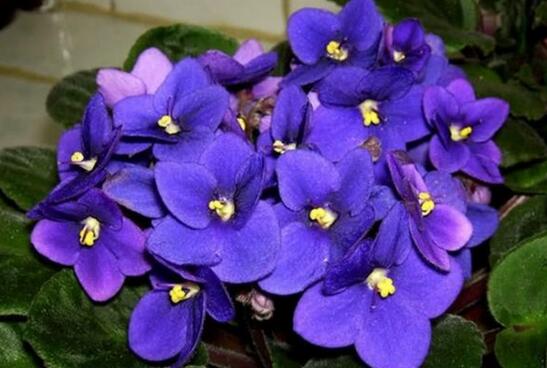
Violets are fast-growing plants, and because they are strongly cold-tolerant, their propagation time differs from that of other plants. So how do you propagate violets? Botanists commonly use three methods, namely seed sowing, cuttings and division, but the most effective are seed sowing and cuttings. Below is a detailed look at these two violet propagation methods.
Violet propagation methods
I. Seed propagation
1. When to sow violet seeds
As long as the temperature is suitable, violets can be sown throughout the year, but for flower lovers in most parts of China, the best sowing time is from August to October each year. The specific time can be chosen according to the flowering time you want.
2. How to sow violet seeds
a. Choosing seeds
Seeds should be collected from plants with single-petaled flowers, because double-petaled plants have no pistil and cannot set seed, so only single-petaled flowers can be used as the mother plant. Generally, the double-petal rate in the second generation will be relatively high.
b. Sowing
Put potting soil into a flower pot. After placing it, water it first; the amount of water should be such that no water flows out of the holes at the bottom and no water accumulates on the surface of the potting soil. Then evenly scatter the seeds on the surface of the potting soil.
After scattering, cover with just a thin layer of fine soil, then place it in a shady spot and observe it every day. Generally no watering is needed, but if the potting soil is found to be too dry, you can place the bottom of the pot in water so that the water level reaches one-half the height of the pot. Water can enter the pot through the holes at the bottom, but it will not submerge the seeds.
About two weeks after sowing, small sprouts will emerge. After that, once the leaves of the seedlings have fully unfolded, they can be transplanted and set in place, and then cared for according to the violet growing methods and precautions.
c. Precautions
If the violet propagation method used is seed sowing, after setting in place, water once, then place it in a well-ventilated, shady spot. After the seedlings adapt to the environment, place them in sunlight, water once every 2 days, and fertilize once every 10 days.
II. How to propagate violets by cuttings
1. Cutting time
Among violet propagation methods, the cutting time differs from sowing. The best cutting time is from April to June each year, that is, late spring and early summer. If you want earlier flowering, choose April; if you want it a little later, choose June.
2. How to take cuttings
Select 6-8 cm stem tips as the main propagation material. When taking cuttings, prepare a flower pot filled with fine sand, insert the plants in clusters into the fine sand at a depth of generally about 1 cm, then spray water daily to maintain moisture. Roots will grow in about one month, at which point they can be divided and planted.
Summary: The main violet propagation methods are seed sowing and cuttings, and their success rate can reach over 95%. The advantage of seed propagation is better flowering. Of course, no matter which propagation method is used, the later care must be noted, because only correct care can allow violets to flower smoothly.
How to propagate African violets: African violet propagation methods
African violets are a type of flower. African violets are flowers that people relatively like to use to decorate and beautify the environment, so how do you propagate African violets? Below, let us take a look at African violet propagation methods.
1. African violet leaf-cutting propagation method
African violets commonly use the cutting propagation method, mainly leaf cuttings. After flowering, choose healthy, plump leaves, cut them off leaving a 2 cm long petiole, let them dry slightly, insert them into a sand bed, and maintain relatively high air humidity. The room temperature should be 18-24 degC. Roots form 3 weeks after cutting, and seedlings will be produced in 2-3 months and moved into 6 cm pots. During the cutting process, treatment with vitamin B is beneficial to the growth of African violet seedlings after rooting; treating the petioles with 25 mg/L kinetin for 24 hours is beneficial to the formation of adventitious buds. From cutting to flowering takes 4-6 months.
2. African violet stem-cutting propagation method
The stem-cutting propagation method is also a propagation method chosen for African violets. It is mainly done in spring after the flowers fade, dividing the underground tubers and planting them while repotting and changing the soil. Seedlings form quickly, but the plant shape is not attractive enough, and because the plant has not been renewed, the growth is not vigorous enough.
3. African violet tissue culture propagation method
The propagation method that is relatively popular for African violets now is tissue culture propagation, using leaves, petioles and epidermal tissue as explants. Use MS medium plus 1 mg/L 6-benzylaminopurine and 1 mg/L naphthaleneacetic acid. Adventitious buds grow 4 weeks after inoculation, and after 3 months rooted small plantlets can be planted. The small plantlets are transplanted into a substrate of half leaf mold and half peat moss soil, with a survival rate of 100%. At present, the United States, the Netherlands, Israel and other countries all have African violet test-tube plantlet production. However, this method produces relatively many plantlets and is not very suitable for home cultivation.
4. African violet seed propagation method
African violet seed propagation can be carried out in spring and autumn. For greenhouse cultivation, autumn sowing from September to October is better, with a high germination rate, and the seedlings grow robustly and will bloom in the following spring with large plants and many flowers. Sowing in February means flowering in August, but the growth vigor is slightly poorer and there are fewer flowers. African violet seeds are tiny, so the sowing potting soil should be fine. After sowing, do not cover with soil; just press flat. The suitable germination temperature is 18-24 degC. Germination occurs 15-20 days after sowing, and seedlings are moved in 2-3 months. During the seedling stage, note that the potting soil should not be too wet. Generally, from sowing to flowering takes 6-8 months.
How to propagate African violets? African violet propagation methods
African violets are common indoor potted plants. They have rich flower colors and are gorgeous and colorful, and they also have effects such as purifying indoor air, improving air quality and harmonizing mood, so they are deeply favored by flower and plant enthusiasts. In the process of potting African violets, I believe everyone is most concerned about the propagation issue. So how do you propagate African violets? The African violet propagation methods are introduced below.
Image: African violet
I. Leaf-cutting propagation method
African violets commonly use the cutting propagation method, mainly leaf cuttings. After flowering, choose healthy, plump leaves, cut them off leaving a 2 cm long petiole, let them dry slightly, insert them into a sand bed, and maintain relatively high air humidity. The room temperature should be 18-24 degC. Roots form 3 weeks after cutting, and seedlings will be produced in 2-3 months and moved into 6 cm pots. During the cutting process, treatment with vitamin B is beneficial to the growth of African violet seedlings after rooting; treating the petioles with 25 mg/L kinetin for 24 hours is beneficial to the formation of adventitious buds. From cutting to flowering takes 4-6 months.
II. Stem-cutting propagation method
The stem-cutting propagation method is also a propagation method chosen for African violets. It is mainly done in spring after the flowers fade, dividing the underground tubers and planting them while repotting and changing the soil. Seedlings form quickly, but the plant shape is not attractive enough, and because the plant has not been renewed, the growth is not vigorous enough.
Image: African violet
III. Tissue culture propagation method
The propagation method that is relatively popular for African violets now is tissue culture propagation, using leaves, petioles and epidermal tissue as explants. Use MS medium plus 1 mg/L 6-benzylaminopurine and 1 mg/L naphthaleneacetic acid. Adventitious buds grow 4 weeks after inoculation, and after 3 months rooted small plantlets can be planted. The small plantlets are transplanted into a substrate of half leaf mold and half peat moss soil, with a survival rate of 100%. At present, the United States, the Netherlands, Israel and other countries all have African violet test-tube plantlet production. However, this method produces relatively many plantlets and is not very suitable for home cultivation.
IV. Seed propagation method
African violet seed propagation can be carried out in spring and autumn. For greenhouse cultivation, autumn sowing from September to October is better, with a high germination rate, and the seedlings grow robustly and will bloom in the following spring with large plants and many flowers. Sowing in February means flowering in August, but the growth vigor is slightly poorer and there are fewer flowers. African violet seeds are tiny, so the sowing potting soil should be fine. After sowing, do not cover with soil; just press flat. The suitable germination temperature is 18-24 degC. Germination occurs 15-20 days after sowing, and seedlings are moved in 2-3 months. During the seedling stage, note that the potting soil should not be too wet. Generally, from sowing to flowering takes 6-8 months.
[Editor's concluding remarks]Leaf cuttings, stem cuttings, tissue culture and seed sowing are common African violet propagation methods and are the key to turning one pot into many pots. The African violet propagation methods have been introduced above, and I hope they can be helpful to everyone!