How to propagate Platycodon grandiflorus? Sowing propagation has a high survival rate
Platycodon grandiflorus is a flower with high ornamental value, and many people choose to grow one of these plants at home, so its propagation methods are also a question people care about. How to propagate Platycodon grandiflorus, and what are the propagation methods? Let me walk you through them below.
I. How to propagate Platycodon grandiflorus / Sowing propagation
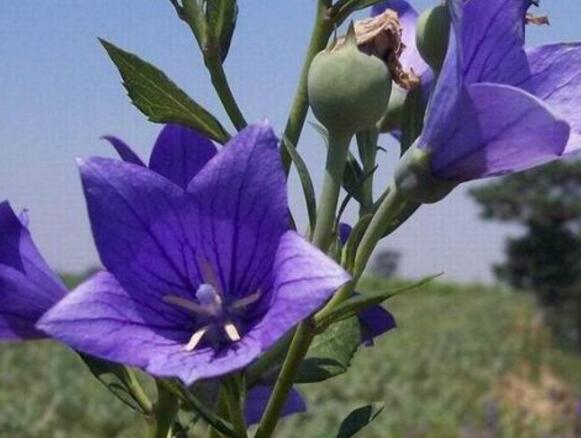
As for how to propagate Platycodon grandiflorus, the most common method is generally sowing propagation, and the survival rate of this method is relatively high. This propagation method for Platycodon grandiflorus is described in detail below, and those interested can take a look.
II. Propagation methods of Platycodon grandiflorus
Sowing propagation
1. Sowing time
To propagate Platycodon grandiflorus by sowing, choosing a suitable time point is very important. Generally, spring and autumn are the two seasons most suitable for the growth of Platycodon grandiflorus, so choosing to sow and propagate at these times is best, and the survival rate will also be greatly improved.
2. Seed selection
Among the propagation methods of Platycodon grandiflorus, seed selection is a relatively important part. Generally, seeds that are more than 2 years old and not stale should be chosen, as this gives a higher germination rate, and before sowing the seeds need to be soaked in warm water, generally for about 8-12 hours.
3. Soil selection
After choosing the seeds, we need to choose the soil. We can choose a relatively loose humus soil, a soil mixed with garden soil and fine sand, so that drainage is better and the seeds can absorb nutrients better.
4. Sowing method
After completing the preliminary preparation work, we can sow. When sowing, first press the potting soil flat, then mix the seeds with fine sand and scatter them together on the soil surface. After scattering, cover them with about 2cm of soil, and then we can water. It is best to use a spray bottle when watering, just keep the soil moist. After doing these things, leave it for about a week and it should basically germinate.
5. Follow-up management
After Platycodon grandiflorus germinates, we can care for it. For the care methods, everyone can refer to the article on the cultivation methods of Platycodon grandiflorus, which has detailed instructions, so I will not introduce too much here.
How to propagate Eustoma grandiflorum, propagation methods of Eustoma grandiflorum / sowing / cuttings
Eustoma grandiflorum is a relatively common plant in people's lives, with high ornamental value, and many people in our country grow it, so how to propagate Eustoma grandiflorum is also a question people care about. What are the propagation methods of Eustoma grandiflorum? Let me walk you through them below.
I. How to propagate Eustoma grandiflorum / sowing / cuttings
As for the question of how to propagate Eustoma grandiflorum, it can be roughly divided into two types: sowing propagation and cutting propagation. As long as the methods are mastered, the survival rates of these two propagation methods are relatively high. There is a detailed explanation of the propagation methods of Eustoma grandiflorum below, let's take a look.
II. Propagation methods of Eustoma grandiflorum
Sowing propagation
1. Soil selection
Among the propagation methods of Eustoma grandiflorum, sowing propagation is a relatively simple one. When carrying out sowing propagation, first we need to choose soil. We can choose relatively loose soil, so that drainage is better and it will be more conducive to Eustoma grandiflorum absorbing nutrients.
2. Sowing method
After the soil is selected, we must first disinfect the soil to prevent it from carrying pathogens. After disinfection is completed, we can sow. We can evenly scatter the seeds on the soil surface, then cover them with a layer of about 2cm of soil, then water thoroughly and leave it for about 15 days, and it should basically germinate.
3. Follow-up management
After germination, we can carry out normal care. For specific care methods, everyone can refer to the article on the cultivation methods of Eustoma grandiflorum, which has detailed instructions, so I will not introduce them one by one here.
Cutting propagation
1. Choosing cuttings
When choosing cuttings, we can choose relatively robust branches, as the survival rate of such cuttings will be relatively higher. And after choosing the cuttings, certain pruning is also needed. Generally, about half of the leaves on the branch can be removed, which can reduce nutrient consumption.
2. Choosing the substrate
After choosing the cuttings, we need to choose the substrate. We can choose a slightly alkaline substrate. After choosing it, we also need to use carbendazim to disinfect the substrate, which can prevent the breeding of viruses.
3. Cutting method
After completing the preparation work, we can carry out cutting. We can first use chopsticks to poke a small hole in the substrate, then insert the cutting, then press the substrate flat and water thoroughly. Generally, it can take root in 3-4 weeks, and after rooting and germinating we can carry out normal care.
Cultivation methods of Platycodon grandiflorus, how does Platycodon grandiflorus propagate?
Platycodon grandiflorus likes a cool climate, is cold-resistant, and likes sunlight. It is suitable for cultivation in hilly areas below 1100m altitude, in semi-shaded and semi-sunny sandy loam, and grows better in neutral sandy soil rich in phosphorus and potassium fertilizer. The seed lifespan is 1 year, and storage at low temperature can extend the seed lifespan. Dry storage of seeds at 0-4°C for 18 months increases the germination rate by 3.5-4 times compared with storage at room temperature. The seed germination rate is 70%. At a temperature of 18-25°C, with sufficient moisture, seedlings emerge 15d after sowing.
Platycodon grandiflorus, also known as balloon flower, bellflower, and monk's cap flower, is a perennial herbaceous plant. The stem is 20-120 cm tall, usually hairless, occasionally densely covered with short hairs, unbranched, rarely branched in the upper part. The leaves are all whorled, partly whorled to all alternate, sessile or with very short petioles, the leaf blade ovate, ovate-elliptic to lanceolate, the leaves ovate or ovate-lanceolate, and the flowers dark blue or dark purple-white.
Planting methods of Platycodon grandiflorus
1. Soil selection
Platycodon grandiflorus likes a growing environment that is warm and humid, with sufficient sunlight and abundant rainfall. Platycodon grandiflorus does not have high requirements for climate and environment, but the soil is best if it is sandy loam with deep soil layers, fertile, well-drained, and rich in humus. Platycodon grandiflorus likes a cool and humid environment. Most wild Platycodon grandiflorus flowers grow on sunny slopes and in grass, so low-lying and waterlogged places are not suitable for planting Platycodon grandiflorus.
2. Pest and disease control
Common pests and diseases of Platycodon grandiflorus include root rot, aphids, red spiders, etc. When root rot occurs in Platycodon grandiflorus, the diseased leaves are covered with gray powder, and in severe cases the whole plant withers. The control method is to spray with 0.3 degree Baume lime sulfur mixture or 500-fold white powder net solution at the beginning of the disease, or spray with 1800-fold 20% triadimefon powder solution. If Platycodon grandiflorus is harmed by aphids or red spiders, use 1500~2000-fold 40% dimethoate emulsion or 1500-fold 80% dichlorvos emulsion, spraying once every 10 days.
3. Fertilizer and water management
June-September is the peak growing season for Platycodon grandiflorus. In late June and July, timely topdressing should be done according to the growth of Platycodon grandiflorus. The fertilizer is mainly human and animal manure, with a small amount of phosphate fertilizer and urea. Water during drought; when rainfall is abundant, pay attention to drainage. Platycodon grandiflorus is very prone to root rot, so soil waterlogging must be prevented. The flowering period of Platycodon grandiflorus lasts as long as 4 months, and picking flowers can increase yield.
Propagation methods of Platycodon grandiflorus
1. Varieties
In the plots cultivating Platycodon grandiflorus, a small number of white-flowered Platycodon grandiflorus appear, which have stable heredity and high yield. However, the saponin and amino acid contents and hemolytic effect are all lower than those of purple-flowered Platycodon grandiflorus. The pharmacological properties of the saponins of the two kinds of Platycodon grandiflorus are exactly the same. Among purple-flowered Platycodon grandiflorus there is a faster-growing southern type of Platycodon grandiflorus, and in Tonghua, Jilin there is a yellow-flowered Platycodon grandiflorus.
2. Site selection and land preparation
Choose a sunny slope with deep soil layers or flat land with good drainage. Deep plow 30-40 cm, apply base fertilizer at the same time, break up soil clods, level, and make beds 1.3-1.7 meters wide.
(1) Seed treatment
Soak seeds in warm water for 24 hours, or soak in 0.3% potassium permanganate for 12 hours, which can increase the germination rate.
(2) Sowing period
Autumn sowing, winter sowing, and spring sowing are all acceptable, with autumn sowing being best. With autumn sowing, seedlings emerge that same year, the growth period is long, and the fruit-setting rate and root thickness are significantly higher than those of the following year's spring sowing.
(3) Sowing method
Generally, direct sowing is used, and seedling transplanting can also be used. The yield of direct sowing is higher than that of transplanting, and the quality is good. In production, drilling is mostly used. On the bed, open horizontal furrows with a row spacing of 20!25 cm, 4-7 cm deep, with a sowing width of 10 cm, and cover with small ash after sowing. For direct sowing, use 500-750 grams of seed per mu; for seedling raising, use 250-350 grams of seed per mu. In addition, tissue culture can also be used for returning good variety propagation.
Field management techniques
(1) Thinning and replanting
When the seedlings are 2 cm tall, thin appropriately; when the seedlings are 3-4 cm tall, finalize the seedlings, keeping 1 strong seedling every 10-13 cm. Replanting and thinning are carried out at the same time, and replanting with soil makes it easier to survive.
(2) Cultivation and weeding
Weed 3 times: carry out the first when the seedlings are 7-10 cm tall, the second after one month, and the third after another month.
(3) Topping
When the seedlings are 10 cm tall, top the plants kept for seed production to increase the number of seeds per fruit and the plumpness of the seeds, thereby increasing seed yield.
(4) Topdressing and earthing up
When the seedlings are 1-2 cm tall, apply 1000 kg of light human and animal manure water per mu; when the seedlings are 6-7 cm tall, apply 10 kg of superphosphate per mu in the furrow, then apply 1200 kg of light human and animal manure water in the holes and earth up. In the second spring, when the seedlings are 6-7 cm tall and before flowering, apply 1500 kg of human and animal manure water and 5 kg of urea per mu each time.
(5) Flower removal
The flowering period of Platycodon grandiflorus is relatively long, and the growth and development of flowers and fruits consumes a large amount of nutrients. Removing flowers and fruits reduces nutrient consumption so that more assimilated substances are stored in the roots, which is an effective measure to increase the yield of Platycodon grandiflorus.
Effects of Platycodon grandiflorus
① Diffusing the lung and eliminating phlegm
Platycodon grandiflorus is pungent and dispersing, bitter and purging, opens and diffuses lung qi, eliminates phlegm and benefits the throat, and is an important medicine for treating diseases of the qi aspect of the lung meridian. For treating cough with profuse phlegm, it can be used regardless of cold or heat.
② Benefiting the throat
Platycodon grandiflorus can diffuse the lung and purge heat, benefit the throat, open the voice, and treat hoarseness. It is used for all syndromes such as external pathogens invading the lung, sore throat and loss of voice, as well as sore throat and swelling with excessive heat toxin.
③ Discharging pus
Platycodon grandiflorus is dispersing in nature and moves upward, and can benefit lung qi to discharge the pus and phlegm of congestion. It can be used to treat syndromes such as lung abscess with cough and chest pain, and expectoration of foul-smelling phlegm.
④ Unblocking the two bowels
Platycodon grandiflorus can open and diffuse lung qi and unblock and disinhibit the two bowels, and can be used for the treatment of retention of urine and constipation.
Actions of Platycodon grandiflorus
① Anti-inflammatory
Platycodon grandiflorus saponins have a strong anti-inflammatory effect on acute and chronic inflammation. Platycodon grandiflorus has no obvious anti-inflammatory effect, but its water extract can enhance the phagocytic ability of macrophages, enhance the bactericidal power of neutrophils, and increase the activity of lysozyme.
② Eliminating phlegm and relieving cough
The saponins contained in Platycodon grandiflorus can stimulate the gastric mucosa, cause mild nausea, reflexively cause increased secretion of bronchial glands, dilute phlegm, and thus exert a phlegm-eliminating effect.
③ Lowering blood pressure
Crude Platycodon grandiflorus saponins have the effects of lowering blood pressure, slowing heart rate, and inhibiting respiration.
④ Lowering blood sugar
Both the water and alcohol extracts of Platycodon grandiflorus have blood sugar-lowering effects. In addition, Platycodon grandiflorus also has diuretic and swelling-reducing, anti-allergic, and anti-tumor effects.
What is the flower language of Platycodon grandiflorus flowers?
1. Hopeless love.
2. Eternal and unchanging love; sincerity, gentleness, sorrow.