How to Propagate Monstera deliciosa? Division Is the Fastest to Show Results
Among foliage plants, Monstera deliciosa is a well-deserved star, so many people want to propagate it after growing it for a while. So how should Monstera deliciosa be propagated in a more scientific way? Today we will learn about the main propagation methods for Monstera deliciosa.
How to Propagate Monstera deliciosa
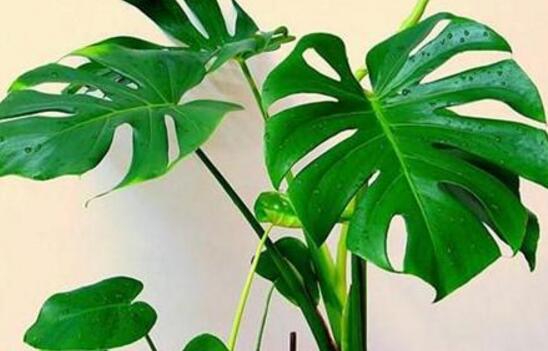
It varies slightly depending on the season and climate conditions. The propagation of Monstera deliciosa needs to choose the best method according to the season. So how is Monstera deliciosa propagated? There are mainly three methods: seed sowing, cuttings, and division. The detailed key points are below.
Propagation Methods for Monstera deliciosa
1. Seed Propagation of Monstera deliciosa
1. Time
The most suitable temperature for seed propagation is 20-25 degrees, which is favorable for seed germination, so the season should be spring.
2. Seed Selection
Choose seeds that are plump and firm, and be sure to choose seeds that have already matured. Do not choose seeds taken just after the fruit has formed. Store the seeds in a ventilated, shady place.
3. Soaking and Disinfection
The selected seeds should be soaked in warm water at 40 degrees for 10 hours, and the soil used for sowing should also be disinfected. The disinfection method is very simple: place the soil in the sun to dry.
4. Start Sowing
This is the most critical step in seed sowing among the propagation methods for Monstera deliciosa. Generally, spot sowing is used, and the spacing between each seed should be 2-3 cm. After sowing, plastic film can be covered to control temperature and maintain humidity. Generally, germination can occur after 20 days. After growing 5 leaves, it can be transplanted. After transplanting, the correct Monstera deliciosa cultivation methods need to be used.
2. Cutting Propagation Methods for Monstera deliciosa
1. Time
There are relatively more choices of time for cutting propagation. Cuttings can be taken in spring or autumn, between April-May and between September-October. Apart from winter, cuttings can also be taken at other times, but the effect is not as good as in spring and autumn.
2. Specific Steps
First, choose the branch. Mainly choose side branches with solid stems and robust growth from the current year. A length of 20 cm is appropriate. Cut off the leaves at the base and keep only the small leaves at the upper part. At the same time, cut off the aerial roots. This is beneficial for water absorption.
Second, choose soil mixed with peat or humus soil. The principle is good air permeability and drainage, then insert the selected branch into the prepared soil. Place it in an environment with a temperature of 25 degrees, and it can take root after 1 month. At first, the axillary buds on its stem nodes begin to sprout, and attention must be paid to care at this time.
3. Division Propagation of Monstera deliciosa
1. Time
Generally, division propagation is carried out in summer and autumn, mainly from September-October. The specific time can be chosen according to temperature and humidity conditions.
2. Propagation Method
Although division is not commonly used among the propagation methods for Monstera deliciosa, it is a relatively simple method. Split off an entire section of a side branch from a large Monstera deliciosa. Note that it must have aerial roots, then plant it in a wooden barrel or nutrient pot.
Summary: Among the propagation methods for Monstera deliciosa, three methods are relatively commonly used. Division is the fastest in effect but the least used, because before propagation there must be a large Monstera deliciosa. Only with this condition is division more practical. Otherwise, we should choose cutting or sowing methods.
Division Propagation of Monstera deliciosa
Carried out in summer and autumn, split off an entire section of a side branch from a large Monstera deliciosa, with some aerial roots, and plant it directly in a wooden barrel or pot. Not only is the survival rate high, but the shaping effect is also fast.
Seed Propagation of Monstera deliciosa
Monstera deliciosa blooms in summer. To increase the seed setting rate, artificial pollination is needed. Pollinating twice, at 10 o'clock and at 3-4 in the afternoon, is best, and the pollination success rate is high. From pollination to seed maturity takes 15 months. During the seed development stage, pay attention to ventilation and fertilizer and water management to promote plump seeds. Before sowing, first soak the seeds in warm water at 40°C for 10 hours, and the sowing soil should be sterilized at high temperature. Monstera deliciosa seeds are relatively large, so spot sowing can be used. After sowing, keep the room temperature at 20-25°C, cover the box opening with plastic film, and maintain humidity above 80%. Generally, germination occurs 20-25 days after sowing. If the room temperature is too low during sowing, it will not only affect emergence, but the seeds may even become water-soaked and rot.
Cutting propagation is the most common and easiest to master for Monstera deliciosa, so below we will introduce cutting propagation of Monstera deliciosa in detail!
Propagation Methods for Monstera deliciosa: Summary of Commonly Used Propagation Methods for Monstera deliciosa
Monstera deliciosa is one of the commonly used home green plants. Its leaves are broad and it remains verdant green all year round. It has great ornamental value and is very charming when used in home decoration. Below let us learn about the propagation methods for Monstera deliciosa:
Propagation Methods for Monstera deliciosa:
Propagation Methods for Monstera deliciosa: 1. Division Propagation
Carried out in summer and autumn, split off an entire section of a side branch from a large Monstera deliciosa, with some aerial roots, and plant it directly in a wooden barrel or pot. Not only is the survival rate high, but the shaping effect is also fast. It is currently one of the most used and also one of the simplest methods in Monstera deliciosa propagation.
Propagation Methods for Monstera deliciosa: 2. Cutting Propagation
Another propagation method for Monstera deliciosa is cutting propagation. Stem node cuttings can be used in both spring and autumn, and the best results are obtained from cuttings in spring from April to May and in autumn from September to October. Because the temperature during this period is suitable for the healing and rooting of the stem node cuts, survival is fast. For the cuttings, choose side branches of the current year with full stem tissue and robust growth. The cuttings should be 20-25 cm long, and the leaves at the base should be cut off. Keep the small leaves at the upper end, cut off the long aerial roots, and keep the short aerial roots to absorb water and help rooting. The cutting bed uses a mixed substrate of coarse sand and peat or leaf mold. After cutting, maintain 25-27°C and relatively high air humidity. Rooting begins only about 1 month after cutting. After the cuttings take root, the axillary buds on the stem nodes also begin to sprout and unfold leaves. In order to accelerate seedling growth, keep the room temperature above 10°C and strengthen fertilizer and water management. In the second year after cutting, the seedlings are formed and can be sold as commodities. If suspension decoration is needed, a wooden frame or iron stand container can be prepared, filled with palm fiber, and fertile leaf mold placed on top. Plant the rooted and surviving Monstera deliciosa on it as a hanging basket product.
Propagation Methods for Monstera deliciosa: 3. Seed Propagation
Seed sowing is also a relatively commonly used propagation method for Monstera deliciosa, but compared with the previous two, it is used less often. Monstera deliciosa blooms in summer. To increase the seed setting rate, artificial pollination is needed. Pollinating twice, at 9-10 in the morning and at 3-4 in the afternoon, is best, and the pollination success rate is high. From pollination to seed maturity takes 15 months. During the seed development stage, pay attention to ventilation and fertilizer and water management to promote plump seeds. Before sowing, first soak the seeds in warm water at 40°C for 10 hours, and the sowing soil should be sterilized at high temperature. Monstera deliciosa seeds are relatively large, so spot sowing can be used. After sowing, keep the room temperature at 20-25°C, cover the box opening with plastic film, and maintain humidity above 80%. Generally, germination occurs 20-25 days after sowing. If the room temperature is too low during sowing, it will not only affect emergence, but the seeds may even become water-soaked and rot.
Monstera deliciosa is a foliage plant that we like very much. Its leaf shape is unique and beautiful, and it is suitable for placement in the home to beautify and accent the home environment. The propagation of Monstera deliciosa mainly uses the three methods summarized above. We hope this is helpful to everyone.