How to Propagate a Money Tree? Introduction to Four Methods, High Survival Rate with May Cuttings
The money tree (Pachira aquatica), a foliage plant with an auspicious meaning and a sturdy, handsome form, not only beautifies the environment when kept at home but also refreshes the spirit, making it a rare and excellent choice for indoor cultivation. Nowadays, more and more people are growing money trees, and this requires mass propagation, so how do you propagate a money tree? Below, the editor brings you four propagation methods for the money tree. Friends who want to try it themselves should definitely take a look~
I. How to Propagate a Money Tree: There Are Four Methods
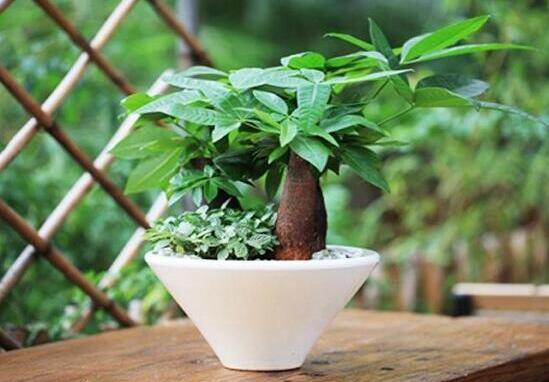
Among indoor cultivated plants, because it grows beautifully and symbolizes wealth, the money tree has become the first choice for many people. Regarding how to grow a money tree, everyone surely knows, but do you know how to propagate a money tree? Actually, the propagation methods for the money tree are very simple, mainly including four types: cuttings, sowing, grafting, and tissue culture, among which cuttings are the most practical. Below, the editor will focus on introducing them.
II. Propagation Methods for the Money Tree
(1) Illustrated Guide to Money Tree Cutting Propagation
Regarding money tree cutting propagation, there is a lot of experience shared online, and basically all of it works, but in reality, people who fail at cuttings are everywhere. Although roots may appear to form, the plant later dies after being transferred to soil. What exactly is going on? Actually, it is just that your steps were not done properly. Below is an illustrated guide to money tree cutting propagation. As long as you follow it, the success rate will be very high~
① Cutting time: May to August
The money tree has fairly strong vitality and is very easy to root from cuttings. Basically, it can be done throughout the year. However, if you want a high survival rate for money tree cutting propagation, it is best to choose May to August each year.
② Cutting substrate
In money tree cutting methods, the choice of cutting substrate is also very important. We can choose according to the habits of the money tree. The editor suggests using coarse sand, vermiculite, or a mixed medium containing perlite.
③ Cutting selection
The cutting's importance in the entire propagation process is self-evident, so for money tree cuttings, we can select semi-lignified branches from the current year as cuttings.
Cutting method: On a cloudy day or a windless morning, select a healthy lignified branch and cut it to a length of 6 or 7 cm. Each cutting should retain one to two leaves. Cut the lower incision of the cutting at a 45-degree slant, and keep the upper incision smooth. This helps with the formation of callus tissue.
④ Starting the cuttings
After the cuttings are cut, remember to let them air for a while so the wounds heal properly, and then you can begin inserting them. If conditions allow, you can dip them in rooting powder or rooting liquid. Then insert the cuttings into the prepared substrate to a depth of 15 cm.
Note: When inserting the cuttings, first make a hole with a wooden stick, then place the money tree in, and press firmly with your hand.
⑤ Daily care. Roots in 1 month
After completing the above steps, the money tree cutting propagation is basically finished, and all that remains is post-cutting care. Be careful to keep the potting soil moist but not waterlogged, and provide 50% shade; this is very important. Then place it in a ventilated, shady spot. After 2 to 3 months, it will be able to root. Flower enthusiasts need to wait patiently!
(2) Money Tree Propagation by Sowing
The money tree generally blooms in May and bears fruit in October. We can wait until it fruits, take out the seeds, and sow them immediately; they cannot be stored for long. Method: Scatter the money tree seeds on the surface of the potting soil, then cover with 3 to 4 cm of thin soil, water thoroughly, and keep the potting soil moist. Under normal circumstances, they will sprout after one week.
(3) Money Tree Propagation by Grafting
Among money tree propagation methods, grafting is also a relatively commonly used one, as it ensures the excellent characteristics of the money tree variety. Before grafting a money tree, we first need to prepare three things:
1. Time: Money tree grafting is often carried out in August to September;
2. Rootstock: Choose a 2-year-old money tree seedling;
3. Scion: Use a robust 1-year-old branch that has already flowered, cut off all the leaves on the branch, retain 2 buds, and make one cut on each side below the buds.
Grafting method: Cut off the rootstock at 40 cm from the ground, and make a vertical slit downward in the center of the cut surface, then insert the scion into the slit of the rootstock. Next, put a plastic film bag over the scion area to prevent rain exposure. Usually, new shoots will grow after one month.
(4) Money Tree Propagation by Tissue Culture
Regarding how to propagate a money tree, tissue culture is actually also a method of propagating money trees. It is generally used for large-scale propagation of money trees and is suitable for factory production. Advantages: It grows more vigorously than general seedling propagation, has a high survival rate, and has more luxuriant branches and leaves.
Tissue culture propagation method
① Seed disinfection: Wash the dust off the surface of the money tree seeds with a small amount of detergent, then rinse repeatedly with distilled water, then place the seeds in 70% alcohol for 2 minutes for disinfection. After removal, rinse 3 times with sterile water.
② Tissue culture: At 7 to 10°C, money tree seeds will sprout; at 15 to 20°C, they will be induced into callus tissue; at around 30°C, the callus tissue will be induced to differentiate into clustered shoots. After that, plant the clustered shoots in culture medium for subculture, and finally inoculate the plantlets into rooting medium. At 7 to 10°C, small seedlings can grow and then be transplanted.
Overall, the money tree has strong vitality, and all four propagation methods are easy to survive with, but when it comes to convenience and survival rate, cuttings are still the best. Of course, methods are fixed, but people are flexible. Everyone can choose a method to propagate according to actual circumstances. The editor has introduced money tree propagation methods up to here, hoping it can be of help to everyone.
How to Propagate a Malabar Chestnut? Three Propagation Methods for Malabar Chestnut / Cuttings Have the Highest Survival Rate
Among indoor potted plants, because it grows beautifully and symbolizes wealth, the Malabar chestnut (Pachira aquatica) has become the first choice for many people. As more and more people grow it, it is therefore being propagated in large quantities. So how do you propagate a Malabar chestnut? In response, based on the experience of expert gardeners, the editor has summarized 4 common propagation methods for Malabar chestnut, among which cuttings have the highest survival rate. Let's take a look together.
I. How to Propagate a Malabar Chestnut: Cuttings / Sowing / Grafting
For beginners, mastering how to grow a Malabar chestnut is enough; but for experienced growers, just knowing how to grow it is not enough. They also need to know how to propagate it, because this not only allows one pot of Malabar chestnut to become many pots, but also increases the fun of growing plants. As for how to propagate a Malabar chestnut, there are three propagation methods suitable for flower enthusiasts to carry out: cuttings, sowing, and grafting. For the specific operations, let's continue reading below.
II. Three Propagation Methods for Malabar Chestnut
(1) Malabar Chestnut Propagation by Cuttings
① Cutting time
The Malabar chestnut has strong adaptability. As for cutting time, it can basically be done throughout the year. However, if you want a high survival rate for Malabar chestnut cutting propagation, it is best to choose May to August each year, when its vitality is at its highest.
② Cutting selection
For cutting propagation, the most important thing is of course the cutting, as its quality will directly determine the survival rate of the entire propagation. To select a cutting for the Malabar chestnut, it is best to do so on a cloudy day or a windless morning: on a potted Malabar chestnut, select a healthy lignified branch and cut it to a length of 6 or 7 cm as the cutting. Each cutting should preferably retain one to two leaves.
Cutting treatment: After the cuttings are cut, remember to let them air for a while so the wounds heal properly, and then you can begin inserting them. If conditions allow, you can dip them in rooting powder or rooting liquid. In addition, cut the lower incision of the cutting at a 45-degree slant, and keep the upper incision smooth. This helps with the formation of callus tissue.
③ Cutting substrate
In Malabar chestnut cutting propagation, the choice of substrate is also very important. Choose according to the habits of the Malabar chestnut. The editor suggests using coarse sand, vermiculite, or a mixed medium containing perlite.
④ Starting the cuttings
After completing the above preparation work, Malabar chestnut cuttings can officially begin: insert the cuttings into the substrate to a depth of 15 cm. Note that when inserting the cuttings, first make a hole with a wooden stick, then place the Malabar chestnut in, and press firmly with your hand. After that, keep the potting soil moist but not waterlogged, and provide 50% shade. Then care for it in a ventilated, shady spot, and after 2 to 3 months it will be able to root.
(2) Malabar Chestnut Propagation by Sowing
The Malabar chestnut will bear fruit after flowering, naturally leaving seeds behind, and if there are seeds, sowing propagation can be used (Malabar chestnut seeds are best sown immediately after collection). Method: Scatter the Malabar chestnut seeds on the surface of the potting soil, then cover with 3 to 4 cm of thin soil, water thoroughly, and keep the potting soil moist. Under normal circumstances, they will sprout after one week.
(3) Malabar Chestnut Propagation by Grafting
Besides cuttings and sowing, Malabar chestnut propagation can also use the grafting method. This method is very practical and also ensures the excellent characteristics of the Malabar chestnut variety. However, before grafting a Malabar chestnut, we first need to prepare three things:
① Time: Malabar chestnut grafting is often carried out in August to September; ② Rootstock: Choose a 2-year-old Malabar chestnut seedling; ③ Scion: Use a robust 1-year-old branch that has already flowered, cut off all the leaves on the branch, retain 2 buds, and make one cut on each side below the buds.
Grafting method: Cut off the rootstock at 40 cm from the ground, and make a vertical slit downward in the center of the cut surface, then insert the scion into the slit of the rootstock. Next, put a plastic film bag over the scion area to prevent rain exposure. Usually, new shoots will grow after one month.
Overall, the Malabar chestnut has strong vitality, and all three propagation methods are easy to survive with, but when it comes to convenience and survival rate, cuttings are still the best. Of course, methods are fixed, but people are flexible. Everyone can choose a method to propagate according to actual circumstances. The editor has introduced Malabar chestnut propagation methods up to here, hoping it can be of help to everyone.
How to Propagate a Money Tree, Money Tree Propagation Methods (Cuttings / Sowing / Grafting)
The flower language of the money tree is bringing in wealth and treasure, with money rolling in, so many people choose the money tree when growing flowers. To grow a money tree, you still need to first understand how to propagate a money tree. Let the Huayu Web editor answer for you how to propagate a money tree and what the propagation methods are!
Money Tree Propagation Method: Cuttings
Regarding the question of how to propagate a money tree, cutting propagation is actually extremely easy to succeed with. Use branches after top pruning or branches pruned each year for cuttings, cut them into 10 to 15 cm sections, and they can root in 10 days. After 15 to 20 days, new shoots emerge. There are no strict requirements for the cutting substrate. However, the base of cutting-propagated seedlings is not easy to swell. The best cutting time for the money tree is from late June to early August, preferably on a cloudy summer day or in the morning or evening, cutting and inserting as you go.
When selecting cuttings, you need to choose robust, current-year, semi-lignified branches, and it is best to cut them on a cloudy day or a windless morning. The cut branch length should be 6 to 7 cm. The lower incision should be slanted and located below a leaf or axillary bud. The incision should be smooth to help form callus tissue. Also, each cutting generally carries two palmate leaves. Be careful not to damage the leaves, so as to facilitate photosynthesis.
In how to propagate a money tree, the cutting method is also very important. When inserting cuttings, place half of the cutting in rooting liquid and soak for 20 to 24 hours, then remove and rinse clean with water. This can make the money tree easier to sprout. Insert the prepared cuttings into a perlite medium. When the cuttings are shorter, they can be inserted straight; when the cuttings are longer, they can be inserted at an angle. The insertion depth should be based on not falling over, generally 3 to 5 cm. If the branch is too long, the depth can be appropriately increased. After inserting, water thoroughly and pay proper attention to shading to avoid direct sunlight.
The last point is that post-cutting care precautions are still very important. Everyone must remember to ventilate once every 3 days after inserting the cuttings; in June to August, the temperature is high and water evaporates quickly, so spray water once in the morning and evening. Keep the temperature between 23 and 25°C, and the humidity at about 80% of field water capacity. If you want the money tree to lignify as soon as possible, you can spray 0.2% monopotassium phosphate before the end of August to prevent fungal infection. Spray thiophanate-methyl or carbendazim on the bed surface once every 7 days.
Money Tree Propagation Method: Sowing
To understand how to propagate a money tree, we first need to understand the growth conditions for the money tree to flower and set seed. When the money tree is planted in open fields, it will flower and set seed. The money tree blooms in April to May, and the fruit matures in September to October. After its seeds are taken out, they must be sown immediately and cannot be stored for long or dried.
The specific sowing method for money tree seeds is: sow the seeds with the fruit skin removed in holes in well-drained, fertile sandy loam, with a sowing depth of 3 to 4 cm. After sowing, water thoroughly, keep the soil moist, and at a temperature of 20°C to 30°C, they will germinate after 7 to 10 days. During the seedling stage, apply light nitrogen fertilizer and additional phosphorus and potassium fertilizer 2—3 times to promote swelling of the stem base. The grown money tree will be more ornamental. Generally speaking, each money tree seed can produce 1 to 4 seedlings, so without transplanting, you can shape and pot them according to how many “sibling brothers” there are. When the seedlings are about 30 cm tall and have grown to 3 to 5 leaves, they can be divided into pots and planted.
The last thing to note is the precautions for sowing money trees. For sowing, it is suitable to use fresh seeds. Remove the seed shell and sow immediately for a high survival rate, so when purchasing money tree seeds, pay attention to identification; moreover, after sowing, the covering soil should not be too thick, as too thick will make seed germination difficult; temperature is the top priority for money tree germination, and before germination, be sure not to let the temperature fluctuate too much; if it is winter, film covering can be carried out. These are all very important in how to propagate a money tree.
Money Tree Propagation Method: Grafting
Money tree grafting propagation is generally used for variegated-leaf varieties. The rootstock uses an ordinary money tree, and the cleft grafting method with tender branches is used. Generally, each plant can be grafted with 2 to 3 buds. The grafting time is mostly August to September. After grafting, care should be taken to prevent exposure to the sun and rain.
The grafting method for the money tree is also an important part of how to propagate a money tree. First, cut the collected scions into 8-10 cm long scions with 2-3 buds. At the lower end, 3 cm below the lowest bud on the scion, cut both sides into 2-3 cm long wedge-shaped slopes. The scion surface should be flat and smooth. Second, use a cleft grafting knife to gently split vertically down from the center of the cut surface of the rootstock, with the split about 3 cm long. Use the cleft grafting knife to gently pry open the split, quickly insert the prepared scion, and align the cambium of both the scion and the rootstock so they grow together well. Then, immediately bind tightly with plastic film tape after joining, do not let the scion and rootstock move, and smear the incision with yellow mud or grafting wax to prevent water evaporation and avoid soil falling into the incision and affecting healing. Finally, bury the rootstock and scion completely with moist soil.
The last thing to pay attention to is the precautions for money tree grafting. First, after the scion is cut, pay attention to moisture retention, prevent water evaporation and contamination with soil; when inserting the scion, do not insert the cut surface entirely, leave a small part exposed, about 0.2 cm is enough; when burying with soil, you can go from bottom to top. The soil at the scion part should be slightly loose, and the soil buried at the upper end of the scion should be finer and looser, so as to facilitate the scion sprouting out of the soil.
More related knowledge about the money tree, for flower enthusiasts' reference: