What to do about root rot in a Variegated Spider Plant? Trim off the rotten roots, repot with fresh soil, and manage water and fertilizer properly
The Variegated Spider Plant (Chlorophytum comosum 'Vittatum'), the most beautiful of the spider plants, has slender, drooping leaves with yellow-white longitudinal stripes down the center, making it very elegant and attractive. But once the Variegated Spider Plant suffers root rot, its leaves will show all kinds of problems, which affects the overall ornamental appeal of the plant. So what should you do about root rot in a Variegated Spider Plant? On this point, the editor has summed up three causes. Let's take a look together!
1. Root rot in the Variegated Spider Plant: find the cause
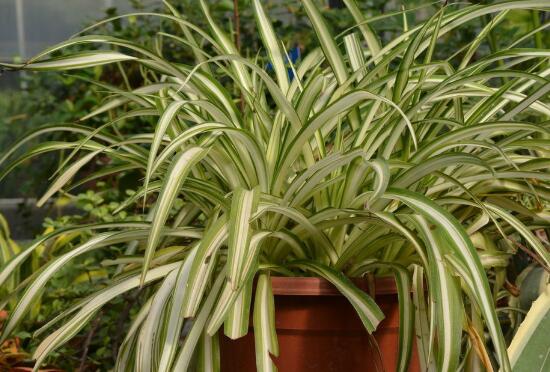
Among spider plant varieties, the Variegated Spider Plant is relatively harder to grow, and combined with its preference for moist conditions but fear of waterlogging, many beginners run into root rot when growing it. And once the roots have rotted, the Variegated Spider Plant naturally cannot grow well, and may even die. So finding the cause of root rot in the Variegated Spider Plant is crucial. On this point, the editor has summed up three: overwatering, overfertilizing, and unsuitable soil.
2. Causes of root rot in the Variegated Spider Plant and solutions
(1) Causes of root rot in the Variegated Spider Plant
1. Overwatering
The Variegated Spider Plant likes a moist environment, so we need to water frequently to keep the potting soil moist. But for many flower growers, watering is simple, yet the amount is hard to gauge, and overwatering happens often. Once water accumulates in the pot, the roots stay soaked in water for a long time, and over time they rot.
Remedy: after discovering that too much water was added, regardless of the state of the root rot, move the potted Variegated Spider Plant to a ventilated spot with good but not intense light, so the water evaporates quickly.
2. Overfertilizing
When growing the Variegated Spider Plant, fertilizing is essential, but when we fertilize too much, it not only causes the leaves of the Variegated Spider Plant to turn yellow, but may also lead to root rot.
Remedy: if you find that overfertilizing has caused poor plant growth, flower growers should immediately flush with water so the fertilizer is diluted, then let it drain out through the bottom of the pot.
3. Unsuitable soil
Besides watering and fertilizing, unsuitable soil is also a point that cannot be ignored when it comes to root rot in the Variegated Spider Plant. Once the potting soil has poor aeration, two situations arise: first, the water added cannot be absorbed by the lower roots; second, when too much water is added, it cannot drain out through the holes in the bottom of the pot. Both cause the plant's roots to rot.
(2) Solutions for root rot in the Variegated Spider Plant
When you run into root rot in the Variegated Spider Plant, you should first take emergency measures, that is, the remedies above, and only then work on solving it. On this point, the editor has summed up 4 steps for everyone, as follows:
1. Take the plant out of the pot, trim the rotten roots, and disinfect
After root rot appears in the Variegated Spider Plant, we should first take the plant out of the pot, then trim off the rotten roots, and then disinfect the roots. For disinfection, potassium permanganate solution or carbendazim solution can be used. If you do not have the corresponding chemicals, you can first rinse the roots with clean water, then put them in a ventilated place to dry. Never place them in direct sunlight.
2. Replant and provide aftercare
After disinfecting the roots of the Variegated Spider Plant, replace the potting soil, then replant the plant. After that comes careful care. To avoid root rot appearing again, take care not to overwater, and also take care that the fertilizer concentration is not too strong. The soil should mainly be a sandy type with good aeration.
Overall, although the Variegated Spider Plant is hard to grow, as long as everyone follows the growing methods for the Variegated Spider Plant, root rot basically will not appear. Of course, if root rot does appear, do not panic; just treat it according to the methods above. That is all the editor has to introduce about root rot in the Variegated Spider Plant, and I hope it can be of help to everyone.
What to do about dry leaf tips in a Golden Spider Plant? Proper light, the right amount of water and fertilizer, and replacing the potting soil
The Golden Spider Plant (Chlorophytum comosum 'Variegatum'), just like its name, is a kind of spider plant, and its distinguishing feature is the golden edges on its leaves, which look fresh and elegant, very attractive. But when grown indoors, many flower growers' Golden Spider Plants develop all kinds of problems, such as dry leaf tips. So what should you do about dry leaf tips in a Golden Spider Plant? Today, the editor will solve this problem for everyone.
1. Dry leaf tips in the Golden Spider Plant: find the cause
As a common indoor potted plant, the Golden Spider Plant is not hard to grow, but because beginners are in the majority, they often grow the leaves into problems, such as dry leaf tips, blackened leaf tips, and soft leaves in the Golden Spider Plant. On this point, the editor found 6 causes of dry leaf tips in the Golden Spider Plant, along with solutions. Let's read on.
2. Causes of dry leaf tips in the Golden Spider Plant and solutions
1. Sudden environmental change
As for the causes of dry leaf tips in the Golden Spider Plant, the first thing everyone thinks of should be environmental problems. Nowadays, many flower growers' Golden Spider Plants are bought online, which causes too great a change in environment, and the plant cannot adapt for a while, resulting in the symptom of dry, yellow leaf tips.
Solution: very simple. Ask the shop about the Golden Spider Plant's previous growing environment, then replicate it at home until the Golden Spider Plant fully adapts. After that, with normal care for a period of time, the plant's leaves will recover.
2. Improper light
① Insufficient light: the growth of the Golden Spider Plant cannot do without light. Once it is placed in a rather shady spot for a long time, its leaves easily lose their luster, or even dry up. Solution: just supplement light, but the light must not be too strong; it is best if the shade level reaches above 50%.
② Excessive light: the Golden Spider Plant likes light, but at the same time it also dislikes strong light. If it receives direct sunlight in summer and autumn, it easily develops dry leaf tips. Solution: move it to a ventilated spot with diffused light, wait an hour, then water an appropriate amount. Once the leaves recover, normal care is enough.
3. Insufficient watering
The Golden Spider Plant likes a moist environment. Once the potting soil is too dry, the leaves cannot take in enough water, and the tips of the leaves may show symptoms of drying up.
Solution: what should you do about dry leaf tips in the Golden Spider Plant? If it is caused by insufficient watering, it is very simple: just replenish water, but do not water too much at once; just keep the potting soil moist.
4. Improper fertilizing
① Insufficient fertilizing: the growth of the Golden Spider Plant cannot do without nutrients. Once fertilizing is insufficient and the plant lacks nutrients, it easily ages, and its outward sign is dry leaf tips. Solution: very simple, just supplement nutrients. Flower growers can add fertilizer once every week, but it is best to apply a little less nitrogen fertilizer.
② Overfertilizing: the Golden Spider Plant likes fertilizer, but too much fertilizer can also cause dry leaf tips in the Golden Spider Plant. Once fertilizing exceeds the plant's needs, at first the leaves become glossy and uneven, then the roots rot, and the outward sign is dry leaf tips. Solution: stop fertilizing and water more with clean water to dilute the fertilizer; in severe cases, repot, trim off the rotten roots, then replace with fresh soil and replant.
5. Pests and diseases
When the potting soil is waterlogged and ventilation is poor, the Golden Spider Plant first develops root rot, then contracts root rot disease, and one of the symptoms of the disease is dry leaf tips.
Solution: according to pest and disease control for the Golden Spider Plant, find the corresponding pesticide, then buy it and spray it.
6. Unsuitable soil
If the above points can be ruled out, then dry leaf tips in the Golden Spider Plant may be caused by unsuitable soil. It is understood that when the potting soil is not changed for a long time, the various nutrient elements contained in the soil are continuously lost. When the three elements nitrogen, phosphorus, and potassium are not replenished in time, the symptom of dry leaf tips in the Golden Spider Plant appears.
Solution: promptly replace with fertile loam soil, and water an appropriate amount of alum fertilizer water.
Overall, the Variegated Spider Plant is still quite easy to grow, but because many flower growers are beginners, yellowing leaves inevitably appear. However, after reading the whole article, I believe everyone has a clearer idea. If yellowing leaves appear, just remedy it according to the methods above. That is all the editor has to introduce about dry leaf tips in the Variegated Spider Plant, and I hope it can be of help to everyone.
What to do about blackened centers in the leaves of the Variegated Spider Plant? Learn 5 tricks to easily solve it / pay attention to water and fertilizer
The Variegated Spider Plant (Chlorophytum comosum 'Vittatum'), the finest of the spider plants, is a plant that is both attractive and green, and can also absorb formaldehyde, and it is grown in many flower growers' homes. But during the growing process, many flower growers run into all kinds of problems, such as yellowing, blackening, and withering of the Variegated Spider Plant's leaves, which affects the plant's ornamental appeal. So what should you do about blackened centers in the leaves of the Variegated Spider Plant? Today the editor will solve this problem for everyone.
1. Blackened centers in the leaves of the Variegated Spider Plant: find the cause
As the finest variety among spider plants, the Variegated Spider Plant is very beautiful, but at the same time it is also hard to grow! Combined with the many beginners, quite a few flower growers' Variegated Spider Plants develop the symptom of blackened leaves as they grow. By then, flower growers must be very anxious! As for what to do about blackened centers in the leaves of the Variegated Spider Plant, it is actually very simple. Learn the 5 tricks below and it can be easily solved. Let's read on.
2. Causes of blackened centers in the leaves of the Variegated Spider Plant and solutions
1. Soil problems
When it comes to blackened centers in the leaves of the Variegated Spider Plant, there are actually many causes. If everyone thinks there is no problem with the care, then you should consider whether the soil is the problem. Because during the growing period of the Variegated Spider Plant, if the soil has poor aeration and water permeability and cannot drain in time, it easily causes root rot in the Variegated Spider Plant, and the result may be the symptom of blackened leaves.
Solution: if it is a soil problem, it is also simple to solve. Just replace the soil of the Variegated Spider Plant with fertile, loose soil with relatively good aeration.
2. Light problems
The Variegated Spider Plant cannot do without light. Once light is insufficient, growth is hindered, and the result may be blackened centers in the leaves; besides that, the Variegated Spider Plant dislikes direct strong light. Once it is exposed to the strong sun in summer, its leaves may also blacken.
Solution: give the Variegated Spider Plant sufficient light, but provide shade under strong light. So the best approach is to place the Variegated Spider Plant in a semi-shady spot, keeping the light sufficient but not strong. After a period of time, the leaves will return to health.
3. Improper watering
Water is the key to healthy growth of the Variegated Spider Plant. Once watering is too much or too little, it causes poor plant growth, and the final result may be blackened centers in the leaves of the Variegated Spider Plant.
Solution: when watering the Variegated Spider Plant, control the amount, and it is best to follow the watering methods for the Variegated Spider Plant.
4. Insufficient humidity
The Variegated Spider Plant has high requirements for humidity. If the air is too dry, the leaves of the Variegated Spider Plant will also develop problems, and blackening is just one of the symptoms.
Solution: when the air is dry, spray water on the Variegated Spider Plant to keep the potting soil and the surrounding air at a certain level of moisture.
5. Improper fertilizing
Having discussed watering, let's talk about fertilizing, which is also one of the causes of blackened centers in the leaves of the Variegated Spider Plant. If you fertilize the Variegated Spider Plant too much or too little, it is not good for its growth, and the final bad results will all show on the leaves.
Solution: fertilize the Variegated Spider Plant in appropriate amounts. During the growing period, apply a compound fertilizer about once every 20 days. Besides that, be careful when fertilizing not to splash fertilizer onto the leaves.