How to fertilize potted chrysanthemums? Fertilization methods differ at different stages
Chrysanthemums are certainly familiar to everyone. They are one of China's top ten famous flowers and one of the world's four major cut flowers. Their beautiful blooms and vivid colors make people adore them endlessly. However, if you want to grow chrysanthemums beautifully, fertilization is a very key part. So how do you fertilize chrysanthemums? Below are the fertilization methods for potted chrysanthemums. Follow along with the editor to learn more.
I. How to fertilize chrysanthemums: timing/fertilizer/method
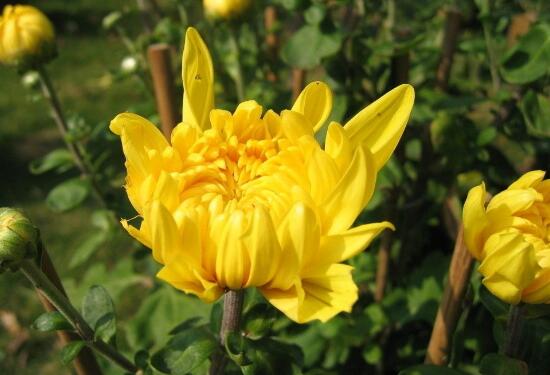
In the methods for growing chrysanthemums, we once mentioned that chrysanthemums are a flower that loves fertilizer. They have a long flowering period and need a lot of fertilizer. When fertilizing chrysanthemums, one thing is very troublesome: you cannot fertilize too much, otherwise the roots rot easily, causing yellowing of chrysanthemum leaves and other problems, seriously affecting the plant's ornamental value. As for how to fertilize chrysanthemums, the method is very important. Let's continue reading below.
II. Fertilization methods for potted chrysanthemums
To fertilize chrysanthemums, you first need to understand their growth habits. It is said that chrysanthemums love fertilizer and are relatively tolerant of it, so before fertilizing, we should first switch them to cultivation in fertile soil with strong permeability and good water and fertilizer retention. As for the fertilization methods for potted chrysanthemums, they differ at different stages, as follows:
1. Fertilizer and timing
For how to fertilize chrysanthemums, you first need to choose the fertilizer, and second, choose the right fertilization time. Fertilizer: when fertilizing chrysanthemums, potassium and phosphorus fertilizers can be used as the main fertilizers. Timing: chrysanthemums should not be fertilized too early. You can choose the period from the Start of Autumn to before the plant blooms. During this time, you must ensure the chrysanthemums have sufficient fertilizer and water.
2. Repotting and fertilizing
According to the size of the chrysanthemum, we need to repot it at the right time. When repotting, an appropriate amount of fertilizer should be added to the soil so that the chrysanthemum can grow more healthily.
Note: the size of the flowerpot should be determined by the size of the plant. It should be neither too large nor too small. The best approach is: as the chrysanthemum gradually grows, move it bit by bit into a larger pot.
3. Fertilization methods for chrysanthemums at different stages
Seedling stage: the plant is relatively fragile, and at this time the chrysanthemum needs a relatively small amount of fertilizer. You can fertilize once every week plus one or two days, and use diluted liquid fertilizer.
Growth stage: the seedlings gradually grow larger and enter a rapid growth stage. At this time, the chrysanthemum's fertilizer needs also increase, so you can increase the frequency of fertilization, about once every 5-7 days.
July-August: entering summer, the outdoor temperature is very high. At this time, fertilization should be appropriately reduced to let the chrysanthemums in the growth stage safely pass through summer.
September-October: entering autumn, the outdoor temperature gradually drops. This is the period of most vigorous growth for chrysanthemums. We should increase the frequency of fertilization, and at the same time we can also increase its concentration.
4. Precautions
By fertilizing as described above, everyone will surely be able to grow beautiful chrysanthemums. However, when fertilizing chrysanthemums, attention is also needed, because once too much or too little fertilizer is applied, it will harm the plant, so you need to stick to the principle of an appropriate amount.
Overall, chrysanthemums are plants that require a relatively large amount of fertilizer. We should fertilize selectively according to the different growth stages of chrysanthemums. Only in this way can we grow beautiful chrysanthemums. That is all the editor has to introduce about chrysanthemum fertilization methods. We hope it can be helpful to everyone.
How to grow potted chrysanthemums: methods for growing potted chrysanthemums!
Recently, many people have become obsessed with chrysanthemums, and potted chrysanthemums are especially popular. So how do you grow potted chrysanthemums? Have you mastered the methods for growing potted chrysanthemums? It does not matter if you have not mastered them. After reading this article, you will definitely be able to grow beautiful potted chrysanthemums. Next, the editor will introduce the methods for growing potted chrysanthemums for you!
Methods for growing potted chrysanthemums:
1. Fertilize regularly
Fertilization is very key and directly affects the growth of chrysanthemums, but the method must be particular. Proper fertilization will help chrysanthemums grow better, but the wrong fertilization method will directly affect the growth of potted chrysanthemums. So be sure not to fertilize too much. Base fertilizer should mainly be phosphorus and potassium fertilizer. Topdressing should be timely. In the early stage, control the concentration. After the Start of Autumn, when chrysanthemums grow vigorously, gradually increase the amount of fertilizer to ensure better growth of chrysanthemums.
2. Water promptly
Water promptly, but also control the water and ensure the amount. It should be neither too much nor too dry, that is, spraying leaf surface water once in the morning and once in the evening is enough.
3. Repot the chrysanthemums
As chrysanthemums grow, the root system also expands, so they must be repotted regularly to ensure normal growth. Generally, they need to be repotted 2-3 times throughout the entire growth process, respectively during the strong seedling stage and the flower bud stage, to ensure that the growth of chrysanthemums is not restricted.
4. Pinch chrysanthemums regularly
Pinching is done to promote the growth of side branches of chrysanthemums. The number and timing of pinching can be determined according to the growth of the chrysanthemum.
5. Prevent pests and diseases
Although potted chrysanthemums have relatively few pests and diseases, pesticides should still be sprayed regularly for prevention and control to avoid damage.
After reading this, do you already understand how to grow potted chrysanthemums and the methods for growing potted chrysanthemums? Finally, we wish everyone can grow beautiful chrysanthemums.
Further reading:
Chrysanthemum flower language and symbolic meaning, how to grow it, growing methods and precautions
How to grow potted chrysanthemums: methods for growing potted chrysanthemums
Brief introduction to potted chrysanthemums
The chrysanthemum is a perennial herbaceous plant in the Asteraceae family, Chrysanthemum genus. Its stem is upright, branched or unbranched, and covered with soft hairs. The leaves are ovate to lanceolate, pinnately lobed or partly lobed, with short petioles, and the underside of the leaves is covered with white short soft hairs. The flower heads vary in size, with multiple layers of involucral bracts, the outer layer covered with soft hairs on the outside, ray florets in various colors, and tubular florets yellow.
Habits of potted chrysanthemums
The chrysanthemum is a short-day plant and can bloom earlier under short-day conditions. It likes cool conditions and is relatively cold-tolerant. The suitable growth temperature is 18-21°C. The underground rhizome is drought-tolerant and most avoids waterlogging. It likes soil with high terrain, deep soil layers, rich in humus, loose and fertile, and with good drainage. It can grow in soils from slightly acidic to slightly alkaline.
How to grow potted chrysanthemums
1. Temperature: for potted chrysanthemums, the suitable growth temperature is around 21°C. Ornamental chrysanthemums are also cold-tolerant and can safely overwinter at around 5°C. However, they are not heat-tolerant, and when the temperature is above 32°C, growth slows.
2. Light: chrysanthemums are a typical short-day flower. Only when the daily sunshine is relatively short do they form flower buds and bloom. Under longer sunshine, they only grow stems and leaves and cannot form flower buds. Generally, during the vegetative growth stage, they need 14.5 hours of sunshine per day, and during the flower bud differentiation stage, they need 12 hours of sunshine per day.
3. Soil: ornamental chrysanthemums have wide adaptability to soil acidity and alkalinity. They can grow in soil from slightly acidic to slightly alkaline, with a pH value between 5.5-7.0. For potted chrysanthemums, suitable potting soil should be chosen. The potting soil should be loose, fertile, and sandy.
4. Moisture: ornamental chrysanthemums have a relatively large demand for water, but they are afraid of waterlogging. Especially during the vegetative growth period, growth is fast and water demand is high. They easily become short of water. Water frequently. But be careful not to let water accumulate.
5. Fertilization: when fertilizing, be sure to first spread the fertilizer on top, and then water thoroughly, so that the fertilizer can fully penetrate with the water into the chrysanthemum's root system. Only in this way can it be absorbed by the chrysanthemum.
6. Pinching and bud thinning: when the chrysanthemum plant grows to more than 10 cm tall, begin pinching. When pinching, leave only 4-5 leaves at the base of the plant, and remove all the upper leaves. Later, when new branches grow from the leaves and have 5-6 leaves, pinch off the growing tip again, so that the plant retains 4-7 main branches. Branches and buds that grow afterward should be removed in time.
Summary: through the content above, we have learned the growing methods and precautions for potted chrysanthemums. The cultivation of ornamental chrysanthemums has a long history. They have many varieties, rich colors, changeable flower shapes, and countless forms. If you are a flower lover, if you love chrysanthemums, then plant a pot yourself.