How to propagate Fatsia japonica? Division is the simplest method
Fatsia japonica is a relatively easy plant to grow, but before planting it, we should also understand how it reproduces. So what is the more scientific way to propagate Fatsia japonica? Today we will take a detailed look at three propagation methods for Fatsia japonica.
How to propagate Fatsia japonica
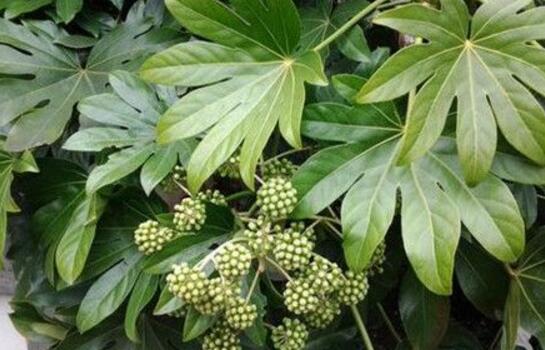
Fatsia japonica is an evergreen shrub or small tree. Its height can reach 5 m. It is one of the potted plants that people love. So how do you propagate Fatsia japonica? The answer is that sowing, division, and cuttings are all possible, and the corresponding method can be chosen according to conditions.
Propagation methods for Fatsia japonica
1. How to sow Fatsia japonica
1. Which month to sow
If using the sowing method, how do you propagate Fatsia japonica? First, the time is generally chosen in April-May. However, seeds should be harvested in late April. After harvesting, they should be washed clean with water. The germination rate is generally about 26.3%. If the seeds are dried in the shade, the germination rate can increase to more than 60%.
2. Sowing
Evenly scatter the selected seeds on the growing medium, then cover with about 3 cm of potting soil, and keep the soil slightly moist.
3. Transplanting
After sowing, it generally takes 1 month to germinate and emerge. At this time, weeds need to be removed promptly, and the soil should be kept moist. After the seedlings grow 4 leaves, that is, 3-4 months after sowing, transplant them with a soil ball to another location.
2. Cutting propagation of Fatsia japonica
1. When to take cuttings
Among the propagation methods for Fatsia japonica, cuttings are a relatively commonly used one. The time is generally chosen in April or August. The temperature at this time is relatively moderate and suitable for the growth of new shoots.
2. Specific method
Choose strong branches that have already grown for two years, then cut them into 13-15 cm long cuttings. Note that the cut should be slanted. Insert the cuttings obliquely into a sand bed, then cover with plastic film to prevent [moisture loss], and manage them in a cool place.
3. Transplanting
After cutting, roots and shoots will appear in one month. During this process, pay attention to spraying water to maintain moisture and remove weeds promptly. After growing for 2-3 weeks, they can be transplanted. Note that they should be transplanted with soil.
3. Division method for Fatsia japonica
1. Time for division
Usually, if cultivated in a greenhouse, division can be done throughout the year, but if grown at home, the best time for division is April-May, and it can be combined with repotting. Among the propagation methods for Fatsia japonica, division has the highest survival rate.
2. How to divide
Take the plant out of the pot by gently tapping around the pot, then tip the plant out of the pot, cut off poorly growing rotten roots, then wash off the soil, divide the plant into 3-4 plants, and plant them separately into prepared potting soil.
3. Later care
After division, no fertilization is needed, but a small amount of water can be given. Then after 3 weeks of growth, normal care can be carried out according to the cultivation methods and precautions for Fatsia japonica, including watering, light, temperature, and so on, all of which should be well controlled.
How to propagate Fatsia japonica: sowing, cutting, and division methods
How to propagate Fatsia japonica? It can be propagated by three methods: sowing, cutting, and division. Among these three propagation methods, flower lovers can choose one according to their own circumstances. Below is a summary of the steps and matters for cutting, sowing, and division propagation of Fatsia japonica.
How to propagate Fatsia japonica 1. Sowing propagation methodThe sowing time for Fatsia japonica is from January to late February. First, prepare Fatsia japonica seeds, and be sure to use mature seeds. Then sow the Fatsia japonica seeds on a seedbed. After sowing, water appropriately to keep the seedbed soil moist, then pay attention to shading. Generally, after 1 month of sowing, the Fatsia japonica seeds will germinate and emerge.
2. Cutting propagation methodThe best time for taking Fatsia japonica cuttings is March-April, combined with repotting. First select robust side branches 2-3 years old with terminal buds, cut cuttings about 15 cm long from the upper part, insert them with 2-3 leaves into a sand bed, and pay attention to shading and keeping the soil moist. When the weather is hot and dry, spray the leaves several times a day to maintain air humidity. At 20-25°C, roots generally form in 1 month, and they can be potted in 2 months.
3. Division propagation methodThe division propagation time for Fatsia japonica can also be combined with spring repotting. Tip the Fatsia japonica plant that has filled the pot out of the pot, prune poorly growing roots, then cut the original plant clump into several clumps or several plants, plant them into pots of suitable size, place them in a ventilated and cool place for care, and after 2-3 weeks they can be returned to normal management. Division propagation should be planted as soon as it is divided to increase the survival rate.
Fatsia japonica Fatsia japonica illustrated guide: how to grow Fatsia japonica / how to propagate Fatsia japonica
Fatsia japonica profileFatsia japonica Fatsia japonica
Cultivation methods and precautions for Fatsia japonica, introduction to Fatsia japonica
Fatsia japonica, as the name implies, refers to its palm-shaped leaves, with about 8 leaf lobes, named because it looks as if it has 8 corners. Its leaf clusters are glossy and green all year round, and the leaves are like green palms. It is shade-tolerant, often planted beside rockeries or large trees in gardens, and can also be used as a foliage plant indoors, in halls, and in venue displays.
The flowering period of Fatsia japonica is generally between summer and autumn, and some can continue until late autumn and early winter. The flowers are white and borne in terminal conical cymes, rising one after another and very beautiful. After flowering, it produces black berries containing seeds. Fatsia japonica is a strongly shade-loving plant, evergreen in all seasons, and can be placed indoors for viewing year-round.
Morphological characteristics of Fatsia japonica
Fatsia japonica, also known as eight-hand and hand tree, is an evergreen shrub in the Araliaceae family. Its leaves are nearly round, the plant is 1-2 m tall, and the base divides into clustered stems, with 5-9 lobes. The leaves are large and glossy, named because they mostly have 8 lobes and sometimes the edges are golden yellow. The flowers are yellow-white or pale green. They gather into terminal conical cymes and open in October-November. Although the flowers are not showy, they are quite elegant, and it is often used as a potted foliage flower.
Evergreen shrub or small tree, up to 5 m tall. Stems smooth and spineless. Petiole 10-30 cm; leaf blade large, leathery, nearly round, 12-30 cm in diameter, palmately 7-9-parted, lobes long elliptic-ovate, apex shortly acuminate, base cordate, margin with distant coarse serrations, upper surface dark bright green, lower surface lighter, with granular protrusions, margin sometimes golden yellow; lateral veins raised on both sides, reticulate veins slightly conspicuous below. Panicle terminal, 20-40 cm; umbels 3-5 cm in diameter, inflorescence axis covered with brown tomentum; calyx nearly entire, glabrous; petals 5, ovate-triangular, 2.5-3 mm, yellow-white, glabrous; stamens 5, filaments equal to petals in length; ovary inferior, 5-locular, each locule with 1 ovule; styles 5, separate; disk raised, semicircular. Fruit nearly spherical, 5 mm in diameter, black when mature. Flowering period October-November, fruit ripening period April of the following year.
Evergreen shrub. Leaves large, palmately 5-7-parted, thick, glossy, margin serrate or wavy, green, sometimes with golden yellow edges, petiole long, base thickened. Umbels gathered into terminal panicles, flowers white. Flowering period October to November. Berries spherical, purple-black, covered with white powder, ripening in May of the following year.
Ecological habits of Fatsia japonica
Fatsia japonica is native to mountain forests near the sea in warm regions of Japan. It was introduced to China in early years and is now widely cultivated south of the Yangtze River as urban landscaping and garden ornament, especially abundant in Taiwan, China. It is a subtropical tree species and likes a shady, humid, and warm climate. It is not tolerant of drought or severe cold. In the Nanjing-Shanghai area, it should be planted in places with a good microclimate, preferably in well-drained and fertile slightly acidic soil; it can also adapt to neutral soil. Its sprouting ability is still strong.
Likes a warm and humid climate, tolerates shade, does not tolerate drought, and has a certain degree of cold resistance. It is suitable for planting in well-drained and moist sandy loam.
Distribution range of Fatsia japonica
Native to the Ryukyu Islands, introduced and cultivated in Taiwan, China, and now widely cultivated in warm regions worldwide.
Propagation methods of Fatsia japonica
Can be propagated by sowing, cutting, or division. After the fruit ripens in May, it can be sown as soon as collected. Transplanting can be done after the weather warms in spring, and a soil ball is needed for transplanting. It can also be potted.
After the fruit ripens in May, sow as soon as collected. Under greenhouse cultivation conditions, except in midsummer, cuttings can be taken throughout the year; the suitable periods are February-March and May-June, and the plum rain season is best for cuttings. Take small side branches sprouting from the base of the stem, about 10 cm long, and insert them into sand or vermiculite, paying attention to shading and moisture retention; they can root in half a month. Division is mostly done during spring repotting. It can be cultivated in the open field in the Yangtze River basin. But sown seedlings need protection from cold in winter. For greenhouse cultivation in North China, the room temperature must not be lower than 5°C, and normal growth is possible above 10°C. During the growing season, keep the potting soil moist and apply topdressing frequently. Stop topdressing in summer, cultivate under a shade shed, and pay attention to ventilation and spraying water to cool down. When the temperature exceeds 30°C, the leaves easily turn yellow, growth vigor declines, and diseases often occur. After the fruit ripens in May, it can be sown as soon as collected; after sowing, seedlings can emerge in half a month, and the seedlings are very suitable for potted viewing. For current-year seedlings, protection from cold is needed in winter. Cuttings can be taken in February-March using hardwood cuttings, or in the plum rain season using softwood cuttings. Take robust side branches about 20 cm long, with two or three leaves, insert them into sand, keep humidity and shade, and they root easily. Division can be done during early spring repotting. Cut the clump apart with a sharp blade and plant separately in a shady and humid environment. Other management requirements are the same as for ordinary shrub division. Transplanting can be done after the weather warms in spring, and a soil ball is needed for transplanting. It can also be potted. Use sowing, cutting, or air layering, with spring and autumn as the suitable periods. The suitable temperature for seed germination is 15-20°C.
Cultivation techniques for Fatsia japonica
Humus loam is best for cultivation. The cultivation site should be semi-shaded, with about 50%-60% sunlight. Fatsia japonica leaves have a large evaporation surface, so the growing medium should often remain suitably moist; do not let drought and withering affect growth. It likes coolness and avoids high temperatures. The suitable growth temperature is about 13-23°C. In summer, strive for coolness and ventilation.
After the fruit of Fatsia japonica matures, harvest it immediately, otherwise it will naturally fall to the ground. After the fruit is collected, pile it in a corner against the wall, cover it well with a sandbag, and after about one week, the fruit skin and flesh become soft and rotten. Then put it into a sandbag and rub it, rubbing the flesh and skin to pieces, or put it into a small vat and mash it with a fine bamboo stick or reed stick, then rinse it in clean water, washing away the flesh and skin, and take out the pure seeds ready for sowing. The drilling method for Fatsia japonica is to open horizontal furrows on a prepared seedbed, with a furrow spacing of 15 cm to 20 cm and a furrow depth of 2 cm to 3 cm, then evenly scatter the seeds into the furrows and cover with soil. If using the broadcasting method, first smooth the surface of the seedbed, slightly compact the surface, then evenly scatter the seeds on the surface of the seedbed, then cover the seeds with soil sifted through a fine sieve, with a soil covering thickness of about 3 cm. Build an arched frame and cover it with plastic film to keep warm and moist. If the surface soil of the bed is found to be dry, water promptly to ensure the soil is often in a moist state. Seeds generally germinate in about 20 days. After the seedlings emerge, pay attention to shading. For shading material, black shade netting with 50% or more than 50% shading can be used, or reed curtains can also be used. After the seedlings grow 2 to 3 true leaves, carry out the first thinning. The second thinning is carried out when the seedlings grow to more than 10 cm. Current-year seedlings can reach about 15 cm to 20 cm tall.
Cutting propagation of Fatsia japonica should be carried out in early spring or autumn. Choose 1-year to 3-year-old seedling stems as cuttings. The cuttings are about 20 cm long and without leaves. After cutting, tie them in bundles of 50 each, soak the base of the cuttings in a 60 ppm naphthalene acetic acid solution for about 20 hours, or soak in a 200 ppm ABT No. 1 rooting powder solution for 30 minutes to 60 minutes, then take them out and insert them.
Because Fatsia japonica branches are relatively thick, when taking cuttings, first make holes with a wooden stick similar in thickness to the cuttings, then insert them. The insertion depth is 2/3 of the cutting length. The planting spacing for cuttings is 10 cm x 20 cm. After inserting, firm the soil around them and water thoroughly. Spring cutting is done in March, and after inserting, build a shed for shading. Use black shade netting with more than 50% shading, or reed curtains are also acceptable. If using reed curtains for shading, it is best to cover early and uncover late, so the cuttings can receive natural rain and dew. To ensure the water needed for the cuttings to root and grow leaves, spray water frequently so the soil remains moist. For autumn cutting, in addition to building a frame and covering with plastic film to retain moisture and warmth, shading should also be provided on the plastic film in the early period.
After the seedlings root and grow leaves, weeds should be pulled early and thoroughly so that weeds do not compete with the seedlings for nutrients and water. After the weeds are completely pulled, water once with diluted manure water to be absorbed by the new roots and promote seedling growth. Fatsia japonica is suitable for growing in fertile, loose, and well-drained soil. The potting soil can be mixed using 3 parts garden soil plus 1 part rice husk ash, with some base fertilizer added. In ordinary care, avoid direct sunlight and place it in a semi-shaded, well-ventilated environment such as the north side of a building. During the new leaf growth period, water somewhat more to keep the soil moist; afterward, watering should alternate between dry and moist. When the climate is dry, water should also be sprayed on the plant and around it to increase humidity. From May to September, apply cake fertilizer water twice a month. If seeds are not to be kept after flowering, cut off the faded flower stalks to avoid consuming nutrients. In winter, overwintering outdoors south of the Yangtze River is basically safe. For potted seedlings, placing them in a cold room is safer.
Care pointsThis plant is native to Japan and Taiwan, China, and other places. It likes a warm and humid environment, has strong shade tolerance, and is also relatively cold-resistant; it likes moisture and fears drought, and is suitable for growing in fertile, loose, and well-drained soil. When planted in the ground, Fatsia japonica grows best in semi-shaded and moist places such as forest edges and ditch sides, and potted management is also convenient. The potting soil can be mixed using 3 parts garden soil plus 1 part rice husk ash, and adding some base fertilizer is better. Potting should be done before spring sprouting. When the plant is relatively tall, it can be appropriately cut back to suit potted viewing. In ordinary care, avoid direct sunlight and place it in a semi-shaded, well-ventilated environment such as the north side of a building. During the new leaf growth period, water somewhat more to keep the soil moist; afterward, watering should alternate between dry and moist. When the climate is dry, water should also be sprayed on the plant and around it to increase humidity. From May to September, apply cake fertilizer water twice a month. If seeds are not to be kept after flowering, cut off the faded flower stalks to avoid consuming nutrients. In winter, overwintering outdoors south of the Yangtze River is basically safe. For potted seedlings, placing them in a cold room is safer.
Precautions
1. Causes of yellow-brown spots on Fatsia japonica leaves
Through observation, we found yellow-brown spots on the leaves, petioles, and stems of Fatsia japonica. The disease spots on the leaves were round, later expanding into irregular large patches. After reaching a certain number, the leaves began to curl and wither. At the same time, we also found that the spots were contagious, and Fatsia japonica beside the diseased plants were also infected with the spots. Through observation, looking up information, and consulting experts, we learned that the Fatsia japonica had anthracnose.
2. Small insects on Fatsia japonica
During field observation, we found small red insects on the undersides of Fatsia japonica leaves. Through investigation and verification, we believe these are scale insects. Scale insects pierce and suck sap on the undersides of leaves and at petioles. Affected plants have lighter leaf color, appearing yellow-green. The secretions of scale insects can cause sooty mold and reduce ornamental value.
3. Causes of drooping Fatsia japonica leaves
For various reasons, Fatsia japonica leaves may droop. The possible causes of drooping Fatsia japonica leaves are introduced below:
1. The potting soil is too dry, causing leaves to droop. Because Fatsia japonica is not drought-tolerant, keeping the potting soil moist is key. But also grasp the principle of not watering when the surface soil is not dry, and it is better to water when the surface soil just begins to look white.
2. The potting soil is too wet, causing root rot. The plant can be taken out of the pot, the soil removed, the rotten root system cut off, and new soil used to replant it. After watering thoroughly, place it in a cool place.
3. Fertilizer is too concentrated, causing root burn. Take the plant out of the pot, wash the roots with clean water, rinse continuously several times, then place the roots in clean water to soak. After the leaves recover, replace with new soil and replant.
Medicinal or dietary value of Fatsia japonica
The medical information and health dietary information on Huahua Net are for reference only and cannot be used as a basis for diagnosis or medical treatment. Any health issues should be consulted with professional medical staff, and treatment of any disease should follow a doctor's advice.
Ultimate flower-protecting task: to love yourself, start from reality and strictly follow a doctor's advice. For illness, do not be careless, do not delay, do not give up hope, face it bravely, warm the silent world with love, and care for the flower field in your heart with your heart.
Medicinal value
Leaves, roots, and bark are used medicinally. Source: the root bark of Fatsia japonica, a dicotyledonous medicinal plant in the Araliaceae family.
[Nature, flavor, and meridian entry]: Pungent, slightly warm; enters the liver and kidney meridians. Fatsia japonica
[Dosage and usage]: Oral use: decocted in water, 6-9 g; external use: decocted in water for washing.
[Ecological environment]: Mostly cultivated as an ornamental plant in gardens in North China, East China, and Kunming, Yunnan. Native to southern Japan.
[Various discussions]: "Taiwan Medicinal Plants" states: leaves and root bark treat traumatic injuries and remove blood stasis. Harvesting and storage: collect leaves in summer and autumn; root bark can be collected throughout the year. Wash all clean, and use fresh or dry in the sun.
[Main indications and effects]: Invigorate blood and resolve stasis. Transform phlegm and stop cough; dispel wind and remove dampness; resolve stasis and relieve pain. Mainly treats traumatic injuries. Cough with abundant phlegm; rheumatic arthralgia; gout.
Medication contraindications: pregnant women should take it cautiously.
The stem is toxic and can cause immune system poisoning, mental poisoning, organ-damaging poisoning, and so on.
There was one case in which taking it caused a first-degree disability, with the person bedridden year-round, abdominal bloating, and extreme suffering.
Landscape uses of Fatsia japonica
Fatsia japonica is evergreen in all seasons and has huge leaves. The leaf shape is elegant, deep green, and glossy, making it a popular indoor foliage plant. It adapts to indoor low-light environments and is a commonly used plant material for beautifying hotels, restaurants, office buildings, and homes. It is used to arrange entrance halls, windowsills, corridors, and poolside areas, or as a base for indoor flower beds. The leaves are also a good matching material for flower arrangements. South of the Yangtze River basin, it can be used outdoors and is suitable for planting in gardens, corners, and shady sides of buildings; it can also be dotted beside streams, pool banks, or planted in groups under trees and at lawn edges.
Fatsia japonica is an excellent foliage plant. It can also be potted for indoor viewing.
Functions, uses, and application value of Fatsia japonica
Fatsia japonica is an excellent foliage plant. It is suitable for planting in courtyards, beside doors, by windows, at wall corners, and in shady sides of buildings. It can also be dotted beside dripping streams and can be planted in groups at lawn edges and in woodland. It can also be grown in small pots for indoor viewing. It has strong resistance to sulfur dioxide and is suitable for planting in factory and mining areas and neighborhoods. Leaves, roots, and bark can all be used medicinally.
Impact on the home environment
1. Absorb harmful gases
It can absorb harmful gases such as carbon dioxide in the air and purify the air. In the houses where modern people live, many people often keep doors and windows tightly closed and rarely ventilate the indoor air with outside air, discharging harmful gases exhaled by people indoors to the outside. When these harmful gases accumulate indoors to a certain amount, the indoor air also becomes increasingly turbid. Moreover, urban air quality is getting worse and worse nowadays. If Fatsia japonica is planted at home, it can absorb part of the carbon dioxide and other harmful gases exhaled by people, purify the air, and make the owner's life more comfortable.
2. Greening the indoor environment
Fatsia japonica is evergreen in all seasons and is a very good indoor decorative plant with extremely high ornamental value. The flowers it produces are also very elegant. Cultivating a Fatsia japonica indoors to green the indoor environment is a very good choice. In terms of cultivation, it also does not require the owner to spend much effort. Keeping it in a courtyard, beside a door, by a window, at a wall corner, and in the shady side of a building is enough, and the owner can also admire its lush green appearance at any time.
Variety classification of Fatsia japonica
The main cultivated varieties of Fatsia japonica include:
(1) White-spotted Fatsia japonica, with white spots on the leaf surface;
(2) Yellow-spotted Fatsia japonica, with yellow spots on the leaf surface;
(3) Yellow-striped Fatsia japonica, with fine yellow lines on the leaves;
(4) Lobed Fatsia japonica, with palmately deep-lobed leaves, and each lobe further divided;
(5) White-edged Fatsia japonica, with white leaf margins;
(6) Wavy-edged Fatsia japonica, with wavy, wrinkled leaf margins;
(7) Dwarf Fatsia japonica, short in stature, with dense branches and leaves and vigorous growth.
Flower language of Fatsia japonica
Wealth from all directions, gathering the vitality of the four quarters, rising to a higher level.
Fatsia japonica pictures