The propagation methods for Aglaia odorata (Chinese perfume plant) include sowing, cuttings and layering.
Aglaia odorata is a highly ornamental flowering plant, and people in many regions of our country grow it. As more people grow it, how to propagate Aglaia odorata has become a question of general interest. Below is a detailed explanation of the propagation methods for Aglaia odorata, let us take a look.
I. How to propagate Aglaia odorata
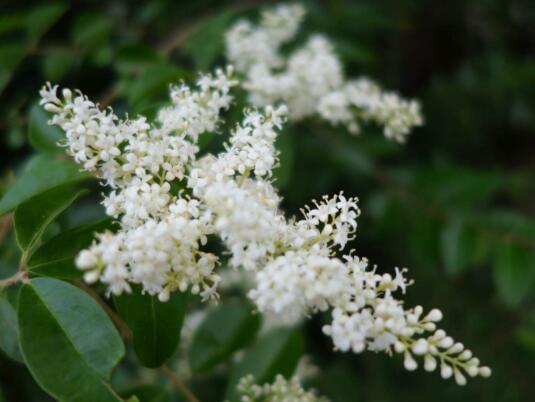
How to propagate Aglaia odorata can broadly be divided into three types: propagation by sowing, propagation by cuttings and propagation by layering. As long as you master the right propagation method, the survival rate is still very high. How exactly are these three propagation methods carried out? Let us continue reading.
II. Propagation methods for Aglaia odorata
1. Propagation by sowing
a: Soil selection
When propagating Aglaia odorata by sowing, soil selection is the first step and also a fairly important one; choosing the right soil can greatly increase the survival rate. As for the soil, we can choose relatively fertile humus soil; this kind of soil has good drainage and is more conducive to the seeds absorbing nutrients.
b: Sowing method
Among the propagation methods for Aglaia odorata, sowing is a fairly commonly used method. First we need to level the soil, then evenly scatter the seeds on the surface of the soil, after that cover them with about 2cm of soil and then water. When watering, be careful to water thoroughly in one go, and be sure not to cause waterlogging, otherwise it will be very difficult for them to sprout.
c: Follow-up management
After finishing the above, they will sprout in about 15-25 days, and afterwards we just carry out normal care. For care methods everyone can refer to the article on how to grow Aglaia odorata; I will not introduce too much here.
2. Propagation by cuttings
Among the propagation methods for Aglaia odorata, propagation by cuttings is the method with a relatively high survival rate, provided of course that the propagation method is correct. The specific method is described in detail in the article on cutting methods for Aglaia odorata, which everyone can look up.
3. Propagation by layering
Propagation by layering is relatively uncommon among the propagation methods for Aglaia odorata, but as long as the method is mastered correctly, the survival rate is still fairly high. When carrying out layering, it is best to choose the rainy season; use a one-year-old woody branch, make a ring-shaped cut 1cm wide at 20cm from the base, apply peat to the ring-cut area, then tie it tightly above and below. Generally it will take root in about 2-3 months, after which follow-up care is all that is needed.
Aglaia odorata Aglaia odorata illustrated guide: how to grow Aglaia odorata / how to propagate Aglaia odorata
Aglaia odorata profileAglaia odorata
Aliases: Shulan, Four-season Aglaia, Sui Aglaia, Aglaia
Category: Shrub flowers
Family and genus: Plantae, Angiosperms, Dicotyledons, Sapindales, Meliaceae, Aglaia
Full bloom period: Spring and autumn
Aglaia is also known as Shulan, Four-season Aglaia and Sui Aglaia, of the family Meliaceae, genus Aglaia. Evergreen shrub or small tree; the tips of the branchlets are often covered with star-shaped rusty small scales; pinnately compound leaves alternate, 5-12 cm long, with 3-7 leaflets, the common leaf axis has narrow wings, the leaflets have short stalks, obovate to oblong, 2-7 cm long, 1-3 cm wide, apex obtuse, base cuneate, hairless on both sides; panicles axillary, 5-10 cm long, slightly loose. Flowers orange-yellow, extremely fragrant, about 2 mm in diameter. Bisexual flower stalks slightly short and thick, calyx 5-lobed, petals 5, oblong; berry nearly spherical, 10-12 mm long, flowering between summer and autumn.
How to grow Aglaia odorata and points to note Introduction to Aglaia odorata
Aglaia is also known as Shulan, Four-season Aglaia and Sui Aglaia, of the family Meliaceae, genus Aglaia. Evergreen shrub or small tree; the tips of the branchlets are often covered with star-shaped rusty small scales; pinnately compound leaves alternate, 5-12 cm long, with 3-7 leaflets, the common leaf axis has narrow wings, the leaflets have short stalks, obovate to oblong, 2-7 cm long, 1-3 cm wide, apex obtuse, base cuneate, hairless on both sides; panicles axillary, 5-10 cm long, slightly loose. Flowers orange-yellow, extremely fragrant, about 2 mm in diameter. Bisexual flower stalks slightly short and thick, calyx 5-lobed, petals 5, oblong; berry nearly spherical, 10-12 mm long, flowering between summer and autumn.
Morphological characteristics of Aglaia odorata
Aglaia odorata is an evergreen shrub or small tree, much branched. The tips of young branches have star-shaped rusty scales, which later fall off. Odd-pinnately compound leaves, alternate, the leaf axis has narrow wings, leaflets 3-5, opposite, obovate to long elliptic, apex obtuse, base cuneate, hairless on both sides, entire margin, veins obvious.
Aglaia odorata has axillary panicles. Flowers yellow, extremely fragrant. Calyx 5-lobed, lobes round. Corolla 5 petals, oblong or nearly round, longer than the calyx. Staminal filaments united into a tube, shorter than the petals. Pistil ovary ovate, densely covered with yellow coarse hairs. Berry, ovate or spherical, with star-shaped scales. Seeds have a fleshy aril.
Aglaia odorata flowers from July to August, or blooms in all four seasons.
Ecological habits of Aglaia odorata
Aglaia odorata likes a warm, humid and sunny environment, is not cold-tolerant, slightly shade-tolerant, and the best soil is loose, fertile, slightly acidic soil; in winter the temperature should not be lower than 10°C.
Aglaia likes warmth, sunlight and plenty of fertilizer. The optimum growth temperature is 20°C-25°C. Under normal circumstances, with sufficient sunlight and relatively high temperature (around 30°C), the flowers it produces have a strong fragrance. If in summer it is placed in a shaded spot and at the same time given large amounts of nitrogen fertilizer, this is one of the main reasons it fails to bloom or blooms little with a faint fragrance. Therefore, during the growth and development period, Aglaia needs to be kept outdoors in a sunny spot for care, and care should be taken to properly apply more liquid fertilizer containing more phosphorus; it is best to apply fully rotted alum fertilizer water made by soaking crushed bone meal, fish bones, chicken bones, etc., and regularly supplement with some chemical fertilizer containing more phosphorus or fermented rice washing water, etc., all of which help bud formation and result in more blooms, golden-yellow color and a fresh fragrance.
Aglaia likes moisture, and watering during the growth period should be moderate. If watered too much, it easily leads to root rot and yellow, withered, falling leaves; too much watering during the flowering period easily causes flowers and buds to drop; too little watering will cause the leaf edges to dry up and buds to wither. Therefore, when summer temperatures are high, besides watering 1-2 times a day, also frequently spray and wash the branches and leaves with clean water and sprinkle water on the ground where it is placed to raise air humidity. At the same time, fertilization should also be appropriate. Since Aglaia blooms many times within a year, after each bloom it should promptly be given 2-3 applications of fully rotted dilute liquid fertilizer, so that it blooms continuously with a rich fragrance. Aglaia likes acidic soil, and for pot cultivation a growing medium based mainly on leaf mold soil should be chosen. During the vigorous growth period, spraying once a week with 0.2% ferrous sulfate solution results in green leaves and abundant flowers.
Cultivation techniques for Aglaia odorata Cultivation environment
Potted Aglaia odorata seedlings should be shaded, and strong direct sunlight must be avoided. After the seedlings grow new leaves, fertilize once every 2 weeks, but the amount of watering must be controlled and it should not be too wet. Apart from shading at noon in midsummer, it should get plenty of sunlight, so that Aglaia not only blooms more often but also has a rich fragrance. In areas north of the Yangtze River, it must be moved indoors for care in winter.
For potting use loose soil with good drainage and aeration. Repot once every 1-2 years, and fertilize once every 1-2 weeks during the growth period. In the south it is mostly planted in courtyards; in the north it is potted, and in spring, summer and autumn it should be placed outdoors where direct sunlight can reach it. In winter move it indoors to a spot with direct sunlight, with a wintering temperature above 10°C.
After flowering, an adult mother plant will produce small red fruits that are oval and resemble the fruit of the Chinaberry tree. When the fruit turns reddish-brown, pick it, soften it by soaking in warm water, peel off the fleshy rind, then sow the seeds as soon as they are collected in a pot of sandy soil; sown in summer and autumn, they sprout in about one month. Seedlings must grow for two or three years before they can flower, unlike the small plants propagated by the high-altitude layering method, which can fill the branches with wondrous fragrance in the very same year.
Wintering management
Aglaia odorata originates from the tropics and is not tolerant of low temperatures. Generally, between Frost's Descent and the Start of Winter it must be moved indoors, placed on a sunny windowsill or tabletop, with the indoor temperature kept at 8-10°C, and preferably not lower than 5°C. If the temperature is too high, it will grow tender shoots, reducing its adaptability and cold resistance. The plant should not be placed near a stove or kitchen range; a plastic cover can be used to regulate temperature and humidity, but one or two slits need to be cut at the top of the cover, so as to avoid excessive temperature and humidity affecting normal growth.
When the potting soil is dry, water it a little, but do not fertilize. If the weather suddenly changes and the indoor temperature drops below 5°C, special warming measures should be taken, such as moving the potted flower under a table at night, hanging a cloth curtain over the table and laying a straw mat underneath for warmth; you can also put a plastic bag over the pot, then the next day when the sun comes out remove the covering curtain and move the potted flower back from under the table to its original place. Where Aglaia is placed, it is not advisable to open windows for ventilation, so as to avoid cold wind harming the plant.
Propagation methods for Aglaia odorata
Aglaia is propagated by cuttings, high-branch layering or sowing, and likes warmth and plenty of sunlight.
Layering
Mainly high-altitude layering; in the plum rain season choose a one-year-old woody branch, make a ring-shaped cut 1cm wide at 20 cm from the base, apply moss or peat to the ring-cut area, then tie it tightly above and below with plastic film, and it can take root in 2-3 months.
Cuttings
From June to August, cut about 10 cm of tender tip shoots and insert them into peat; they begin to take root after 2 months.
Pest and disease control for Aglaia odorata Pest control
1. Aphids: spray the plant with cigarette butt or chili water. Spraying with 800 times dilution of Mieyaling also works. If there are few, they can be removed manually with a small brush. For other control methods, refer to Chinese rose.
2. Scale insects: spray with 1500 times dilution of Jiesha. If there are few, they can be removed manually with a brush. For other control methods, refer to Clivia.
3. Red spider mites: spray the plant with 1000 times dilution of dichlorvos or 2000 times dilution of dimethoate. For other control methods, refer to crabapple.
4. Sooty mold: this disease occurs easily with high temperature and high humidity and poor ventilation.
[Control method]: Improve the environment, wash the leaves and branches with water, or spray with 1000 times dilution of 70% thiophanate-methyl. For other control methods, refer to Chinese rose.
How to grow Aglaia odorata Daily care
Aglaia originates from Fujian, Guangdong, Sichuan and Yunnan in our country as well as Southeast Asia and other places, and is a subtropical tree species. It likes a mild and humid climate. Because Aglaia is a southern plant, in Beijing, especially when grown indoors, it is somewhat difficult. It needs careful care. Your Aglaia is dropping leaves; since I am not on site, the causes may be various, for example soil pH, water pH, or fertilizer problems.
Here are some technical points for growing Aglaia in the north: In the north, Aglaia is mostly planted with peat, leaf mold plus coarse sandy soil. At home you can use half (old) Clivia soil and half plain sandy soil mixed together as the growing medium. Do not use too large a pot, and do not add alkaline fertilizer to the soil; a drainage layer should be placed at the bottom of the pot. After planting the seedling, first keep it under deep shade for care. In dry weather, spray water on the leaves and the surrounding ground every day to keep the environment humid. After new leaves grow, move it to light shade, and afterwards gradually adapt it to strong light, then the flowers will be more fragrant.
For flower seedlings potted in spring, start topdressing around the Beginning of Autumn, with dilute organic liquid fertilizer being best. From the second year on, during the peak growth season, apply organic liquid fertilizer once every 20 days. If it can be applied alternately with a mixed solution of 0.1% urea and 0.2% potassium dihydrogen phosphate, the flowers and leaves will be even more luxuriant.
The potting soil should be kept moist at all times; never miss watering and let it dry out, but it also must not become waterlogged and wet for long. If placed indoors, ventilation should be strengthened, and it should be rotated outdoors about every 15 days. In winter, when moved indoors, it needs sufficient sunlight, and the minimum room temperature must not be lower than 8°C. Restrict water and stop fertilizer, and at the same time pay attention to opening and closing doors and windows to avoid direct cold wind and smoke and dust pollution. Prevent damage from scale insects and sooty mold. In North China, after the dry winds from late April to early May, move it outdoors for care. Aglaia can be repotted once every two years.
Aglaia should be pruned and shaped starting from the seedling stage, keeping a section of main trunk 15 cm to 20 cm tall; do not let the main trunk branches grow in a cluster from the soil surface, but rather prune and branch above the 15 cm tall main trunk, so as to make the plant full in shape. The lower branches of perennial old plants often age and die. Therefore in the north it is best to shorten-prune once every other year during the hot season, to prompt adventitious buds on the lower part of the main branches to sprout and grow new side branches, thereby maintaining a well-proportioned tree shape, strong tree vigor and abundant leaves and flowers.
Variety classification of Aglaia odorata Four kinds are commonly cultivated
Aglaia (Aglaia odorata)
Evergreen small tree or shrub, much branched, the tips of the branchlets often covered with fine brown star-shaped scales, panicles axillary at the tips, flowers golden-yellow, small, with a rich fragrance.
Taiwan Aglaia (A. taiwaniana)
Leaves relatively large, flowers slightly smaller, and its flowers often bloom along with the growth of new branches.
Large-leaf Aglaia (A. elliptifolia)
Evergreen large shrub, tender branches often covered with brown star-shaped scales, leaves relatively large.
Four-season Aglaia (A. duperreana)
Blooms in all four seasons, with the most abundant blooming in summer. For home potting it is best to choose ordinary Aglaia, which has a long flowering period, dense inflorescences, and a fragrance like that of an orchid, and is relatively commonly cultivated. Under home cultivation conditions, generally as long as the lowest indoor temperature in winter can be maintained at no less than 5°C, it can winter safely; even if some leaves drop from the branch tips, after spring comes, with pruning and repotting and strengthened water and fertilizer management, it can quickly send out new leaves and bloom again. Or on nights of particularly cold weather, put two layers of plastic bags over the plant to keep it warm, and after the temperature rises again at noon the next day, open the bags for ventilation. If conditions permit, an electric heater can also be installed indoors to warm the Aglaia placed in the room, with particularly good results.
Distribution area of Aglaia odorata
Aglaia originates from southern Asia and is widely planted throughout the tropical regions of the world.
In China, Aglaia is distributed in Fujian, Guangdong, Guangxi, Sichuan and Yunnan, and is also often potted in the north.
Uses and purposes of Aglaia odorata Life value
Aglaia is a flowering plant that people love, and when the flowers bloom the fragrance is striking. As an edible flower, it can be used to extract essence. Such as Aglaia flower tea.
Pot cultivation uses
Potted Aglaia can be displayed in the living room, study and porch, fresh and elegant, soothing to body and mind. In southern courtyards, Aglaia is also an excellent landscape tree.
Cultural background and legends of Aglaia odorata
Aglaia odorata is a symbol of bravery and passion; regarding this, there is also a legendary story.
In an ancient legend, there was a flower that for half of the year would bloom red flowers, and for the other half of the year would bloom blue flowers. When the sun rose, it would give off a fiery red glow, and when the moonlight shone everywhere, its light was shrouded in a faint blue halo. It was so magical that people gave it the title of the flower of warriors; it became synonymous with bravery and striving upward, and before going to battle warriors would wear it to show courage, and its name was passed down from generation to generation. But one day, people found that it had changed: on the same stem, blue and red flowers bloomed at the same time, and these two flowers shone together in the sunlight and rippled together in the moonlight, equally profound and deeply affectionate. So people began to argue about who was the true flower of bravery, but every time warriors went to battle they would still wear it, only some liked to wear the blue flower and some liked to wear the red flower. And the flowers of these two colors always appeared at the same time in sunlight and moonlight, on the heads of brave warriors, and in any place that needed courage and passion. This flower is called Aglaia odorata.
The flower language of Aglaia odorata
Flower language of Aglaia odorata: with love, life will bloom.
Aglaia odorata pictures
Types of Aglaia odorata How to grow Aglaia odorata
Nowadays many people place a pot of flowers at home to decorate the room. And Aglaia odorata has a light, elegant fragrance, is full of refinement, and can also remove harmful substances from the air, so surely many people will like Aglaia odorata. So how should we choose Aglaia odorata and how should we grow it? Today I will introduce to you the types of Aglaia odorata and how to grow it.
Types of Aglaia odorata
1. Aglaia odorata
Aglaia odorata (the original variety), shrub or small tree; the stem has many branchlets, the tips of young branches covered with star-shaped rusty scales. Leaves 5-12(-16) cm long, the leaf axis and petiole with narrow wings, with 3-5 leaflets; leaflets opposite, thickly papery, 2-7(-11) cm long, 1-3.5(-5) cm wide, the topmost one largest, the lower ones much smaller than the top one, apex obtuse, base cuneate, hairless on both sides, lateral veins about 8 on each side, very fine, and together with the reticulate veins slightly raised on both sides.
Panicles axillary, 5-10 cm long, slightly loose and hairless; flowers fragrant, about 2 mm in diameter; male flower stalks slender, 1.5-3 mm long, bisexual flower stalks slightly short and thick; calyx 5-lobed, lobes round; petals 5, yellow, oblong or nearly round, 1.5-2 mm long, apex round and truncate; staminal tube slightly shorter than the petals, obovate or nearly bell-shaped, hairless outside, apex entire or with rounded teeth, anthers 5, ovate, included; ovary ovate, densely covered with yellow coarse hairs.
2. Small-leaf Aglaia odorata
The main differences between this variety and Aglaia odorata (the original variety) are:
Leaves usually with 5-7 leaflets, occasionally 9, narrowly long elliptic or narrowly oblanceolate long elliptic, less than 4 cm long and 8-15 mm wide.
Produced in Hainan; grows in open forests or shrub forests in low-altitude mountainous areas. Cultivated in the southern provinces and regions of our country.
3. Four-season Aglaia
Blooms in all four seasons, with the most abundant blooming in summer. For home potting it is best to choose ordinary Aglaia, which has a long flowering period, dense inflorescences, and a fragrance like that of an orchid, and is relatively commonly cultivated.
Under home cultivation conditions, generally as long as the lowest indoor temperature in winter can be maintained at no less than 5°C, it can winter safely; even if some leaves drop from the branch tips, after spring comes, with pruning and repotting and strengthened water and fertilizer management, it can quickly send out new leaves and bloom again.
On nights of particularly cold weather, put two layers of plastic bags over the plant to keep it warm, and after the temperature rises again at noon the next day, open the bags for ventilation. If conditions permit, an electric heater can also be installed indoors to warm the Aglaia placed in the room, with particularly good results.
4. Taiwan Aglaia
Leaves relatively large, flowers slightly smaller, and its flowers often bloom along with the growth of new branches.
Medium evergreen tree, diameter at breast height up to 30 cm; bark reddish-brown, thin, peeling; branchlets, petioles, leaf axes and inflorescences all densely covered with silvery or pale yellow star-shaped scales.
Leaflets 7-11, thinly leathery, opposite, obovate or obovate-elliptic, 4-8 cm long, 1.5-3 cm wide, apex obtuse or rounded, base cuneate, the leaf surface densely covered with silvery scales, the underside densely covered with pale yellow scales, the midvein on the leaf surface slightly sunken, the midvein on the underside raised, lateral veins 5-6 on each side, very fine, inconspicuous on both sides; leaflet stalks 5-10 mm long.
Panicles axillary, about 15 cm long, densely covered with yellow-brown scales; flowers about 2 mm in diameter; calyx 5-lobed, lobes nearly round, the outside covered with pale yellow scales; petals 5, oblong, imbricate, about 1.2 mm long and about 1 mm wide, concave, apex rounded, the outside covered with pale yellow scales; staminal tube spherical, apex 5-lobed, anthers 5; ovary ovate.
Berry spherical, 1-1.4 cm in diameter, sparsely covered with scales or not. Flowering in September.
Produced in Taiwan, China; grows in coastal areas and islands in the south or southeast. Distributed in the Philippines.
5. Large-leaf Aglaia
Evergreen large shrub, tender branches often covered with brown star-shaped scales, leaves relatively large.
How to grow Aglaia odorata
Propagated by cuttings, high-branch layering or sowing.
Layering: mainly high-altitude layering; in the plum rain season choose a one-year-old woody branch, make a ring-shaped cut 1cm wide at 20 cm from the base, apply moss or peat to the ring-cut area, then tie it tightly above and below with plastic film, and it can take root in 2-3 months.
Cuttings: from June to August, cut about 10 cm of tender tip shoots and insert them into peat; they begin to take root after 2 months.
Potted Aglaia odorata seedlings should be shaded, and strong direct sunlight must be avoided. After the seedlings grow new leaves, fertilize once every 2 weeks, but the amount of watering must be controlled and it should not be too wet. Apart from shading at noon in midsummer, it should get plenty of sunlight, so that Aglaia not only blooms more often but also has a rich fragrance. In areas north of the Yangtze River, it must be moved indoors for care in winter.
Aglaia likes moisture, and watering during the growth period should be moderate. If watered too much, it easily leads to root rot and yellow, withered, falling leaves; too much watering during the flowering period easily causes flowers and buds to drop; too little watering will cause the leaf edges to dry up and buds to wither.
Therefore, when summer temperatures are high, besides watering 1-2 times a day, also frequently spray and wash the branches and leaves with clean water and sprinkle water on the ground where it is placed to raise air humidity. At the same time, fertilization should also be appropriate.
Since Aglaia blooms many times within a year, after each bloom it should promptly be given 2-3 applications of fully rotted dilute liquid fertilizer, so that it blooms continuously with a rich fragrance.
Aglaia likes acidic soil, and for pot cultivation a growing medium based mainly on leaf mold soil should be chosen. During the vigorous growth period, spraying once a week with 0.2% ferrous sulfate solution results in green leaves and abundant flowers.
For potting use loose soil with good drainage and aeration. Repot once every 1-2 years, and fertilize once every 1-2 weeks during the growth period.
After flowering, an adult mother plant will produce small red fruits that are oval and resemble the fruit of the Chinaberry tree. When the fruit turns reddish-brown, pick it, soften it by soaking in warm water, peel off the fleshy rind, then sow the seeds as soon as they are collected in a pot of sandy soil; sown in summer and autumn, they sprout in about one month. Seedlings must grow for two or three years before they can flower, unlike the small plants propagated by the high-altitude layering method, which can fill the branches with wondrous fragrance in the very same year.
Reasonable fertilization. Aglaia odorata has a strong capacity for flowering and blooms many times, so nutrients must be replenished in time. After each bloom, nutrients should be replenished promptly; insufficient fertilizer is the main reason Aglaia odorata only grows leaves without blooming or drops leaves and buds.
Therefore, when the temperature rises, Aglaia odorata should be moved outdoors for care, and after a week the soil should be loosened and some dilute nitrogen fertilizer applied; 10% to 20% rotted cake fertilizer water or human waste may be used, and afterwards apply liquid fertilizer about once every 10 days to promote the growth of branches and leaves.
From the beginning of June, Aglaia odorata enters the vigorous growth period and flowering period, until mid-October. Every 15 days or so, apply a relatively concentrated fertilizer based mainly on phosphorus fertilizer, or spray once every 15 to 20 days with 0.3% potassium dihydrogen phosphate solution, then it will bloom even more abundantly.
Pay special attention that during the flowering period phosphorus fertilizer must be the main component, otherwise the situation of only growing leaves without blooming will occur. During the flowering period from June to October, if fertilization is insufficient, not only will the number of blooms decrease and the flowers lose their fragrance, but the flower buds that have already appeared will also wither and fail to open.
Pest Control
1. Aphids: spray the plants with a liquid made from cigarette butts or chili peppers. Spraying with a 800x dilution of Mieyaling also works. If there are only a few, they can be removed manually with a small brush.
2. Beetles: spray with a 1500x dilution of Jiesha. If there are only a few, they can be removed manually with a brush.
3. Red spider mites: spray the plants with a 1000x dilution of dichlorvos or a 2000x dilution of dimethoate.
4. Improve the environment, wash the leaves and branches with water, or spray with a 1000x dilution of 70% thiophanate-methyl.