How to propagate Aglaia odorata (mock lime) by cuttings? The soil must be loose, and the cuttings must be robust
Many people in China grow Aglaia odorata (mock lime), so many are also quite concerned about how to propagate it. In fact, there are many propagation methods for mock lime, among which cutting propagation is the most common, and the survival rate is very high. So what exactly is the cutting method for mock lime? Let's take a look below.
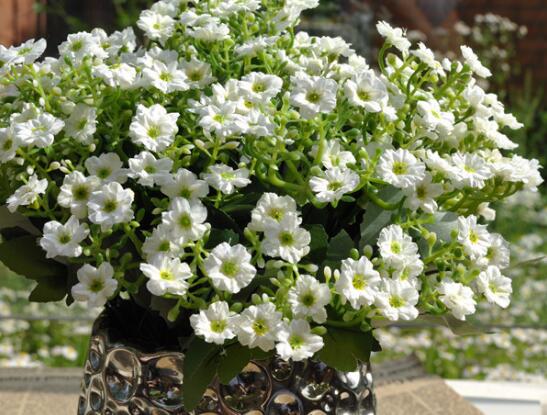
The cutting method for Aglaia odorata (mock lime)
Regarding the cutting method for Aglaia odorata (mock lime), there are many points to pay attention to, such as the selection of soil and cuttings, and the subsequent management. These points are introduced in detail below, and interested friends can take a look.
1. Soil selection
Before taking cuttings of Aglaia odorata (mock lime), we first need to choose the right soil, so the survival rate will be relatively higher. For the soil, we can choose relatively fertile soil with high looseness; this kind of soil has better drainage and will be more beneficial to its growth.
2. Cutting selection
In the cutting method for Aglaia odorata (mock lime), the selection of cuttings is also very important. Whether the chosen cutting is suitable directly determines the survival rate. In this regard, we had best choose branches that grow relatively robustly and are free of pests and diseases, so the survival rate will be relatively higher. If the chosen branch looks very weak, it will basically be very difficult to survive.
3. Cutting method
After completing the preliminary work, we can carry out the cuttings. As for what the cutting method for Aglaia odorata (mock lime) is like, it is actually very simple. First, we need to find a chopstick and use it to poke a hole in the center of the potting soil, then insert the cutting into the soil, and finally press the potting soil flat before watering.
4. Watering management
In the cutting method for Aglaia odorata (mock lime), watering is also a very important part. After the cuttings are completed, we need to water for the first time. When watering, it is best to use a spray bottle, so the water will be more even. Just water thoroughly once, and absolutely do not cause waterlogging, otherwise root rot is very likely to occur. After that, roots can form after 1-2 months.
5. Follow-up management
Once Aglaia odorata (mock lime) has rooted, the cutting is basically declared successful, and then we can carry out normal care. For the care method, everyone can refer to the article on how to grow Aglaia odorata (mock lime), which has detailed teaching. I will not introduce too much here.
How to propagate Aglaia odorata (mock lime): sharing the cutting method for mock lime
For propagating mock lime, it is generally better to propagate it during the plum rain season in summer, because at this time the temperature is high and the humidity is high, making it easy for propagation to survive. So how do you propagate Aglaia odorata (mock lime)? The propagation methods of mock lime can generally be divided into three types: layering, air layering, and cuttings, with cuttings and air layering as the main methods. Now let's take a look with the editor of wed114 wedding website at the cutting method for Aglaia odorata (mock lime) and other related content.
Aglaia odorata (mock lime) picture
How to propagate Aglaia odorata (mock lime): the cutting method for mock lime
Propagating mock lime by cuttings is simple and easy, and the quantity is large. The cutting methods for mock lime can be divided into two types: one is old-branch cuttings from the previous year, which can be carried out from April to May; the other is tender-branch cuttings from the current year, which can be carried out from June to July.
For the selection of cuttings, whether they are old branches from the previous year or tender branches from the current year, branches that are robust, full, and have good growth vigor should be chosen as cuttings.
Tender-branch cutting propagation is generally carried out by collecting branches and taking cuttings from June to July each year. Select robust branches grown in the current year, cut them into about 10 cm lengths, remove the lower leaves, and keep 2-3 small leaves at the top. Before inserting, it is best to soak them for a while in vitamin B12 injection to promote rooting.
For cuttings, use a flowerpot as the cutting bed, use vermiculite or river sand as the cutting medium, insert to a depth of 4-5 cm, press firmly after inserting and water thoroughly, then cover with plastic film. Keep it at high temperature and high humidity, with the temperature at 28-30C. Afterward, spray water 2-3 times daily to keep the soil layer moist, and roots can form in 40-50 days.
Aglaia odorata (mock lime) picture
How to propagate Aglaia odorata (mock lime): high-position layering method
The air layering method is best carried out under conditions of relatively high temperature and relatively high humidity. The layering time is generally from May to August, and the plum rain season in early June is best, with a high survival rate and fast rooting. This is because during this period, the environmental humidity is relatively high. Practice has proved that air layering started during this period will successively root after 40 days, and by October, if cared for properly, it can still bloom 1-2 times. Starting air layering in July is also possible, but this is exactly the height of midsummer heat, with strong sun, rapid water evaporation, and a dry environment, so the branches and leaves at the air-layered site are prone to withering and scorching, and healing and rooting will be slower. Therefore, after air layering, the potted mother mock lime should be placed in a place with half shade and half sun or half-day sunlight, otherwise it is prone to withering and scorching.
For the selection of the air-layering site, without affecting the shape of the whole mother plant, choose a robust branch from the previous year that has become woody, remove the leaves at a length of 15-25 cm, and carry out ring barking.
For high-position layering, choose robust, pest-free branches from the current year that are semi-lignified, with a thickness of more than 0.5 cm. Make a ring bark 7-8 cm below the branching point, wrap the ring-barked area with a mud ball or wet vermiculite or moss, then bind it tightly with plastic film, leaving an opening for watering. Keep it moist regularly. After 2-3 months, roots will form, and it can be cut from the mother plant and potted, making it easy to bloom. High-position layering can be divided into the pot-sleeving type and the mud-wrapping type.
(1) Pot-sleeving type: choose a robust one-year-old branch that has become woody, and sleeve on a flowerpot with an enlarged drainage hole at the bottom, making sure the flowerpot is securely fixed. Make a ring bark 1 cm wide on the mock lime branch inside the flowerpot, then fill soil around it and press firmly, and water thoroughly. After that, water every day and always keep the wrapped soil moist. Generally, roots will form in two months; then cut it off from the mother plant and cultivate it separately.
(2) Mud-wrapping type: choose a robust one-year-old woody branch, make a ring bark at a position about 10 cm from the base of the branch, keep 4-5 small branches on the upper part, and cut off all lower side branches. Use pre-prepared mud (mixed with fertile soil and moss; dried on a fire stove, then kneaded with boiling water and cooled thoroughly) to wrap the ring-barked area, then wrap the outside with plastic film and tie it tightly with string. Do not let the lower part leak water, and keep the upper part slightly loose for water injection. The wrapped part should be 10 cm long and 5 cm in diameter. Afterward, inject water into the wrapped part every day to keep it moist. Roots can form in two months; then cut it off from the mother plant and plant separately.
For beginners at air layering, ring barking is very important. If it is peeled well, most can take root and survive; otherwise, they will not survive. The method of ring barking is: use a small knife to make two circular cuts at the selected branch position, with a spacing of 1.5 cm, without damaging the xylem, then cut away (or peel away) the bark in the middle. However, the bark that should be peeled off must be peeled cleanly, until the surrounding xylem appears and becomes smooth. Only in this way can it heal and root normally; otherwise, it is very difficult to survive.
You can also use the "fingernail peeling method". The method is: after selecting the ring-barking site, use the thumbnail to peel downward from top to bottom, peeling off about 1-1.5 cm of bark around the circumference. The requirements for this peeling method are the same as above. After ring barking, use pre-prepared mud balls (half a bowl of fertile soil plus half a bowl of moss, dried on a fire stove, then kneaded with boiling water) to wrap the ring-barked area, about 10 cm long and about 5 cm in diameter, wrap the outside with plastic film, and tie it tightly with string so that water does not leak (the upper opening should allow watering). If the air-layered branch extends horizontally rather than upward, use a rope to pull it toward the main trunk, or set up another support, to facilitate watering. Keep it moist regularly; this is the key to survival. If you are negligent one day and forget to water, the soil in the plastic bag will dry out, and the new roots will immediately die. Generally, new roots can form in 2 months. If there are not many new roots, wait longer. As long as management is careful and it is not allowed to dry out, it will always take root and survive.
To judge whether air-layered mock lime has rooted, observe whether the leaves on the air-layered part turn light yellow (not withered yellow). If they appear light yellow, it indicates that healing has begun. After a while, if white tender roots can be seen through the plastic bag and gradually fill the bag, it proves that it has not only survived but is also growing well. At this time, use sharp scissors to cut it off together with the plastic bag, gently remove the plastic bag (do not break the mud ball), plant it separately in another pot, water it thoroughly, and place it in a place with half weak sun and half sun or in shade. After about 10 days, some yellow leaves will fall off, and it can be placed in a place with sunlight. Not long after, new leaves will grow, flower buds will appear, and fragrance will be released.
Aglaia odorata (mock lime) picture
How to propagate Aglaia odorata (mock lime): cultivation management
Cultivation environment: for potted mock lime seedlings, pay attention to shading, and absolutely avoid strong light exposure. After the seedlings grow new leaves, fertilize once every 2 weeks, but the amount of watering must be controlled, and it should not be too wet. Apart from shading at noon in midsummer, it should receive more sunlight. In this way, mock lime will not only bloom many times but also have a rich fragrance. In areas north of the Yangtze River, it must be moved indoors for care in winter.
Mock lime likes moisture, and watering should be moderate during the growth period. If watered too much, it is easy to cause root rot, and leaves will turn yellow and fall off; if watered too much during the flowering period, it is easy to cause flowers and buds to drop; if watered too little, it will cause the leaf edges to dry up and buds to wither. Therefore, when the summer temperature is high, in addition to watering 1-2 times a day, also frequently spray and wash the branches and leaves with clean water and sprinkle water on the ground where it is placed to increase air humidity. At the same time, fertilization should also be appropriate. Because mock lime blooms many times within a year, after each flowering, 2-3 timely applications of fully decomposed dilute liquid fertilizer should be given, so that it can bloom continuously with a rich fragrance. Mock lime likes acidic soil, and for potting, culture soil mainly composed of leaf mold should be selected. During the vigorous growth period, spray 0.2% ferrous sulfate solution once a week, and the leaves will be green and the flowers abundant.
For potting, use soil that is loose and has good drainage and aeration. Repot once every 1-2 years, and fertilize once every 1-2 weeks during the growth period. In the south, it is mostly planted in courtyards; in the north, it is potted, and in spring, summer, and autumn it should be placed outdoors in a place where sunlight can directly shine. In winter, move it indoors to a place with direct sunlight, and the overwintering temperature should be above 10°C.
After blooming, adult mother plants will bear small red fruits that are oval and look like the fruit of the Chinaberry tree. When the fruit is reddish-brown, pick it, soak it soft in warm water, peel off the fleshy fruit skin, and then sow the seeds immediately in a sandy soil pot. If sown in summer and autumn, they will sprout in about one month. Seedlings need two or three years to become plants before they can bloom, unlike small seedlings propagated by high-position layering, which can fill the branches with rare fragrance in the same year.
Reasonable fertilization. Aglaia odorata (mock lime) has strong flowering capacity and blooms many times, so nutrients must be replenished in time. After each flowering of mock lime, nutrients should be replenished promptly. Insufficient fertilizer is the main reason why mock lime only grows leaves without blooming or drops leaves and buds. Therefore, when the temperature rises, mock lime should be moved outdoors for care, and after one week it should be loosened and given some dilute nitrogen fertilizer. Either 10% to 20% decomposed cake fertilizer water or human manure and urine can be used. After that, apply liquid fertilizer once about every 10 days to promote the growth of branches and leaves. Starting in June, mock lime enters the vigorous growth period and flowering period, until mid-October. Every 15 days or so, apply a relatively concentrated fertilizer mainly based on phosphate fertilizer once, or spray 0.3% potassium dihydrogen phosphate solution once every 15 to 20 days, and it will bloom even more abundantly.
Pay special attention that during the flowering period, phosphate fertilizer must be the main nutrient, otherwise it will only grow leaves and not bloom. During the flowering period from June to October, if fertilization is insufficient, not only will the number of flowerings decrease and the flowers not be fragrant, but the flower buds that have already appeared will also wither and fail to open.
Aglaia odorata (mock lime) picture
How to propagate Aglaia odorata (mock lime): pest control
1. For aphids, spray the plant with cigarette butt or chili water. Spraying with 800-fold aphid-killing solution is also acceptable. If the quantity is small, they can be manually brushed off with a small brush. For other control methods, refer to rose.
2. For scale insects, spray with 1500-fold jiesha solution. If the quantity is small, they can be manually brushed off with a brush. For other control methods, refer to clivia.
3. For red spider mites, spray the plant with 1000-fold dichlorvos solution or 2000-fold dimethoate solution. For other control methods, refer to begonia.
4. Sooty mold: this disease is prone to occur under high temperature and high humidity and poor ventilation.
Potted cultivation methods and precautions for Aglaia odorata (mock lime)
Aglaia odorata (mock lime) is an evergreen shrub or small tree belonging to the genus Aglaia in the Meliaceae family. It is also known as zhulan, mizailan, shulan, yuzailan, and so on. Mock lime is native to Fujian, Guangdong, Guangxi, Yunnan and other provinces in China, and is also distributed in Southeast Asia. It is a common fragrant ornamental plant. Now the editor of Qiannong website will take everyone to look at the cultivation method of mock lime.
Growth habits of Aglaia odorata (mock lime)
Aglaia odorata (mock lime) likes warm, humid, and sunny environments, is not cold-tolerant, and is slightly shade-tolerant. The best soil is loose, fertile, slightly acidic soil. The winter temperature should not be lower than 10°C.
1. Mock lime likes warmth, sun, and fertilizer. The suitable growth temperature is 20°C-25°C. Under normal circumstances, with sufficient sunlight and relatively high temperature (about 30°C), the flowers produced will have a rich fragrance. If it is placed in a shady place in summer and a large amount of nitrogen fertilizer is applied at the same time, this is one of the main reasons why mock lime does not bloom or blooms little and has a weak fragrance. Therefore, during the growth and development period, mock lime needs to be placed outdoors in a sunny place for care, and attention should be paid to appropriately applying more liquid fertilizer containing more phosphorus. It is best to apply decomposed alum fertilizer water soaked with crushed bone meal, fish bones, chicken bones, etc., and often supplement with chemical fertilizers containing more phosphorus or fermented rice washing water, etc. All of these help bud formation, and also help it bloom more, with golden yellow color and a light fragrance.
2. Mock lime likes moisture, and watering should be moderate during the growth period. If watered too much, it is easy to cause root rot, and leaves will turn yellow and fall off; if watered too much during the flowering period, it is easy to cause flowers and buds to drop; if watered too little, it will cause the leaf edges to dry up and buds to wither. Therefore, when the summer temperature is high, in addition to watering 1-2 times a day, also frequently spray and wash the branches and leaves with clean water and sprinkle water on the ground where it is placed to increase air humidity. At the same time, fertilization should also be appropriate. Because mock lime blooms many times within a year, after each flowering, 2-3 timely applications of fully decomposed dilute liquid fertilizer should be given, so that it can bloom continuously with a rich fragrance. Mock lime likes acidic soil, and for potting, culture soil mainly composed of leaf mold should be selected. During the vigorous growth period, spray 0.2% ferrous sulfate solution once a week, and the leaves will be green and the flowers abundant.
Propagation techniques for Aglaia odorata (mock lime)
Aglaia odorata (mock lime) is commonly propagated by cuttings and high-position layering.
1. Cuttings include old-branch cuttings and tender-branch cuttings. The former uses old branches grown in the previous year as cuttings, carried out from April to May; the latter uses semi-lignified branches grown in the current year, carried out from June to August. The standard for collecting tender branches as cuttings is that the leaves at the branch tip are thick in texture, green in color, and the axillary buds are full. The cuttings should be about 10 cm long, retaining 2-3 leaves at the upper end, with all other leaves removed to reduce water evaporation and nutrient consumption, and the cut should be trimmed flat. The cutting medium can use river sand, expanded perlite, peat, vermiculite, etc. When taking cuttings, first use bamboo chopsticks to make holes in the cutting medium at a spacing of about 5 cm, then insert the cuttings into the holes to a depth of about 1/3 of the cutting. After inserting, press the soil firmly with your fingers so that the soil and cuttings are closely combined, and water thoroughly. Set up a shade shed to maintain a ventilated and moist environment. The speed of rooting of cuttings is greatly related to the temperature of the cutting medium. If the bottom temperature is high, rooting is fast. When the bottom temperature is 30C-32C, roots can form 40 days after insertion; at 25C-28C, it takes 50-60 days to root. However, when the bottom temperature is high, leaves evaporate quickly, and the metabolism of the cuttings is in an active state. At this time, if the humidity is low, it is easy to cause the cuttings to lose leaves. Once the cuttings lose leaves, there is no hope of survival. Therefore, high temperature must also ensure high humidity, and generally a relative humidity of more than 85% must be maintained. Before taking cuttings, soak the base of the cuttings in 20PPm-25PPm indolebutyric acid for 12-24 hours, or in 50PPm indoleacetic acid for 15 hours, which has the effect of promoting rooting.
2. High-position layering can be done from May to September, but the best time is the plum rain weather in June. At this time, air layering has a high survival rate and fast rooting. Generally, mock lime air-layered in early June will successively root after 40 days. The specific method is: choose a robust one-year-old woody branch with a stem thickness of 0.5 mm. Make a ring bark about 20 cm from the branching point, with a ring width of about 0.5 cm, and the depth should be until the xylem is visible. Then apply moss or wet soil to the ring-barked area, wrap it with plastic film, and keep the moss and so on moist at all times. After rooting, cut it off from the mother plant, first let it recover in a shaded place, and then pot it for planting. Using this method, the survival rate is high, and the resulting plants bloom relatively quickly.
Cultivation management of Aglaia odorata (mock lime)
Although Aglaia odorata (mock lime) has relatively strong shade tolerance, it is not tolerant of long-term shade. Especially when potted mock lime is in full bloom, it cannot be placed indoors for a long time. When flowering, it can be moved outdoors after 4 p.m. and moved indoors before 9 a.m., so that it can receive sunlight and accumulate nutrients for producing new branches and new flower spikes. When moved indoors in winter, it should also receive as much light as possible.
Although Aglaia odorata (mock lime) is not strict about soil requirements, sandy loam rich in humus, fertile, and slightly acidic is suitable. When preparing potting soil, use 2 parts peat soil plus 1 part sand, or choose 2 parts fertile garden soil and 2 parts compost soil plus 1 part sand, and mix them thoroughly.
After the seedlings are potted, when they grow to a height of 20 cm-25 cm, pinch off the growing tips to promote the development of side branches and the early formation of a crown, while also controlling plant height and increasing flower quantity.
When potting Aglaia odorata (mock lime), ensure good drainage. Watering should be determined according to dry and wet climatic conditions. It is necessary to keep the potting soil moist but not to have excessive water for a long time. Maintaining relatively high air humidity is beneficial to the growth of mock lime. In dry weather and during the vigorous growth period, it is best to spray water on the leaves 1-2 times a day.
Aglaia odorata (mock lime) has lush branches and leaves, and during the growth period it continuously produces new branches and forms flower spikes, so it needs sufficient fertilizer. If fertilizer is insufficient, the number of flowers will decrease significantly. For this reason, after growth begins in spring, fertilizer should be applied in time. For topdressing, decomposed cake fertilizer or sesame paste residue water is best. Mock lime cannot tolerate concentrated fertilizer, so fertilization should follow the principle of light fertilizer applied frequently. Especially when starting topdressing in spring, avoid applying concentrated fertilizer. Topdressing should preferably be applied once every 7-10 days, and an appropriate amount of superphosphate should also be added to the fertilizer water.
When summer is hot, place Aglaia odorata (mock lime) in a shaded place, such as at the edge of a shade shed, so that it is neither exposed to strong light nor able to receive more sunlight. This is because overly strong direct light inhibits the growth and development of mock lime, while overly shady conditions also easily cause leggy growth, weak growth, and reduced flower quantity.
According to the temperature requirements of Aglaia odorata (mock lime), potted mock lime generally cannot be moved outdoors until after Grain Rain, and in autumn it must be moved indoors for overwintering before Frost Descent. During overwintering, the indoor temperature should preferably be kept at 10C-12C. If the indoor temperature is too high, it is easy to cause continued growth, which is unfavorable for growth and development in the second year. But if the temperature is too low and drops below 5C, it is easy to cause cold damage. When mock lime overwinters indoors, the leaves easily collect dust, affecting normal photosynthesis, so it needs to be rinsed once every so often.
Shaping should begin from the seedling stage, keeping a section of main trunk 15 cm-20 cm high, and do not let the main branches cluster out from the ground. Because mock lime produces flower spikes in the axils of new leaves, it is generally not pruned. If it is to control the tree shape and increase new branches, pinch the growing tips before new branches grow, or combine pruning with cutting propagation.
Pest and disease control for Aglaia odorata (mock lime)
The diseases of Aglaia odorata (mock lime) include stem rot and anthracnose, and the pests include white wax cicada, aphids, red spider mites, scale insects, and so on.
1. Stem rot: occurs on the stems of mock lime. At the beginning of the disease, it is a small black spot, which after expansion becomes strip-shaped and dark brown. After encircling the stem, it causes the plant to die. In the early stage of the disease, apply 0.5%-1% Bordeaux mixture to the branches and trunk; 1-2 degree lime-sulfur mixture or 70% thiophanate 800-fold aqueous solution can also be applied, and the effect is also relatively good.
2. Anthracnose: anthracnose is the main disease of mock lime, mostly occurring from June to October. In the early stage of the disease, the lesions invade from the leaf tip and leaf edge, causing the leaf tip to turn brown. It can occur on the plant's leaves, petioles, and stems. Control method: when diseased leaves and branches are found, remove them in time and improve ventilation conditions. Potassium permanganate 1000-1200-fold aqueous solution can also be sprayed.
3. Red spider mites: aphids and so on can all be sprayed with 40% dimethoate 1000-1500-fold aqueous solution, or with 1200-fold dichlorvos aqueous solution.
Key points for growing Aglaia odorata (mock lime)
1. Temperature should be suitable: Aglaia odorata (mock lime) likes warmth, and the higher the temperature, the more fragrant the flowers it produces. Generally speaking, when the temperature is above 30°C, under sufficient sunlight, the flowers produced have a rich fragrance; conversely, under an environment below 30°C, if it is also in a shaded place with insufficient light, the flowers produced are not as fragrant as when the temperature is high. To grow mock lime well, the suitable temperature range is between 20°C and 35°C, and during the period from June to October it can bloom as many as 5 times.
2. Light should be sufficient: Aglaia odorata (mock lime) should be placed in a sunny place in all four seasons. If mock lime is placed in a courtyard or balcony with sufficient light and good ventilation, with more than 8-12 hours of light per day, the plant's leaves will be dark green, the branches will grow thick and strong, the number of flowerings will be high, the flowers will be bright yellow, and the fragrance will also be relatively rich. If mock lime is placed under environmental conditions with insufficient sunlight and shade, the plant's branches and leaves will grow leggy and weak, the number of flowerings will decrease, and the fragrance will be light.
3. Fertilization should be reasonable: Aglaia odorata (mock lime) has strong flowering capacity and blooms many times, so nutrients must be replenished in time. After each flowering of mock lime, nutrients should be replenished promptly. Insufficient fertilizer is the main reason why mock lime only grows leaves without blooming or drops leaves and buds. Therefore, when the temperature rises, mock lime should be moved outdoors for care, and after one week it should be loosened and given some dilute nitrogen fertilizer. Either 10% to 20% decomposed cake fertilizer water or human manure and urine can be used. After that, apply liquid fertilizer once about every 10 days to promote the growth of branches and leaves. Starting in June, mock lime enters the vigorous growth period and flowering period, until mid-October. Every 15 days or so, apply a relatively concentrated fertilizer mainly based on phosphate fertilizer once, or spray 0.3% potassium dihydrogen phosphate solution once every 15 to 20 days, and it will bloom even more abundantly. Pay special attention that during the flowering period, phosphate fertilizer must be the main nutrient, otherwise it will only grow leaves and not bloom. During the flowering period from June to October, if fertilization is insufficient, not only will the number of flowerings decrease and the flowers not be fragrant, but the flower buds that have already appeared will also wither and fail to open.
4. Watering should be timely and appropriate: the number of times to water Aglaia odorata (mock lime) must depend on the size of the plant, climate changes, and the placement site, and should be timely and appropriate. Applying more phosphorus and potassium fertilizer before flowering, with frequent scattered sunlight and moderate watering, will make its flowers have a strong fragrance. Summer is the peak growth season for mock lime, and water demand also increases accordingly, generally watering once a day. In high-temperature sunny weather, watering once in the morning and once in the evening each day is enough. If there is a lack of water, the leaves will turn yellow or even fall off. In case of showers, tip the pot to drain water after the rain to prevent root rot.