How to Propagate Zephyranthes candida? Detailed Guide to Seed Propagation and Division Propagation
Zephyranthes candida is a plant native to South America that was later introduced to China. Nowadays, people in many regions of China are growing it, and as more and more people cultivate it, the question of how to propagate Zephyranthes candida has become a matter of considerable interest. What are the propagation methods for Zephyranthes candida? Let us walk you through them below.
I. How to Propagate Zephyranthes candida
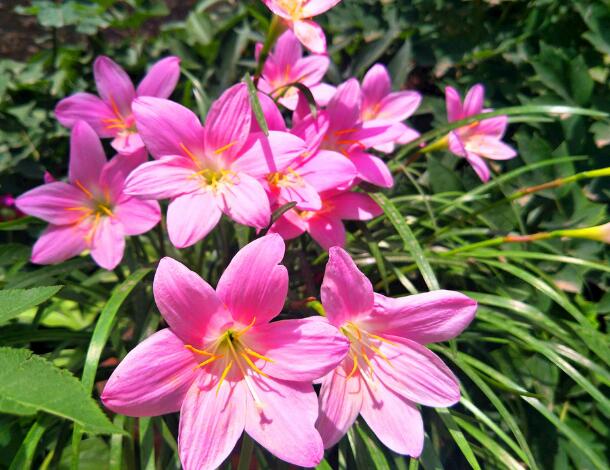
As for how to propagate Zephyranthes candida, it can roughly be divided into two propagation methods: seed sowing and division, and both have a fairly high survival rate, but only on the premise that the methods are correct. A detailed explanation of the propagation methods for Zephyranthes candida is provided below; interested friends can take a look.
II. Propagation Methods for Zephyranthes candida
Seed Propagation
1. Seed Collection
After Zephyranthes candida blooms, the seeds will mature in about 15-20 days, and that is when we can harvest them. After harvesting, soak the seeds in water for 3-5 days and they are ready for sowing.
2. Soil Selection
In the propagation methods for Zephyranthes candida, soil selection is a very important part. In this regard, we can choose a fairly loose humus soil; this kind of soil has good drainage and allows Zephyranthes candida to absorb nutrients better.
3. Sowing Method
After choosing the soil and seeds, we can proceed with sowing. The seeds of Zephyranthes candida are rather small, so when sowing we need to mix the seeds with fine sand and scatter them. After scattering, we need to cover them with 2 cm of soil, then water thoroughly once, and they will generally sprout in about 15 days; after that, carry out subsequent care as usual.
Division Propagation
1. Division Method
Among the propagation methods for Zephyranthes candida, division propagation is a relatively commonly used one. First, we need to dig the mother plant out of the pot soil, then separate the root system that has become tangled together using scissors. Each plant that is separated out must have roots; everyone should remember this point. After that, we can proceed with planting.
2. Planting Method
After dividing, we can proceed with planting. Simply plant the divisions directly in the chosen soil and water thoroughly; the soil choice is the same as above. After about 3-4 weeks, new roots will sprout, and then we can carry out normal care. For the care methods, everyone can refer to the article on how to grow Zephyranthes candida; we will not go into too much detail here.
How does Zephyranthes candida propagate by division, and how does it propagate by sowing?
Zephyranthes candida, Latin scientific name: (Zephyranthes candida), is a perennial herbaceous plant with an ovate bulb about 2.5 cm in diameter, with a distinct neck, and the neck is 2.5-5 cm long. The leaves are narrowly linear, thick and fleshy, bright green, 20-30 cm long and 2-4 mm wide. It is native to South America and the West Indian Ocean islands, and is now planted throughout China. It likes plenty of sunlight and tolerates partial shade. It is often used as a border material for flower beds, and is also suitable for mass planting in green spaces. It is best used as a groundcover plant in partially shaded areas under trees, or planted beside courtyard paths. It has the effects of reducing swelling and dissipating blood stasis.
Division Propagation Technique for Zephyranthes candida
Division Time
Carry it out in early spring (February, March) after the soil thaws.
Division Method
Take the mother plant out of the flower pot, shake off the excess pot soil, separate the tangled root system as much as possible, and cut it open into two or more plants with a sharp knife. Each plant that is separated out must have a considerable amount of roots, and its leaves should be pruned appropriately to help it survive.
Potting and Disinfection
Soak the divided small plants in a 1500-fold solution of chlorothalonil for five minutes, then take them out and let them dry, and they can be potted. Alternatively, immediately after potting, drench the roots with chlorothalonil. After the divisions are potted, drench the roots or water thoroughly once. Because its root system has been greatly damaged and its water-absorbing capacity is very weak, it takes about 3-4 weeks to recover and sprout new roots. Therefore, within 3-4 weeks after division, watering should be controlled to avoid root rot. However, the transpiration of its leaves is not affected, so in order to maintain the water balance of the leaves, the leaf surface needs to be misted 1-3 times a day (mist more when the temperature is high, and mist less or not at all when the temperature is low). Do not apply fertilizer during this period either. After division, also be careful of overly strong sunlight; it is best to place it in a shade shed for care.
Seed Propagation Technique for Zephyranthes candida
Sowing Time
Sowing Method
The seeds of Zephyranthes candida mature about 20 days after flowering, and must be harvested in time, because that period coincides with the rainy season and it is very easy for the seeds to germinate while still on the plant. Since it is fairly afraid of heat throughout the growing period, and the optimum sowing temperature is 15-20°C, autumn sowing is often carried out after mid-to-late September.
Substrate Disinfection
Disinfect the substrate used for sowing. The best method is to put it in a pot and heat it by stirring until hot, which can kill most diseases and pests.
Temperature Management
It likes a warm climate, but the high-temperature, stuffy environment of summer (above 35°C, with relative air humidity above 80%) is unfavorable for its growth; it has strict requirements for winter temperature, stopping growth when the ambient temperature is below 10°C, and it cannot overwinter safely when frost occurs.
Pest and Disease Control
The main problems harming Zephyranthes candida are insect pests, such as the Zephyranthes candida noctuid moth, which mainly harms plants such as Zephyranthes candida, Hippeastrum, and Lycoris, and is a secondary pest. In severe cases, the Zephyranthes candida noctuid moth can eat all the aboveground stems of Zephyranthes candida. Although after the stems and leaves of Zephyranthes candida are eaten by this insect, the aboveground parts can still sprout and grow, and it will not cause the death of Zephyranthes candida, its growth vigor is noticeably weakened.
Control Methods
Plow the soil in winter or early spring and dig out the overwintering pupae to reduce the pest population base; when larvae appear, spray with 1500-fold mian, 1500-fold lesiben, or 800-fold phoxim emulsifiable concentrate, choosing to spray in the morning or evening when the larvae come out to be active (feed), for a relatively good control effect.
Through the detailed introduction in this article, we hope everyone can gain something from it! Thank you all for your support of and attention to Duorou Huapu!
Propagation Methods for Zephyranthes candida
There are generally two propagation methods for Zephyranthes candida: sowing and division. The division method is more commonly used. The seeds of Zephyranthes candida mature about 20 days after flowering, and must be harvested in time, because that period coincides with the rainy season and it is very easy for the seeds to germinate while still on the plant. Since it is fairly afraid of heat throughout the growing period, and the optimum sowing temperature is 15-20°C, autumn sowing is often carried out after mid-to-late September.[Division Time]: Carry it out in early spring (February, March) after the soil thaws.
[Division Method]: Take the mother plant out of the flower pot, shake off the excess pot soil, separate the tangled root system as much as possible, and cut it open into two or more plants with a sharp knife. Each plant that is separated out must have a considerable amount of roots, and its leaves should be pruned appropriately to help it survive.
[Potting and Disinfection]: Soak the divided small plants in a 1500-fold solution of chlorothalonil for five minutes, then take them out and let them dry, and they can be potted. Alternatively, immediately after potting, drench the roots with chlorothalonil.
[Care After Division]: After the divisions are potted, drench the roots or water thoroughly once. Because its root system has been greatly damaged and its water-absorbing capacity is very weak, it takes about 3-4 weeks to recover and sprout new roots. Therefore, within 3-4 weeks after division, watering should be controlled to avoid root rot. However, the transpiration of its leaves is not affected, so in order to maintain the water balance of the leaves, the leaf surface needs to be misted 1-3 times a day (mist more when the temperature is high, and mist less or not at all when the temperature is low). Do not apply fertilizer during this period either. After division, also be careful of overly strong sunlight; it is best to place it in a shade shed for care.
[Potting or Transplanting]: First place a 2-3 cm thick coarse substrate at the bottom of the pot as a drainage layer, then place the plant in.