How to sow cockscomb? Soak the seeds in advance and mix them with sandy soil before scattering
Among the propagation methods for cockscomb, sowing is one of the more commonly used. Some people say the survival rate of this method is not high, but that is mainly because the sowing method is wrong. Master the right method and the survival rate is actually fairly high. So how do you sow cockscomb? Let me walk you through it below.
I. How to sow cockscomb
1. Sowing time
Choosing the right time to sow cockscomb is beneficial to its growth. This time is generally chosen in spring or autumn each year; the temperatures in these two seasons are relatively suitable and are quite good for cockscomb growth.
2. Soil selection
When it comes to how to sow cockscomb, soil selection is one of the more important steps. Although cockscomb does not have very high soil requirements, choosing a suitable soil can make it grow more robustly. For soil, we can choose a relatively fertile sandy soil; this kind of soil has good drainage and is very helpful for cockscomb growth.
3. Soaking the seeds
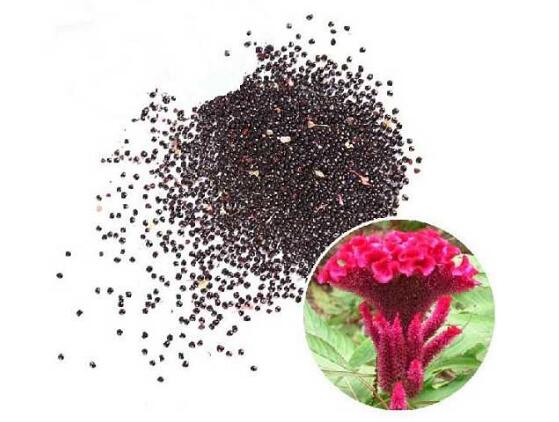
After choosing the cockscomb seeds, we first need to soak the seeds in cool water for about 5-6 days, which makes the seeds very easy to sprout. Cockscomb seeds are relatively small, so when sowing it is best to mix them with sandy soil and scatter them.
4. Sowing method
When it comes to how to sow cockscomb, first we need to level the potting soil, then evenly scatter the seeds mixed with fine sand over the soil surface, then cover them with about 2 cm of soil, and then water. When watering, it is best to use a spray bottle, because cockscomb seeds are small; if you water directly with a watering can, the seeds are easily washed away, so everyone should pay attention to this point. After sowing is completed, they will sprout in 7-10 days.
II. Care after sowing cockscomb
After cockscomb has been sown and has sprouted, we need to carry out follow-up care. Among these, the more important aspects are ornamental value and watering management. See below for specific management methods.
1. Light management
Cockscomb is a light-loving flower, so after sprouting it needs to maintain sufficient light. This allows it to carry out photosynthesis better and grow more quickly.
2. Watering management
Watering is an indispensable nutrient in the plant growth process, and cockscomb is no exception. However, the amount of water still needs to be controlled. Generally, keeping the soil at a certain level of moisture is enough. Waterlogging is strictly prohibited, because the seedlings are relatively fragile; if water accumulates, they can easily rot directly and die.
How to treat seeds before sowing
How to treat seeds before sowing
The common ordinary seeds we see, such as seeds of begonia and garden balsam, need no treatment and can be sown directly. For seeds with an oily or waxy seed coat, such as magnolia, plant ash can be added with water to form a paste, mixed with the seeds, and only then sown. For lotus, canna and others with harder seed coats, the seed coat needs to be nicked before sowing, soaked in warm water for 24 hours, and then sown. Seeds of flowering almond are sown before the ground freezes in early winter, and watered thoroughly; in winter the seed coats crack from freezing, and they can germinate the following spring. Before sowing, all kinds of seeds need a germination rate test. Generally take 100 seeds, soak them in warm water until swollen, place them in a container lined with moist gauze, and force germination at about 22°C to check the seed germination rate, so as to determine the sowing amount.
For woody flowers with thicker seed coats, before spring sowing it is generally necessary to force germination, so as to help seedlings emerge quickly and uniformly and achieve a high seedling rate. Germination forcing mostly uses methods such as water soaking and stratification.
1. Water soaking to force germination. Three water temperatures can be used: first, cold water soaking to force germination, water temperature above 0°C, suitable for seeds with thinner seed coats, such as wisteria, palm, wintersweet, and deodar cedar. Second, warm water soaking to force germination, water temperature 40°C-60°C, suitable for peony, Chinese peony, redbud, Chinese wingnut, Chinese scholar tree, oriental arborvitae, golden larch and others with thicker seed coats. Third, hot water soaking to force germination, water temperature 70°C-90°C, suitable for seeds with hard seed coats, such as silk tree, black locust, and camphor tree. When soaking seeds, the amount of water used is about 3 times that of the seeds. When pouring in the water, stir so the seeds are heated evenly. When using hot water to soak seeds, after the water temperature drops to natural temperature, stop stirring and soak for 13 days. After the seeds absorb water and swell, remove them and place them at 18°C-25°C to force germination. Drench with warm water 1-2 times a day, and be careful to turn them gently. After the seeds split open, they can be sown.
2. Stratification to force germination. So-called stratification to force germination means mixing three parts moist sandy soil with one part seeds, then keeping them moist and cold at 0°C-7°C. Southern magnolia, banana shrub, white magnolia, Caprifoliaceae, and seeds that can only germinate every other year all need stratification to force germination. In addition, for seeds with long dormancy or seeds that sprout every other year, a variable-temperature germination forcing method can be used, that is, after soaking the seeds, keep them at 25°C-30°C during the day and about 15°C at night, repeating for about 10-20 days, which can promote germination. For example, osmanthus, wintergreen, and coral tree can all use this method.
How to promote normal seed germination
Different types of flowers have different seed germination periods because of differences in seed coat structure and physiological characteristics. Some flowers, such as cineraria, garden balsam, and scarlet sage, will emerge quickly as long as they are sown at the right time; while some flowers need several months or even longer to germinate, so artificial germination forcing must be carried out to shorten the seed dormancy period. Here we introduce general common knowledge in flower sowing and propagation for everyone's reference.
I. Seed selection. Flower seeds used for sowing should be plump, free of pests and diseases, and uniform in maturity. Only in this way can strong seedlings sprout at the right time.
II. Seed treatment. Seeds of different flowers should use different treatment methods.
For seeds that germinate easily, the soaking method can be used. For example, scarlet sage seeds can be soaked in 40°C warm water for a day and night, rinsed clean, and then sown. For hard seeds such as asparagus fern, peony, orange jasmine, daphne, and crape myrtle, it is best to first soak them in 40°C warm water for 48 hours, then sow them in soil; only after 20 to 30 days can they sprout and grow. For pearl bush, redbud, weigela and others with a short dormancy period that germinate easily, soaking the seeds in 40°C to 60°C warm water for 24 to 48 hours allows direct sowing.
Some flowers, such as lilac, wintersweet, and some herbaceous flowers sown in autumn, need a period of low-temperature treatment (0°C to 10°C) to promote after-ripening and break embryo dormancy so they can germinate. The method is to mix the seeds with sand at 60% moisture, then put them in a plastic bag, tie the opening tightly, place it in a flower pot, and bury the whole pot 40 to 60 cm deep in the ground. The seeds can also be placed in a refrigerator at 3°C to 5°C for 60 to 90 days, then taken out in spring for sowing. They can also be sown in autumn so that the seeds pass through natural winter freezing outdoors and germinate and emerge the following spring. Some flowers, such as fringetree, viburnum, and Chinese peony, have seeds with the characteristic of double dormancy of radicle and hypocotyl, that is, their radicles also need 1 to 2 months or longer at a high-temperature stage of 25°C to 32°C to break dormancy. For such seeds, before sowing they need to be mixed with moist sand, go through a period of high temperature, and then shift to low temperature. After variable-temperature treatment, they can germinate when sown in spring.
III. Choosing the sowing period. Generally, annual flowers are not cold-resistant, so when planting in open ground they can be sown after the late frost. To promote earlier flowering and more blooms, seedlings can be raised early in a greenhouse or cold frame. Biennial flowers and perennial flowers are cold-resistant, and their seeds are suitable for germinating at low temperatures, so they are better sown in autumn. Most annual and biennial flowers can also be sown repeatedly. Considering the flowering period, sow in a planned way according to the number of days each flower needs from germination to flowering. Sowing of greenhouse flowers has no strict seasonal restriction and can be determined according to the desired flowering period. Seeds that are relatively small with loose, thin outer coats, such as chrysanthemum, asparagus fern, garden balsam, crape myrtle, and Chinese trumpet creeper, are suitable for sowing in late spring; seeds that are relatively large with hard outer coats or containing oil, such as Chinese rose, rose, pomegranate, kumquat, southern magnolia, and daphne, are suitable for sowing in autumn and winter; seeds that are relatively small, have thinner outer coats, and need high temperatures should be sown promptly after maturity, such as cineraria and cyclamen, which should both be sown in early summer, while China pink, pansy, and golden melon should be sown in late autumn.
IV. Sowing methods. By sowing location, they are divided into open-ground sowing and pot sowing; by method, they are divided into broadcast sowing, row sowing, and hole sowing. Before sowing, water thoroughly; after sowing, cover with plastic film, or cover the flower pot with a glass sheet to preserve moisture and prevent the soil from becoming too dry, which would affect seed germination and seedling emergence. The sowing depth should be about two and a half times the diameter of the seed. For very small seeds such as cockscomb, August chrysanthemum, cineraria, and begonia, mix them evenly with fine sand or soil powder before scattering. During seed germination, the sowing area should be sprayed with water to maintain moisture, but not too much, to prevent lowering the soil temperature or rotting the seeds and the roots of the seedlings.