How does Celosia reproduce? Sowing propagation has a high survival rate
Celosia is a plant with high medicinal value, which was introduced in the article on the efficacy and effects of Celosia, and precisely because of this, many people in our country grow it. However, before growing it, we must first understand how it reproduces. How does Celosia reproduce? What are the propagation methods of Celosia? Let me walk you through them below.
I. How does Celosia reproduce
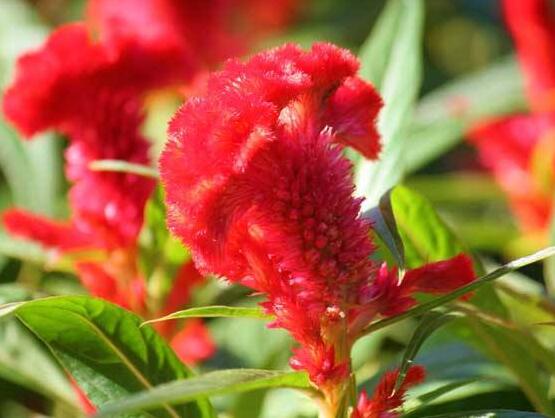
As for how Celosia reproduces, it can generally be divided into two types: sowing propagation and cutting propagation. As long as the methods are mastered correctly, the survival rate is still very high. Below is a detailed explanation of Celosia's propagation methods. Friends who are interested can take a look.
II. Propagation methods of Celosia
Sowing propagation
1. Early preparation
When propagating Celosia by sowing, it is best to choose spring and autumn, because the temperature is more suitable and the survival rate of sowing will also increase. In addition, for the soil, it is best to choose a relatively loose sandy soil. This kind of soil has good drainage and allows Celosia to absorb nutrients better.
2. Sowing method
Among the propagation methods of Celosia, sowing propagation is a relatively commonly used method. When sowing Celosia, we first need to soak the seeds in cold water for a few days, then mix them with fine sand and scatter them. After scattering, cover the seeds with about 2 cm of soil and then water them. Water thoroughly in one go, and be sure not to cause waterlogging.
3. Follow-up management
After sowing is completed, they will basically germinate in 7-10 days. After germination, we can carry out follow-up care. For the care methods, everyone can refer to the article on Celosia growing methods. I will not introduce too much here.
Cutting propagation
1. Early preparation
The early preparation for cutting propagation mainly involves selecting cuttings and soil. For the soil, everyone can refer to the above. When selecting cuttings, it is best to choose branches that grow robustly and are free of pests and diseases, as this will give a higher survival rate and make rooting easier. When taking cuttings, you need to first trim off the leaves at the bottom of the branch. Everyone must remember this.
2. Cutting method
Among the propagation methods of Celosia, cutting propagation is used by relatively few people, but if the method is mastered correctly, the survival rate is equally high. First, we can use chopsticks to poke a hole in the soil, then insert the branch. Generally, inserting one third is enough. After that, press the soil flat with your hands and water it. Then let it sit for about 15-20 days and it will root. After that, carry out follow-up care. The care method is the same as above.
How to sow Celosia, how to grow Celosia
Flower Bonsai Network introduction: Today the editor of Flower Bonsai Network will share with you an article on how to sow Celosia and how to grow Celosia. Flower friends, let's take a look.
How to sow Celosia
The most common propagation method for Celosia is sowing. The steps are simple and the survival rate is high. Today I will introduce to you how to sow Celosia and what needs attention.
Steps for sowing Celosia
Before sowing, spread some base fertilizer into the soil, such as barnyard manure, compost or cake fertilizer.
When sowing, because Celosia seeds are relatively small, it is best to mix some fine soil into the seeds, then broadcast them. The soil covering does not need to be too deep, 2-3 millimeters is enough.
After sowing, you can use a fine-nozzle watering can to spray an appropriate amount of water, and provide moderate shade. There is no need to water again within two weeks. Generally, they will germinate in about 7-10 days.
If sown in April-May, they can bloom in August-September.
Precautions for sowing Celosia
Celosia is generally sown in April-May each year. The best temperature is maintained at 20°C-25°C. Before sowing, keep the soil moist.
When the Celosia seedlings grow 3 or 4 leaves, thinning should be carried out. Remove some seedlings that are weaker in growth and too densely packed. When the seedlings grow to 5-6 cm, they can be transplanted and planted out. Note that when transplanting, take a small amount of root soil with them.
Other situations for sowing Celosia
If sowing during the Qingming period, you need to wait until there is no frost. Apply sufficient base fertilizer in the soil, evenly scatter the seeds on the ground, cover the seeds lightly and completely with fine soil, then water thoroughly to keep the land moist. If the ambient temperature is maintained at 15°C-20°C, seedlings can emerge in about 15 days.
If sowing in summer, it should be after Mangzhong. Sow at a row spacing of 30 cm. When the seedlings are 6 cm tall, thin them at a plant spacing of 20 cm. The thinned seedlings can be transplanted to other fields. After transplanting, be sure to water. During the seedling stage, be sure to weed and loosen the soil. When it is not too dry, water as little as possible. When the seedlings grow to 30 cm, apply a topdressing once.
Celosia can also be grown in a greenhouse, as long as attention is paid to temperature and humidity. But if Celosia in a greenhouse is to be planted outside, after germination and growing four leaves, it must be taken outside at night to harden off, letting it learn to adapt to the cold environment. Otherwise, the plant will grow thin and delicate and will soon die.
How to grow Celosia
Celosia, also known as Laolaihong, has red or greenish-white stems, and leaves in various colors such as dark red, emerald green, yellow-green, and red-green. Among the many kinds of flowers, some people like plants with small and exquisite flowers, while others like flowers that bloom very brilliantly. Today I want to introduce to you a flower that blooms very nobly and gorgeously - Celosia.
Planting methods for Celosia
Generally speaking, Celosia is mostly planted in the ground, and occasionally in pots. As for how to plant Celosia, it is actually very simple. Generally speaking, it starts with sowing. Collect seeds every year from August to October (ignore this step if buying seeds). Cut off the already mature Celosia, evenly pick off the seeds from the Celosia, and store them dry.
Start sowing in spring (around March-April). Loosen the soil well. If conditions permit, mix in an appropriate amount of base fertilizer. Then mix the Celosia seeds with fine soil, evenly scatter them on the soil, cover with fine soil, water thoroughly, and then keep the soil moist and wait for germination (about 1 week to germinate).
After Celosia germinates, watering should be properly controlled. Do not water too much. When the seedlings grow to 3-5 cm, some unhealthy seedlings can be properly removed, retaining healthy seedlings. They can be transplanted as needed. After transplanting, water promptly, but do not let water accumulate.
When the seedlings grow 2 leaves, transplant them, either into pots or in open ground. When potting Celosia, it should be planted slightly deep, leaving only the cotyledons above the pot soil. Use a 1:1 mixture of loam and fertile soil. If you want to cultivate large Celosia, you need to change to a larger pot, but be careful not to break the root ball, otherwise the recovery time after transplanting will be too long or the plant may even die.
During the growing period, Celosia needs sufficient light, with at least 4 hours of light guaranteed every day. When Celosia grows to about 30 cm, apply a topdressing once. After topdressing, cut off the excess leaves on the seedlings. When blooming, water appropriately more, and remove the excess flower buds on the Celosia stems.
Celosia flowering time: open-ground sowing is generally in April-May, and it can bloom in August-September. The most suitable flowering temperature is 24~25°C. If sown in June, it can bloom during the "National Day" holiday.
The inflorescences of Celosia vary in form. According to form, Celosia can be divided into: broom cockscomb, face cockscomb, mandarin duck cockscomb, tassel cockscomb, etc. According to appearance, it can be divided into: spherical flower type, plume flower type, and spear flower type. Each flower type has its own unique advantages and character. Sowing propagation is commonly used. For sowing, each gram contains 1200-1300 seeds, the suitable germination temperature is 21-24, and germination occurs 10-12 d after sowing. The seedling growth period is suitable; if the temperature is too high, the seedlings are prone to leggy growth. Celosia is a cross-pollinated plant, so seed production must be isolated to prevent hybridization and avoid affecting seed quality. When the seedlings have 3-4 leaves, transplant them into pots on a cloudy day, commonly using a 10 cm pot. Head-type Celosia is not pinched during the growing period, while spike-type Celosia is pinched when it has 7-8 leaves to promote more branching. In order to make the flowers on the main branch of Celosia larger, the side axillary buds should be removed promptly during the seedling stage.
For the soil, choose fertile, loose, well-drained sandy loam. Avoid waterlogged soil. In poor thin soil, growth is poor and the inflorescence becomes smaller. Light: Celosia likes sufficient sunlight. The plant grows robustly, the leaf color is deep green, the flowers are large, and the flower color is bright. If the light is insufficient, the stems and leaves are prone to leggy growth, the leaf color becomes pale green, and the flowers become smaller. A place with sufficient sunlight must be selected for producing potted Celosia.
When does Celosia bloom
Celosia is also known as Laolaihong. Generally, Celosia colors include red, white, and yellow. Due to its medicinal properties, the main color circulating in the flower market is red. So what season does Celosia bloom in? Let's take a look.
Friends who like Celosia must know that its flowering period is from July to October. Its vigorous vitality is as passionate as the scorching sun. It is generally divided into white and red. However, most people grow the red one, because traditional Chinese people believe that red can bring joy and good fortune. It also fits its name even better. If you want to see the elegance of Celosia, you must not miss it.
Celosia is an annual herbaceous plant. It likes a warm and dry climate, but is not drought-tolerant and is also afraid of waterlogging. It especially loves sunlight, but has low requirements for soil, and ordinary soil can grow it. Sowing is generally in April-May each year. Because Celosia is an annual plant, it grows very quickly, and the flowers will bloom 2-3 months after sowing. From summer all the way to autumn is the flowering period of Celosia.
Celosia has spike inflorescences that are mostly variable, growing at the top of the stem or the ends of branches, often shaped like a cockscomb, with colors including purple, red, light red, yellow, or mixed colors. The utricle splits transversely when ripe, containing 2 to several small black seeds. The flowering period is July-September. The fruiting period is September-October. Therefore, the flowering period of Celosia is from July to September each year, which means Celosia blooms in summer. According to form, Celosia can be divided into: broom cockscomb, face cockscomb, mandarin duck cockscomb, tassel cockscomb, etc. According to appearance, it can be divided into: spherical flower type, plume flower type, and spear flower type. Each flower type has its own unique advantages and character. Generally, the flowering period of Celosia is July-October, and the fruiting period is September-November.
Flowers are loved by many people. There are many kinds of flowers, and different flowers are different in color, shape, and growing environment. Therefore, different flowers also have their own characteristics. Flowers not only have ornamental value, but at the same time flowers are also somewhat helpful in treating diseases. Celosia is one of them.
Source: Yanghua Daquan, public account: yanghua98
When to sow Celosia? Celosia sowing time
"Blooming in the long summer and autumn, just like a rooster about to announce the dawn." Celosia is deeply loved for its unique flower shape and brilliant flower color, and is widely cultivated around the world. The propagation method of Celosia is usually sowing propagation, which not only has simple steps but also a high survival rate. So, when to sow Celosia? The sowing time, steps, and precautions for Celosia are introduced below.
Image: Celosia
I. Celosia sowing time
Celosia is generally sown in April-May each year. The best temperature is maintained at 20°C-25°C. Before sowing, keep the soil moist. When the Celosia seedlings grow 3 or 4 leaves, thinning should be carried out. Remove some seedlings that are weaker in growth and too densely packed. When the seedlings grow to 5-6 cm, they can be transplanted and planted out. Note that when transplanting, take a small amount of root soil with them.
II. Steps for sowing Celosia
Before sowing, spread some base fertilizer into the soil, such as barnyard manure, compost or cake fertilizer; when sowing, because Celosia seeds are relatively small, it is best to mix some fine soil into the seeds, then broadcast them. The soil covering does not need to be too deep, 2-3 millimeters is enough; after sowing, you can use a fine-nozzle watering can to spray an appropriate amount of water, and provide moderate shade. There is no need to water again within two weeks. Generally, they will germinate in about 7-10 days. If sown in April-May, they can bloom in August-September.
Image: Celosia
III. Precautions for sowing Celosia
If sowing during the Qingming period, you need to wait until there is no frost. Apply sufficient base fertilizer in the soil, evenly scatter the seeds on the ground, cover the seeds lightly and completely with fine soil, then water thoroughly to keep the land moist. If the ambient temperature is maintained at 15°C-20°C, seedlings can emerge in about 15 days. If sowing in summer, it should be after Mangzhong. Sow at a row spacing of 30 cm. When the seedlings are 6 cm tall, thin them at a plant spacing of 20 cm. The thinned seedlings can be transplanted to other fields. After transplanting, be sure to water. During the seedling stage, be sure to weed and loosen the soil. When it is not too dry, water as little as possible. When the seedlings grow to 30 cm, apply a topdressing once. Celosia can also be grown in a greenhouse, as long as attention is paid to temperature and humidity. But if Celosia in a greenhouse is to be planted outside, after germination and growing four leaves, it must be taken outside at night to harden off, letting it learn to adapt to the cold environment. Otherwise, the plant will grow thin and delicate and will soon die.
Image: Celosia
[Editor's concluding remarks]Celosia is generally sown in April-May each year. Because Celosia has strong adaptability, its survival rate is relatively high. The above introduced the sowing time, steps, and precautions for Celosia, hoping it can help everyone!