How to Propagate Peace Lilies? Division Is the Simplest Method with a High Survival Rate
If you follow the cultivation methods and precautions for peace lilies, they can grow very vigorously, so many people want to divide them into separate pots, which involves the question of propagation. So how do you propagate a peace lily in the best way? Today we will mainly introduce three propagation methods for peace lilies.
How to Propagate Peace Lilies
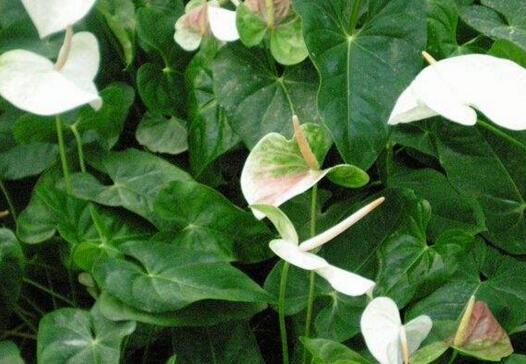
Most plants can generally be propagated by cuttings, but the peace lily is an exception, because it readily produces suckers, and if you use cuttings without professional techniques, the survival rate is relatively low. So other methods are usually used. How do you propagate a peace lily? The answer is division, sowing and tissue culture.
I. How to Divide Peace Lilies
1. Choosing the Time
Depending on the climate in different regions, the best time to divide peace lilies is from May to June each year, when the temperature is above 25 degrees. For peace lilies, which like high-temperature environments, this is quite suitable and helps the plants quickly resume growth after being separated.
2. Preparing the Potting Soil
Choose the pot size according to the number of plants; for 3-4 peace lilies, choose a small pot. The soil should mainly be loose, well-draining sandy soil, which can be made by mixing leaf mold and peat soil. Some perlite can be added, and base fertilizer can also be added to the bottom of the pot.
3. Selecting the Plants
Among the propagation methods for peace lilies, division is one of the easier ones to use. To ensure healthy growth of the plants after propagation, choose mainly vigorous plants when selecting them. After choosing the plants, carefully take them out of the potting soil, and keep some soil around the roots.
4. Planting in the Pot
Plant the selected plants into the prepared potting soil, then water them in moderation. Generally, keep 3-4 leaves per plant. As long as the roots are not damaged, they will take root after 15-20 days, and afterward normal care is all that is needed.
Precautions: Division can be done each year when repotting. It is best to divide one plant into 3 parts, not too many, and keep 3 leaves per plant with roots and new shoots, otherwise the survival rate after division will be affected.
II. Propagating Peace Lilies by Sowing
1. Sowing Time for Peace Lilies
If you use sowing among the propagation methods for peace lilies, the time is generally chosen in April-May each year, because the germination temperature needs to be 30 degrees, and this condition is easier to meet at that time.
2. How to Sow
Sprinkle the selected peace lily seeds onto the prepared potting soil, then lightly cover them with sandy soil to a thickness of about 2 cm. When the temperature reaches 30 degrees, they will begin to germinate. Generally, they germinate 15 days after sowing. If the temperature is too low, the seeds are prone to rotting.
3. Transplanting
After the new shoots grow out, the new seedlings can be transplanted into potting soil. Be careful to keep the soil moist, and do not let them be exposed to direct sunlight. After 45 days, adventitious buds can grow.
III. Tissue Culture Technique for Peace Lilies
Use the stems, leaves or lateral buds of the inflorescence of the peace lily as explants, disinfect them, and inoculate them on the culture medium. Then use hormones such as 6-BA to induce bud growth. After rooting, new seedlings will grow after 1 month of culture, and seedlings can emerge after 10 days.
Propagation Methods for Peace Lilies
The common propagation methods for peace lilies are sowing and division; large-scale cultivation uses tissue culture.
Propagating Peace Lilies by Division
Division Time
Division propagation of peace lilies should avoid low and high temperatures. Apart from that, it can be done throughout the year, but spring and autumn are most suitable. People usually divide them in March-May when repotting.
Division Steps
Select vigorous plants that have grown for about two years. Before buds sprout in early spring, take the plants out of the pots, remove the soil around the roots, and trim the rhizomes.
Lift the whole plant out of the pot, cut the rhizome apart from the base of the clump, with at least 3-4 leaves per clump, being careful not to damage the roots. After division, plant them separately, then place them in a semi-shaded place to recover.
Precautions for Division
Repot once each year in early spring before a large number of new buds sprout; division is most suitable at this time. According to the plant's growth condition, after division repot into a slightly larger pot, which is more conducive to root development and vigorous growth.
After division, frequently loosen the surface soil so that the potting soil stays loose and airy. As long as the temperature is suitable, it can grow well all year round.
Propagating Peace Lilies by Sowing
Sowing propagation of peace lilies is relatively rarely used, because peace lily seeds are not easy to obtain. It takes 10-15 months from pollination to seed maturity, and it is often used for preserving native varieties and breeding hybrid varieties.
Sowing Method
Disinfection: Sowing is usually carried out in a greenhouse, and the soil must first be disinfected. Place the planting soil in the sun to bake, or water it with a disinfectant.
Seed soaking: Before sowing, soak the seeds in warm water at 40°C for 10 hours, let them dry slightly in a cool place, then sow.
Sowing: Sow the seeds in pots in a greenhouse, then cover with a thin layer of soil, and use spraying or the bottom-soaking method to keep the soil moist. During sowing, control the temperature at 25-28°C. If the temperature does not meet the standard, cover the pot opening with plastic film and maintain humidity above 80%.
Care After Sowing
For most varieties, germination occurs 20-25 days after sowing. But if the temperature is unsuitable or the room temperature is too low, it will not only affect emergence but also cause the seeds to rot. So control the temperature at around 20°C and water appropriately.
After emergence, when the seedlings grow 1-2 true leaves, they can be planted in separate pots. After planting, spray a dilute liquid fertilizer so the seedlings grow vigorously.
Peace lilies propagated by sowing can only bloom after 3-6 years of care, but after 2-3 years they can have foliage value.
Tissue Culture of Peace Lilies
Tissue culture is the main method for large-scale propagation of peace lilies. The home environment and technical conditions cannot meet the requirements. The editor will briefly introduce it here, just as general knowledge!
Disinfection of Explants
Tissue culture mainly uses explants such as the stem tips, stem segments, leaves and inflorescences of peace lilies, soaking them in alcohol for 30 seconds, then soaking them in 0.1% mercuric chloride for 10 minutes for disinfection. After disinfection, culture them on MS (the name of the nutrient solution) as the basic medium, and use hormones to induce bud growth; roots will soon grow.
Rooting and Hardening Off
When rooting culture has proceeded for about 30 days and the seedlings are more than 2.0 cm tall, harden them under natural light for another 10 days before removing them from the bottles. The main purpose of hardening off is to enhance the plants' disease resistance and adaptability to the external environment.
Transplanting
When transplanting, use tweezers to take the test-tube seedlings out of the culture bottles, wash off the culture medium from the roots, and plant them into a substrate made of half sand and half perlite. Pay attention to watering, shading and heat preservation; the survival rate can generally reach more than 95%. About 40 days after transplanting, they can be potted for cultivation.
Tissue-cultured peace lilies may seem very distant from us, but perhaps the potted peace lily in your home was obtained this way!
How to Propagate Peace Lilies, Propagation Methods for Peace Lilies / Cannot Be Propagated by Cuttings / Division Is the Most Practical
The peace lily, also called spathe flower, has pure white flowers and is a beautiful flowering plant with an auspicious meaning, deeply loved by flower enthusiasts. When it comes to indoor flower propagation, everyone thinks of cuttings. So can peace lilies be propagated by cuttings? If not, how do you propagate a peace lily? The following are the three major propagation methods for peace lilies; division is the most practical. Let's take a look.
I. How to Propagate Peace Lilies: Division / Sowing / Tissue Culture
As a beginner, knowing the cultivation methods for peace lilies is enough; but if you are experienced, besides knowing how to grow them, you should also master the propagation methods for peace lilies, which can add to the fun of growing them. As for how to propagate peace lilies, as far as the editor knows, there are three common methods: division, sowing and tissue culture. The specific operation methods will be introduced in detail for everyone.
Extension: Can Peace Lilies Be Propagated by Cuttings? No.
As common indoor potted plants, basically all can be propagated by cuttings, but the peace lily is very special: it cannot be propagated by cuttings. The reason is that peace lilies readily produce suckers, and cuttings easily die, so division is mostly used for propagation. So can peace lilies be propagated by cuttings? Obviously not. Below are three commonly used propagation methods for peace lilies. Let's continue reading.
II. Propagation Methods for Peace Lilies
(1) Steps for Propagating Peace Lilies by Division
① Division Time
If you want a high survival rate when dividing peace lilies, choosing the right time is also key. Generally, division can be done around May each year. Of course, other months are also possible, but it is best to avoid seasons that are too cold or too hot. It is worth mentioning that vigorous peace lilies can be divided once about every 2 years.
② Division Method
Before division, stop watering for 2 days so the potting soil will not be sticky. Then lift the whole peace lily out of the pot and carefully remove the potting soil. To be safe, if it does not affect division, try to keep some soil on the roots, which can prevent wilting after repotting.
Generally speaking, peace lilies will not sprout before they are absolutely mature. For this, people usually artificially damage the growth point. Each small clump should preferably have more than 3 stems and buds, and should carry as many roots as possible, so that the new plants can quickly send out new leaves and have a full plant shape. When the new shoots grow to about 15 cm, cut them apart, then insert them in coarse sand and wait for them to take root.
(2) Propagation Method for Peace Lilies by Sowing
After peace lilies bloom, seeds can be obtained through artificial pollination, so sowing can be chosen as a propagation method for peace lilies. Method: After the peace lily seeds mature, they can be sown immediately after collection. The sowing temperature should be around 25°C; if the temperature is low, the seeds easily rot and emergence is affected.
(3) Tissue Culture Propagation of Peace Lilies
Households can use the division propagation method, but traditional division propagation of peace lilies simply cannot meet market demand. Now tissue culture can be successfully used to rapidly propagate their seedlings. Method: First plant the tissue-cultured seedlings in plastic trays. When they grow to 4—5 leaves, they can be divided and planted. After 3—4 rounds of repotting and transplanting, when the seedlings are about 30 cm tall they can be planted, and then managed according to conventional cultivation.
That is all the editor has to introduce about propagation methods for peace lilies. Although division is a bit more troublesome compared with cuttings, as long as we operate properly, beginners can do it too~ If you only have one pot of peace lilies, it can indeed look a bit monotonous sometimes, but once you master division propagation, none of this is a problem. As long as everyone gives it a try, turning one pot into ten pots will become a reality.