How to Propagate Figs: Detailed Guide to Cutting, Division and Layering Methods
The fig is a plant that people are relatively familiar with, and many people grow it in all regions of our country. As more people grow figs, people are also more concerned about the question of how to propagate them. As for how to propagate figs? It can actually be divided into three types: cutting, division and layering. So how exactly should the fig propagation methods be carried out? Below, the editor will guide everyone through it.
I. How to Propagate Figs
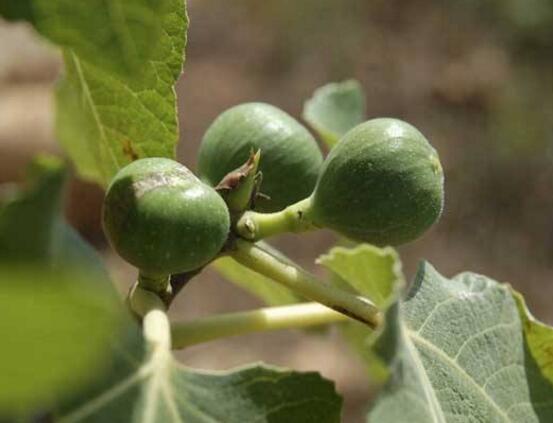
The three propagation methods of cutting, division and layering are all relatively suitable for figs. So which fig propagation method works best? They are actually all about the same; as long as the methods are mastered well, the survival rates of these three methods are all relatively high. The details of fig propagation methods are given below, so let us continue reading.
II. Fig Propagation Methods
1. Cutting Propagation
a: Preliminary Preparation
When carrying out cutting propagation of figs, we first need to select relatively healthy branches, as this will give a higher survival rate. If relatively weak and slender branches are selected, the survival rate will be greatly reduced, and everyone needs to pay attention to this point. After selecting the cuttings, we also need to choose the soil. For this point, everyone can refer to the article on fig cultivation techniques, which has detailed introductions, so the editor will not repeat them here.
b: Cutting Method
Among fig propagation methods, cutting propagation is a relatively commonly used method, and its survival rate is also relatively high. After completing the preliminary preparations, we can carry out the cutting. When cutting, we can first use chopsticks to poke a hole in the potting soil, which makes cutting go more smoothly and makes it less likely to damage the cuttings.
We can directly insert the cuttings into the hole, then press the soil flat, after which we can water. When watering, just water thoroughly once, and be sure not to cause waterlogging, otherwise root rot is very likely to occur. After the cutting is completed, roots can basically form in about one month, and after that normal care is all that is needed.
2. Division Propagation
When carrying out division propagation of figs, it is generally best to do it around February to March each year, as this gives a higher survival rate. First, we need to dig away the soil, and we can see that there will be some suckers at its roots. At this time, we need to use scissors to cut out the suckers together with the roots, and then plant these root seedlings at a row spacing of (3~4) m × (3~4) m.
3. Layering Propagation
Among fig propagation methods, layering propagation is one of the less commonly used methods. When carrying out layering propagation, we first need to bury branches close to the soil into the soil, and then when they grow roots and seedlings, we can cut off this branch and care for the new roots. It is actually a relatively simple propagation method.
Fig Propagation Methods
The fig is a flowering plant belonging to the mulberry family, genus Ficus, mainly growing in some tropical and temperate places, and is a subtropical deciduous small tree. There are many ways to propagate figs, such as cutting, division and layering, all of which can propagate figs. For ordinary flower lovers, cutting is the simplest and quickest way, and it has the advantages of maintaining variety characteristics and fast propagation speed. For cuttings, mostly after leaf fall in autumn or before sap flow in early spring, cut branches about 20 cm long as cuttings, insert them into sand or vermiculite, keep them moist, and under a temperature condition of 20~25°C, roots can form in about 1 month. After the surviving figs are given strengthened fertilizer and water management, they can bear fruit the following year.1. Fig Propagation - Cutting
Cutting can be carried out in a clay pot (tile pot) with a diameter of more than 20 cm. This type of pot is rough in texture, cheap, convenient to use, and also has good water permeability and air permeability. The substrate for cutting can be clean river sand (or construction sand) and humus soil with high organic matter content. Both should be sun-dried thoroughly before use, and larger stones in the sand and soil should be removed as much as possible to make the substrate more uniform. Then mix the two in equal volumes and put them into pots for later use.
Cutting can be carried out from early March to early May before the branches unfold leaves. For the cuttings, take plump, disease-free branches from adult trees, retain more than 2 nodes, cut them into small sections of about 20 cm, and cut both the top and bottom flat. After soaking them in sun-dried tap water, use a soft-bristled brush such as an old toothbrush to brush away surface dust.
Insert the branches evenly into the pot at a slight tilt. Generally, a clay pot with a diameter of 20 cm can hold 4~5 branches. Both the part buried in the soil and the part exposed on the surface should retain at least one node. After pressing firm, cover the surface with about 1 cm of sand and water thoroughly. Bend bamboo slices or iron rods into an arch shape and place them on the pot as a support, then cover with colorless plastic film or an ordinary colorless plastic bag, and tie it tightly around the outside of the clay pot with cloth strips to ensure the plastic bag is stretched tight. At the upper positions of the two slopes of the small arched shed, cut a small hole of about 1 cm2 each for ventilation. Place the flowerpot in a place indoors where sunlight can reach, such as a windowsill, and avoid touching it. Observe the moisture situation once every 2 weeks to ensure the sand and soil remain moist. When most branches have grown 4~5 leaves, the plastic bag can be removed to harden the seedlings. When the leaves turn dark green after two weeks of hardening, they can be transplanted outdoors.
II. Transplanting of Grown Seedlings
Because figs have strong salt tolerance and tolerance to barren soil, and do not have strict requirements for soil, whether to apply base fertilizer can be decided according to actual conditions.
After transplanting, a simple small arched shed can be built on the seedbed. The height and size of the shed can be adjusted according to the height of the seedlings, and generally it should be ensured that the leaves are more than 20 cm away from the shed film to prevent them from being close to the film and being burned by high temperature. Press the soil firm around the shed, and cover the shed with a shade net or newspaper. According to the recovery and growth of the seedlings in the shed, gradually increase the size and number of ventilation openings. Later, the two ends of the small shed can be opened until the small shed is completely removed. After removing the shed, water thoroughly and loosen the soil in time, then cover the ground around the seedlings with withered grass.
III. Main Technical Points of Cutting
Selection of branches: Choose healthy and thick branches. Cuttings from branches when sap begins to flow at the end of April have a high survival rate and grow quickly. At the same time, wounds with relatively thick cut surfaces on the mother tree should be painted with paint to reduce bleeding and prevent drying out.
Water management during seedling hardening: Water management after the cuttings survive is crucial. At this time, the newly grown young roots are relatively tender and have poor resistance, being neither tolerant of waterlogging nor drought. Once slight leaf wilting appears, water should be given in time. If all leaves wilt, the seedlings are very likely to die. Note that continuous excessive watering can also cause young roots to rot, resulting in seedling death. In the early stage of seedling hardening, the pots can be moved to a place without direct sunlight.
IV. Fig Propagation - Division
For fig division, root suckers often sprout at the root crown. In spring and autumn, dig away the surface soil, dig out the root suckers around the mother plant's root crown together with their roots, and plant them separately.
V. Fig Propagation - Layering
This method is relatively simple, so it will not be introduced much; it is the same as the layering method for ordinary flowers and plants.
VI. Fig Cultivation and Management
Soilless cultivation of figs is mainly based on potted plants and bonsai. Flower pots are often ordinary plastic flowerpots or deep purple clay pots. The soilless substrate should be selected according to the root characteristics of figs. Generally speaking, a mixed substrate of ceramsite and vermiculite, peat or perlite, peat, furnace slag, etc. in equal amounts can meet the requirements.
When potting figs, add a layer of ceramsite or coarse furnace slag at the bottom of the pot as a drainage layer, then fill in the mixed substrate and plant the seedlings well. After planting, the first watering should be thorough, place in semi-shade for about 1 week, and after the seedlings recover, gradually move them to a place with sufficient light for normal management. Generally, apply nutrient solution once every 7-10 days, 100~150 ml each time; at ordinary times, add water to keep the substrate moist. On the day of applying nutrient solution to figs, do not add water; the next day water thoroughly once, so as to dilute the nutrient solution concentration and facilitate absorption by the plant roots.
In northern regions, they can be moved outdoors to a place with sufficient sunlight at the end of April or early May for care. In the hot midsummer season, proper shading should be provided around noon, and water can be sprayed on the branches and leaves 2-3 times a day to achieve the purpose of cooling and increasing humidity. From before fig flowering to the young fruit swelling stage, spray 0.2% potassium dihydrogen phosphate liquid fertilizer 2 times to promote fruit setting and fruit growth. Before winter, move indoors to a cool place to overwinter, stop applying liquid and watering, and keep the temperature at around 0°C.
In order to make figs bear more fruit and have a beautiful tree shape, pruning is needed every year. Pruning must be carried out in early spring before sap flow to avoid bleeding and affecting the fruit set of that year. Generally, it is often pruned into a single trunk with main branches and side branches, forming a clustered round-headed crown.
In addition, figs also have certain medicinal value. They can be used to strengthen the stomach and clear the intestines, reduce swelling and detoxify. They treat enteritis, dysentery, constipation, hemorrhoids, sore throat, carbuncles, scabies and ringworm, benefit the throat, stimulate appetite and expel worms. They can also be used for poor appetite, abdominal distension and pain, hemorrhoids and constipation, indigestion, hemorrhoids, rectal prolapse, diarrhea, insufficient milk, sore and swollen throat, heat dysentery, cough with profuse phlegm, and other symptoms.
Fig Ficus carica Linn. Fig Illustrated Guide: How to Grow Figs / How to Propagate Figs
Fig ProfileFig Ficus carica Linn.
Aliases: Ari, Ayi, Yingri Guo, Youtanbo, Miguo, Wenxian Guo, Naijiang Guo, Pinxian Guo
Classification: Tree flower
Family and Genus: Plantae, Angiosperms, Dicotyledoneae, Urticales, Moraceae, Ficus
Full bloom period: Summer
The fig (Ficus carica Linn.) is a flowering plant belonging to the mulberry family, genus Ficus, mainly growing in some tropical and temperate places, and is a subtropical deciduous small tree. There are currently about eight hundred known varieties of figs, the vast majority of which are evergreen varieties, and only those growing in temperate places are deciduous varieties. The fruit is bulbous in shape, with a small hole at the tail end, and pollen is spread by wasps. Also known as Aza (from Youyang Zazu, transliterated from Persian: anjir). Besides being eaten fresh and used medicinally, figs can also be processed into dried figs, preserved fruit, jam, juice, fruit tea, fruit wine, beverages, canned goods, etc. Dried figs have no...
Fig Cultivation Methods and Precautions Introduction to Figs
The fig (Ficus carica Linn.) is a flowering plant belonging to the mulberry family, genus Ficus, mainly growing in some tropical and temperate places, and is a subtropical deciduous small tree. There are currently about eight hundred known varieties of figs, the vast majority of which are evergreen varieties, and only those growing in temperate places are deciduous varieties. The fruit is bulbous in shape, with a small hole at the tail end, and pollen is spread by wasps. Also known as Aza (from Youyang Zazu, transliterated from Persian: anjir). Besides being eaten fresh and used medicinally, figs can also be processed into dried figs, preserved fruit, jam, juice, fruit tea, fruit wine, beverages, canned goods, etc. Dried figs contain no chemical additives at all and have a rich, sweet taste. Fig juice and beverages have a unique fresh fragrance, promote salivation and quench thirst, and are suitable for young and old alike. Fig trees have luxuriant branches and leaves and an elegant tree form, with relatively good ornamental value, and are a good landscaping and courtyard ornamental tree species. They bear fruit in the same year they are planted, making them one of the best potted fruit trees. If fig bonsai are vigorously developed, the benefits will be very obvious, and they are currently one of the potted fruit trees with the highest profit margins. In the Bible (New Testament) there is also the story of the fig and Jesus (the four Gospels).
Fig Morphological Characteristics and Appearance
The fig is a deciduous shrub, 3-10 m tall, much branched; bark grayish brown, lenticels obvious; branchlets upright, thick and strong.
Leaves
The leaves of the fig are alternate, thickly papery, broadly ovate, with length and width nearly equal, 10-20 cm, usually 3-5 lobed, the small lobes ovate, with irregular blunt teeth at the edges, rough on the surface, densely covered on the back with small cystoliths and gray short pubescence, the base shallowly heart-shaped, basal lateral veins 3-5, lateral veins 5-7 pairs; petiole 2-5 cm long, thick and strong; stipules ovate-lanceolate, about 1 cm long, red.
Flowers
Figs are dioecious. Male flowers and gall flowers grow together on the inner wall of a syconium; male flowers grow at the mouth of the inner wall, with 4-5 perianth segments and 3 stamens, sometimes 1 or 5; gall flowers have lateral, short styles; female flowers have the same perianth as male flowers, the ovary is ovate, smooth, the style is lateral, and the stigma is 2-lobed, linear.
Fruit
The syconium is solitary in the leaf axils, large and pear-shaped, 3-5 cm in diameter, sunken at the top, purplish red or yellow when mature, with 3 basal bracts, ovate; the achene is lens-shaped.
The flowering and fruiting period of figs is May to July.
Fig Ecological Habits
Figs prefer a warm and humid climate, tolerate barren soil, resist drought, and are not tolerant of cold or waterlogging. Cultivation is suitable in sunny, deep, loose and fertile sandy loam or clay loam with good drainage.
Fig Cultivation Techniques: Planting
They can be cultivated in pots or on barren slopes, in fields and in courtyards. When cultivated using barren slopes, fields, courtyards, etc., the planting density is generally appropriately increased; a density of 1×2 m can be used, and each planting pit should be 50-70 cm deep. With a diameter of 40-60 cm, use mixed fertilizer containing phosphorus and potassium (such as human and livestock manure, poultry manure, green manure, cake fertilizer, chemical compound fertilizer) as base fertilizer. The suitable planting time in North China should be around Qingming, in Northeast China it should be around Guyu, and in the south it can be transplanted and planted after leaf fall in autumn, but the flowering and fruiting period should be avoided.
Shaping and Pruning
The shaping and pruning of figs is relatively simple, and the technical requirements for pruning and shaping are not high. Generally, the multi-main-branch natural open-center shaping method is used, but 3-5 main branches should be retained for the whole plant, with no side branches kept, and branch groups growing directly on the main branches. During the young tree period, focus on cultivating the main branches, and pay attention to raising the angle of the main branches to promote the growth of more branches, achieving the goal of rapidly expanding the crown. After entering the initial fruiting period, focus on cultivating more branch groups so as to promote the formation of a certain yield. During the full fruiting period, pay attention to cultivating scaffold branches, renewing medium and large branch groups, and pruning and shrinking weak branch groups. For trees that are aging or severely affected by pests and diseases, the sprouting branches or latent buds growing from the base or branches can be used to re-cultivate main branches and branch groups.
Figs begin in mid-July and mature successively until November. Fig harvesting is generally best carried out in the morning or evening on sunny days. Harvest when a small hole at the top of the ripe fruit is slightly open and the peel shows the color of the inherent variety (mostly divided into red and yellow varieties). Overripe fruit is not resistant to storage and transportation after harvest.
Field Management
After the plants survive, loosen the soil and weed. Apply human manure or ammonium sulfate once each in June and July. After planting, cultivate the crown to form a non-layered tree form, or a multi-main-branch natural open-center tree form. Generally, the trunk can be headed at a height of 50 cm, retaining 5~7 main branches, and side branches can be appropriately selected to fill gaps. After the trunk shape is set, prune every year to remove dense branches, pest-diseased branches and dead branches. Thinning should mainly be light pruning. For those mainly harvesting autumn fruit, the fruiting branches can be cut back leaving 2~3 buds; if mainly harvesting summer fruit, then cutting back is not suitable.
During the growth period of young fig trees, fertilizer should be applied if the base fertilizer is insufficient. The method is to apply about 5 kg of decomposed miscellaneous fertilizer per plant at about 40 cm from the main root; for potted plants, apply at least 1 kg. For mature trees, apply about 15 kg of decomposed farmyard manure per plant. Apply base fertilizer before and after leaf fall, and topdressing is best applied during the peak new shoot growth period and the rapid fruit swelling period. The fig is a fruit tree that is relatively tolerant of fertilizer, but emphasis should be placed on applying phosphorus and potassium fertilizer. Generally, the ratio of nitrogen, phosphorus and potassium is 0.5:1:1. Because it is relatively drought-tolerant and not tolerant of waterlogging, the water demand is relatively large during new shoot growth and fruit swelling, but long-term waterlogged or heavily accumulated water environments can easily cause flower drop, fruit drop, leaf drop, and even death, so attention should also be paid to drainage and water removal. Potted plants should also be paid attention to for drainage, especially in continuous rainy seasons after heavy rain or rainstorms, where rain sheltering or turning the pot to control water should be noted.
Fig Propagation Methods
Figs are propagated by cutting, division and layering, especially mainly by cutting propagation.
Cutting Propagation
In mid-to-late March, select from excellent mother plants healthy branches 1~3 years old that have not yet sprouted, with short internodes and branch thickness of 1~1.5 cm, cut them into cuttings 30~50 cm long, open furrows at a row spacing of 50 cm, insert obliquely into the soil for two-thirds, leaving the rest exposed above the soil, fill and press firm, and water to keep the soil moist. For summer cutting, semi-lignified green branches can be used for cutting. Roots form about 1 month after cutting. After 1 year of cultivation, they can be transplanted. The cuttings can also be stored in wet sand for 1 month to form callus tissue before cutting.
Division Propagation
Carry out division and planting in February to March, and plant by opening holes at a row and plant spacing of (3~4) m × (3~4) m. Pruning should be done before planting, removing dense branches or dead branches, and planting before sap flow or before leaf unfolding is best.
Fig Disease and Pest Control
Figs suffer relatively few pests and diseases. During the fruit growth period, the special odor released around them easily attracts mulberry longhorn beetles; when the fruit is ripe, it is easily damaged by birds. Besides manually catching mulberry longhorn beetles and driving away birds, insect eggs can be eliminated manually or with chemicals. Scarecrows tied with colored plastic strips can also be inserted in the field to drive away birds.
Fig Variety Classification: Lanruike
A dual-purpose variety for summer and autumn fruit, with few summer fruits and mainly autumn fruits. Summer fruits are oval, greenish yellow when mature; autumn fruits are inverted conical or obovate, with an average single fruit weight of 50-60 g, peel yellowish brown, fruit hollow; flesh reddish brown, containing more than 16% soluble solids, sweet and aromatic. This variety has a moderate tree vigor, a semi-open tree posture, a dwarfed tree body, weak branching, strong continuous fruiting ability, not high yield, cold tolerance, and strong salt tolerance.
Penglai Shi
A variety dedicated to autumn fruit, with very few summer fruits. Autumn fruits are inverted conical or ovate, with a round and slightly flat fruit top that cracks easily, single fruit weight 60-70 g, thick peel, purplish red; flesh bright red, containing 16% soluble solids, relatively sweet, but the flesh is coarse and has no aroma. This variety has very strong tree vigor, an upright tree posture, a tall crown and vigorous growth. Branches are sparse, long and thick, and cold tolerance is good.
Qingpi
A dual-purpose variety for summer and autumn fruit, mainly autumn fruit. Autumn fruits are inverted conical, single fruit weight 60-80 g, maximum more than 120 g, light green when mature, the fruit top does not crack, but the fruit shoulder has cracks, flesh purplish red, hollow, containing more than 16% soluble solids, with excellent flavor. This variety has vigorous tree vigor, a semi-open tree posture, thick branches, relatively few branches, medium cold tolerance, strong disease resistance, and relatively strong salt tolerance.
Fig Distribution Regions
Figs originated along the Mediterranean coast. They are distributed from Turkey to Afghanistan. In China, they were introduced from Persia during the Tang Dynasty, and are now cultivated in both the north and south, **especially in the south.
Fig Dietary Therapy or Medicinal Value
The medical information and health dietary therapy information on Huhua.com is for reference only and cannot be used as a basis for diagnosis or medical treatment. Any health problems should be consulted with professional medical personnel, and treatment of any disease should follow doctor's advice.
Ultimate flower-protecting task: To love yourself, start from reality and strictly follow doctor's advice. For illness, do not be careless, do not delay, do not give up hope, face it bravely, use love to warm the silent world, and use your heart to care for the flower field within.
Medicinal Value
Strengthens the stomach and clears the intestines, reduces swelling and detoxifies. Treats enteritis, dysentery, constipation, hemorrhoids, sore throat, carbuncles, scabies and ringworm, benefits the throat, stimulates appetite and expels worms.
Used for poor appetite, abdominal distension and pain, hemorrhoids and constipation, indigestion, hemorrhoids, rectal prolapse, diarrhea, insufficient milk, sore and swollen throat, heat dysentery, cough with profuse phlegm, and other symptoms.
Diannan Bencao: Apply to all unnamed swellings and toxins, carbuncles, scabies, leprosy and ringworm sores, yellow water sores, fish-mouth and stool toxin, breast nodules, and broken smallpox sores; mix with sesame oil and apply.
Bianmin Tuzuan: Treats throat diseases.
Wang Ying, Shiwu Bencao: Stimulates appetite, stops diarrhea and dysentery.
Gangmu: Treats five types of hemorrhoids, sore throat.
Shengcaoyao Xing Bei Yao: Wash hemorrhoids. The fruit, cooked with meat, resolves a hundred toxins. The core, promotes lactation.
Yilin Zuanyao: Benefits the lungs, promotes lactation.
Suixiju Yinshi Pu: Clears heat, moistens the intestines.
Jiangsu Zhiyao Zhi: The white latex of the fresh fruit applied externally removes warts.
Yunnan Zhongcaoyao: Strengthens the stomach and stops diarrhea, removes phlegm and regulates qi. Treats poor appetite, indigestion, enteritis, dysentery, sore throat, cough with profuse phlegm, and chest tightness.
Common Attached Prescriptions
To treat stabbing throat pain: Dry fresh figs in the sun, grind into powder, and blow into the throat. (Quanzhou Bencao)
To treat hoarseness from lung heat: Five qian of figs, decoct in water and mix with rock sugar to take. (Fujian Zhongcaoyao)
To treat hemorrhoids, rectal prolapse, and constipation: Eat fresh figs raw, or take ten dried fruits and one section of pig large intestine, decoct in water and take. (Fujian Zhongcaoyao)
To treat chronic diarrhea: Five to seven figs, decoct in water and take. (Hunan Yaowu Zhi)
To promote milk: Two liang of figs, two liang of sweet potato root, four to six liang of daylily root, two liang of milk vine. Stew with pig front trotters and take. (Chongqing Caoyao)
150 g of figs, decoct in water and add an appropriate amount of rock sugar to take, treats hoarseness from lung heat, cough and sore throat.
Eat two fresh figs raw, or cook ten dried fruits together with one section of pig large intestine and eat, treats hemorrhoids, rectal prolapse, and constipation.
Ten fresh figs, decoct in water and wash the affected area, treats external hemorrhoids.
Two figs, 10 g of fennel, decoct in water and take, treats hernia.
An appropriate amount of fig branches, decoct in water and take, two or three times a day, treats enteritis.
Mash figs into half a cup of juice, take with boiling water, once a day, until cured, treats asthma.
10 g of fig leaves, decoct in water and drink as tea, treats jaundice.
Remove the rough skin from fig roots, crush them, soak in boiling water and take, treats itchy throat.
Fresh tender fig leaves, wash clean, mash and squeeze the juice, take half a cup each time with warm boiled water, treats accidental poisoning from eating fish or crabs, abdominal pain, and vomiting.
Fig Pork Soup: 250 g of lean pork, cut into small pieces, 100 g of figs (dried), cook together as soup, season with an appropriate amount of salt and eat. It has the effect of regulating the intestines and strengthening the stomach, detoxifying and reducing inflammation, and treats hemorrhoids and chronic enteritis.
Suitable Groups
Generally, all people can eat it.
Suitable for people with indigestion, people with poor appetite, patients with hyperlipidemia, patients with hypertension, patients with coronary heart disease, patients with arteriosclerosis, cancer patients, and people with constipation.
Not suitable for patients with fatty liver, patients with cerebrovascular accidents, people with diarrhea, patients with normal potassium periodic paralysis, etc.; people with loose stools should not eat it raw.
Fig Landscape Uses
The fig tree has an elegant tree posture and is an ornamental tree for courtyards and parks. It generally does not require pesticides and is a purely natural pollution-free tree. Its leaves are large, palmately lobed, and rough on the surface, with a good dust-absorbing effect. If configured together with other plants, it can also form a good noise-proof barrier. Fig trees can resist toxic gases and air pollution that ordinary plants cannot tolerate, and are a good tree species for greening chemical pollution areas. In addition, figs have strong adaptability, resist wind, tolerate drought, and tolerate salt and alkali. Planted in arid sandy wasteland areas, they can play a role in windbreak and sand fixation and greening barren beach land.
The Benefits and Uses of Figs
The fig is also currently one of the fastest fruit trees in the world to come into production, and it has high yields, no alternate bearing (no on-years and off-years), few pests and diseases, and is easy to cultivate and manage. Fig trees planted in the same year bear fruit in that same year; with proper management, a single plant can yield up to 2 kg, and a mu can yield up to 500 kg. Even more remarkable is that in the year the seedlings are raised, they can also bear a large amount of fruit in the nursery, which is very rare among fruit trees. This excellent characteristic of the fig allows the investment to be recovered in an extremely short time, which is extremely helpful for mobilizing the production enthusiasm of the vast number of fruit growers, and is also extremely helpful for the industrialization efforts of governments in various regions and for meeting the requirements of large domestic companies pursuing profit maximization; it is one of the best projects for large capital investment in agriculture. In the 3rd to 5th years it enters the full production period; during the full production period, the yield per mu is generally above 2500 kg, among which Qingpi figs have a maximum yield of more than 3500 kg per mu, and there is no alternate bearing and there are also very few pests and diseases, which is especially conducive to producing green fruit products and conforms to international trends.
Most fig varieties bear fruit in two seasons, summer and autumn, and the fruits mature successively from June to November. The fresh fruit sales period is long and sales pressure is low, and it also greatly extends the processing time, which is especially conducive to improving the utilization rate of factory equipment. Fig trees have a long lifespan, with a general economic lifespan of 30 to 50 years.
Fig pictures