Aptenia cordifolia not blooming? Less watering, more sun, and moderate fertilizing are key
Aptenia cordifolia has many benefits; besides absorbing formaldehyde, its most impressive feature is its beautiful flowers. So once Aptenia cordifolia fails to bloom, its ornamental value is severely affected, and by then flower lovers must be very anxious! So what should you do if Aptenia cordifolia does not bloom? For this, the editor has summarized 4 reasons; let's take a look together.
1. If Aptenia cordifolia does not bloom, find the cause
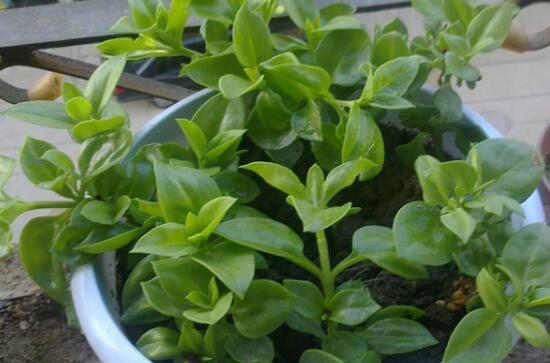
The beauty of Aptenia cordifolia is impressive; its emerald green foliage paired with small red flowers is bright and eye-catching, looking extremely beautiful. But because many flower lovers do not follow the proper cultivation methods for Aptenia cordifolia, the result is a failure to bloom, thus ruining this beautiful scene, so finding the reasons why Aptenia cordifolia does not bloom and solving them is very important.
2. Reasons why Aptenia cordifolia does not bloom and solutions
1. Overwatering
When it comes to the reasons why Aptenia cordifolia does not bloom, the first thing everyone should consider is the watering issue. Because once overwatered, it is very easy for the plant to absorb a large amount of nitrogen and phosphorus elements that favor stem and leaf growth, and in the end Aptenia cordifolia will only grow leaves without blooming.
Solution: When watering Aptenia cordifolia, pay attention to the amount and frequency: in spring, water once every 2-3 days; in summer, water once a day; in autumn, water once every 4-5 days; in winter, water once every 7 days. In general, keep the soil slightly moist.
2. Insufficient light
Aptenia cordifolia loves light, and sufficient light is a necessary condition for it to bloom. If it is placed in a dark place for a long time and cannot get sufficient photosynthesis, there will be no extra nutrients to promote flower bud growth, so it also cannot bloom. If the light is severely insufficient, it can also cause the leaves of Aptenia cordifolia to turn yellow.
Solution: It is very simple; give Aptenia cordifolia more sun, which helps the leaves become larger and wider, and also effectively promotes flower opening. Of course, the light should not be too strong; 50% shading is best.
3. Lack of phosphorus
Aptenia cordifolia blooming cannot do without sufficient nutrients, especially phosphorus, which must not be lacking, because it is the key to promoting flowering in the plant. If Aptenia cordifolia lacks phosphorus, it cannot form flower buds, and without flower buds it naturally cannot bloom.
Solution: If the failure of Aptenia cordifolia to bloom is caused by a lack of phosphorus fertilizer, flower lovers should apply an appropriate amount of phosphorus fertilizer, which can effectively promote flower growth,
4. No pruning
If water and fertilizer are appropriate, Aptenia cordifolia will grow very quickly, and if it is not pruned in time at this point, the plant's stems and leaves will take away the nutrients originally meant for flowering. The result is that Aptenia cordifolia grows denser and denser, but there will be no blooming.
Solution: When Aptenia cordifolia is found to be growing luxuriantly, it should be pruned in time. Generally in May in spring, flower lovers should cut off the diseased branches and dead branches. In addition, they should also pinch off the growing tips to promote the production of flower buds and let Aptenia cordifolia bloom better.
5. Temperature too high
The flowering period of Aptenia cordifolia is from March to September, so its blooming will go through high temperatures. Aptenia cordifolia likes a warm environment, and once the temperature is too high, it will show the phenomenon of only growing leaves without blooming.
Solution: Adjust the temperature appropriately, because the most suitable growth temperature for Aptenia cordifolia is around 20°C, so everyone should best maintain this temperature.
Overall, Aptenia cordifolia is not difficult to grow, but for it to produce beautiful flowers, everyone still needs to care for it carefully. Of course, if Aptenia cordifolia does not bloom, everyone does not need to be too anxious; just solve it according to the methods above. Finally, may everyone's Aptenia cordifolia bloom with beautiful flowers.
Why Aptenia cordifolia does not bloom, and in which month Aptenia cordifolia blooms
As for the question of whether Aptenia cordifolia can bloom, most people's answers are probably the same: Aptenia cordifolia is a succulent that does bloom, but in reality many people who grow Aptenia cordifolia find that the plant they planted shows no sign of blooming. Why is that?
Why Aptenia cordifolia does not bloom
First, the plant is not yet mature.
Second, lack of potassium fertilizer and phosphorus fertilizer. It is not that the leaves being green means the plant is healthy; someone once did not understand rational fertilizing and applied a large amount of nitrogen fertilizer to crops, and as a result, there were more leaves, but no heading or flowering.
In which month Aptenia cordifolia blooms
Aptenia cordifolia generally blooms from July to August, and the flowering period is long. The flowering period of Aptenia cordifolia includes the flowering period of a single flower and the flowering period of the whole pot. Generally speaking, a single flower of Aptenia cordifolia can bloom for two or three days, opening during the day and closing at night, while the flowering period of the whole pot can last 3-4 months, that is, from spring to autumn, blooming one after another during this period, with July to August being the most vigorous.
What to do if Aptenia cordifolia does not bloom
1. Control the frequency and amount of watering. Since Aptenia cordifolia is extremely easy to grow, you can control the amount of watering and water appropriately when the potting soil is dry. The reason is that excessive or frequent watering will cause the plant to absorb a large amount of nitrogen and phosphorus elements used for stem and leaf growth, while potassium fertilizer, which is difficult to dissolve in water, cannot be supplemented in time, affecting both flowering and fruit setting, so some flower lovers' Aptenia cordifolia develops lush branches and leaves but no flowers.
2. Give it more sun. Aptenia cordifolia, being a succulent plant, benefits from more sun, which helps the leaves become larger and wider and can also effectively promote flower opening. When sunning it, it is recommended to do so in the morning and afternoon; especially in summer, absolutely do not expose it to strong sun, and provide appropriate shade. Otherwise, it is easy to scorch the flower buds.
3. Use fertilizer or nutrient solution that promotes flowering. Since potassium fertilizer can effectively promote flower growth, you can use flower fertilizer containing potassium fertilizer. Here the editor recommends everyone use "Huaduoduo No. 2" fertilizer for fertilizing, to accelerate Aptenia cordifolia blooming.
4. Control the temperature. The most suitable growing environment for Aptenia cordifolia is room temperature (around 20°C). Too low a temperature may cause Aptenia cordifolia to enter dormancy, and Aptenia cordifolia in dormancy will show flower drop. When the temperature is too high, it will show the phenomenon of only growing leaves without blooming.
5. The annual flowering time of Aptenia cordifolia is roughly from March to October. Therefore, after entering winter, Aptenia cordifolia will drop all flower buds to preserve the nutrients and water needed by the roots.
6. In addition, a few suggestions should be given to everyone: first, the potting soil should choose a humus type with good air permeability and strong fertilizer-holding capacity. Second, regularly or irregularly pinch off the tips or prune Aptenia cordifolia to maintain its ornamental value.
What to do if Aptenia cordifolia leaves become soft
First, you can check whether the roots and stems are rotten. If they are rotten, immediately stop watering, then cut off the rotten parts, and replant by cuttings.
Pay attention to the usual light. In the morning and evening, it can be placed in the sun, but at noon, when the sun is strong, you should move its position to avoid direct strong light.
Pay attention to watering; the potting soil can be kept half dry and half wet, and should not be moist, let alone waterlogged.
Generally speaking, when succulents do not bloom, there are mainly two problems: first, they are not old enough and not yet mature; second, they do not have enough nutrients and cannot provide for the business of blooming, so what we need to do is wait patiently and then promptly provide a suitable growing environment for the succulent.
How to grow Aptenia cordifolia? Planting methods and care tips for Aptenia cordifolia
Many people like to grow flowers, and there are many forms of growing flowers, such as spider plants and potted plants. Speaking of spider plants, one kind that people nowadays like to grow very much is called Aptenia cordifolia. So how do you plant and propagate Aptenia cordifolia by cuttings? Below, the editor will introduce it to you.
Aptenia cordifolia is also called heartleaf ice plant. Its leaves are emerald green, its flowers are delicate and beautiful, and the flowers open at the tips of the branches. Its flowering period is very long, and it can bloom from spring all the way to autumn. The leaves are ornamental, and you can also enjoy the flowers. It is as easy to grow and propagate as ordinary spider plants. It can grow especially luxuriantly, and the trailing appearance is very beautiful.
Planting methods and care tips for Aptenia cordifolia
Aptenia cordifolia is very simple to propagate by cuttings. As long as you choose the right time, healthy branches, and a suitable medium, the survival rate is almost 100 percent. Because spring and autumn are the peak growing seasons for Aptenia cordifolia, these two seasons are most suitable for cuttings.
1. For the cutting soil, it is best to use breathable and fertile soil. You can use leaf mold plus garden soil plus a portion of sand, or perlite.
2. Choose a relatively sturdy branch about ten cm long, let the cut dry a bit, then insert it into the soil. The cutting depth is 3 cm, then keep the potting soil moist. Generally after about ten days it begins to grow roots and sprout.
3. At this time it has a period of adjusting to the pot, so you cannot water too much. The potting soil just needs to be slightly moist. In addition, in spring and autumn, ordinary diffused light is enough.
4. When it grows to more than ten cm tall, you can pinch off the growing tips and top it, to promote more branches and make the plant shape fuller. It will bloom more. Do not waste the pruned branches; you can propagate more new pots of Aptenia cordifolia by cuttings.
5. When fertilizing, do not apply only nitrogen fertilizer, otherwise it will only grow leaves without blooming, so it is best to use some compound fertilizer, or phosphorus and potassium fertilizer. Apply thin fertilizer frequently.
6. Usually control watering; do not water too much or too often. Water thoroughly only when the potting soil is dry. When watering, give a little potassium fertilizer, which is more conducive to its blooming.
7. July and August are when Aptenia cordifolia blooms most vigorously. Do not keep Aptenia cordifolia indoors all the time, as this will cause leggy growth. Except for shading in summer, give it sun in all other seasons.
8. As long as the temperature at home is kept at around twenty degrees, it will bloom continuously and can easily be grown to fill the pot. Aptenia cordifolia can also have the pruned branches and leaves propagated by cuttings in water, and it can continue to bloom. Aptenia cordifolia grown hydroponically is also very beautiful.
The above is the introduction to Aptenia cordifolia. This Aptenia cordifolia blooms with fresh, delicate pink flowers, incredibly pleasing to the eye, and its trailing appearance is super cute. If you grow a pot at home, it can bring you a good mood.