What to Do When Aptenia cordifolia Leaves Turn Yellow? Analysis of Light, Water, Fertilizer and Metabolic Causes
Aptenia cordifolia, a plant whose flowers can be admired and whose leaves can also absorb formaldehyde, is naturally beloved and kept in many homes. But during cultivation, many flower lovers encounter yellowing leaves, which seriously affects the plant's ornamental value. So what should be done when Aptenia cordifolia leaves turn yellow? Regarding this, the editor has summarized 5 causes. Flower lovers with this problem should definitely take a look~
I. When Aptenia cordifolia Leaves Turn Yellow, Find the Cause
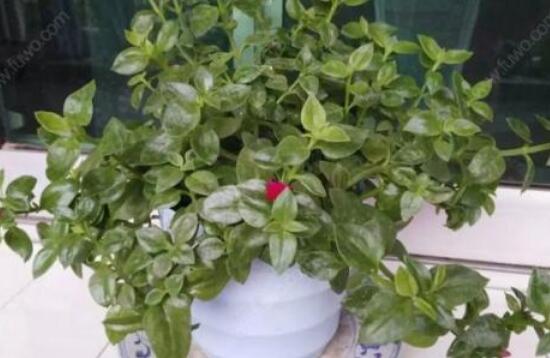
As a type of hanging plant, Aptenia cordifolia is not difficult to cultivate; with careful care, it will not develop problems. But because there are many novice growers, they often make various oversights during care, which easily leads to yellowing leaves. As for what to do when Aptenia cordifolia leaves turn yellow, the editor has summarized 5 causes and attached solutions. Let's continue reading.
II. Causes and Solutions for Aptenia cordifolia Leaves Turning Yellow and Soft
1. Sudden environmental change
Regarding the causes of Aptenia cordifolia leaves turning yellow, the first thing everyone should consider is environmental issues. Nowadays, many flower lovers buy their Aptenia cordifolia online, which easily results in a large regional span, causing the environment to change too much at once. The Aptenia cordifolia cannot adapt for the moment, thus developing yellowing leaves.
Solution: It's very simple. Ask the seller about the Aptenia cordifolia's previous growing environment, then adjust the environment at home until the Aptenia cordifolia fully adapts. After normal care for a period of time, the Aptenia cordifolia leaves will recover.
2. Improper lighting
① Insufficient light: During growth, apart from appropriate shading at noon in midsummer, Aptenia cordifolia needs sufficient light at all other times of the year. Once light is insufficient, the chlorophyll in the Aptenia cordifolia leaves will decrease, and the result is that the leaves slowly turn yellow. Solution: Just supplement light, but the light must not be too strong; preferably the shading degree should be above 50%.
② Too much light: Although Aptenia cordifolia likes light, it dislikes direct strong light. Once exposed to strong sun, its leaves will be scorched, thus developing yellowing symptoms. Solution: Move the Aptenia cordifolia to a ventilated place with scattered light, wait half a day, then water appropriately. With careful care for a few days, it will recover its health.
3. Too much watering
Aptenia cordifolia likes a dry environment, so it should not be watered too much. Once watered too much, water easily accumulates in the pot, causing the root system to have difficulty breathing, resulting in the phenomenon of Aptenia cordifolia leaves turning yellow.
Solution: Flower lovers should move the potted plant to a ventilated place with scattered light to let the water evaporate quickly. Once root rot appears, take it out of the pot, cut off the rotten roots, then change the potting soil and replant. After a period of time, the plant will recover its health.
4. Too much fertilizer
Besides overwatering, too much fertilizer can also cause Aptenia cordifolia leaves to turn yellow. The growth of Aptenia cordifolia needs sufficient nutrients, and appropriate fertilization can make it grow better. But once too much fertilizer is applied, it will burn the roots, and once the root system rots, it easily leads to yellowing leaves.
Solution: Stop fertilizing, water more with clear water, or repot to clean the roots and replace with new soil.
5. Natural metabolism
If the above points can be ruled out, then the yellowing of Aptenia cordifolia leaves may be natural metabolism. Symptoms: If the Aptenia cordifolia has been grown for a relatively long time, and the leaves at the bottom turn yellow, then this may be natural yellowing. This is a very normal phenomenon, and flower lovers need not worry; as long as the top leaves are normal, it is fine.
Overall, although Aptenia cordifolia is easy to grow, if everyone is not careful, it will still develop problems. However, after reading the whole article, I believe everyone has a clearer idea. When yellowing leaves appear, just remedy it according to the above methods. Regarding Aptenia cordifolia leaves turning yellow and soft, the editor will introduce it here, hoping to bring help to everyone.
What to Do When Aptenia cordifolia Gets Pests: Pest and Disease Control for Aptenia cordifolia / 3 Pests and 2 Diseases
As a common indoor potted plant, Aptenia cordifolia has strong benefits. It not only looks good, but is also not prone to pests and diseases, and even has good edible value. But when grown indoors, for certain reasons, Aptenia cordifolia will still unavoidably contract diseases and be disturbed by insects. So what should be done when Aptenia cordifolia gets pests? The following are 5 pest and disease control methods for Aptenia cordifolia. Let's take a look together!
I. When Aptenia cordifolia Gets Pests, Spray with Pesticide
Aptenia cordifolia is not difficult to cultivate; you only need to pay a little attention to water and fertilizer and give it sufficient light, and it will grow very well. But during cultivation, due to water accumulation in the potting soil, poor ventilation, and other situations, it will attract pests and diseases. As for what to do when Aptenia cordifolia gets pests, it is actually very simple: identify the pest, then spray the corresponding pesticide to solve it.
II. Pest and Disease Control for Aptenia cordifolia
1. Aphids
The most common pest of indoor potted plants, it also harms the health of Aptenia cordifolia. This pest mainly harms leaves and buds, sucking large amounts of sap and causing poor plant growth. Because aphids reproduce in large numbers, when they are usually discovered, they are densely packed, which is not only frightening but also very disgusting.
Control method: After discovering aphids, if the number is very small, manual aphid control can be adopted, using a brush or small brush to brush the aphids off and bury them in the potting soil; if there are many aphids, it is necessary to spray relevant pesticides, such as 40% omethoate 1000-fold solution or 50% dichlorvos 1000-fold solution, spraying once every 7—10 days, and 2—3 consecutive sprays will show effect.
2. Scale insects
Besides aphids, under conditions of dense plant clumps and poor ventilation, Aptenia cordifolia is also easily harmed by scale insects. This pest attaches to the leaves, causing the leaves to lose their luster, thus causing Aptenia cordifolia leaves to turn yellow, and in severe cases the entire plant will die.
Control method: Move the plant to a ventilated place and cut off the diseased leaves to reduce the source of pests; then spray 40% omethoate diluted into a 1000-fold solution or 50% malathion diluted into a 1500-fold solution for control.
3. Red spider mites
In addition, red spider mites are also one of the pests and diseases of Aptenia cordifolia. Although they are rarely seen, once they appear, the harm is great. It is understood that this pest mainly harms the leaves of the plant, causing small yellow-white spots on Aptenia cordifolia leaves, which then gradually turn red and spread to the entire leaf, and even cause the leaves to curl, wither, turn yellow, and fall off.
Control method: After discovering red spider mites, spray with 40% dicofol emulsifiable concentrate 1500-2000-fold solution for control, spraying once every 7 days, 2-3 sprays are enough, and the effect is good.
4. Root rot
When talking about the pests and diseases of Aptenia cordifolia, the most common is root rot. This disease is mainly caused by water accumulation in the potting soil and poor ventilation. Symptoms: roots rot, leaves wither, turn yellow, and fall off, until death.
Control method: After discovering the above symptoms, spray 50% carbendazim wettable powder 500-fold solution, or directly drench the roots with it, once a week; in severe cases, pull out the Aptenia cordifolia, remove the rotten root parts, change the soil and pot, and replant.
5. Leaf blight
Under conditions of relatively high environmental temperature, relatively high humidity, and poor ventilation, Aptenia cordifolia can also suffer from leaf blight. Symptoms: Aptenia cordifolia leaves first turn yellow, then become brown diseased spots, and finally spread to the entire plant.
Control method: When the above symptoms are discovered, spray with 70% zineb diluted into a 600-fold solution for control, once every 15-20 days, and 2-3 times will show effect.
Overall, in the process of cultivating Aptenia cordifolia, as long as everyone places it in a ventilated place and pays attention not to water too much, it will not attract pests and diseases. Of course, if you find that Aptenia cordifolia has pests or diseases, do not be afraid; just solve it according to the above control methods. Regarding pest and disease control for Aptenia cordifolia, the editor will introduce it here, hoping to bring help to everyone.
What to Do When Aptenia cordifolia Does Not Bloom: Water Less and Give More Sun / Appropriate Fertilization Is Key
Aptenia cordifolia has many benefits. Besides absorbing formaldehyde, the most impressive thing is its beautiful flowers. So once Aptenia cordifolia does not bloom, it will seriously affect its ornamental value, and by then flower lovers will surely be very anxious! So what should be done when Aptenia cordifolia does not bloom? Regarding this, the editor has summarized 4 causes. Let's take a look together.
I. When Aptenia cordifolia Does Not Bloom, Find the Cause
The beauty of Aptenia cordifolia is impressive. Its emerald-green foliage, paired with small red flowers, is bright and eye-catching, looking extremely beautiful. But because many flower lovers do not cultivate it according to the methods for Aptenia cordifolia, the result is a failure to bloom, thus ruining this beautiful scene. Therefore, finding the causes of Aptenia cordifolia not blooming and solving them is very important.
II. Causes and Solutions for Aptenia cordifolia Not Blooming
1. Too much watering
When talking about the causes of Aptenia cordifolia not blooming, the first thing everyone should consider is the watering issue. Because once watered too much, it easily causes the plant to absorb large amounts of nitrogen and phosphorus elements beneficial to stem and leaf growth, and finally Aptenia cordifolia will only grow leaves and not bloom.
Solution: When watering Aptenia cordifolia, pay attention to the amount and frequency: water once every 2-3 days in spring, once a day in summer, once every 4-5 days in autumn, and once every 7 days in winter. Overall, keep the soil slightly moist.
2. Insufficient light
Aptenia cordifolia likes light, and sufficient light is a necessary condition for it to bloom. If it is placed in a dark place for a long time and cannot get sufficient photosynthesis, there will be no extra nutrients to improve flower bud growth, so it also cannot bloom. If the light is seriously insufficient, it will also cause Aptenia cordifolia leaves to turn yellow.
Solution: It's very simple. Give Aptenia cordifolia more sun, which is beneficial for making the leaf surface larger and wider, and can also effectively promote flower opening. Of course, the light must not be too strong; 50% shading is best.
3. Lack of phosphorus
The blooming of Aptenia cordifolia cannot be separated from sufficient nutrients, especially phosphorus, which must not be lacking, because it is the key to promoting plant blooming. If Aptenia cordifolia lacks phosphorus, it cannot form flower buds, and without flower buds, it naturally cannot bloom.
Solution: If the failure of Aptenia cordifolia to bloom is caused by a lack of phosphate fertilizer, flower lovers should apply phosphorus fertilizer appropriately, which can effectively promote flower growth.
4. No pruning
If water and fertilizer are appropriate, Aptenia cordifolia will grow very quickly, and at this time if it is not pruned in time, the plant's stems and leaves will take away the nutrients originally used for blooming. The result is that Aptenia cordifolia grows more and more densely, but there will be no blooming.
Solution: When Aptenia cordifolia is found to be growing luxuriantly, it should be pruned in time. Generally in May in spring, flower lovers should cut off the diseased branches and dead branches. In addition, they should also pinch off the tips to promote the production of flower buds and let Aptenia cordifolia bloom better.
5. Temperature too high
The flowering period of Aptenia cordifolia is from March to September, so its blooming will experience high temperatures. Aptenia cordifolia likes a warm environment, and once the temperature is too high, the phenomenon of only growing leaves and not blooming will appear.
Solution: Adjust the temperature appropriately. Because the most suitable growth temperature for Aptenia cordifolia is around 20°C, everyone should best maintain this temperature.
Overall, Aptenia cordifolia is not difficult to grow, but for it to produce beautiful flowers, everyone still needs to care for it carefully. Of course, if Aptenia cordifolia does not bloom, everyone need not be too anxious; just solve it according to the above methods. Finally, may everyone's Aptenia cordifolia bloom with beautiful flowers.