How to Grow Potted Yucca and Key Points to Note: Avoid Strong Fertilizer
Yucca is an ornamental flowering plant native to eastern and southeastern North America, later introduced to China, and today it can be seen in many regions of the country. However, there are many things to pay attention to if you want to grow it well. How do you grow potted yucca? What are the growing methods and key points to note for yucca? Let's take a look below.
1. How to Grow Potted Yucca: Understand Its Habits
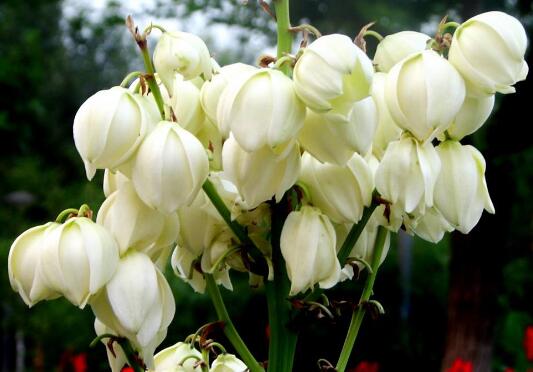
To know how to grow potted yucca, we first need to understand its growing habits. It prefers an environment with plenty of sunlight, so we should keep it in sufficient light when growing it. In addition, routine watering and fertilizing also need attention. The specific growing methods are described below, so let's take a look.
2. Growing Methods and Key Points to Note for Yucca
1. Soil: Sandy Soil
Before growing yucca, we first need to choose the soil, which is the foundational step. Generally, it is best to choose loose, fertile sandy soil. This type of soil has good drainage and aeration, allowing yucca to absorb nutrients better and making waterlogging less likely.
2. Fertilizing: 1-2 Times Per Month During the Growing Season
During the growth of yucca, fertilizer is one of its main sources of nutrients. Especially after entering the growing season, its demand for nutrients is very high, and it basically needs fertilizing 1-2 times per month so that it has enough nutrients to grow vigorously. However, before fertilizing, note that it must be diluted with water first. If the fertilizer is too concentrated, it can easily burn the plant.
3. Water: Spray Frequently in Summer
Yucca is a fairly drought-tolerant plant and generally grows well as long as the soil is neither dry nor waterlogged. However, after summer arrives, it still needs frequent watering, because summer temperatures are higher and water evaporates faster. So it is best to spray the leaves every day to maintain air humidity, which also makes the leaves greener and more tender.
4. Light: Avoid Strong Light
Yucca is a light-loving plant, but there is still a limit to how much light it should receive. In spring and autumn, when light is moderate, we can let it receive light all day. After summer arrives, because the light is stronger, it still needs shading at noon.
5. Pests and Diseases: Prevent and Control Promptly
During the growth of yucca, if we are not careful enough with its care, pests and diseases can easily appear. These problems are extremely harmful to the plant, not only affecting its ornamental value but, in severe cases, causing the plant to wither and die. So prevention and control must be timely. For specific treatment methods, you can refer to the article on pest and disease control for yucca; here I will not go into too much detail.
Growing Methods and Key Points to Note for Yucca, How to Grow Yucca
Flower and Bonsai Network introduction: Today, the editor of Flower and Bonsai Network will share with you an article on the growing methods and key points to note for yucca, and how to grow yucca. Flower lovers who like growing yucca, come and take a look.
Yucca, also known as pineapple flower or sisal, represents blooming hope. Its large clusters of flowers and tall posture make it a highly ornamental plant. So if we grow yucca ourselves, what methods and key points should we note?
Growing Methods for Yucca
Soil and Fertilizing
If grown in a pot, the commonly used soil is a mix of leaf mold and coarse sand. When repotting in spring, remove the old soil from the roots, then also prune away dead and rotten roots. When new leaves grow, the old leaves should also be pruned away. During the plant's growing period, apply organic liquid fertilizer once or twice per month.
Watering
Yucca is a fairly drought-tolerant plant and generally grows well as long as the soil is neither dry nor waterlogged. However, note that in summer it should be watered sufficiently, and it is best to spray the leaves every day while maintaining relatively high air humidity, so the leaf color will be more vibrant. After winter arrives, yucca generally stops growing, and at this point watering and fertilizing should be controlled.
Growing Environment
Yucca is suitable for growing in a warm, humid environment with plenty of sunlight. It is drought-tolerant, cold-tolerant, and shade-tolerant, and it is not strict about soil requirements, with strong adaptability.
The potting soil is commonly prepared by mixing leaf mold and coarse sand. When repotting each spring, scrape away the old soil between the roots and prune away dead and rotten roots. As new leaves grow, cut off the yellowed and withered old leaves at the lower part to keep the plant tidy. During the growing period, apply organic liquid fertilizer 1-2 times per month. The plant is fairly drought-tolerant and grows well with alternating dry and moist conditions. In summer, water sufficiently. Spray the leaves every day to maintain relatively high air humidity. The leaf color becomes more vibrant. In winter, growth stops, so control watering and stop fertilizing.
Yucca prefers a warm, humid environment with plenty of sunlight. It is cold-tolerant, shade-tolerant, drought-tolerant, and also relatively moisture-tolerant, with no strict soil requirements. Fertile, loose sandy loam is best. It can also adapt to barren, gravelly piled soil and waste ground. It has a wide range of pH adaptability and can grow in all soils except saline-alkaline land.
Yucca prefers light and resists pollution. It has strong sprouting ability and strong adaptability. After flowering, the top stops growing, and lateral buds emerge from the leaf scars at the sides. It grows robustly and has thick fleshy roots. The stem easily produces adventitious buds and readily grows suckers, expanding the plant, with very strong renewal capacity.
Propagation Methods for Yucca
Yucca can be propagated by sowing, division, and cuttings.
Division
Yucca can be divided and planted in spring from February to March when the root sucker buds emerge from the ground. When dividing, it is best for each bud to carry some fleshy roots. First dig holes and apply fertilizer, then bury the separated sucker buds in them. Do not bury too deep; just slightly cover the top. Alternatively, cut off the part of the stem with the clustered leaves at the top, keeping a 9-12 cm long section of stem, remove part of the leaves, leaving about 7 leaves, and bury it in a 12-15 cm deep hole, then water after burying. Because yucca leaves are densely grown and widely spreading with sharp tips, when lifting the seedlings they should be tied first; bare-root or with native soil are both acceptable.
Yucca plants cultivated for many years will sprout small offset plants from the roots. When the small offsets have grown somewhat, cut them away from the mother plant. Those with roots can be planted directly; those without roots can be used as cuttings. Apply sulfur powder to the cut surface, then plant in sterilized plain sandy soil and place in a shady spot. They root after about 50 days, then move them to a sunny spot for cultivation.
Cuttings
For cuttings, in spring or early summer, dig up the stem, strip off the leaves, cut into 10 cm lengths. Thick stems can be split lengthwise into 2-4 pieces, placed flat in a furrow with the longitudinal cut facing down, covered with 5 cm of soil, and kept moist. They sprout 20-30 days after insertion. For division, in spring, dig up leaf-bearing stems and plant directly.
Sowing
For yucca, seed propagation can only be achieved through artificial pollination. Artificial pollination is best done in May. About 70 days after pollination, the seeds mature. Sow in late September of the same year, seedlings emerge after one month, with a germination rate of about 40% or more. The seeds can also be dried and stored until spring sowing. Cuttings root easily. In spring or early summer, take stems and remove the leaves, saw into 10 cm sections; thick ones can be split lengthwise into 2 or 4 pieces, placed flat in a furrow with the longitudinal cut facing down, covered with 5-10 cm of soil. After insertion, note that the soil must not be too wet to prevent the stem pieces from rotting. Using fleshy roots as cutting material is even better. Yucca can overwinter outdoors in the lower reaches of the Yellow River and areas to the south. Because yucca leaves are densely grown and widely spreading with sharp tips, they should be tied first when digging up; bare-root or with native soil are both acceptable. Apply sufficient base fertilizer before planting, water thoroughly after planting, remove the ties, and spread out the leaves. Maintenance and management are extremely simple; just prune dead branches and withered leaves and promptly cut off the flower stalk after flowering. After many years of growth, if the stem is too tall or leans toward the ground, it can be cut back for renewal. In autumn, dig a ring-shaped trench around the plant and apply some organic fertilizer.
Key Points to Note When Growing Yucca
Newly planted yucca can survive after just a few waterings. Water according to soil conditions. In routine management, note proper earthing up and fertilizing to promote the emergence of flower spikes; when withered leaves and residual stems are found, prune them promptly to maintain a tidy and attractive appearance.
Yucca is not demanding about the type or amount of fertilizer. When potted, apply nitrogen-phosphorus-potassium compound fertilizer once or twice each in spring and autumn; do not fertilize in winter or summer.
Diseases and Their Control
Common diseases of yucca are brown spot and leaf spot. If affected by these two diseases, spray with 70% thiophanate-methyl wettable powder at 1000 times dilution.
Pests and Their Control
Common pests of yucca include scale insects, whiteflies, and noctuid moths. If infected by the above pests, spray with 40% omethoate emulsifiable concentrate at 1000 times dilution.
How to Control Yucca Anthracnose
Yucca anthracnose is a commonly occurring disease of yucca and spreads very quickly. If not controlled in time after onset, it not only affects the ornamental effect but, in severe cases, can also cause plant death. The symptoms, occurrence patterns, and control methods are described below:
Symptoms
It first occurs at the leaf tip, initially as brown spots, then expands outward in round or irregular shapes. The inside of the lesion is grayish-brown, surrounded by a yellow halo, with scattered black granular bodies on the surface. After the entire leaf is infected, it turns black.
Occurrence Patterns
This disease is caused by infection by Colletotrichum agaves. The peak period of occurrence is from mid-May to early October. The pathogen overwinters on diseased leaves as mycelium, conidia, and sclerotia, and spreads through wind and rain. It is prone to occur under conditions of high temperature, high humidity, and poor ventilation.
Control Methods
1. Strengthen water and fertilizer management, enhance tree vigor, and improve the plant's disease resistance;
2. When planting initially, pay attention to choosing the planting environment; the cultivation site must have good ventilation;
3. Promptly remove diseased leaves and burn them in a centralized manner to reduce sources of infection;
4. At the time of onset, spray with 50% thiram anthracnose fungicide at 300 times dilution or 75% chlorothalonil wettable powder at 1000 times dilution, spraying once a week for 3-4 consecutive times, which can effectively control the disease.
The above are the growing methods and key points to note for yucca. With careful cultivation, there will certainly be rewards!
Growing Methods and Key Points to Note for Yucca
Yucca likes sun and tolerates shade, and can be placed in an entrance hall with plenty of scattered light for viewing. Its leaves are deep green year-round. Several plants form a clump with varying heights, and the sword-shaped leaves are arranged neatly in a radiating pattern. It can be planted at the center of flower beds, beside rocks or terraced slopes, and near modern buildings. Its sharp leaf tips can also be used as a hedge, or it can be planted beneath walls and fences. Yucca has strong resistance to harmful gases and can be used as a beautification and greening material in industrial and mining areas.Yucca is also known as pineapple flower and yucca filamentosa. Yucca has large flowers, a beautiful tree form, and green leaves, making it a good ornamental garden tree. Because yucca leaves are densely grown and widely spreading with sharp tips, tie them first when digging up; bare-root or with native soil are both acceptable. Apply sufficient base fertilizer before planting, water thoroughly after planting, remove the ties, and spread out the leaves. Maintenance and management are extremely simple; just prune dead branches and withered leaves and promptly cut off the flower stalk after flowering. So how should yucca be grown well? Below we will learn about the growing methods and key points to note for yucca.
Growing Methods for Yucca:
The potting soil is commonly prepared by mixing leaf mold and coarse sand. When repotting each spring, scrape away the old soil between the roots and prune away dead and rotten roots. As new leaves grow, cut off the yellowed and withered old leaves at the lower part to keep the plant tidy. During the growing period, apply organic liquid fertilizer 1-2 times per month. The plant is fairly drought-tolerant and grows well with alternating dry and moist conditions. In summer, water sufficiently. Spray the leaves every day to maintain relatively high air humidity. The leaf color becomes more vibrant. In winter, growth stops, so control watering and stop fertilizing.
Yucca prefers a warm, humid environment with plenty of sunlight. It is cold-tolerant, shade-tolerant, drought-tolerant, and also relatively moisture-tolerant, with no strict soil requirements. Fertile, loose sandy loam is best. It can also adapt to barren, gravelly piled soil and waste ground. It has a wide range of pH adaptability and can grow in all soils except saline-alkaline land.
Yucca prefers light and resists pollution. It has strong sprouting ability and strong adaptability. After flowering, the top stops growing, and lateral buds emerge from the leaf scars at the sides. It grows robustly and has thick fleshy roots. The stem easily produces adventitious buds and readily grows suckers, expanding the plant, with very strong renewal capacity.
Key Points to Note:
Newly planted yucca can survive after just a few waterings. Water according to soil conditions. In routine management, note proper earthing up and fertilizing to promote the emergence of flower spikes; when withered leaves and residual stems are found, prune them promptly to maintain a tidy and attractive appearance.
Yucca is not demanding about the type or amount of fertilizer. When potted, apply nitrogen-phosphorus-potassium compound fertilizer once or twice each in spring and autumn; do not fertilize in winter or summer.
Yucca commonly suffers from brown spot and leaf spot, which can be sprayed with 70% thiophanate-methyl wettable powder at 1000 times dilution. Pests include scale insects, whiteflies, and noctuid moths, which can be sprayed with 40% omethoate emulsifiable concentrate at 1000 times dilution.