What to do when the leaves of a green-leaf spider plant won't stand upright? Supplement light and water, and prune in time
The green-leaf spider plant is the finest among spider plants. It not only absorbs formaldehyde but also has extremely high ornamental value. When people think of spider plants, they usually picture drooping leaves, but the green-leaf spider plant is a little different: its leaves stand upright! However, some growers find that their green-leaf spider plant's leaves won't stand upright. What is going on? Today, the editor will help everyone solve this problem.
I. When the green-leaf spider plant's leaves won't stand upright, find the cause
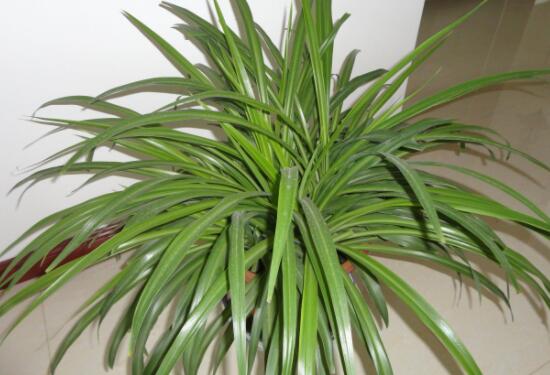
When a spider plant's leaves droop, that is normal, but the green-leaf spider plant is not like that, because its leaves stand upright. Yet because there are many novice growers, they simply do not know how to grow the green-leaf spider plant, and as a result, as they care for it, the leaves droop and the ornamental value declines. For this, the editor found 4 causes. Let's look at the details below.
II. Why the green-leaf spider plant's leaves won't stand upright: causes and solutions
1. Too much nitrogen fertilizer
For ordinary growers, when fertilizing the green-leaf spider plant, the main choice is nitrogen fertilizer, because applying plenty of nitrogen fertilizer helps the plant grow lush branches and leaves, fresh and green, looking especially pleasing. But if too much nitrogen fertilizer is applied, the plant's leaves grow too vigorously and easily droop.
Solution: If the green-leaf spider plant's leaves won't stand upright because of nitrogen fertilizer, reduce the amount of nitrogen fertilizer, and at the same time apply 0.2% monopotassium phosphate (nitrogen fertilizer and potassium fertilizer) once a week to make it sturdy and help the leaves stand upright again.
2. Insufficient light
When talking about why the green-leaf spider plant's leaves won't stand upright, light is one point that cannot be ignored. It is understood that the green-leaf spider plant likes a semi-shaded environment, but this does not mean it does not need light. Moreover, once light is insufficient, its leaves' photosynthesis decreases, and the final result is that the leaves slowly droop.
Solution: It is very simple, just supplement light. Place the green-leaf spider plant somewhere relatively close to a window and balcony so it receives diffused light, but do not let direct sunlight hit it in summer, as the leaves easily scorch. With careful care for a period of time, the leaves should recover.
3. Too little watering
The green-leaf spider plant likes a moist environment and needs sufficient water during growth. Once it is watered too little and the potting soil becomes too dry, the leaves cannot absorb water and easily droop.
Solution: Just supplement water, but do not water too much; keeping the potting soil moist is enough.
4. Not pruning in time
If cared for properly, the green-leaf spider plant will grow very lush, and in this situation, it is hard for the leaves to stand upright.
Solution: Prune in time, cutting off all old leaves, scorched leaves, and dead leaves. Be sure to prune often, so the leaves stay fresh and more leaves remain upright. It is worth mentioning that the green-leaf spider plant is a very pruning-tolerant plant, so growers can prune with confidence.
Overall, there are 4 reasons why the green-leaf spider plant's leaves won't stand upright: too much fertilizer, insufficient light, too little watering, and not pruning in time. So during care, everyone must pay attention to these 4 points. It is believed that as long as these are done well, the green-leaf spider plant will restore its fresh and elegant appearance, and then we can once again enjoy its beauty!
How to grow the green-leaf spider plant well: cultivation methods and precautions for the green-leaf spider plant / likes water
The green-leaf spider plant is a very beautiful foliage plant. Its leaves are shaped like orchids, its leaf color is fresh green, and it also has an extremely strong function as an absorber of toxic gases, so it is deeply loved by growers. In daily life, many households choose to keep a pot of green-leaf spider plant. So how do you grow the green-leaf spider plant well? Below are the cultivation methods and precautions for the green-leaf spider plant compiled by the editor. They are very detailed, and anyone who wants to grow it should definitely take a look.
I. How to grow the green-leaf spider plant well: meet its habits
The green-leaf spider plant likes a warm, moist environment, and it also likes semi-shade and fears strong light. When grown indoors, besides watering frequently to keep the potting soil moist, it should also be kept from being exposed to strong sun, and warmth should be ensured in winter. As for soil, it requires loose, fertile soil with good air and water permeability. So how to grow the green-leaf spider plant well? It is very simple, just meet its growth habits. For the specific requirements, let's continue below.
II. Cultivation methods and precautions for the green-leaf spider plant
1. Potting soil
For growing the green-leaf spider plant indoors, the first thing is to reselect the potting soil. Green-leaf spider plant pots bought from flower shops or online can ensure normal plant growth, but the flowerpot and soil are very cheap. If you want the green-leaf spider plant to grow well, you must choose soil it likes and a suitable flowerpot.
Flowerpot: You can use clay pots, plastic pots, porcelain pots, or ceramic pots; of course, choose beautiful ones as much as possible. As for flowerpot size, generally choose one with a pot diameter of 14-18 cm.
Soil: According to the growth habits of the green-leaf spider plant, it likes loose, fertile, well-drained sandy soil. For this, the editor recommends using a mixed culture soil of 3 parts leaf mold, 3 parts garden soil, 3 parts sandy soil, and 1 part decomposed cake fertilizer.
2. Light
As a foliage plant, in the cultivation methods for the green-leaf spider plant, the importance of light is self-evident. The green-leaf spider plant likes semi-shade and fears intense sun exposure. Especially in northern regions, in spring, summer, and autumn, 50%-70% of sunlight should be shaded; in winter, shading may be omitted and sufficient sunlight is needed.
Precautions: The green-leaf spider plant is not tolerant of intense sun. If sunlight is strong, its leaves will be burned. So when growing it indoors, place it in a spot with more than 50% shading.
3. Temperature
How to grow the green-leaf spider plant: appropriately adjusting temperature is also very necessary. The green-leaf spider plant likes warmth. At a room temperature of 20°C, stems and leaves grow rapidly. In winter, the temperature requirement should not be lower than 5°C.
Precautions: The green-leaf spider plant is not cold-tolerant. Keeping room temperature above 5°C allows it to overwinter safely, but if the ambient temperature is lower than 5°C, the plant will suffer cold damage. So in winter, prevent harm to the plant caused by too-low temperatures.
4. Watering
Water is the source of life, so in the cultivation methods for the green-leaf spider plant, watering is an indispensable part. The green-leaf spider plant likes a moist environment, and during its growth period the potting soil should be kept moist. In summer, watering should be sufficient, and every evening water should also be sprayed on the branches and leaves to keep the air moist; in early October, move it indoors to a sunny spot, and water once every 5-7 days.
Precautions: The fleshy roots of the green-leaf spider plant store a large amount of water, so it also has a relatively strong drought resistance. Therefore, when watering it, do not water too much, to prevent water accumulation in the pot and the appearance of root rot.
5. Fertilizing
After watering, let's talk about fertilizing, which is also very important during the growth of the green-leaf spider plant. In the spring and autumn growth seasons, apply a thin liquid fertilizer about once every 15 days; during high summer temperatures and winter dormancy, topdressing should be stopped.
Precautions: When fertilizing the green-leaf spider plant, remember not to splash fertilizer onto the leaves; in summer and winter, if the temperature difference exceeds 10°C, you can fertilize once a month.
6. Pruning and repotting
As its growth age increases, the green-leaf spider plant will gradually grow larger. In order to maintain a good plant shape and beauty, the old leaves at the base should best be pruned often; and according to the size of the plant's root system, it should be repotted once every year in early spring from March to April. When repotting, slightly prune the excess fleshy roots, plant it into a new pot, place it in a shaded spot, and after the plant recovers growth, carry out normal care and enjoyment.
7. Pests and diseases
Although the green-leaf spider plant is not prone to pests and diseases, water accumulation in the potting soil and poor ventilation can not only cause root rot in the green-leaf spider plant, but may also lead to root rot disease; in addition, when the green-leaf spider plant's clumps are dense and ventilation is poor, it is easily harmed by scale insects, so prevention should be the main approach. Once pests or diseases occur, spray pesticide immediately for control; for this, you can refer to pest and disease control for the green-leaf spider plant.
How to grow the green-leaf spider plant well?
The green-leaf spider plant is one of the common household foliage flowers that people love. It is a perennial evergreen herbaceous plant of the genus Chlorophytum in the Liliaceae family. Its leaf color is fresh green, its leaf shape is like an orchid, it is fresh and elegant, and it has an extremely strong function of absorbing toxic gases. Generally, keeping 1-2 pots in a room can absorb almost all toxic gases in the air. Now let's take a look at how to grow the green-leaf spider plant well!
Growth habits of the green-leaf spider plant
The green-leaf spider plant likes a warm, moist, semi-shaded environment. It has strong adaptability, is relatively drought-tolerant, and is not very cold-tolerant. It is not particular about soil, and grows better in well-drained, loose, fertile sandy soil. It is not strict about light and is generally suitable for growing under medium light conditions, and it also tolerates weak light. The optimum growth temperature is 15-25°C, the overwintering temperature is 5°C, and growth stops above 30°C. In winter, if room temperature is kept above 12°C, the plant can grow normally; if the temperature is too low, growth slows or it goes dormant, and below 5°C it is prone to cold damage.
Propagation methods for the green-leaf spider plant
1. Cuttings: This can be done at any time from spring to autumn. Cut off the clustered stems and leaves on the stolons and directly plant them into a flowerpot for cultivation. Water thoroughly and place in a cool, shaded spot for care. Be careful not to bury them too deep, otherwise the heart easily rots.
2. Division: When dividing the green-leaf spider plant, take the plant out of the pot, remove old soil and decayed roots, cut apart the old roots so that each divided plant retains three stems, and then transplant and cultivate them separately.
3. Sowing: Carry this out every year in March. Because its seeds are not large, after sowing the covering soil should not be thick; generally 0.5 cm is enough. At a temperature of 15°C, they sprout in about 2 weeks. After the seedlings take shape, transplant and cultivate them.
How to grow the green-leaf spider plant well?
1. Light: The green-leaf spider plant likes a semi-shaded environment and is very sensitive to light. When exposed to direct sunlight in summer and autumn, the leaves will wither and yellow, or even the whole plant may die. In winter, because sunlight is not strong, the green-leaf spider plant can appropriately receive some direct sunlight.
2. Temperature: The green-leaf spider plant likes a warm, moist climate and is not tolerant of severe cold or intense heat. The most suitable growth temperature is 15-25°C, and winter room temperature must not be lower than 5°C. In hot periods, avoid direct strong light; in cold, cool periods, it is better to see more sunlight.
3. Watering: The green-leaf spider plant likes water and has relatively strong drought resistance. From March to September, during the peak growth period, its water demand is relatively large, so it should be watered and misted frequently to keep the potting soil fully moist. During winter dormancy, water again after the surface of the potting soil is dry to about 1 cm deep.
4. Fertilizing: The green-leaf spider plant is a relatively fertilizer-tolerant plant. Insufficient fertilizer and water can easily cause the tips to scorch and age, and the leaves to turn yellow, losing ornamental value. For a green-leaf spider plant that has begun to grow small plantlets, apply nitrogen fertilizer once every half month; a green-leaf spider plant growing well can also go without fertilizer.
5. Soil: The green-leaf spider plant is suitable for loose, fertile sandy loam. The soil is required to contain humus and have strong permeability. For potting, you can use equal amounts of leaf mold or peat soil, garden soil, and river sand mixed with a small amount of base fertilizer as the substrate.
6. Repotting: The green-leaf spider plant should be repotted once every year in March. If the pot is relatively deep and the base fertilizer is relatively sufficient, it can be repotted once every two years. When repotting, knock the plant out of the pot, cut off dead and decayed roots and excess roots, replace with new culture soil, and apply sufficient base fertilizer.
7. Pests and diseases: The green-leaf spider plant is generally not prone to pests and diseases. When problems occur, they are usually root rot caused by water accumulation in the potting soil and poor ventilation, and pesticide should be sprayed promptly for control. When the clumps are dense and ventilation is poor, it is easily harmed by scale insects, so prevention should be the main approach.
8. Pruning: The green-leaf spider plant should usually have yellow leaves cut off at any time. It can be repotted once every year in March, cutting off old roots, decayed roots, and excess fibrous roots. In early to mid-May, some old leaves of the spider plant can be cut off, which will encourage the spider plant to sprout more new leaves and small green-leaf spider plants.