How to grow Bougainvillea spectabilis? Cultivation methods and precautions, with plenty of light
Bougainvillea spectabilis is a flowering plant native to Brazil that was later introduced to China, and today it can be seen in many regions of China. But if you want to grow it well, there are still many things to pay attention to. How do you grow Bougainvillea spectabilis? What are the cultivation methods and precautions for Bougainvillea spectabilis? Let's take a look together below.
I. How to grow Bougainvillea spectabilis: understand its habits
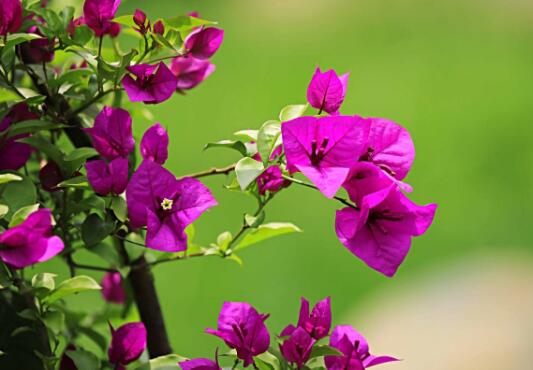
To know how to grow Bougainvillea spectabilis, we first need to understand its growth habits. It prefers a warm and humid environment and is not very cold-tolerant, so during cultivation we must manage the temperature well and not let it get too low. In addition, daily watering and fertilizing should also be done as required, so that it can grow better.
II. Cultivation methods and precautions for Bougainvillea spectabilis
1. Soil: loose and well-draining
This plant is not strict about soil, but it is rather afraid of waterlogging, so we should preferably choose a loose, fertile, and well-draining potting mix. Generally, a mix made of 4 parts humus soil, 4 parts garden soil, and 2 parts sand can be used, or dried pond mud mixed with some coal cinder can also be used as potting soil.
2. Fertilizing: avoid concentrated fertilizer
Fertilizer is one of the main nutrients in the growth process of Bougainvillea spectabilis, especially after entering the growing season, when its demand for fertilizer is quite high, and it basically needs fertilizing once every 7-10 days. However, when fertilizing, there is one thing we need to note: the fertilizer must be diluted with water first. If the fertilizer concentration is too high, it can easily burn the plant.
3. Temperature: 15~30°C
When growing Bougainvillea spectabilis, temperature control is also a point that needs attention, because only when it grows in a suitable environmental temperature can it grow better. Its suitable temperature is between 15~30°C. In summer it can tolerate high temperatures of 35°C, while in winter the environmental temperature should be maintained no lower than 5°C.
4. Water: avoid waterlogging
Among the cultivation methods and precautions for Bougainvillea spectabilis, watering is also a point that needs attention. It prefers a warm and humid environment, so during cultivation we should water frequently and keep the soil somewhat moist, so that it can grow better. However, Bougainvillea spectabilis is not tolerant of waterlogging, so everyone should control the amount of watering.
5. Light: no less than 8 hours per day
Bougainvillea spectabilis is a sun-loving flowering plant, so it quite likes light. If there is insufficient light during growth, its growth will weaken and affect bud formation and flowering. Therefore, when growing it, we should keep it in sufficient light, and the daily light duration should preferably be no less than 8 hours.
6. Pruning: can reduce nutrient consumption
Bougainvillea spectabilis is a plant with a relatively fast growth rate, so during growth we should prune it regularly, which can promote the growth of side branches and produce more flowering branches. Also, after each flowering, we should promptly remove the spent flowers to reduce nutrient consumption.
7. Pests and diseases: deal with them promptly
During the growth of Bougainvillea spectabilis, if we are not careful enough with maintenance, problems such as pests and diseases can easily appear. Such problems are extremely harmful to the plant, so when discovered we must deal with them promptly. For specific treatment methods, everyone can refer to the article on pest and disease control for Bougainvillea spectabilis, which has detailed introductions.
Cultivation methods and precautions for Bougainvillea spectabilis
Bougainvillea spectabilis is also called bougainvillea. The plant has strong adaptability and diverse varieties, making it very suitable for home cultivation. Next, Xiao Qi will introduce the cultivation methods and precautions for Bougainvillea spectabilis. Let's learn about them together.
I. Cultivation methods for Bougainvillea spectabilis
1. Soil: Bougainvillea spectabilis is not strict about soil, but it is afraid of waterlogging and is not tolerant of waterlogging. Therefore, a loose and well-draining potting mix must be selected. Generally, a mix made of 4 parts humus soil, 4 parts garden soil, and 2 parts sand can be used, or dried pond mud mixed with some coal cinder can also be used as potting soil.
2. Temperature: The suitable growth temperature for Bougainvillea spectabilis is 15~30°C, of which May to September is 19~30°C, and October to the following April is 13~16°C. In summer it can tolerate high temperatures of 35°C. When the temperature exceeds 35°C, appropriate shading or measures such as spraying water and ventilation should be taken. In winter, the environmental temperature should be maintained no lower than 5°C; otherwise, when the temperature remains below 5°C for a long time, it is prone to freezing and leaf drop.
3. Light: Bougainvillea spectabilis likes light. Insufficient light during the growing season will lead to weakened plant growth and affect bud formation and flowering. In winter it should be placed by a south-facing window, and the light duration must not be less than 8 hours; otherwise, a large number of leaves may drop. It is a short-day flowering plant. Keeping the daily light duration at about 9 hours can lead to buds and flowers appearing after about one and a half months.
4. Watering: Usually master the principle of "do not water if not dry, and water thoroughly when watering." During water control, absolutely do not fertilize, so as to avoid fertilizer burning the root system. In this way, about one month is enough for buds to appear and flowers to bloom, and the flowers will open neatly and abundantly.
5. Fertilizing: To make Bougainvillea spectabilis bloom, sufficient nutrients must be ensured, and fertilizing should be timely, moderate, and reasonable. Generally, during the vigorous growth period from April to July, apply liquid fertilizer once every 7~10 days to promote robust plant growth. The fertilizer can be 10%~20% decomposed soybean cake, rapeseed cake water, or human waste water, etc. Starting in August, in order to promote flower bud formation, apply fertilizer mainly based on phosphorus fertilizer once every 10 days. A 20% liquid fertilizer of decomposed chicken, duck, and pigeon manure and fish scraps, etc., can be used. Starting in October, it enters the flowering period. From then until mid-November, a fertilizer mainly based on phosphorus fertilizer needs to be applied once every half month, with a fertilizer water concentration of 30%~40%. After each flowering thereafter, an additional topdressing should be applied once, so that the flowering period continuously receives nutrient supplementation.
6. Repotting: Due to long-term watering, fertilizing, and rain washing, the potting soil easily becomes compacted. Therefore, the soil must be loosened regularly, and weeds in the potting soil should be removed at the same time, to facilitate the growth of bougainvillea. Otherwise, if the potting soil becomes compacted and waterlogged, it can easily cause root rot or poor growth.
II. Precautions for growing Bougainvillea spectabilis
Because Bougainvillea spectabilis grows slowly or goes dormant in midsummer and winter, fertilizing should be stopped to avoid fertilizer damage. Do not apply concentrated fertilizer or raw fertilizer (organic fertilizer that has not been fully decomposed), to prevent root damage, causing leaf scorch and drop, or even the death of the whole plant. In severe cold, it needs to be moved indoors; otherwise, it will be frostbitten.
The above iscultivation methods and precautions for Bougainvillea spectabilisintroduction, hoping to help everyone grow Bougainvillea spectabilis better. Friends who want to learn more about Bougainvillea spectabilis, please continue to follow us.
How to grow Zinnia elegans: cultivation methods and precautions for Zinnia elegans / plenty of light
Zinnia elegans is a flowering plant native to Mexico with very high ornamental value, and many people in China grow it. However, if you want to grow it well, there are still many things to pay attention to. How do you grow Zinnia elegans? What are the cultivation methods and precautions for Zinnia elegans? Let's take a look together below.
I. How to grow Zinnia elegans: understand its habits
To know how to grow Zinnia elegans, we first need to understand its growth habits. This plant prefers an environment with plenty of sunlight, so during cultivation we should keep it in sufficient light. In addition, daily watering, fertilizing, and other aspects also need to be carried out strictly according to requirements. The specific details are introduced below. Let's take a look.
II. Cultivation methods and precautions for Zinnia elegans
1. Soil: sandy soil
Before growing Zinnia elegans, we first need to choose the soil. This is the step of laying a good foundation, so a suitable choice must be made. Zinnia elegans relatively likes loose, fertile sandy soil. This kind of soil has good drainage and air permeability, allowing it to absorb nutrients better, and it is also less prone to waterlogging.
2. Temperature: 15°C-20°C
If you want Zinnia elegans to grow vigorously, then it needs to grow at a suitable environmental temperature. The suitable environmental temperature for its growth is between 15°C-20°C. If the temperature is too high or too low, it will slow down the growth rate of Zinnia elegans, so everyone should remember this point.
3. Fertilizing: once every 40-45 days
Fertilizer is one of the main nutrients in the growth process of Zinnia elegans. However, when growing it at home, we do not need to fertilize it too frequently. Generally, fertilizing once every 40-45 days is enough. When fertilizing, we should first melt the fertilizer with an appropriate amount of water, then pour it into the potting soil. When pouring, avoid the leaves to prevent burning them.
4. Water: water every day in summer
Watering is an indispensable part of the growth process of Zinnia elegans, but the frequency of watering should be changed according to different climates. Generally, in spring and autumn, because the climate is more suitable, we can water once about every 3 days. In summer, we should increase the watering frequency, because summer temperatures are higher and water evaporates faster, so we need to water every day.
5. Light: plenty of light is required
Zinnia elegans is a light-loving plant, and sufficient light should be maintained in its growing environment. If there is insufficient light, the plant will become leggy and its resistance will weaken. If there is no light for a long time, it will also affect its flowering. Therefore, when growing it, we should use full sun and place it in direct sunlight.
6. Pests and diseases: deal with them promptly
During the process of growing Zinnia elegans, if we are not careful enough, problems such as pests and diseases can easily appear. Such problems are extremely harmful to the plant, so when we discover problems we must deal with them promptly, and remember not to delay. The specific treatment methods have been introduced in detail in the article on pest and disease control for Zinnia elegans. Everyone can take a look.