How to prune a variegated spider plant (Chlorophytum comosum 'Vittatum') so it looks beautiful? A once-a-year pruning method
The variegated spider plant (Chlorophytum comosum 'Vittatum') is a very beautiful foliage plant, with slender, drooping leaves edged in golden yellow, very attractive. But as the growing time increases, problems arise with both the roots and the leaves, the most common being that the leaves become too dense and affect the plant's growth. And at this point we need to prune it, so how do you prune a variegated spider plant? Let's take a look together at the pruning method for variegated spider plants.
1. How to prune a variegated spider plant: the method matters
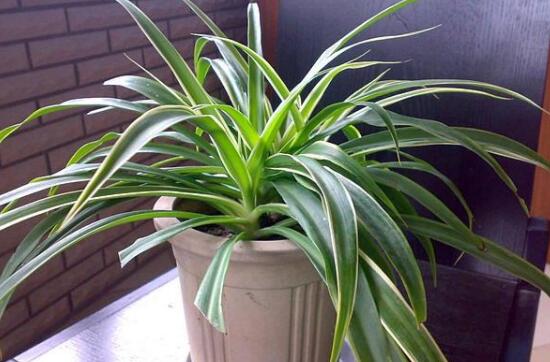
It is understood that the variegated spider plant not only has strong adaptability but also grows very fast. If you strictly follow the variegated spider plant's cultivation methods to care for it, it will grow with lush branches and leaves. However, if it becomes too lush, it will affect the overall appearance, so it is very necessary to prune the variegated spider plant appropriately. As for how to prune a variegated spider plant, I will explain it one by one from the aspects of timing and technique.
2. Pruning methods for the variegated spider plant
(1) Pruning time
For pruning the variegated spider plant, it is best to choose the growing season, so that new leaves will grow quickly. And according to the growth rate of the variegated spider plant, the frequency of leaf pruning can generally be controlled to once a year. Of course, it still depends on personal preference; prune when you feel it needs it, focusing mainly on the overall appearance.
(2) Pruning techniques
1. Prune old leaves
How to prune a variegated spider plant? First is purposeful pruning, that is, for the overall appearance of the variegated spider plant. For this, flower lovers can prune some old leaves of the variegated spider plant in early to mid-May, which is not only beautiful but also encourages the plant to sprout more new leaves and small spider plantlets.
2. Prune rotten roots
The variegated spider plant grows very fast. When repotting it every year, the rotten old roots should be pruned off, which is not only beneficial for new root growth but also helps with the absorption of nutrients. In addition, if you find leaves that are not growing well, you need to prune the roots appropriately.
3. Pruning blackened, withered leaf tips of the variegated spider plant
The most important part of the pruning method for the variegated spider plant is that when you find blackened leaf tips or withered leaf tips during growth, you should prune off all these diseased leaves. Doing so is not only for appearance, but also because if diseased leaves are left on the plant, they will have some effect on the growth of the variegated spider plant.
4. Do not prune too heavily
How to prune a variegated spider plant? In addition to the above points, there is one thing everyone must pay attention to: do not prune too heavily! Because once you prune too heavily, it will have a fatal effect on the plant, making it difficult for it to recover its original appearance, and in severe cases it can even cause the whole plant to die.
(3) Pruning precautions
After pruning the variegated spider plant, flower lovers should note that you cannot immediately water and fertilize the plant, otherwise the pruning will be as good as not pruning at all, and the leaves will quickly grow back.
Three key points for caring for spider plants, and how to grow spider plants
The spider plant can not only decorate an indoor environment but also has a very good purifying effect on indoor air. It can absorb many kinds of indoor harmful gases, especially with a very obvious effect on absorbing formaldehyde. It removes substances harmful to our bodies, creating a healthy, safe, comfortable and beautiful living environment for us, which is of great benefit to our health. Moreover, the spider plant is easy to grow and has relatively strong adaptability to the environment, making it one of our most common household plants. The spider plant stays green throughout all four seasons. Its leaves are slender and soft, and some produce small plantlets from the main body, spreading out naturally, with a very graceful form. Some varieties even produce small white flowers dotted among the leaves, faintly visible and very lovely.
Main varieties of spider plants
Spider plant:This variety is the most common one. Its stems and leaves are indistinguishable, the leaves are slender, soft and drooping, and the leaf color is dark green. It blooms every summer, with white and pale yellow flowers.
Purple spider plant:The stems of the purple spider plant are jointed, with leaves growing from each joint. The leaves are thick and glossy, all drooping downward. Because its leaf stalks are entirely purplish red, it is named the purple spider plant. It produces small pink flowers in summer and autumn.
Variegated flower spider plant:The stems of the variegated flower spider plant are spreading, with both branches and leaves drooping. The leaves are peach-shaped, with golden patterns running through the center of the leaf veins along the leaf edges, and the underside of the leaves is purple and can emit a glossy shine.
Variegated spider plant:The reason the variegated spider plant is called by this name is also determined by its external characteristics. Because its green leaves have yellow lines surrounding the edges of the leaves, it is named accordingly.
Silver-edged spider plant:The silver-edged spider plant is called "silver-edged spider plant" because the edges of its green leaves are white.
How to grow spider plants
Soil:The soil for growing spider plants should be loose and fertile with good drainage, with sandy soil being preferable. For potted plants, slightly acidic soil is best. A mixed soil made from peat soil, sand and small gravel can be used as the potting soil.
Light:Spider plants like an environment where sunlight is not too intense. In spring and autumn, avoid direct exposure to strong sunlight. In summer, when the midday sunlight is especially strong, be sure to provide shade, and it is best to move them out in the morning and evening to receive some slanting light. In winter, it is best to place spider plants by a south-facing window to receive sunlight.
Water:Spider plants like a relatively moist environment, so the soil should often maintain a certain degree of moisture. Especially in summer, when water evaporates extremely quickly, watering should be sufficient. When winter temperatures are too low, water less, and do not let the soil become too wet, otherwise the leaves will easily turn yellow.
Key points for caring for spider plants
Pruning:Pruning is key to spider plant care. During the period of vigorous growth, pinch back appropriately to promote horizontal development of the spider plant. After the flowering period in winter, promptly prune off the spent flower stems, which can save nutrients, promote new branches, and encourage more buds and flowers.
Fertilizing:The spider plant is a foliage plant that is relatively tolerant of fertilizer. If the soil is not fertile enough, it easily scorches and ages, the leaves turn yellow, and it loses ornamental value. So fertilizing is crucial. From late spring to early autumn, apply organic fertilizer once a week.
Repotting and soil renewal:If the growth of the spider plant is restricted and the roots cannot extend, the overall growth of the spider plant will be inhibited. So in order to make the spider plant grow more luxuriantly, giving it a larger growing space is essential. Generally, repotting and renewing the soil once a year is enough. When repotting and renewing the soil, be careful to clean up rotten roots and excess roots, keeping only the main roots. Also, add an appropriate amount of soil according to the size of the pot, so that the spider plant will grow luxuriantly and beautifully.
Summary: The fresh and lovely spider plant has more than just simple uses. It can not only decorate and beautify our living environment, but the key point is that it can also create a healthy living environment for us. Through the above introduction, do you now have some understanding of the cultivation and care of spider plants?
Golden-center spider plant Chlorophytum comosum Golden-center spider plant illustrated guide: how to grow the golden-center spider plant / how to propagate the golden-center spider plant
Golden-center spider plant profileGolden-center spider plant Chlorophytum comosum
Aliases:
Classification: herbaceous flower
Family and genus: Plantae, Angiosperms, Monocotyledoneae, Asparagales, Liliaceae, Chlorophytum
Blooming period: spring and summer
The golden-center spider plant, Latin scientific name: Chlorophytum comosum, is a perennial evergreen herb of the genus Chlorophytum in the Liliaceae family. It is a common flower and is now widely cultivated. An evergreen perennial herbaceous plant, it has rhizomes underground. The leaves are slender, linear-lanceolate, with yellow-white longitudinal stripes in the center, clasping at the base, bright green. Stolons emerge from the leaf axils, extending out of the plant clump, curving outward, with small plantlets bearing aerial roots at the tips. The flowers are white, with 6 tepals, and the flowering period is spring and summer. Flower language: "Helpless yet giving people hope." It is a common green plant for office and home bonsai.
How to grow and care for the golden-center spider plant, precautions, and an introduction to the golden-center spider plant
The golden-center spider plant, Latin scientific name: Chlorophytum comosum, is a perennial evergreen herb of the genus Chlorophytum in the Liliaceae family. It is a common flower and is now widely cultivated. An evergreen perennial herbaceous plant, it has rhizomes underground. The leaves are slender, linear-lanceolate, with yellow-white longitudinal stripes in the center, clasping at the base, bright green. Stolons emerge from the leaf axils, extending out of the plant clump, curving outward, with small plantlets bearing aerial roots at the tips. The flowers are white, with 6 tepals, and the flowering period is spring and summer. Flower language: "Helpless yet giving people hope." It is a common green plant for office and home bonsai.
Morphological characteristics of the golden-center spider plant
The golden-center spider plant is an evergreen perennial herb with rhizomes underground that are fleshy and short, creeping horizontally or growing at an angle. The leaves are slender, linear-lanceolate, with yellow-white longitudinal stripes in the center, clasping at the base, bright green. Stolons emerge from the leaf axils, extending out of the plant clump, curving outward, with small plantlets bearing aerial roots at the tips. The flowers are white, with 6 petals.
The flowering period of the golden-center spider plant is spring and summer.
Ecological habits of the golden-center spider plant
The golden-center spider plant likes warmth and humidity, and likes semi-shade. In summer it should avoid blazing sun. It has relatively high requirements for soil and likes loose, fertile, sandy soil. At a room temperature of 20°C, the stems and leaves grow rapidly, and the winter temperature should not be lower than 5°C. The flowering period is between spring and summer. Spider plants like a warm, shady and humid climate and are suitable for long-term growth in a moist, semi-shaded environment. Spider plants have poor cold resistance and also do not like a hot growing environment. In summer, pay attention to shading, and in winter, pay attention to keeping them warm.
Cultivation techniques and key growing points for the golden-center spider plant
The golden-center spider plant likes a warm, humid and semi-shaded environment. It is not very strict about the intensity of light. Its vigorous growth period is about March to September, and as long as the winter temperature is not lower than 7°C, it can grow normally. It grows better under consistently moist conditions. Because it has fleshy roots, it can endure a period of dryness, so watering should alternate between dry and wet. In spring and autumn, generally water once every two to three days; in summer, generally water once a day; in winter, when the plant grows slowly, appropriately reduce the amount of water. A dry environment and excessively low air humidity often cause the leaf tips to dry up, affecting growth and ornamental effect, so regular misting to increase air humidity is more beneficial for growth. During the vigorous growth period, the golden-center spider plant can be fertilized once every half month. For outdoor cultivation, you can apply thin, fully decomposed cake fertilizer water or human waste; for indoor placement, you can apply some compound fertilizer. Generally, repot once every one to two years, and the potting soil can be loose, fertile, well-drained sandy soil.
Changing soil and repotting
In the management of potted spider plants, in order to achieve lush stems and leaves, the soil and pot should be changed once every March. If the pot is relatively deep and the base fertilizer is sufficient, repotting once every two years is acceptable. When repotting, knock the plant out of the pot, prune off withered and rotten roots and excess roots, replace with new culture soil rich in humus, and then apply livestock hoof and horn pieces or fully decomposed cake fertilizer as base fertilizer. After planting, place it in a semi-shaded, warm place to recover. The most suitable growth temperature for spider plants is about 25°C. After the plant resumes vigorous growth, hang the flower pot under a corridor eaves or in an appropriate indoor position. Generally, the height should be such that it does not bump your head, and attention should be paid to ventilation.
Appropriate light
The golden-center spider plant likes a semi-shaded environment. In spring and autumn, avoid direct exposure to strong sunlight. In summer, when sunlight is especially strong, it can only receive some slanting light in the morning and evening, and during the day 50%-70% of sunlight needs to be shaded, otherwise the leaf tips will dry up. Variegated varieties especially fear strong sunlight. The variegated spider plant grows more beautifully in weak light, with the yellow edges more obvious and the leaves more glossy. But in winter, it should receive more sunlight to keep the leaves tender and fresh green. Household potted spider plants should be placed in front of a south-facing window, otherwise the leaves will lose their luster and may even wither.
Moderate fertilization
The golden-center spider plant is a foliage plant that is relatively tolerant of fertilizer. If fertilizer and water are insufficient, it easily scorches and ages, the leaves turn yellow, and it loses ornamental value. From late spring to early autumn, apply organic fertilizer liquid once every 7-10 days, but for variegated varieties such as golden-edged and golden-centered ones, less nitrogen fertilizer should be applied, so as to avoid the variegated leaf color fading or even disappearing, which affects appearance. You can appropriately apply organic fertilizer made by fermenting bone meal, eggshells and the like. After full fermentation, take an appropriate amount of diluted liquid and apply it once every 10-15 days, which can make the variegated leaves brightly colored.
Appropriate watering
The golden-center spider plant likes a humid environment, and the potting soil should often be kept moist. In summer, watering should be sufficient, and around noon and in the evening you should also spray water on the branches and leaves to prevent the leaves from drying up. Indoor areas often have a lot of dust. If a spider plant accumulates a lot of dust, it will not only affect its growth but also damage the fresh and bright appearance of the branches and leaves, so the branches and leaves should be sprayed and washed frequently to keep them bright and beautiful. Lower withered leaves and yellow leaves should be removed at any time. Normally, maintain normal humidity, and it should not be too dry or too wet.
Propagation methods for the golden-center spider plant: division propagation
The golden-center spider plant is commonly propagated by division. In March of spring, that is, before leaving the greenhouse, separate the clustered old plants and replant them. Alternatively, cut off the small plantlets on the stolons and plant them, and they can also quickly grow into large plants.
The golden-center spider plant very much likes fertilizer, so during cultivation, fertilizer and water should be sufficient. During the growing period, apply a topdressing once every 10 days. If fertilizer and water are insufficient, the leaves easily turn yellow, the leaf tips wither and yellow, and growth is poor. Except in winter, it can grow outdoors and can also be cultivated in ordinary rooms. Pay attention to cleaning the plant and keeping it tidy. It likes semi-shade in spring and autumn, should avoid the midday blazing sun in summer, and needs more sunlight in winter. In winter, if sunlight is insufficient, the leaves will wither and yellow.
Disease and pest control for the golden-center spider plant
The golden-center spider plant has relatively few pests and diseases, mainly physiological disorders, with yellowing at the front ends of the leaves, so fertilizer and water management should be strengthened. Check frequently and promptly remove scale insects, whiteflies and the like on the leaves. Spider plants are not prone to pests and diseases, but if the potting soil is waterlogged and ventilation is poor, besides causing root rot, root rot disease may also occur. You can use carbendazim wettable powder at 500-800 times dilution to irrigate the roots, once a week, for 2-3 consecutive applications.
The golden-center spider plant likes a warm, humid and semi-shaded environment and is not cold-tolerant. It is somewhat less cold-tolerant than ordinary green spider plants, fears high temperatures and strong sunlight exposure, and is also not tolerant of drought, saline-alkali conditions or waterlogging. The suitable growth temperature is 13-28°C, and the winter ambient temperature should not be lower than 7°C. After Frost's Descent, the lowest morning temperature may already be close to 4°C. Such temperature conditions will bring obvious cold damage to golden-center spider plant plants. Although it may not show immediately at the time, after being moved indoors, due to insufficient light, dry air, relatively high room temperature, poor ventilation and other reasons, golden-center spider plant plants that have already suffered cold damage will inevitably show characteristics on the leaves such as green stripes turning yellow and leaf edges turning brown. However, as long as the fleshy root system has not rotted and died due to cold damage, move it to a brightly lit place, control watering of the potting soil, increase foliar misting, and before taking it outdoors the following spring, repot and change the soil while pruning away the withered and dead leaves and strengthening fertilizer and water management, and the plant can quickly recover its vigorous growth. Household potted spider plants, under ordinary circumstances, also often tend to show phenomena such as dry leaf tips and leaves gradually losing their luster.
Distribution area of the golden-center spider plant
The golden-center spider plant is native to South Africa. It is a common flower and is widely propagated by division.
Medicinal or dietary value of the golden-center spider plant
The medical information and health dietary information on Huahu.com is for reference only and cannot be used as a basis for diagnosis or medical treatment. Any health problems should be consulted with professional medical staff, and treatment for any disease should follow a doctor's advice.
Ultimate flower-protecting mission: love yourself, start from reality, and strictly follow a doctor's advice. For illness, do not be careless, do not delay, do not give up hope, face it bravely, use love to warm the silent world, and use your heart to care for the flower field within.
The golden-center spider plant has high medicinal value, and the whole plant can be used as medicine. It has the effects of nourishing yin and moistening the lungs, clearing heat and resolving phlegm, relieving cough and expelling phlegm, and activating blood circulation. It can be used to treat fever, lung heat or lung yin deficiency, cough, vomiting blood and coughing blood and other symptoms. In addition, it can also be decocted and taken to treat oral diseases such as pharyngitis.
Landscape uses and ornamental uses of the golden-center spider plant
The golden-center spider plant is an excellent indoor hanging foliage plant. It can be planted inlaid in roadside stone crevices, or used to accent water-and-stone or tree-stump bonsai, all with distinctive features.
Comparison: Golden-center spider plant: yellow-white longitudinal stripes in the center of the leaf. Silver-edged spider plant: leaf edges green-white. Variegated spider plant: leaf edges yellow-white.
Functions and uses of the golden-center spider plant: environmental value
The golden-center spider plant has a very good air-purifying effect. It can absorb harmful gases such as carbon monoxide, carbon dioxide, formaldehyde and benzene from the air; in addition, the scent emitted by spider plants can also kill bacteria in the air.
Flower language of the golden-center spider plant
Helpless, but still hopeful.
Origin of the flower language
"Helpless yet giving people hope" comes from a legend. Once upon a time there was a chief examiner who was jealous of talent. He paid special attention to anyone talented, and at exam time he made things especially difficult for them.
One year, he learned that an examinee named Lin Dexiang was very talented. After the exam ended, he collected all the papers with the surname Lin. Sure enough, there was one named Lin Dexiang, whose essay was very well written, truly worlds apart from his own godson's paper. He thought it over again and again and resolved to suppress the one surnamed Lin and let his godson come first in the exam.
So he began to mark Lin Dexiang's paper. At that moment, someone came to report that the emperor was visiting in disguise. In a panic, the chief examiner hid the paper among the lush orchids in the pot on his desk. The emperor was welcomed in. After discussing official business, he saw the orchids on the desk, with lush branches and leaves and flowers blooming in rivalry, and wanted them. The chief examiner had no choice but to give them to the emperor. When the emperor returned to the palace and was just about to carefully admire the orchids, unexpectedly the orchid's stems and leaves all bent down, spreading apart in all directions, and revealed that paper. After reading the paper, the emperor thought this examinee was an outstanding talent, and after thinking it over carefully, he understood the mystery within.
He then sent someone to summon the chief examiner before the hall. He not only stripped him of his official post but also "bestowed" that pot of flowers on him. The chief examiner was both ashamed and furious, and died not long after. From then on, the stems and leaves of this kind of orchid never stood upright again, and gradually evolved into today's spider plant; and its flower language, "Helpless, but still hopeful," is also derived from this meaning.
Golden-center spider plant pictures