How to grow spider plant 'Variegatum' in water? A detailed guide, change the water every 2-3 days
Spider plant 'Variegatum', known for its leaves with golden edges, is a foliage plant that is both attractive and able to absorb formaldehyde. In everyday life, because of its strong effects, it is grown in pots in many people's homes. However, compared with soil culture, growing it in water is cleaner and more attractive, so how do you grow spider plant 'Variegatum' in water? Next, let's take a look at the water culture method for spider plant 'Variegatum'.
1. How to grow spider plant 'Variegatum' in water, the method matters
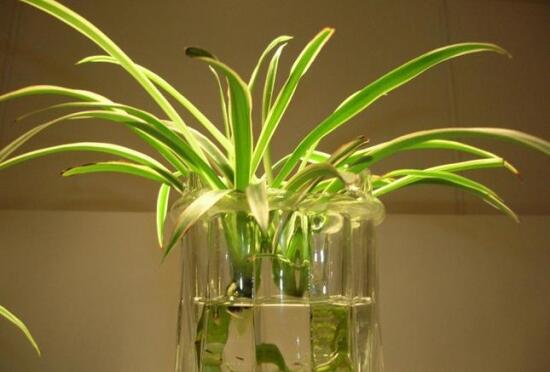
First, spider plant 'Variegatum' likes a moist environment, and the leaves can survive when inserted into water, so spider plant 'Variegatum' can be grown in water. As for how to grow spider plant 'Variegatum' in water, it is actually quite simple: just insert healthy stems of spider plant 'Variegatum' into water. But although it is simple, it is not easy in practice. Let's continue reading to see exactly how to do it.
2. Water culture method for spider plant 'Variegatum'
1. Choose a container
Since it is water culture, naturally you first have to choose a container. The water culture container for spider plant 'Variegatum' should mainly be chosen sensibly according to the size of the plant and its growth space. For this, the editor suggests using a transparent glass vase, because this not only allows you to observe the rooting situation in real time, but also makes spider plant 'Variegatum' look more attractive.
2. Selection of water culture seedlings
Take the soil-cultured spider plant 'Variegatum' out of its pot, clean off the soil attached to the roots with clean water, then remove all rotten roots and diseased roots. If there are yellow leaves or leaves with pests and diseases, remove all of them too, leaving robust branches and leaves with bright color as the water culture seedlings.
3. Starting water culture
Pour clean water into the glass container, then insert the prepared water culture seedlings into the bottle. As for the water depth, it is suitable for the water surface in the bottle to submerge 1/3-2/3 of the root system. Be sure not to completely submerge the root system below the water surface, as this will affect the roots' breathing and cause root rot in spider plant 'Variegatum'.
4. Water culture maintenance
① Nutrient solution
After completing the above steps, the water culture of spider plant 'Variegatum' is basically done, and next is normal maintenance. First, observe the changes in the roots more often, and cut off rotten roots when changing the water; second, when new roots reach 3-5 cm long, you can add nutrient solution, but the amount of nutrient solution should not be too large.
Note: When adding nutrient solution, it is best to do it together with changing the water, and the specific amount can refer to the instructions for the nutrient solution. In addition, you can also spray the leaves of spider plant 'Variegatum' with diluted nutrient solution, about once every 3 days.
② Change the water once every 2-3 days
In the maintenance of water-cultured spider plant 'Variegatum', the most important thing is naturally water, so changing the water frequently is key. Generally, you should change the water once every 2-3 days. If the water has already become cloudy, you can change it earlier.
Water quality requirements: Although ordinary clean water can meet the growth needs of spider plant 'Variegatum', it is best to use water that has been left to stand, or water that has been exposed to sunlight, when changing the water.
③ Diffused light
After successfully growing spider plant 'Variegatum' in water, place it in a spot with diffused light, avoiding exposure to strong sun and overly shady conditions. Only in this way will the plant grow normally. Of course, if improper operation causes phenomena such as dry leaf tips or blackened leaf tips on spider plant 'Variegatum', cut them off promptly.
Water culture method for spider plant 'Variegatum', notes on the cultivation method of water-cultured spider plant 'Variegatum'
How to grow spider plant 'Variegatum' in water: first, spider plant 'Variegatum' has very strong adaptability and is easy to grow in any environment, and its plant shape is attractive, so it is sought after by flower lovers. It has been confirmed that spider plant 'Variegatum' can be grown by water culture. Below is a summary of the steps and precautions for water culture cultivation of spider plant 'Variegatum', hoping to help flower lovers who are about to grow spider plant in water.
Water culture cultivation method for spider plant 'Variegatum' 1. Container selectionThe container bottle can be single-layer or double-layer. For a single-layer bottle, use a bottomless plastic bottle or bottomless ceramic bottle to plant the spider plant. For a double-layer bottle, use a plastic sieve as the upper layer, and the lower layer is a bottomless bottle container; plant the spider plant in the upper plastic sieve and let the roots of the spider plant hang down into the bottle.
2. Plant selectionTake the potted or ground-planted spider plant out of the pot or dig it up from the ground, remove the soil from the roots, wash the roots with clean water, cut off old roots and rotten roots, keep the fibrous roots, cut off some leaves (old leaves, leaves with pests and diseases), and keep robust leaves, generally leaving 6 to 10 leaves.
3. Planting in the containerPlant the spider plant on the plastic sieve, with the roots passing through the small holes of the plastic sieve into the lower bottle. Put ceramic granules or gravel into the sieve so the spider plant stands upright, and fill the lower bottle with clean water and flower nutrient solution. After planting, place the spider plant indoors or in a cool place for management.
4. Maintenance and managementChange the water once every 2-3 days. For those changed from soil culture to water culture, some roots will rot in the early stage, and these need to be cut off when changing the water, and it is best to disinfect them. When new water roots are 3-5 cm long, nutrient solution needs to be added to the water, and the amount does not need to be large.
5. FertilizingAdd flower nutrient solution to the roots through adding water and changing water at the same time. For root topdressing, spray the branches and leaves with diluted flower nutrient solution once every 3 days.
Precautions for water culture of spider plant 'Variegatum'1. To carry out water culture, you need a container for water culture. You can choose a glass bottle or ceramic bottle according to your own habits and preferences, but it must be a container without a bottom hole. Once you have the container, next choose a plant suitable for water culture. Do not use a plant with rotten roots, and you should clean old roots and rotten roots from the root system of the selected plant. Also cut off leaves with pests and diseases. Generally, 6 to 10 healthy leaves need to be kept.
2. After preparing the container and the plant, wash the soil off the plant roots and carefully plant it in a plastic sieve filled with ceramic granules or gravel, keeping the spider plant upright with its roots entering the clean water bottle.
3. Next, place the planted spider plant indoors and change the water every two or three days. When the newly grown roots reach 3 cm long, add nutrient solution to the clean water, but do not apply a large amount of nutrient solution, because a large amount of nutrient solution will breed a large number of molds and bacteria and cause root rot. At the beginning of water culture, the roots of the spider plant will have rotten parts. There is no need to worry about this; just cut them off and disinfect when changing the water.
4. According to my experience with water-cultured spider plants, if you grow spider plants in water, do not put craft items and ornaments in the water culture container, as this is not good for the growth of the spider plant. If you really must decorate the container, put in some natural stone materials such as pebbles, which are both attractive and will not harm the spider plant.
How to grow spider plant 'Variegatum' in water?
Whether it can be grown in water
The answer is yes. The bright leaves of spider plant 'Variegatum', together with the reflection of the water culture bottle, look very eye-catching.
Water culture planting method:
Gently dig out the spider plant 'Variegatum' grown in soil, clean off the soil attached to the roots with clean water, and be careful not to damage its roots during the whole process. After cleaning, trim the roots, remove all rotten roots and diseased roots, and if there are yellow leaves or leaves with pests and diseases, remove all of them too, leaving robust branches and leaves with bright color, and finally put them into clean water.
You can also directly cut off its branches and leaves and put them into clean water for growing.
Maintenance method for water-cultured spider plant 'Variegatum':
If it was transplanted from soil, pay attention to changes in its roots. At this time, cut off rotten roots when changing the water. When the newly grown root system reaches 3 cm to 5 cm, you can add nutrient solution, and the amount of nutrient solution should not be too large.
The addition of nutrient solution can be carried out together with changing the water, and the amount used can be controlled according to the instructions for the nutrient solution. At the same time, you can also spray its leaves with diluted nutrient solution, about once every 3 days.
Maintaining water-cultured plants mainly depends on water. Normally, the water needs to be changed once every 2 to 3 days. If the water has already become cloudy, you can change it earlier. When changing the water, it is best to use water that has been left to stand, or water that has been exposed to sunlight.