How to water a variegated spider plant? Water once every 3 days in spring and autumn, every 1 day in summer, and every 7 days in winter
As a plant that loves a humid environment, the variegated spider plant has a high demand for water, so during its growing season we should water it frequently to keep the potting soil moist. However, the variegated spider plant dislikes waterlogging, so you must not overwater it, otherwise various problems will appear. So how do you water a variegated spider plant? On this, the editor has summarized the watering methods for variegated spider plants based on the experience of many flower lovers. Let's take a look together.
1. How to water a variegated spider plant, timing/amount of water
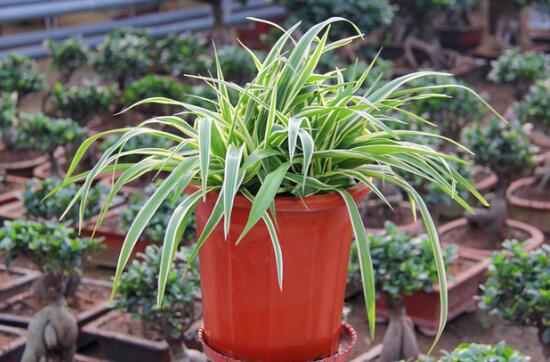
Water is the source of plant life, and this is especially true for the variegated spider plant, which loves a humid environment. However, it has high water requirements, and neither too much nor too little will do. With too little, the plant lacks water and grows poorly; with too much, root rot occurs, leading to symptoms such as dry tips on the leaves of the variegated spider plant and blackened leaf tips. So how do you water a variegated spider plant? Next, the editor will explain this in detail from two aspects: timing and amount of water.
2. Methods for watering a variegated spider plant
(1) When to water a variegated spider plant
On this question, there is actually no fixed time; it mainly depends on the climate and environment: when the temperature is high, water in the morning or evening; when the temperature is low, it is best to water at noon. In short, to avoid "a variegated spider plant without its variegation," everyone should control it well, basically watering thoroughly only after the potting soil has dried out, avoiding watering just a little, avoiding soil that stays wet for a long time, and never letting the soil become waterlogged.
(2) Four-season watering methods for variegated spider plants
1. Watering in spring and autumn, once every 3-5 days
The variegated spider plant likes a warm environment, so spring and autumn, with their suitable temperatures, are its growing seasons. At this time, water generally once every 3-5 days.
2. Watering in summer, once every 1-2 days
Summer temperatures are high and water evaporates quickly, so when watering a variegated spider plant you can increase the watering frequency and keep it to once every 1-2 days. However, when watering in summer, note that the watering should be sufficient, and around noon and in the evening you should also spray water on the branches and leaves to prevent the leaves from drying out.
3. Watering in winter, once every 7-10 days
Winter temperatures are low and water evaporates slowly, so when watering a variegated spider plant at this time you should reduce the watering frequency and keep it to once every 7-10 days. However, the specifics still depend on the condition of the potting soil; on the whole, keep the potting soil moist.
Overall, watering is a technical skill, especially when watering a variegated spider plant. You must grasp the timing well so that it can grow healthily and we can see a beautiful potted variegated spider plant. That is all the editor has to introduce about how to water a variegated spider plant. Those of you raising one must water it according to the methods.
How to grow a variegated spider plant, the cultivation methods and precautions for variegated spider plants/loves plenty of water
The variegated spider plant is a very beautiful foliage plant. It has a graceful form, with slender, drooping leaves edged with golden stripes, and is deeply loved by flower lovers. In daily life, because it is beautiful and because it can absorb formaldehyde, the variegated spider plant is kept in many people's homes. So how do you grow a variegated spider plant? Below are the cultivation methods and precautions for variegated spider plants compiled by the editor. They are very comprehensive, and anyone who wants to grow one should take a look.
1. How to grow a variegated spider plant, understanding its habits
The variegated spider plant likes a warm environment with good light. Although it has strong adaptability, it dislikes cold and is also afraid of direct sun exposure. When growing it indoors, flower lovers should give it plenty of water and light and take good cold-protection measures in winter. As for the soil, it is best if it is loose and has good drainage and air permeability. So how to grow a variegated spider plant is very simple: just meet its growing habits. For the specific requirements, let's continue reading below.
2. Cultivation methods and precautions for variegated spider plants
1. Soil, loose and fertile
For how to grow a variegated spider plant indoors, the first thing is to reselect the soil. Potted variegated spider plants bought from flower shops or online can ensure the plant grows normally, but that soil is very cheap. If you want the variegated spider plant to grow well, you must choose soil that the variegated spider plant likes.
Soil choice: Although the variegated spider plant does not have high soil requirements, loose, fertile, well-draining sandy soil can help it grow better. For this, the editor recommends using leaf mold or peat soil, garden soil, and river sand mixed in equal amounts, with a small amount of base fertilizer added, as the growing medium.
2. Light, 50% shading
Plant growth cannot do without light, so in the cultivation methods for variegated spider plants, light is indispensable. The variegated spider plant likes light, but it dislikes strong light, so while giving it light, avoid direct strong light and preferably place it in a spot with about 50% shading.
Precautions: Avoid the midday sun in spring and autumn; in summer it should only receive morning or evening light, and at other times it is best not to put it in the sun; in winter it can be placed in the sun all day.
3. Temperature, 20-24°C
For how to grow a variegated spider plant, properly adjusting the temperature is also very necessary. The variegated spider plant likes a warm climate, and its most suitable growing temperature is 20-24°C. When growing it indoors, if you want the variegated spider plant to grow well, it is best to maintain this room temperature.
Precautions: The variegated spider plant is not tolerant of high temperatures or cold. As long as the winter temperature stays above 10°C, it can overwinter safely; in summer, when the temperature is above 30°C, the plant will stop growing, and once it is scorched, dry tips on the leaves of the variegated spider plant will also appear.
4. Watering, once every 3-5 days
The variegated spider plant likes a humid environment, and during the growing season you must water frequently to keep the potting soil moist. In spring and autumn, the variegated spider plant grows quickly, so water once every 3-5 days; in summer, temperatures are high and water evaporates quickly, so you can increase the watering frequency and keep it to once every 1-2 days; in winter, temperatures are low, so reduce watering and keep it to once every 7-10 days.
Precautions: The variegated spider plant grows better in a humid environment, but note: at no time should watering cause waterlogging.
5. Fertilizing, once every 10 days
Having covered watering, let's now talk about fertilizing, which is also very important in the cultivation methods for variegated spider plants. When fertilizing a variegated spider plant, follow the principle of applying thin fertilizer frequently, applying a compound fertilizer about once every 10 days during the spring and summer growing seasons.
Precautions: When fertilizing a variegated spider plant, remember not to splash fertilizer on the leaves; in winter, although the variegated spider plant grows slowly, fertilizing should be reduced or stopped.
6. Pruning and repotting
As it ages, the variegated spider plant gradually grows larger. To maintain a good plant shape and appearance, the old leaves at the base should preferably be pruned regularly; moreover, depending on the size of the plant's root system, it should be repotted once every 1-2 years.
7. Disease and pest control
Although the variegated spider plant is not prone to diseases and pests, when the potting soil is waterlogged and ventilation is poor, the plant is susceptible to disease; in addition, when the variegated spider plant's clumps are dense and ventilation is poor, it is prone to damage by scale insects, so prevention should be the priority and a well-ventilated environment should be maintained. Once diseases or pests are found, spray promptly for control. As for what to spray, you can refer to disease and pest control for variegated spider plants.
What are the uses of the variegated spider plant, an introduction to cultivation methods for variegated spider plants
Nowadays, in many homes and offices people like to grow a few plants to green the environment, and there are more and more choices of plants, so today the editor will focus on introducing the uses of the variegated spider plant and its cultivation methods. I hope everyone will like it.
The variegated spider plant belongs to the spider plant family Liliaceae, and is also a perennial evergreen herbaceous plant. It has large, thick, cylindrical fleshy roots. The variegated spider plant often produces many small rooted plantlets formed from plantlets on its flower stems, which is very interesting. Its growth is also very fast, and cultivation is easy. If it is in a relatively bright room, it can be cultivated and enjoyed all year round, so it is a plant very suitable for placing on a flower stand or hanging.
Growing habits
Temperature: The variegated spider plant likes a warm environment and has strong adaptability, and its minimum overwintering temperature should be around 10°C.
Light: Bright light is more suitable for its growth. It also dislikes direct summer sunlight; during the high temperatures of summer, shading it by about 50% is enough, while in winter there is no need to shade it.
Water: The variegated spider plant likes plenty of moisture in the potting soil all year round, but it also has a certain drought tolerance and dislikes waterlogging in the pot.
Air humidity: In dry seasons or during the high-temperature period in summer, we need to frequently spray water appropriately around the plant and on its leaf surfaces to reduce dryness.
Cultivation methods
The spider plant likes a semi-shaded environment, so in spring and autumn avoid direct strong sunlight; in summer the sunlight is especially strong, so we can only let it receive some slanting light in the morning and evening, and during the day we should also shade more than half the light, otherwise the leaf tips will dry out. Variegated varieties in particular dislike strong sunlight, while the variegated spider plant looks even more beautiful when grown in a place with weaker light, and its yellow variegation will also be more obvious and the leaves more glossy. In winter, we need to let it get more sunlight so that the tender, fresh green of the leaves can be well maintained.
If it is a household potted plant, it should be placed in front of a south-facing window, otherwise its leaves will lose their proper luster and in serious cases even wither. Spider plants can be propagated by cuttings, division, and sowing, and repotting can be done according to its needs, generally best done in spring.
Winter protection
In winter we need to place it indoors, then water it once every four days, and the watering should be thorough, preferably at noon, and the water temperature should be consistent with the air temperature. This can prevent its roots from freezing.
Uses of the variegated spider plant
The variegated spider plant is one of the traditional hanging plants for the home. Its leaves are slender and soft, and its special appearance creates a unique hanging display and three-dimensional beauty, achieving a distinctive decorative effect.
The variegated spider plant is not only a very good hanging foliage plant for the home, but also a very good indoor air-purifying flower. Spider plants have an extremely strong ability to absorb toxic gases, so spider plants also have the reputation of being a green purifier.