How to grow Rangoon Creeper (Quisqualis indica)? Cultivation methods and precautions, with plenty of light
Rangoon creeper is a fairly common flowering plant in people's daily lives, with high ornamental value, and it is grown in every region of our country. But if you want to grow it well, there are still many points to pay attention to. How to grow Rangoon creeper? What are the cultivation methods and precautions for Rangoon creeper? Below, the editor will walk you through it.
I. How to grow Rangoon creeper - understand its habits
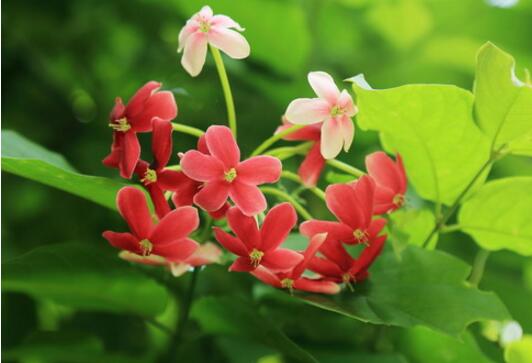
To know how to grow Rangoon creeper, we first need to understand its growth habits; only by understanding its habits will cultivation become much simpler. It is a light-loving plant, so when growing it we should keep it in sufficient light, and this way its flowers will bloom even more profusely.
II. Cultivation methods and precautions for Rangoon creeper
1. Soil - sandy loam
When growing Rangoon creeper, we first need to choose the soil, which is the foundational step. Generally it is best to choose a loose, fertile, organic-rich sandy loam, as this kind of soil has good drainage and aeration, allowing the plant to grow better.
2. Fertilizing - once a month during the growing season
Fertilizer is one of the main nutrients in the growth process of Rangoon creeper, especially after it enters the growing season, when its demand for fertilizer is very high; basically it needs fertilizing once a month so that it has sufficient nutrients to grow vigorously. However, when fertilizing there is one point everyone should note: before fertilizing, the fertilizer must first be diluted with water so the plant can absorb it better; if the fertilizer concentration is too high it can easily burn the plant.
3. Water - avoid waterlogging
Rangoon creeper prefers a warm and humid environment, but it is not tolerant of waterlogging, nor of drought, so when watering we must control the amount of water well, neither too much nor too little, keeping the soil at a certain level of moisture. Remember not to let water accumulate in the pot, otherwise it can easily cause root rot.
4. Light - shade needed in summer
Rangoon creeper is a light-loving plant, so during growth it should be kept in sufficient light, but it is best not to expose it to strong light for long periods, otherwise the plant can easily be scorched. In spring and autumn, when the light is relatively moderate, we can place it outdoors to receive light all day, but when summer comes and the light is relatively intense, we still need to pay attention to shading.
5. Pruning - trim branches regularly
During the growth of Rangoon creeper, we should prune the branches frequently. If the branches grow in a messy or overly dense way, we should prune away the excess branches to prevent them from blocking sunlight and competing for nutrients. After winter arrives, we should also prune its branches and leaves, which helps it bloom again the following year.
6. Pests and diseases - deal with them promptly
When growing Rangoon creeper, if we are not careful enough, pests and diseases can easily take advantage of the situation, and such problems are extremely harmful to the plant, so they must be dealt with promptly when discovered, because the longer it drags on the greater the harm to the plant. For specific treatment methods, you can refer to the article on pest and disease control for Rangoon creeper, which has detailed introductions.
Cultivation methods and precautions for Rangoon creeper
Cultivation methods for Rangoon creeper
Light and temperature
Rangoon creeper by nature likes a warm and humid growing environment; it can tolerate cold, likes light, and can also tolerate partial shade, but it will grow better with sufficient sunlight. When growing Rangoon creeper, it is best to let it receive sufficient sunlight; each day it can receive full sun or more than 4 hours of direct light, which will make it bloom profusely. If the growing environment is too shady, it may cause the plant to grow leggy and reduce flowering. During cultivation, ensure the growing environment of Rangoon creeper has a suitable temperature, between 20°C and 30°C; in winter, pay attention to cold protection.
Water and fertilizer management
Rangoon creeper likes a relatively humid growing environment, is not tolerant of drought, and avoids waterlogging. Keep the soil moist, but remember not to let water accumulate in the pot. During the growing period, Rangoon creeper needs more fertilizing. When planting, apply a sufficient amount of base fertilizer, and afterward carry out topdressing. In spring and summer, topdress once or twice, and before flowering also give Rangoon creeper sufficient nutrients to meet the nutrition consumed by flowering. In autumn and winter, reduce the frequency of watering and fertilizing Rangoon creeper.
Propagation methods
There are mainly four propagation methods for Rangoon creeper. It can be propagated by sowing, with seedlings transplanted, and can also be propagated by division, by cuttings and by layering.
Precautions for growing Rangoon creeper
Flowering
To make Rangoon creeper bloom better, before the flower buds form, the branch growth of Rangoon creeper needs to pause; appropriately reduce watering and fertilizing to slow the growth rate of Rangoon creeper, which will favor flowering.
Pruning
Pruning branches is for shaping and better flowering; during the growth process, branches should be pruned frequently. If the branches of Rangoon creeper grow in a messy or overly dense way, the excess branches can be pruned away to prevent them from blocking sunlight and competing for nutrients. Pruning the branches and leaves of Rangoon creeper in winter favors blooming again the following year.
Cultivation methods and precautions for Rangoon creeper - Rangoon creeper pictures
Cultivation methods and precautions for Rangoon creeper
Rangoon creeper (scientific name: Quisqualis indica, English name: Rangoon Creeper), also known as Liuqiu Zi, Liuqiu Zi, Shi Junzi, Shi Jun Gen, Li Junzi, Shui Junzi, Shui Jun Ye, Si Junzi, Si Shu Shi Junzi, Bing Gan Zi, Yao Qiu Zi, Junzi Ren, Suo Zi Guo, Guo Za Man, Du Ji Li Zi, Lang Mu Huo, Shan Yang Shi, Yangguang Teng, etc., is a plant of the genus Quisqualis in the family Combretaceae. This species is a well-known antiparasitic drug at home and abroad, ancient and modern, and has a history of at least more than 1600 years in treating childhood illnesses.
It is distributed in Sichuan Province, Guangdong and Guangxi, Fujian Province, Taiwan, China, India, Myanmar and the Philippines. It mostly grows on slopes, roadsides, flat ground and other sunny shrublands at an altitude of 1000-2500 m.
Morphological characteristics
The flowers of Rangoon creeper are white when they first open and later turn red
Rangoon creeper is a climbing vine plant, shrub-like when young. The young tender parts are covered with brownish-yellow short pubescence. Leaves are elliptical, oblong to ovate-lanceolate, opposite or nearly opposite, thin papery, with the apex acuminate or sometimes caudate, the base nearly rounded, the surface nearly hairless, the underside covered with brownish-yellow soft hairs, entire or slightly wavy, with 7-8 lateral veins on each side, about 5-13 cm long and about 2.5-6 cm wide; the petiole is hairy, without a joint, densely covered with brownish-yellow soft hairs when young, about 1 cm long, and after leaf fall the persistent petiole base gradually hardens into a spine-like body. The flowers are nearly corymbose spikes, terminal, with more than 10 flowers, bisexual; bracts ovate to linear-lanceolate, hairy, early deciduous, about 5-8 mm long; the calyx is green, the calyx lobes triangular, with 5 small teeth at the tip, hairy; the calyx tube is slender, covered with sparse yellow short pubescence, about 5-9 cm long; petals 5, oblong or obovate-oblong, with the apex obtuse-rounded, white when first open and later turning red, about 1.2-2.4 cm long and about 2-10 mm wide; stamens 10, the filaments arranged in 2 whorls at different heights, the upper whorl inserted above the stigma and extending beyond the corolla, the lower whorl inserted below the stigma and not extending beyond the corolla; the ovary is inferior, spindle-shaped, hairy, 5-angled, 1-locular, with 3 ovules; the style is slender, its base adnate to the calyx tube, the upper part free, slightly extending beyond the corolla; the stigma is slightly enlarged, somewhat flattened on both sides. The fruit is a drupe, greenish-black or brown, ovate to spindle-shaped, with a narrow pointed apex and a bluntly rounded base, with an obvious circular fruit stalk scar, bearing 5 longitudinal ridges, occasionally 4-9 ridges, hairless, leathery, splitting open at the top after maturity, splitting into 3-5 valves, about 2.5-4 cm long and about 1.2-3.3 cm wide. Seeds 1, cylindrical-spindle-shaped, white, with many longitudinal wrinkles, about 2.5 cm long and about 10 mm wide.
The flowers of Rangoon creeper are white when they first open and later turn red
Medicinal uses
The dried mature fruit of Rangoon creeper is used as medicine; it is sweet in taste, warm in nature, non-toxic, and enters the spleen and stomach meridians. The medicinal material is mainly produced in Fujian, Jiangxi, Guangdong, Guangxi, Hunan, Yunnan, Guizhou and other provinces and regions of China, and is classified in traditional Chinese medicine as an antiparasitic and spleen-strengthening medicine. The Chinese medicine name is Shi Junzi; the medicinal name was first recorded in the Kaibao Bencao, and it can kill parasites, remove food stagnation and strengthen the spleen, with effects such as expelling parasites and resisting skin fungi. It mainly treats parasitic accumulation with abdominal pain, abdominal distension, diarrhea and dysentery, infantile malnutrition, and stagnant milk and food, etc. In modern clinical practice it is used to expel roundworms, pinworms and tapeworms, and externally for the treatment of various skin fungal infections, Trichomonas vaginalis, etc.
The leaves of Rangoon creeper are used as medicine; they are pungent in taste, neutral in nature, and enter the spleen and stomach meridians, and are classified in traditional Chinese medicine as an antiparasitic medicine. The Chinese medicine name is Shi Junzi Ye, and it has effects such as killing parasites and detoxifying, and regulating qi and strengthening the spleen. It mainly treats infantile gangrene accumulation, childhood accumulation, abdominal distension and fullness, sores, boils and ulcers, etc.
The root of Rangoon creeper is used as medicine; it is pungent and bitter in taste, neutral in nature, and enters the spleen and lung meridians, and is classified in traditional Chinese medicine as a spleen-strengthening medicine and a lung-diffusing medicine. The Chinese medicine name is Shi Junzi Gen, and it has effects such as descending rebellious qi and stopping cough, and killing parasites and strengthening the spleen. It mainly treats cough, dysentery, parasitic accumulation, etc.
The flowers of Rangoon creeper are white when they first open and later turn red
Rangoon creeper at Laosong Elementary School in Taiwan, China
Medicinal material identification
This product is the dried mature fruit, harvested in autumn when the fruit skin turns purple-black, then dried in the sun or by heat after removing impurities; the surface is blackish-brown to purple-black, smooth and glossy, elliptical or ovate, and the cross-section is mostly five-pointed star-shaped, with the fruit shell thicker at the ridges, a nearly round cavity in the middle, hard in texture, and the seed coat thin and easily shed; the cotyledons are yellowish-white, 2 in number, with cracks on the cut surface and oily; the odor is slightly fragrant and the taste slightly sweet. This species is recorded in the 2005 edition of the Chinese Pharmacopoeia and is designated as the legal original plant source species of the Chinese medicine Shi Junzi, with quality mainly controlled through character as the indicator. Traditional experience holds that those with large size, purple-black color, glossiness, plump kernels and yellow-white color are the best.
Chemical composition
The seeds contain amino acids and their salts, fatty acids, triterpenoids and sterols; the fruit pulp contains fats and hydrolyzable tannins; the flowers and leaves contain flavonoids; the seed kernel contains fatty acids, among which unsaturated fatty acids predominate, and it also contains saturated fatty acids. Among these, quisqualic acid and potassium quisqualate are the active antiparasitic ingredients.
Rangoon creeper is a shrubby flowering plant with medicinal value; its flowers are also very beautiful, so it can be grown for flower viewing and can also be used as a cut flower.
Cultivation methods for Rangoon creeper
Light and temperature
Rangoon creeper by nature likes a warm and humid growing environment; it can tolerate cold, likes light, and can also tolerate partial shade, but it will grow better with sufficient sunlight. When growing Rangoon creeper, it is best to let it receive sufficient sunlight; each day it can receive full sun or more than 4 hours of direct light, which will make it bloom profusely. If the growing environment is too shady, it may cause the plant to grow leggy and reduce flowering. During cultivation, ensure the growing environment of Rangoon creeper has a suitable temperature, between 20°C and 30°C; in winter, pay attention to cold protection.
Water and fertilizer management
Rangoon creeper likes a relatively humid growing environment, is not tolerant of drought, and avoids waterlogging. Keep the soil moist, but remember not to let water accumulate in the pot. During the growing period, Rangoon creeper needs more fertilizing. When planting, apply a sufficient amount of base fertilizer, and afterward carry out topdressing. In spring and summer, topdress once or twice, and before flowering also give Rangoon creeper sufficient nutrients to meet the nutrition consumed by flowering. In autumn and winter, reduce the frequency of watering and fertilizing Rangoon creeper.
Propagation methods
There are mainly four propagation methods for Rangoon creeper. It can be propagated by sowing, with seedlings transplanted, and can also be propagated by division, by cuttings and by layering.
Precautions for growing Rangoon creeper
Flowering
To make Rangoon creeper bloom better, before the flower buds form, the branch growth of Rangoon creeper needs to pause; appropriately reduce watering and fertilizing to slow the growth rate of Rangoon creeper, which will favor flowering.
Pruning
Pruning branches is for shaping and better flowering; during the growth process, branches should be pruned frequently. If the branches of Rangoon creeper grow in a messy or overly dense way, the excess branches can be pruned away to prevent them from blocking sunlight and competing for nutrients. Pruning the branches and leaves of Rangoon creeper in winter favors blooming again the following year.
Legend about Rangoon creeper, part one
It is said that during the Three Kingdoms period, the son of Liu Bei contracted a strange illness: his complexion was sallow, his limbs were emaciated, his whole body was weak, and his belly was swollen like a drum that gave a "thump thump" sound when tapped. Liu Shan also often cried and made a fuss, wanting to eat things like yellow earth and raw rice. One day, with a bright sun and gentle breeze, Liu Shan wanted to play in the wild, so Liu Bei sent two soldiers to take him to play nearby. Who would have thought that after returning home when it was getting dark, Liu Shan suddenly vomited and had diarrhea, clutching his belly with both hands and crying out in pain. When Liu Bei asked the two soldiers to clarify the situation, Liu Shan's pain grew even worse. Seeing Liu Shan crying and shouting and rolling around holding his full belly, the two soldiers were so frightened that they knelt on the ground and did not dare to rise. Liu Bei hurriedly asked them what Liu Shan had actually eaten outside; one of the soldiers replied kneeling and trembling: "...the young lord saw a kind of wild fruit and cried and shouted to pick it. We could not stop him, so we let him pick a few to hold and play with. Who would have thought..." As soon as Liu Bei heard this, he thought Liu Shan had been poisoned by eating the wild fruit, and immediately told the two soldiers to hurry and find a doctor.
Who would have thought that not long after the two soldiers left the door, Liu Shan passed a great many roundworms and egg-flower-like matter, and then stopped crying and fussing and quieted down quite a bit. He even clamored that he was hungry. Liu Shan drank half a bowl of thin porridge, passed some more roundworms, and then began to play by himself. By the time the doctor arrived, Liu Shan had long since fallen quietly into a deep sleep. In the days that followed, Liu Shan's belly became soft, and he no longer wanted to eat things like yellow earth and raw rice.
Watching his son's body gradually improve day by day, Liu Bei was overjoyed. He secretly thought that it must have been that kind of wild fruit that cured his son's strange illness. He urgently ordered those two soldiers to take more than ten people to gather that unnamed wild fruit in the wild. After gathering it, they dried it in the air and ground it into powder, then distributed it among the people to treat the same strange illness as Liu Shan's. It truly was effective. Thereupon the common people, carrying pigs and sheep, beating gongs and drums, and beaming with joy, came to Liu Bei's army to express their thanks. Liu Bei took out the olive-shaped, angular wild fruit and asked everyone what its name was, but the people shook their heads and did not know. At this moment, a person who looked like a scholar squeezed into the crowd and said loudly: "Since this wild fruit has no known name, and the person who first tasted this fruit was the young lord of Liu Shijun, then we might as well call it 'Shi Junzi'!" Hearing this, everyone clapped their hands again and again in approval.
Legend about Rangoon creeper, part two
It is said that during the Northern Song dynasty, there was a physician named Guo Shijun in the Panzhou area who was proficient in the art of medicine and also glad to help the poor common people, and was deeply respected by his neighbors. One day, he went up the mountain to gather herbs and was attracted by a kind of fruit growing on a mushroom-like plant. This fruit resembled the Chinese medicine gardenia in shape, and also somewhat resembled the Chinese medicine myrobalan. He peeled off the outer shell of the fruit and tasted it, discovering that its flavor was sweet and bland yet had a fragrant aroma, so he picked some and took them home. Because the fruits he had gathered were not yet fully dry, he worried that the medicine would deteriorate and mold if left for long, so he placed the fruits in a pot and roasted them. Before long, a fragrant aroma overflowed from the pot, making his young grandson so tempted that he clamored to eat them. Helpless, Guo Shijun had to pick out four or five of the roasted ones and give them to his grandson to eat. Who would have thought that the next morning his grandson actually passed several roundworms during a bowel movement. Guo Shijun thought and thought but could not figure it out, so he took out more than ten fruits and let his grandson eat them. Unexpectedly, before even an hour had passed, his grandson kept hiccuping and vomiting, and Guo Shijun hurriedly used ginger, dried tangerine peel, licorice and other medicines to counteract the poison. A few days later, he gave his grandson half the amount to take, and this time the grandson again smoothly passed several roundworms. From then on, whenever Guo Shijun encountered children with parasitic accumulation or malnutrition, he would use this fruit in appropriate amounts to treat them, and often achieved good results. To commemorate this doctor, people gave this medicine a beautiful name, "Shi Junzi".